

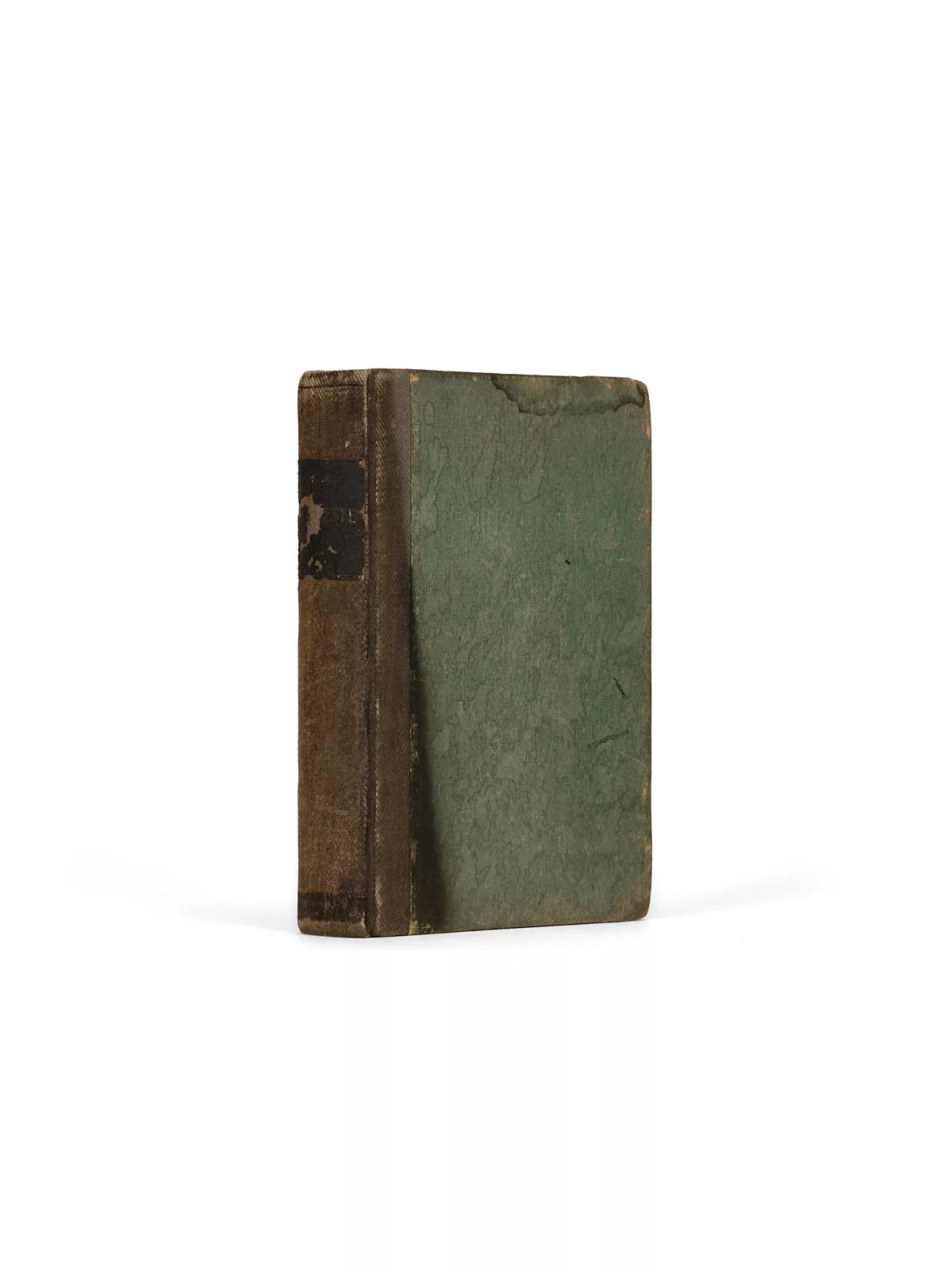
La Peste
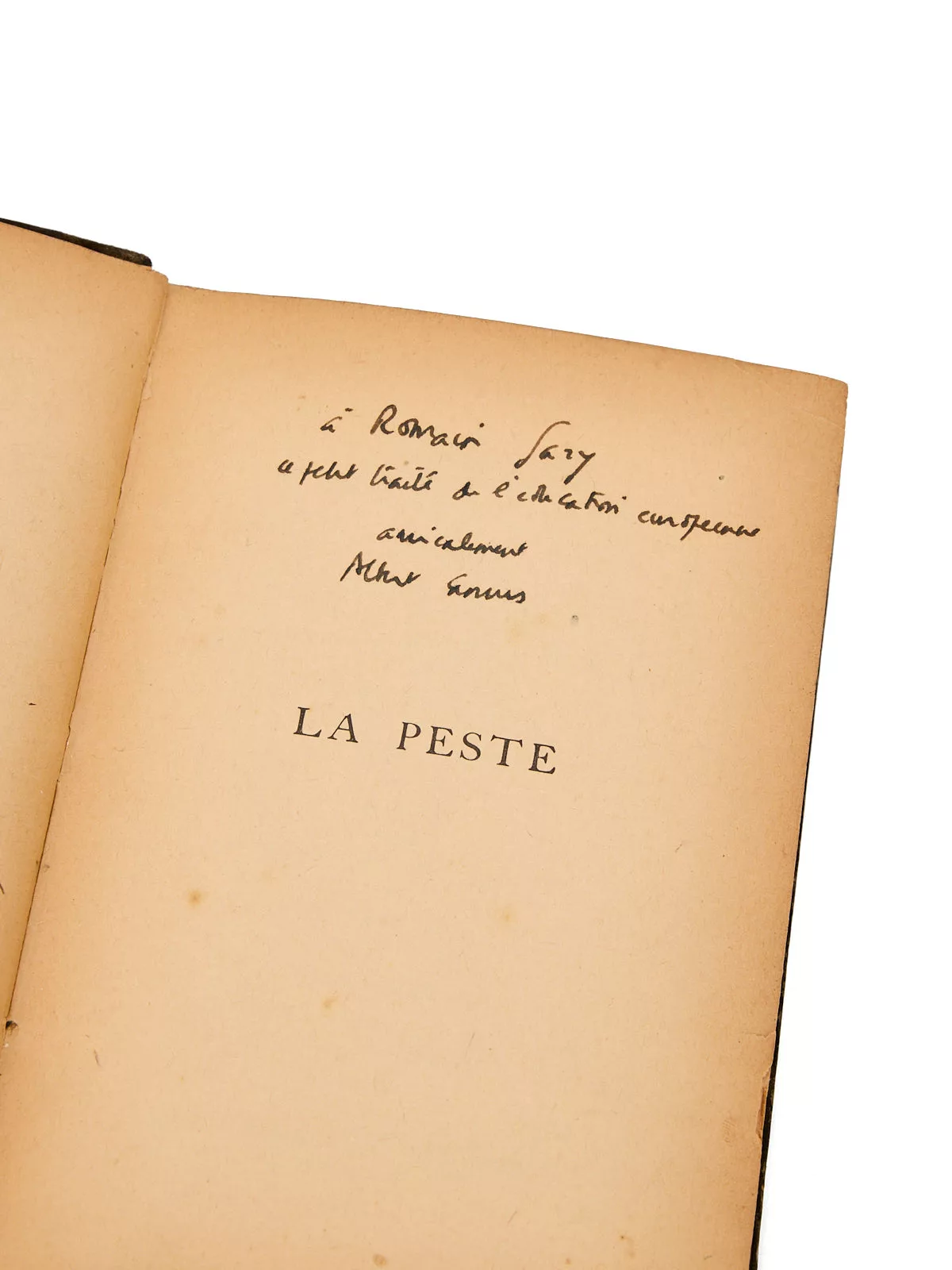
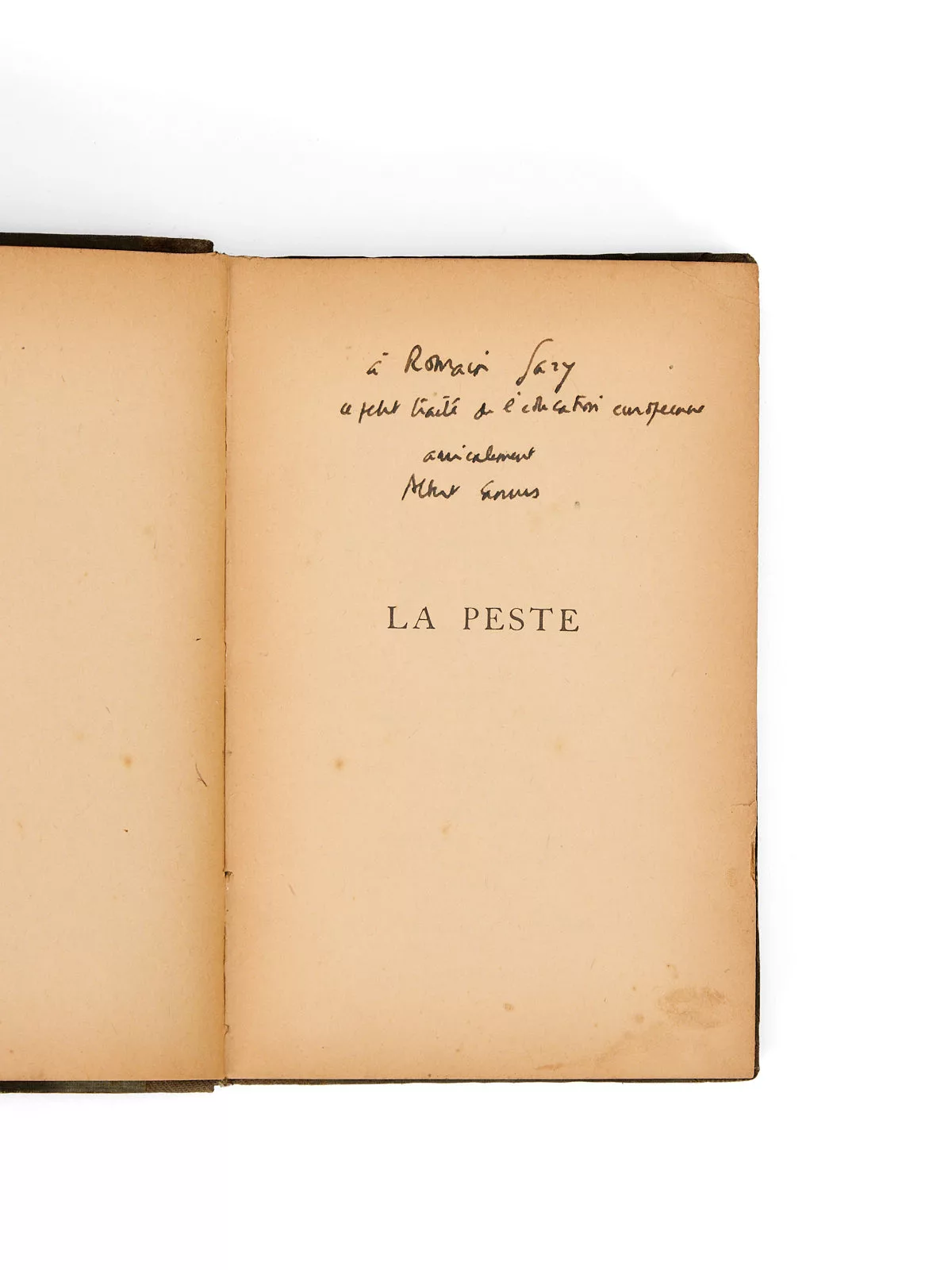
Autograph presentation inscription, signed:
“à Romain Gary, ce petit traité de l'éducation européenne, amicalement, Albert Camus.”
Accompanied by:
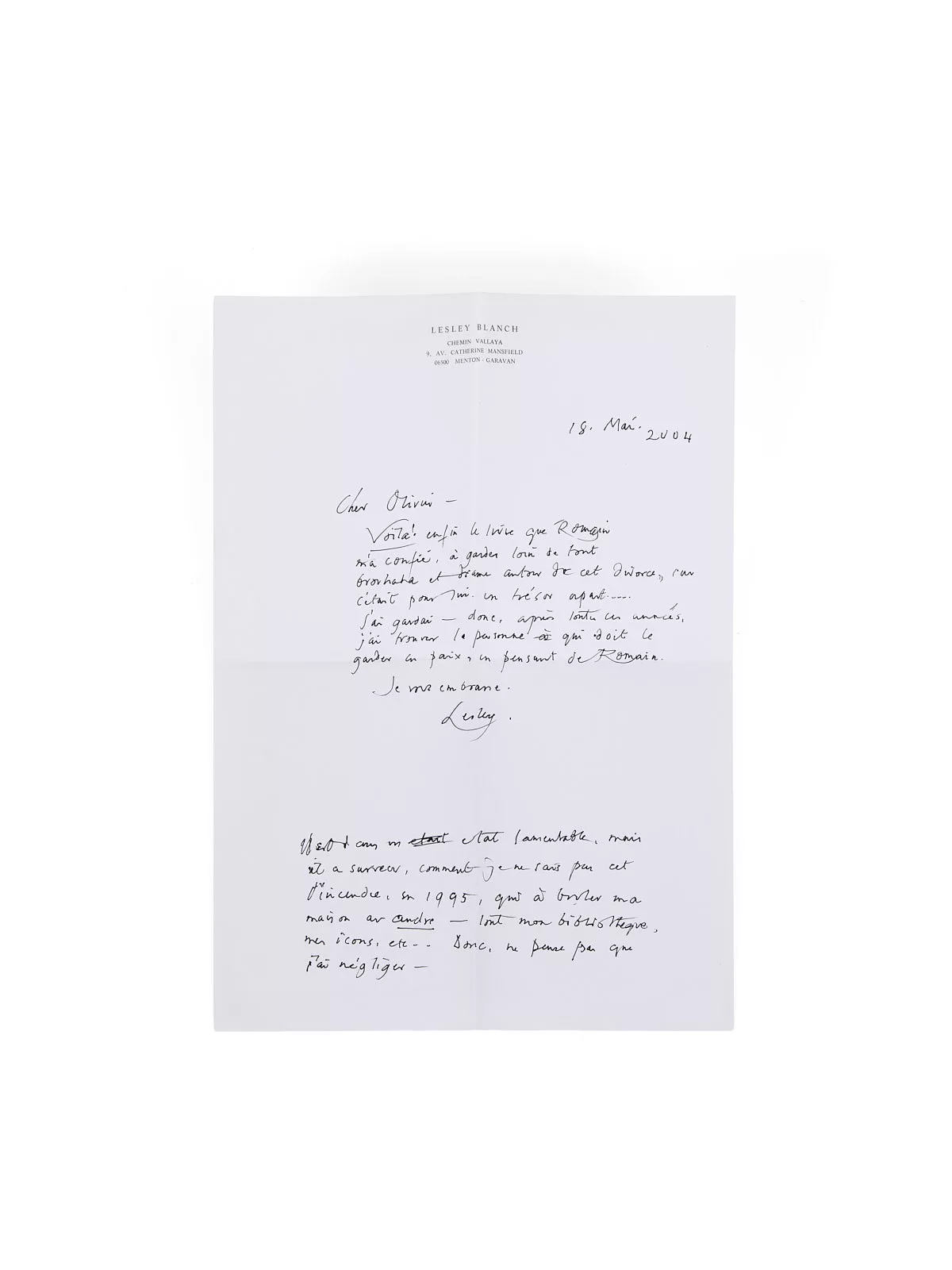
An autograph letter signed by Lesley Blanch, entrusting and transferring ownership of the book to Olivier Agid, son of Romain Gary's childhood friends René and Sylvia Agid:
“Cher Olivier,
Voilà enfin le livre que Romain m'a confié, à garder loin de tout brouhaha, et aussi (?) autour de cet [sic] divorce, car c'était pour lui un trésor apart [sic], j'ai gardai [sic] - donc, après toutes ces années, j'ai trouvé la personne qui doit le garder en paix, en pensant de [sic] Romain. Je vous embrasse. Lesley.
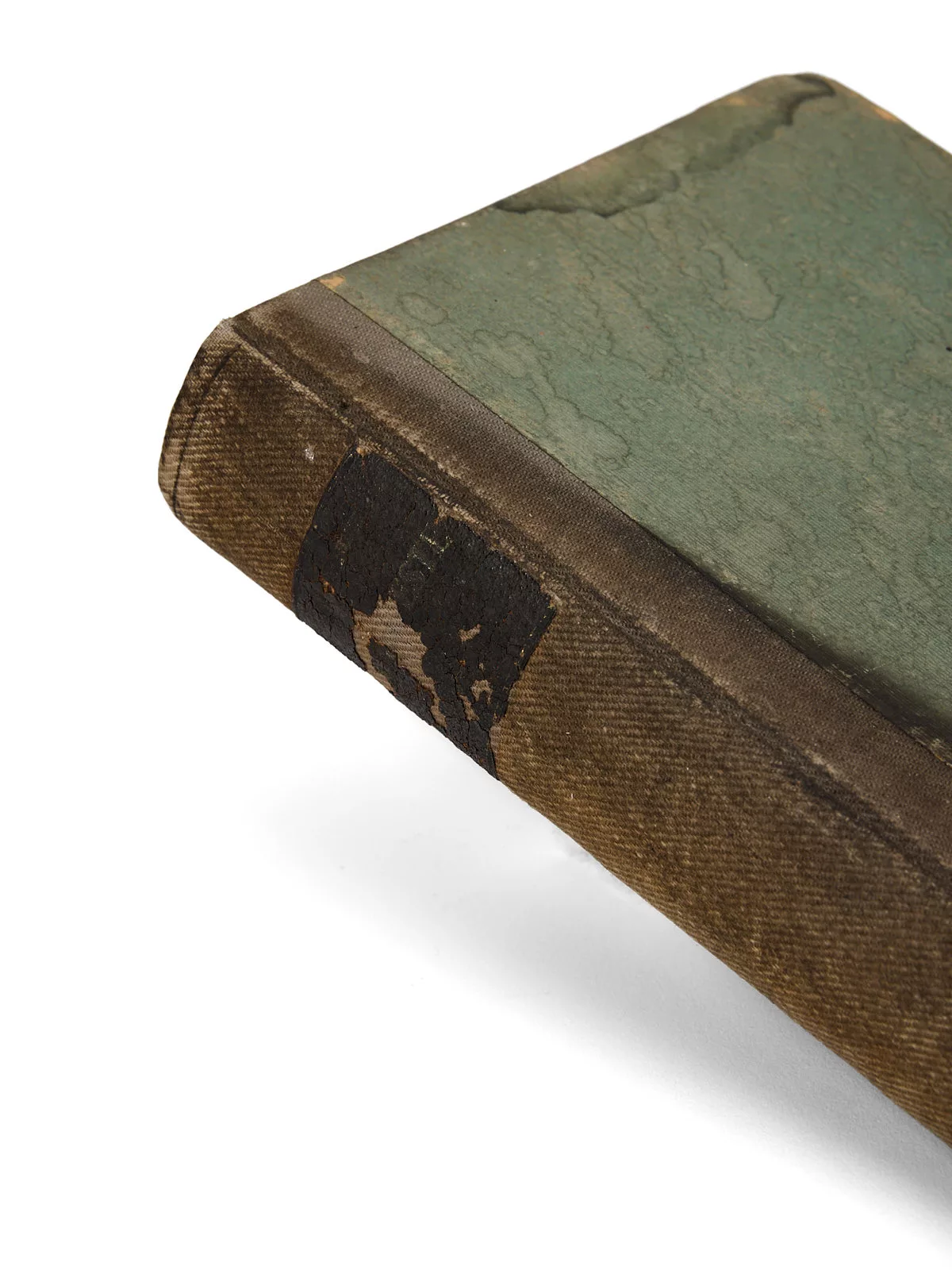
P.S. Il est dans un état lamentable mais il a survécu, comment je ne sais pas, cet incendie, en 1995, qui a brûlé ma maison…[…] tout mon (sic) bibliothèque, mes icons, etc… Donc, ne pense pas que j'ai négliger -.”
Romain Gary’s copy, later preserved by Lesley Blanch, and given by her, on May 18, 2004, to Olivier Agid, son of René and Sylvia Agid, Gary’s childhood friends from Nice.
This is a truly exceptional copy, remarkable not only for its inscription — among the most significant one could imagine for La Peste — but also for the chain of friendship and loyalty it embodies around Romain Gary. Camus’s chosen phrase is admirable: by offering La Peste to Gary as a “little treatise on European education,” he explicitly refers to Gary’s first novel, Éducation européenne, published in 1945, and pays tribute, in a formula both affectionate and witty, to a work born, like his own, from the European disaster and the moral question it left behind. The inscription is no mere social nicety two years after their meeting: it marks the immediate recognition of one writer by another.
Gary himself left the most eloquent testimony of this recognition. Still unknown in Parisian literary circles, just back from the war, he wrote to Raymond Aron on 8 August 1945 of his almost incredulous emotion at the reception given to Éducation européenne, then just translated from English and published in France in the summer of 1945: among the letters he received, he singles out Albert Camus’s as “the most beautiful,” confiding that it gave him “one of the purest joys” of his life. Maurice Nadeau, one of the first to recognize Gary’s importance, likewise reported the young novelist’s admiration for Camus, whose work he praised for “its violence in the love of life,” where others saw only despair.
Nadeau devoted four articles to Éducation européenne, in one of which he predicted: “If there is no doubt that tomorrow the name of Romain Gary and his novel Éducation européenne will be on everyone’s lips, it is because he has written not a novel of the Resistance, but ‘the’ novel of the Resistance.” These articles appeared in Combat, then edited by Albert Camus. In a letter to Nadeau dated September 1945, a still-disoriented Gary wrote that he no longer knew exactly what he had promised to whom, adding: “I believe Albert Camus could explain my rather complicated situation; I know you are acquainted with him.”
The inscription in La Peste, published in May 1947, thus belongs to a very particular moment: Gary was just beginning his French career, and Camus, already an established figure, recognized in him far more than a passing success. It is not known exactly when or on what occasion the volume was given: at the time of the publication of La Peste Gary was still in Sofia, though several trips back and forth are documented before he returned, with Lesley Blanch, in the course of 1948. The couple remained in France until early 1950, when Gary was appointed Secretary at the French embassy in Switzerland, under Henri Hoppenot, who would become another close friend.
The bond between the two men was real, lasting and of a rare quality, as attested by a correspondence of which only one side survives, preserved in the Albert Camus archive. Gary left one further, deeply moving testimony, in a scene from La Promesse de l’aube. In 1956, having just learned, through a letter received at the offices of the NRF, of the terrible circumstances of his father’s death, murdered during the Shoah, he faltered on the staircase; Camus, passing by at that moment, understood his distress and took him into his office: “I stood for a long time, letter in hand; I then went out onto the staircase of the N.R.F., leaned against the banister and stayed there, I do not know how long… I was lucky: Albert Camus happened to pass by and, seeing that I was unwell, took me into his office. The man who had died in this way was, to me, a stranger, but that day he became my father, forever.” (Gary, La Promesse de l’aube, ch. XIV)
The episode is brief, but it says everything essential: a presence, a discretion, a fraternity. That same year, when malicious rumors suggested that Les Racines du ciel had been rewritten by Camus and Jacques Lemarchand, Camus immediately responded to France-Soir. Here again, the gesture mattered: it was not only a matter of literature, but of protecting Gary from a slander touching the very integrity of his work. The letter, written with rare vehemence, led to a definitive break with France-Soir. Its director, Charles Gombault — although he had worked with Camus at Paris-Soir in 1940, and had even fled with him when the paper relocated to Clermont-Ferrand — declared: “Camus will no longer be mentioned in this newspaper except to announce his death.” And France-Soir largely kept to that, even at the time of the Nobel Prize, which was chiefly acknowledged in the sports pages, since Camus used to attend football matches with the sports journalists (cited by Roger Grenier, in Le citoyen de la rue du Bac, Romain Gary, l’ombre de l’histoire, pp. 13–26).
Gary’s admiration for Camus never wavered. When Camus received the Nobel Prize, Gary wrote to him from Hollywood, on 21 October 1957, one of the finest private reactions to that honor: “Vous êtes nous…” he wrote, contrasting with striking intensity Camus’s fidelity to the suffering of the world with other forms of greatness, notably that of his other great companion, André Malraux:
“Cher Albert, Quel beau moment ! Et que cette joie demeure longtemps dans votre cœur, car elle est la plus pure, la plus merveilleuse — une joie qui réhabilite beaucoup les hommes et même les académies. Je sais bien : il y a Malraux. Mais vous êtes demeuré au cœur de la souffrance et lui est allé chercher l’oubli dans la beauté. Vous êtes resté toute votre vie une blessure et lui a succombé à la tentation des « pensements ». Mon adoration pour lui demeure entière, mais ma joie pour vous est d’autant plus grande qu’elle est plus proche de moi. Vous êtes nous… Affectueusement, Romain”
Finally, after Camus’s death, it was again Gary who wrote a preface to La Peste, from New York, for the 1962 American edition: “It is curiously very difficult to remember the words of friends who are gone; one does not pay them much attention while they are alive. I remember Camus’s smile and the gravity of his face — the two expressions sometimes following each other within seconds — far better than his conversation. I never set much store by words, in any case. But now that his voice is silent, words only make me feel his absence more keenly. I do seem to recall, though, that he once said… no, actually, nothing very important. ‘Only that there are truths worth dying for, but none worth killing for.’ That was when he was writing La Peste.”
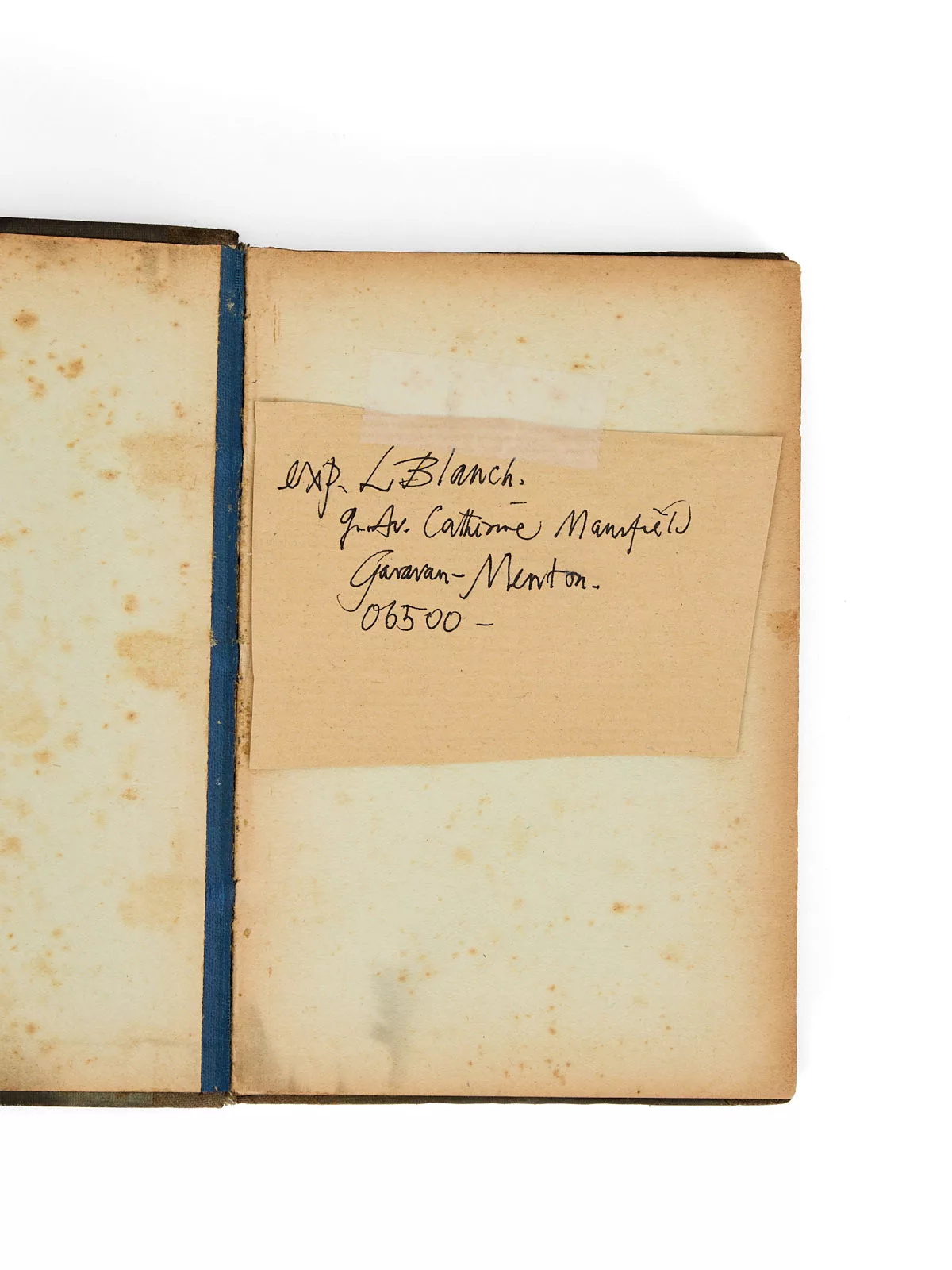
The provenance adds further to the importance of this volume: the copy was kept by Lesley Blanch, Romain Gary’s wife and later ex-wife, to whom he had evidently entrusted it, probably at the time of their separation in 1962. Entrusted and cherished like a relic to be preserved, after years of travel had worn the copy that Gary faithfully kept with him. In the accompanying autograph letter, dated May 18, 2004, Lesley Blanch hands the book over to Olivier Agid in these words: “Here at last is the book that Romain entrusted to me, to keep away from all the commotion… it was a treasure to him… after all these years, I have found the person who should keep it in peace, thinking of Romain.” She further notes that the volume, in her possession for more than forty years, survived the fire that destroyed her house in 1995, consuming her entire library and her icons. As the sole survivor, this copy reaches us almost miraculously — not merely as a dedicated copy, but as an object saved, protected, and set apart, seemingly in accordance with Gary’s own presumed wishes.
That Lesley Blanch ultimately chose to pass it on to Olivier Agid is far from incidental. The Agid family belongs to the earliest and most intimate chapter of Gary’s life. It was in Nice, after Mina Kacew and her son arrived there in 1928, that Romain met René Agid, who would become one of his closest friends. The Agid family, rooted in the Nice hotel trade, played an important role during Mina’s difficult years; biographers and witnesses alike have recalled how warmly and familiarly the young Gary was welcomed into their home, and how the Agid household remained, throughout his life, a refuge for Romain Gary. To pass this copy on to the Agids was, after a long detour, to bring it home to the oldest circle of loyalty in Gary’s life — that of Nice, of his mother, of his boyhood friendships, and of his first French homeland.