

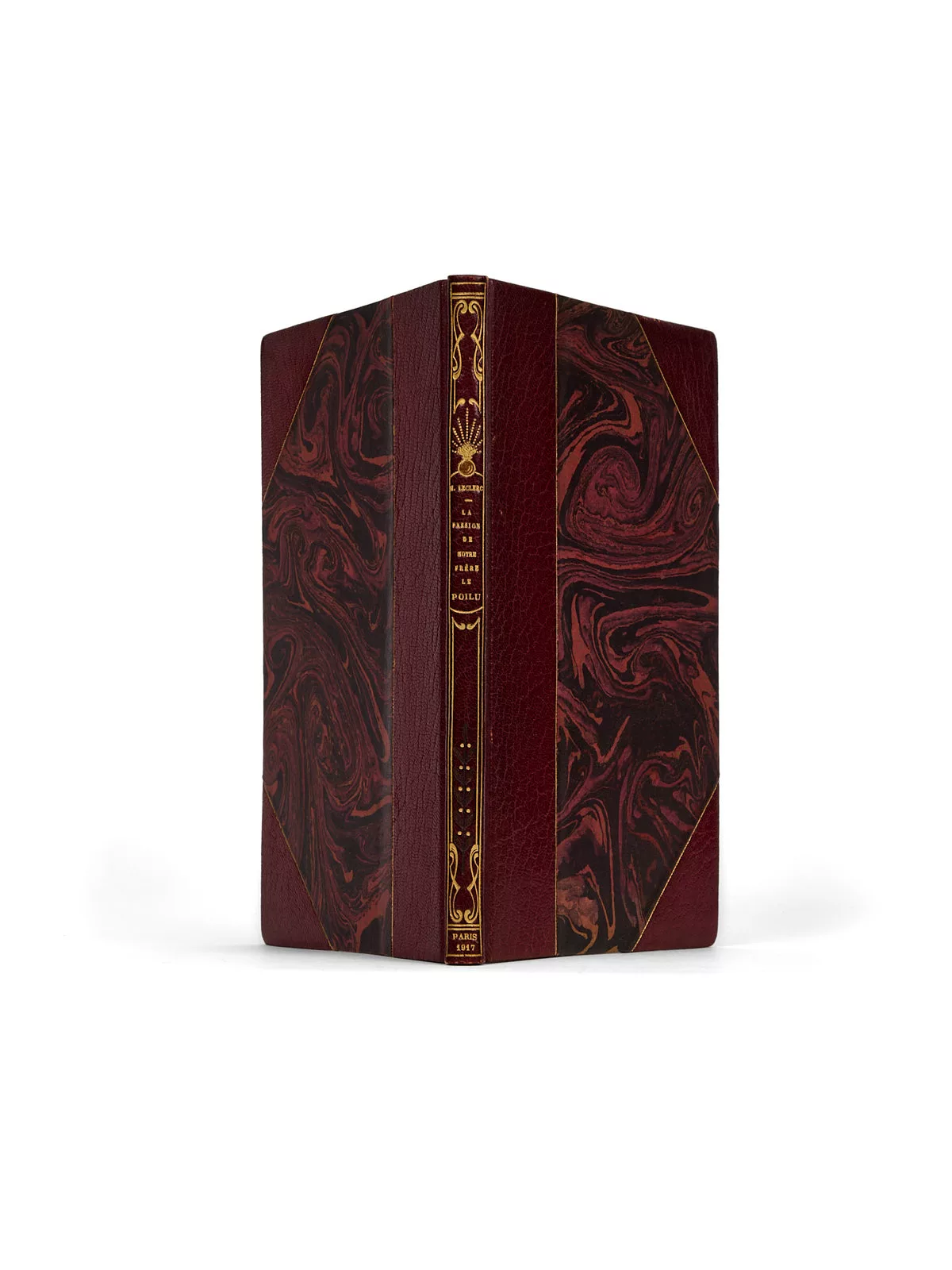
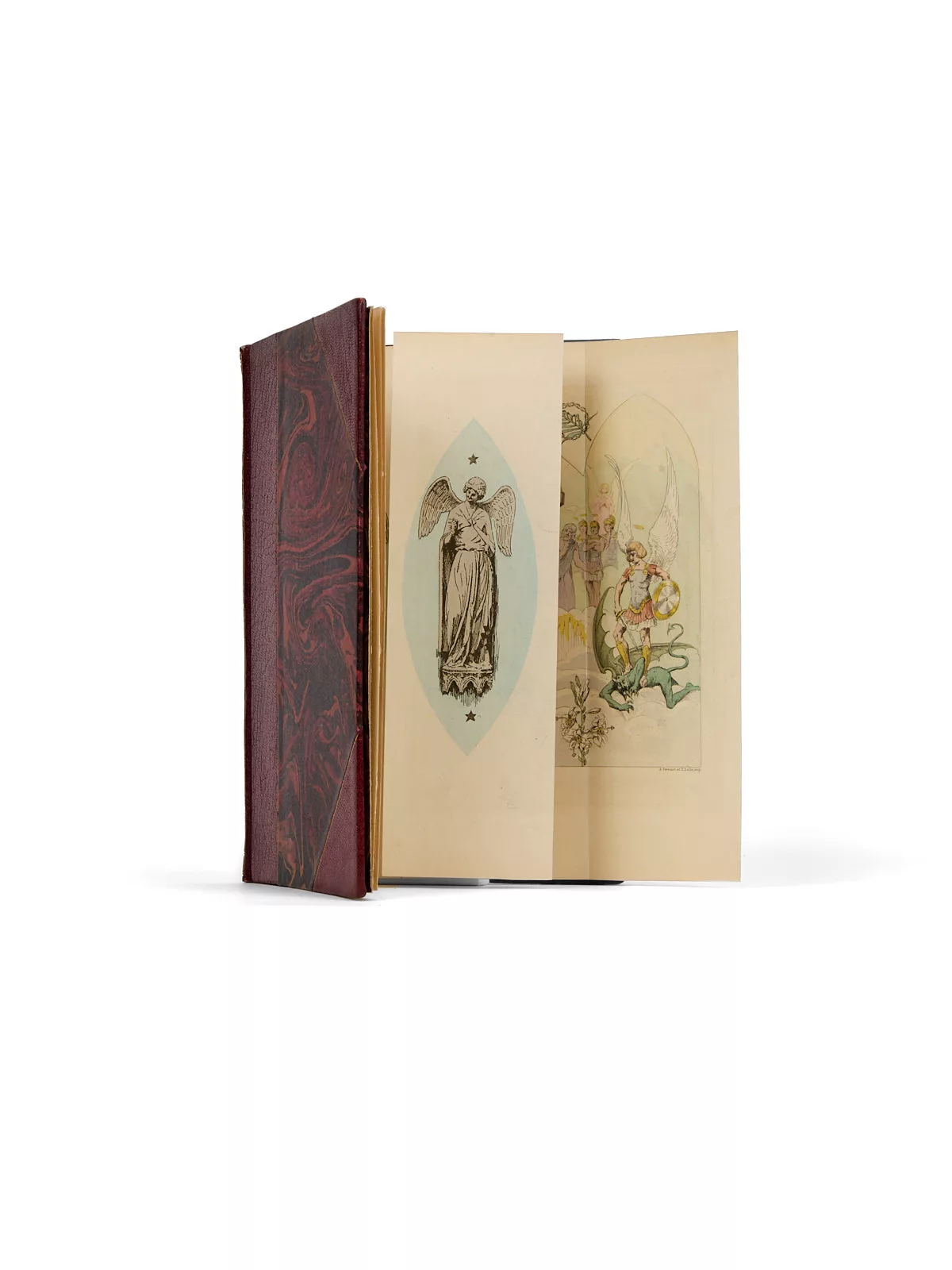
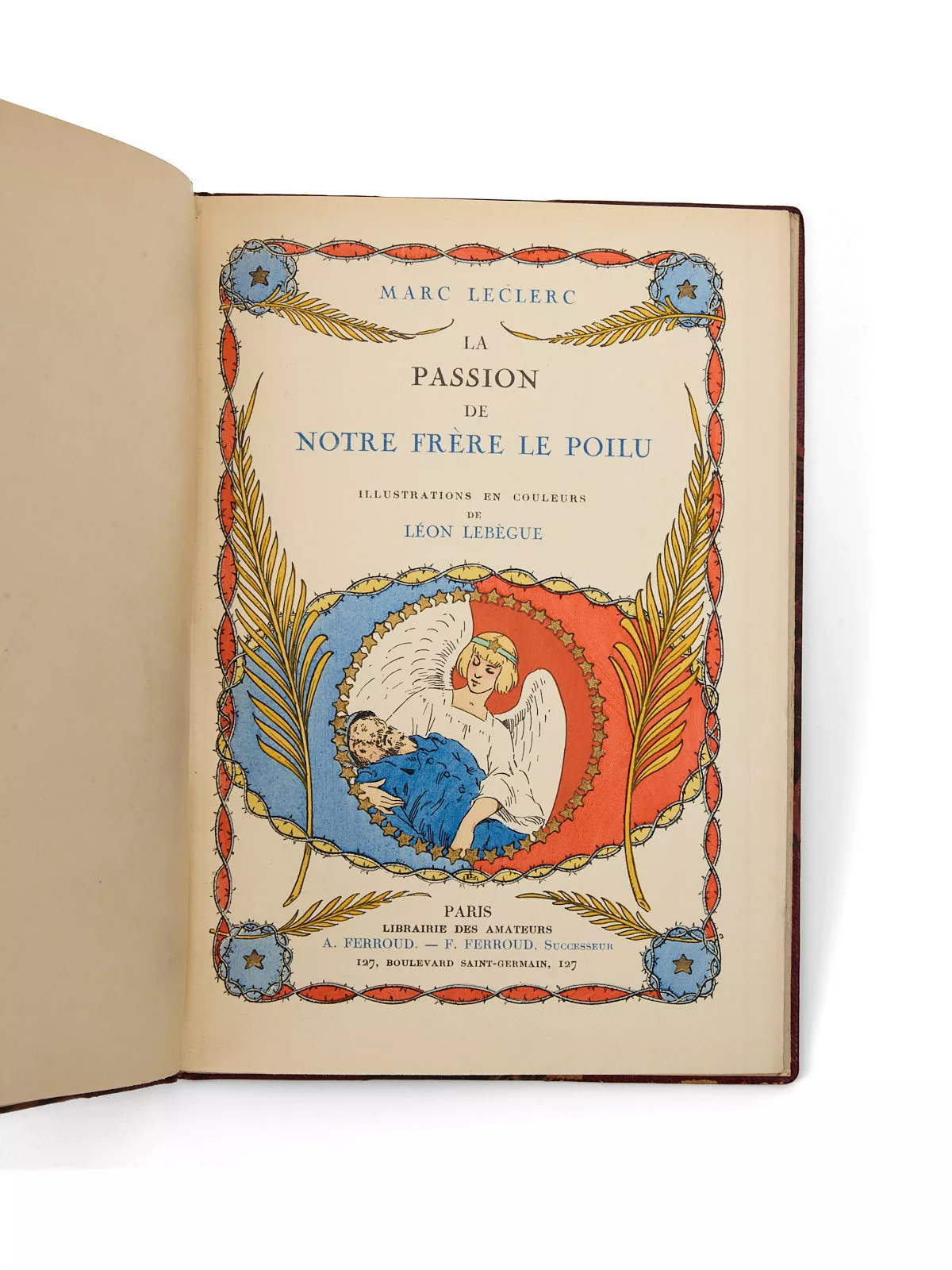
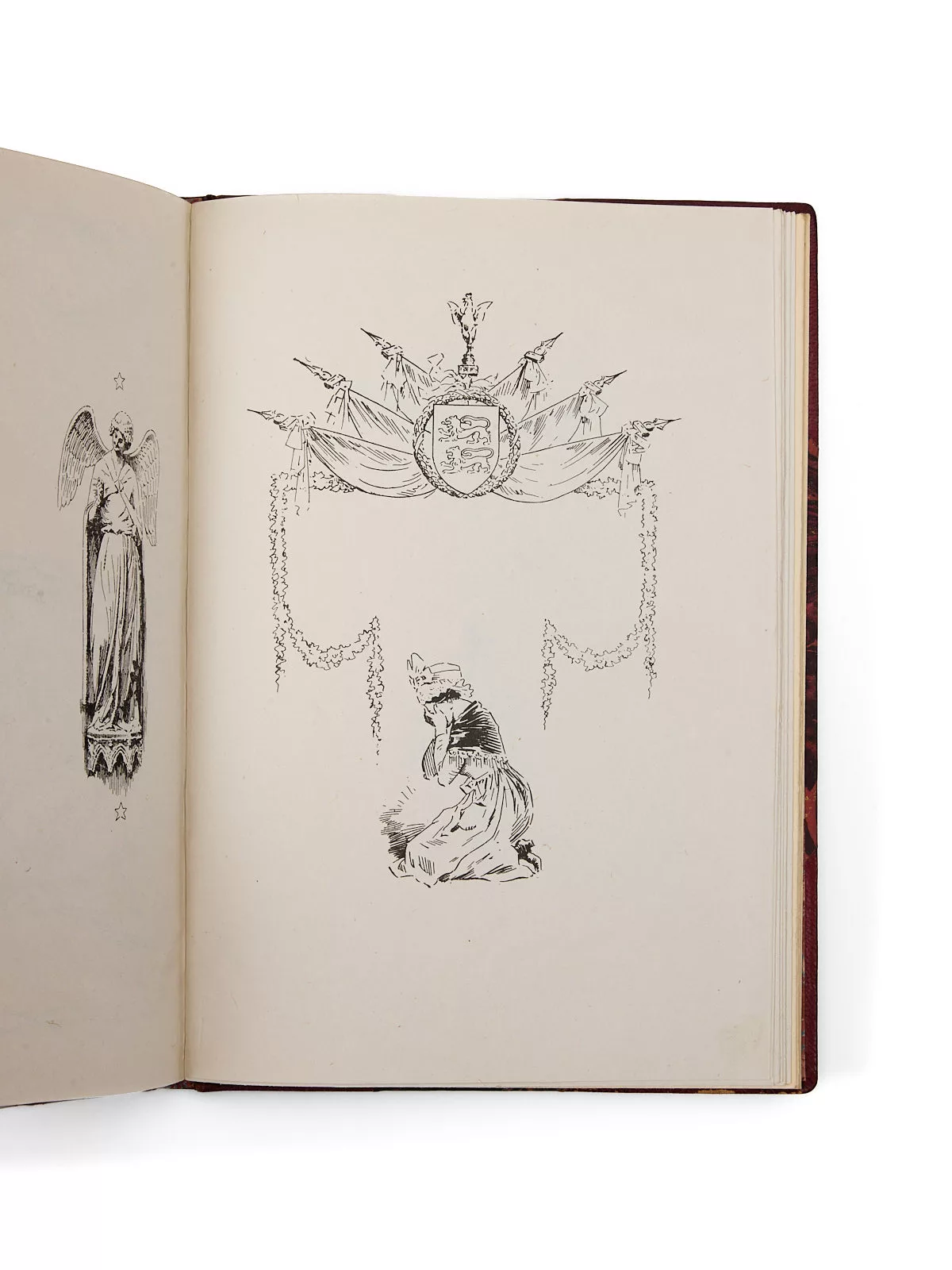
One of 190 copies on Imperial Japan paper, numbered and signed by the publisher, with a suite in black and a second state of the frontispiece in color (no. 138).
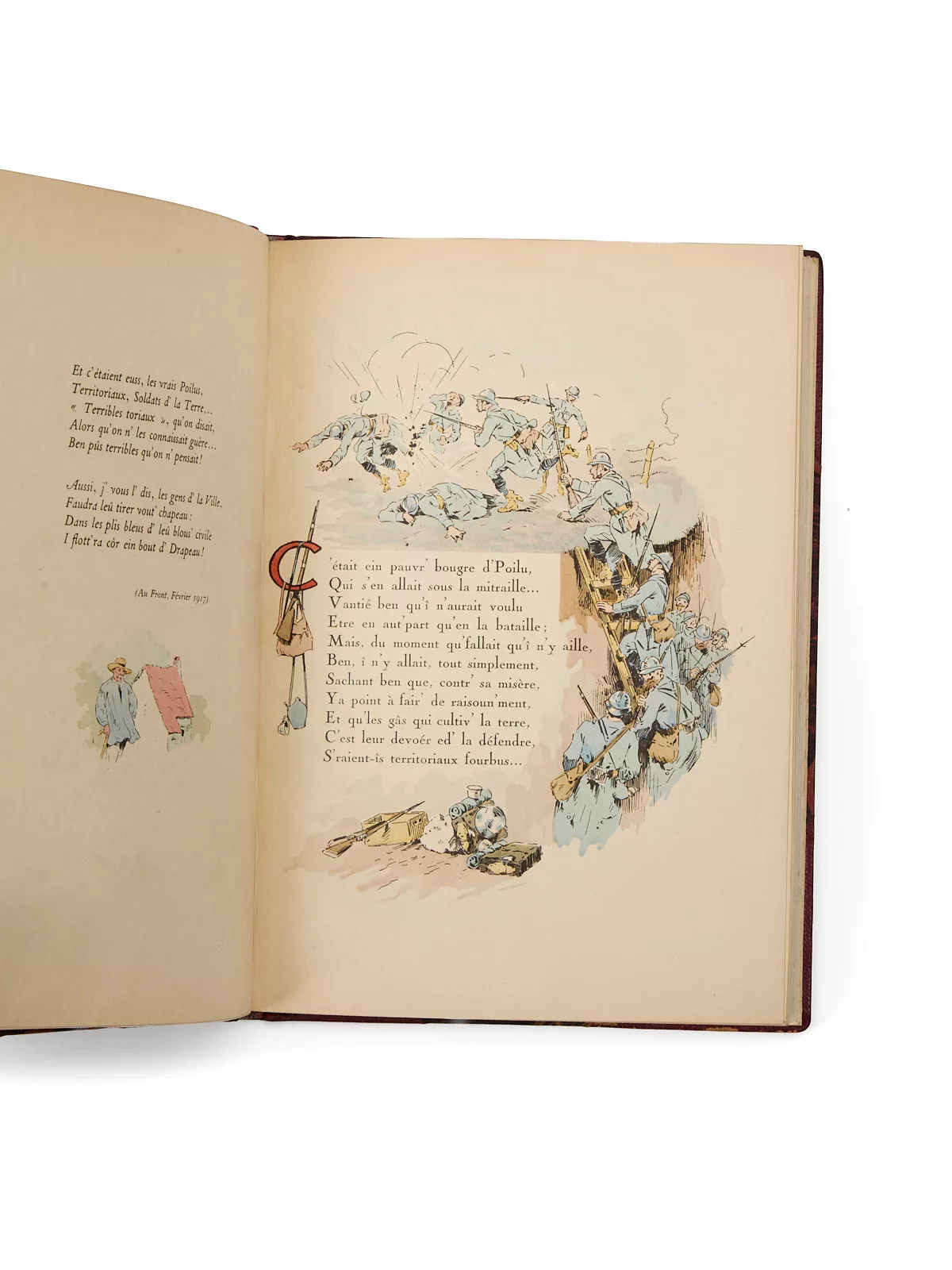
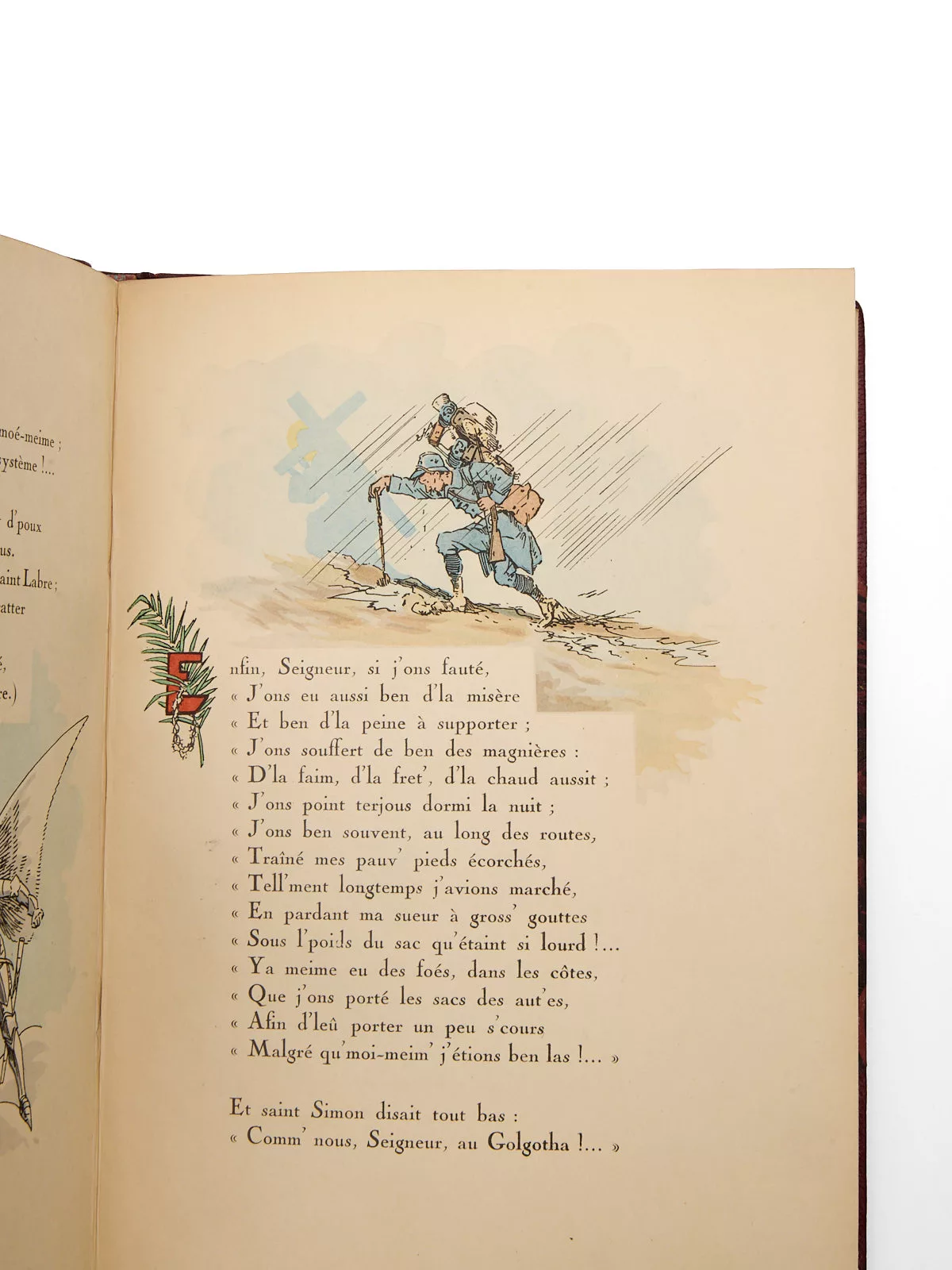
La Passion… is a poem in Angevin dialect, composed in 1916 “near Verdun,” where the author — then a mobilized officer — transposed the soldier’s sacrifice into a popular passion play: a poilu “brother,” a peasant of Anjou, presents himself at the gates of Paradise and must answer before the assembly of saints. Creator of the Rimiaux — rhymed poems and tales in the Angevin dialect — Marc Leclerc had established himself from the beginning of the century as one of the major voices of Anjou literature, alongside Émile Joulain and Yvon Péan. Born into a military family from Saumur, he first turned to the visual arts, training at the École normale d’enseignement du dessin under Eugène Grasset, before turning to journalism in 1904 (L’Angevin de Paris). The publication of the Rimiaux in 1913 established him as a poet of the soil, whose verve, rooted in the Angevin dialect, met with an enthusiastic public. The publication in December 1916, by Georges Crès, of the collection La Passion de notre frère le Poilu was awarded the Prix Jean-Revel by the Société des Gens de Lettres as the best regionalist book, underscoring the singularity of this familiar epic in which humor, fervor and fraternity counterpoint the tragic: a new rimiau elevated to the dignity of an ex-voto for the dead of 1914–1918.
The 1917 Ferroud edition constitutes the great illustrated edition: every page is decorated by Léon Lebègue, with a large folding triptych frontispiece, vignettes and full-page color illustrations — a sumptuous production that fixed the iconography of the text. This edition also had a hors commerce printing for the society “Les XX,” one of the few books published during the war and the only illustrated one.
A very fine work and a very fine copy.