

La Mort propagande
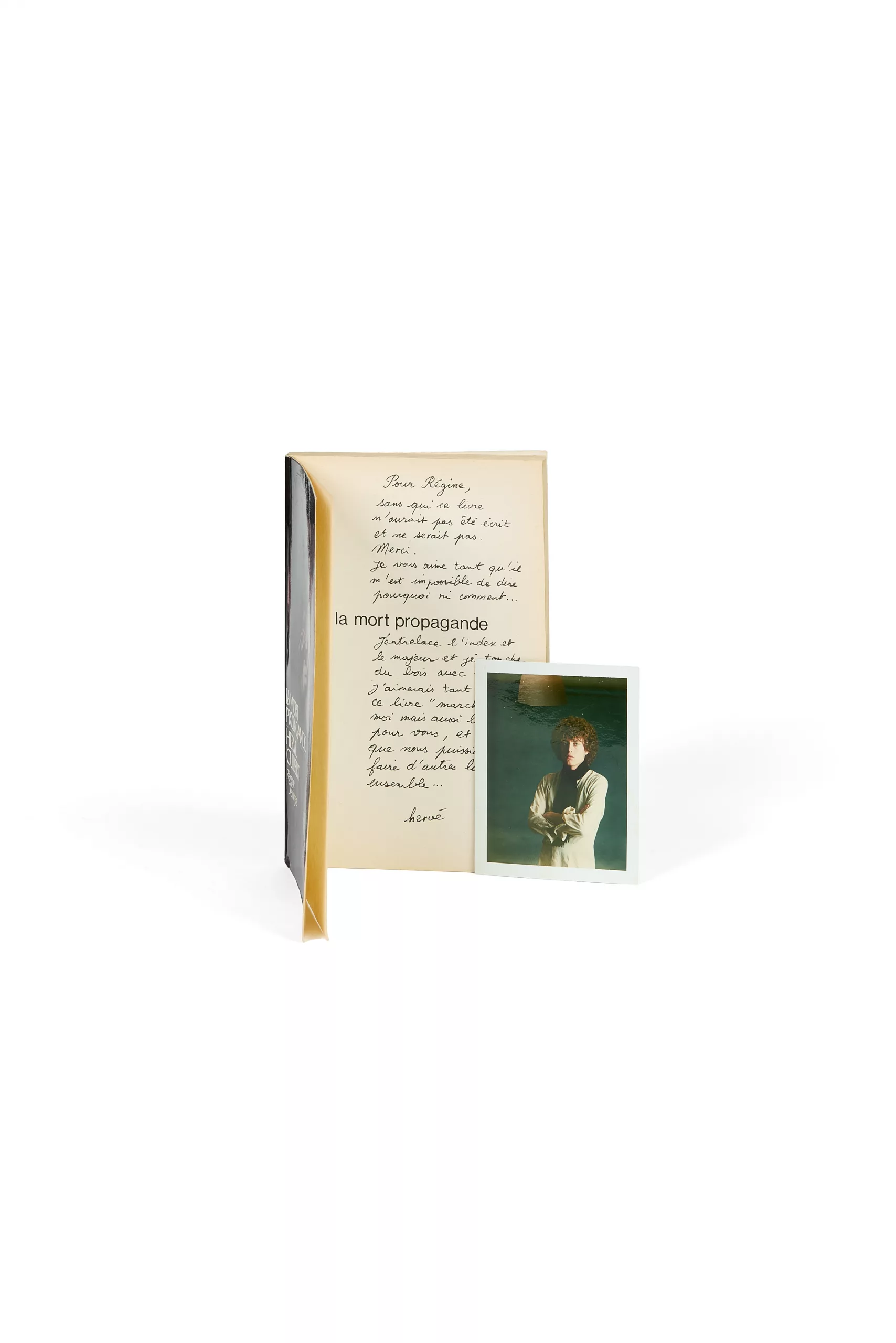
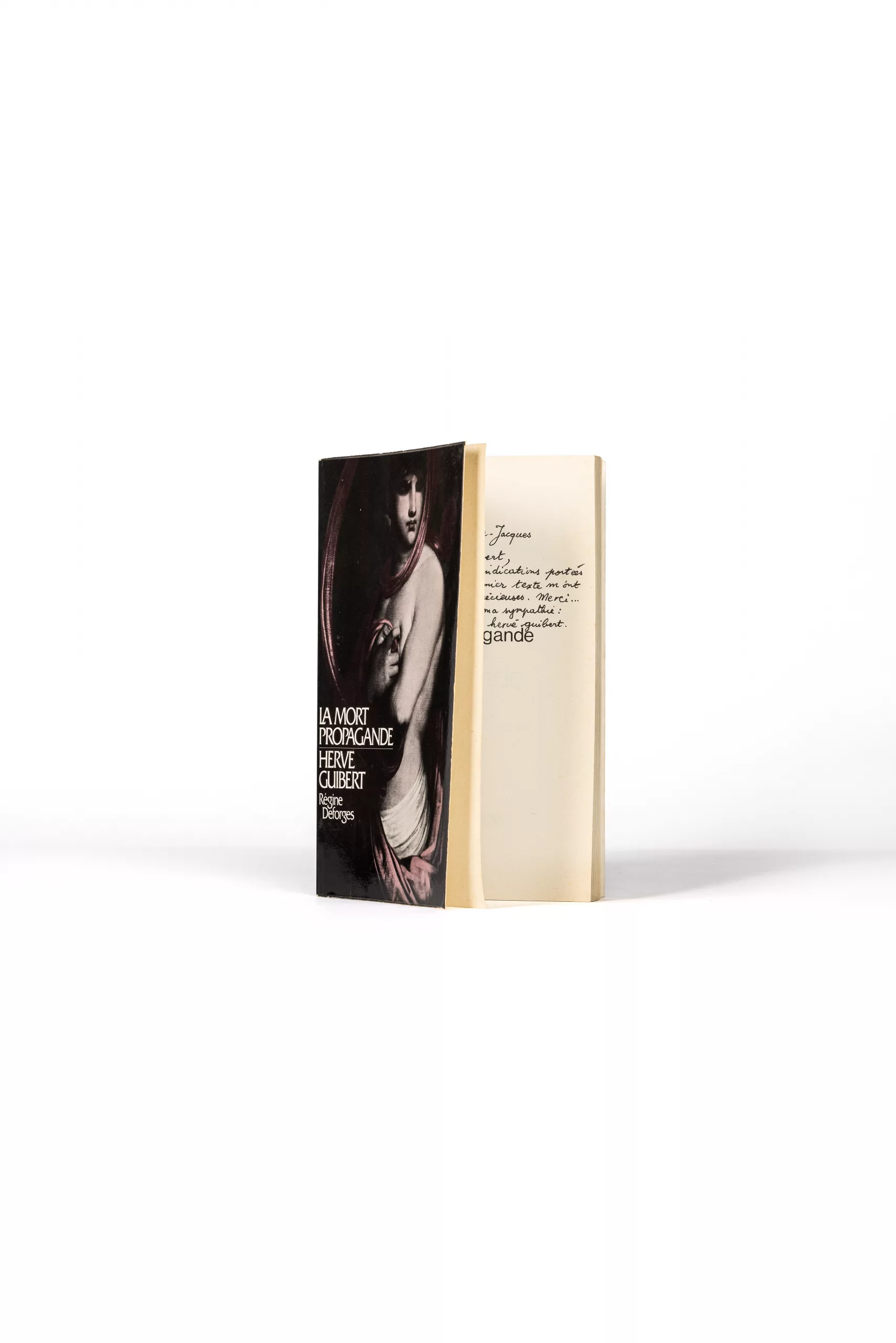
Presentation copy inscribed by Guibert to Jean-Jacques Pauvert:
“Pour Jean-Jacques Pauvert, dont les indications portées sur le premier texte m'ont été très précieuses. Merci…Avec toute ma sympathie : Hervé Guibert.”
Hervé Guibert's first book, here with an especially fitting provenance: that of Jean-Jacques Pauvert, co-publisher of the text and its second reader.
Hervé Guibert’s first book, here with an especially fitting provenance: that of Jean-Jacques Pauvert, co-publisher of the text and its second reader.
Paris, March 1967. Having already opened several bookshops, in Paris and in the provinces, Régine Deforges decided that year to launch her own publishing house, L’Or du temps (a tribute to André Breton). Noting how few erotic books were being published, she resolved to fill that gap, assisted by Jean-Jacques Pauvert, who was also her lover.
She wrote to Aragon to secure the rights to Le Con d’Irène, which was attributed to him. He never replied, and since the book still had no official author, Régine Deforges was able to publish it in 1968 under the title Irène. “This act of self-censorship, the only one I ever committed, did not prevent the book from being seized on 22 March 1968,” forty-eight hours after it went on sale. Régine Deforges was convicted of offending public morals and temporarily stripped of her civil rights. This was only the beginning: her editions of Pierre Louÿs’s Trois Filles de leur mère and André Hardellet’s Lourdes, lentes… would in turn drag her before the least erotic of chambers: the 17th correctional chamber of the Paris court.
The publishing house then went dormant, to be revived at the end of the 1970s. “I met Hervé Guibert when he was seventeen. He was beautiful as a god, Satan personified. And no one would have dared publish his book. Then people like Michel Foucault and Roland Barthes fell on it like a plague on the lower clergy. They loved it for the wrong reasons: because a very pretty young man was talking about gay sex. Hervé was fooled, but not for long. His book was premonitory, it announced AIDS. Of all the books I had published, it was the most dangerous, the most shocking and the most timely. A formidable, deeply unsettling book,” she admitted in L’Enfant du 15 août, her memoirs in which she settled her accounts in 2013, a year before her death.