

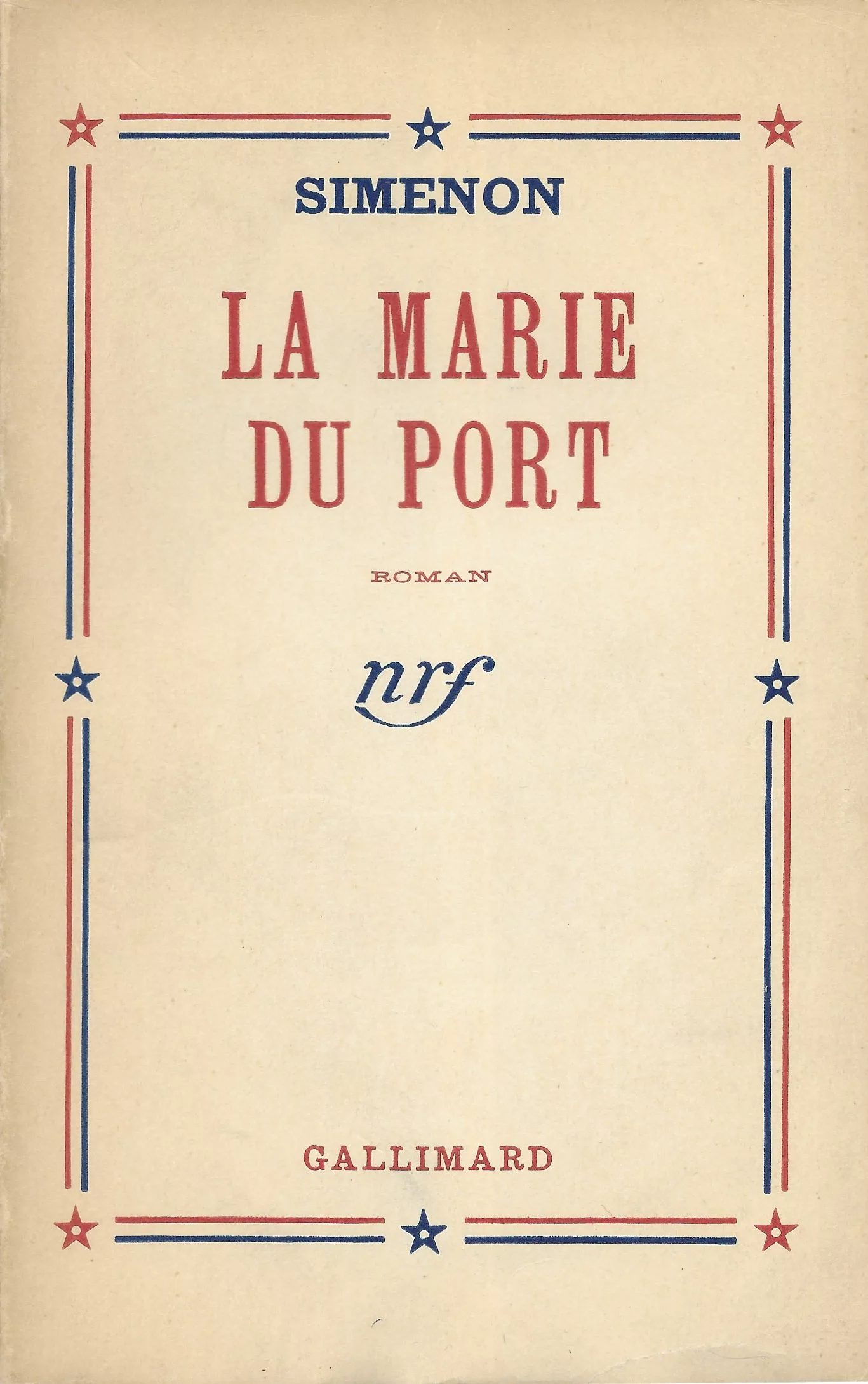
La Marie du port
One of 30 copies on Alfa Lafuma-Navarre (no. 22).
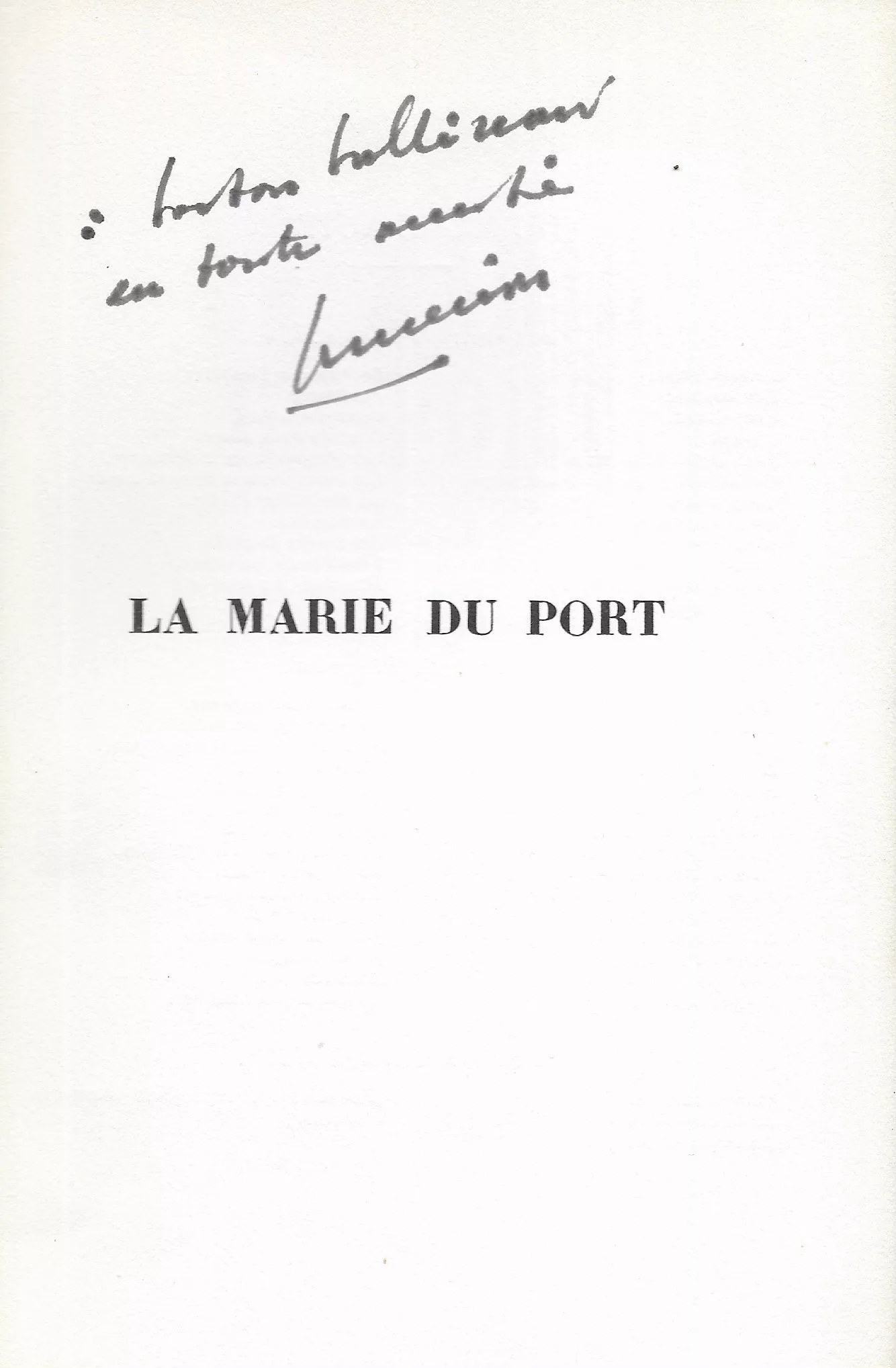
Signed presentation inscription: “à Gaston Gallimard, en toute amitié, Simenon.”
La Marie du port is, most unusually for Simenon, a novel written on the very setting of its action, at the Hôtel de l’Europe in Port-en-Bessin (Calvados). There is no murder here, but a romantic trap centered on the fisherman Jules Le Flem: when he dies, he leaves five orphans, each of whom must go to live with a relative. Odile, the eldest, takes charge and settles in Cherbourg with her lover Chatelard, owner of a café and a cinema. Marie, seventeen, wishes to remain in Port-en-Bessin and takes a job as a waitress at the Café de la Marine…
The novel first appeared as a serial in the daily Le Jour, from 15 January to 6 February 1938 (in 23 installments). In November 1938, in the pages of the Nouvelle Revue Française, Simenon also published a reflection on his craft as a novelist and on the turning point that the writing of La Marie du port represented in the development of his work.
A precious copy, presented to Gaston Gallimard.
The first contract between Simenon and his publisher dates from October 1933: at a meeting that would become legendary, the novelist imposed extremely demanding terms on the head of the venerable house on rue Sébastien-Bottin, both in terms of publication rhythm and of royalties. After breaking with Fayard, Simenon entered a new stage in his career, abandoning the Maigret series. Le Locataire was the first non-series novel published by Gallimard, a new kind of production that the author called the “roman dur”, corresponding to his new ambitions. The publishing relationship lasted about ten years, until Simenon met Sven Nielsen, who founded Presses de la Cité in 1945, where Pedigree would be published. From the Gallimard period remain Simenon’s most famous “romans durs”: Malempin, La Veuve Couderc, Chez Krull, Le Bourgmestre de Furnes, and this Marie du port.
Marcel Carné adapted the novel for the screen in 1950, starring Jean Gabin and Nicole Courcel, with dialogue by Jacques Prévert and Georges Ribemont-Dessaignes, and a screen adaptation by Louis Chavance. It is now considered a classic among Simenon adaptations, prized for its cinematic qualities, Gabin’s transformation (long before he would become Commissioner Maigret), and Nicole Courcel’s striking performance, which introduced to the screen a new kind of woman determined to seize the power traditionally held by men.