

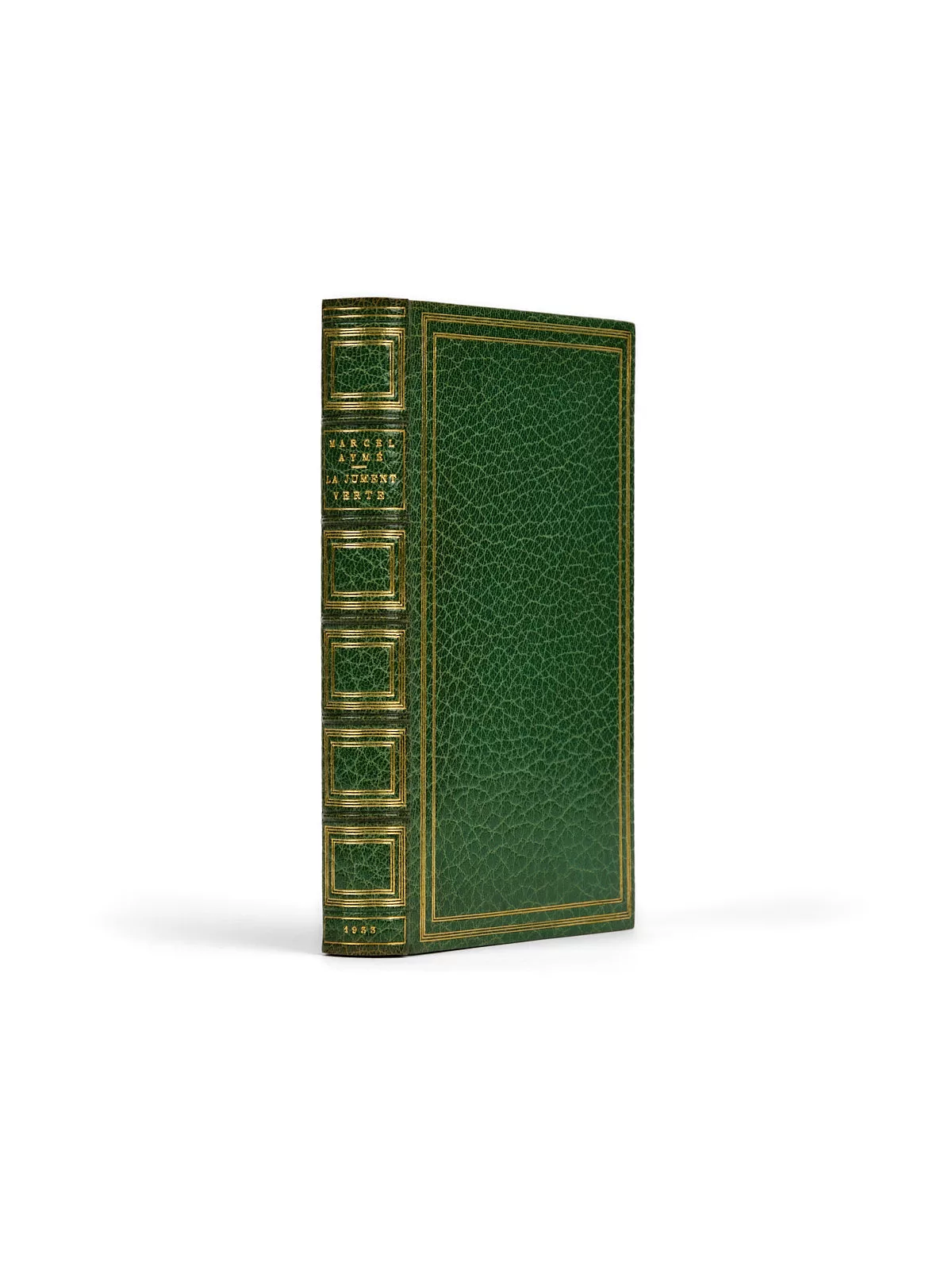
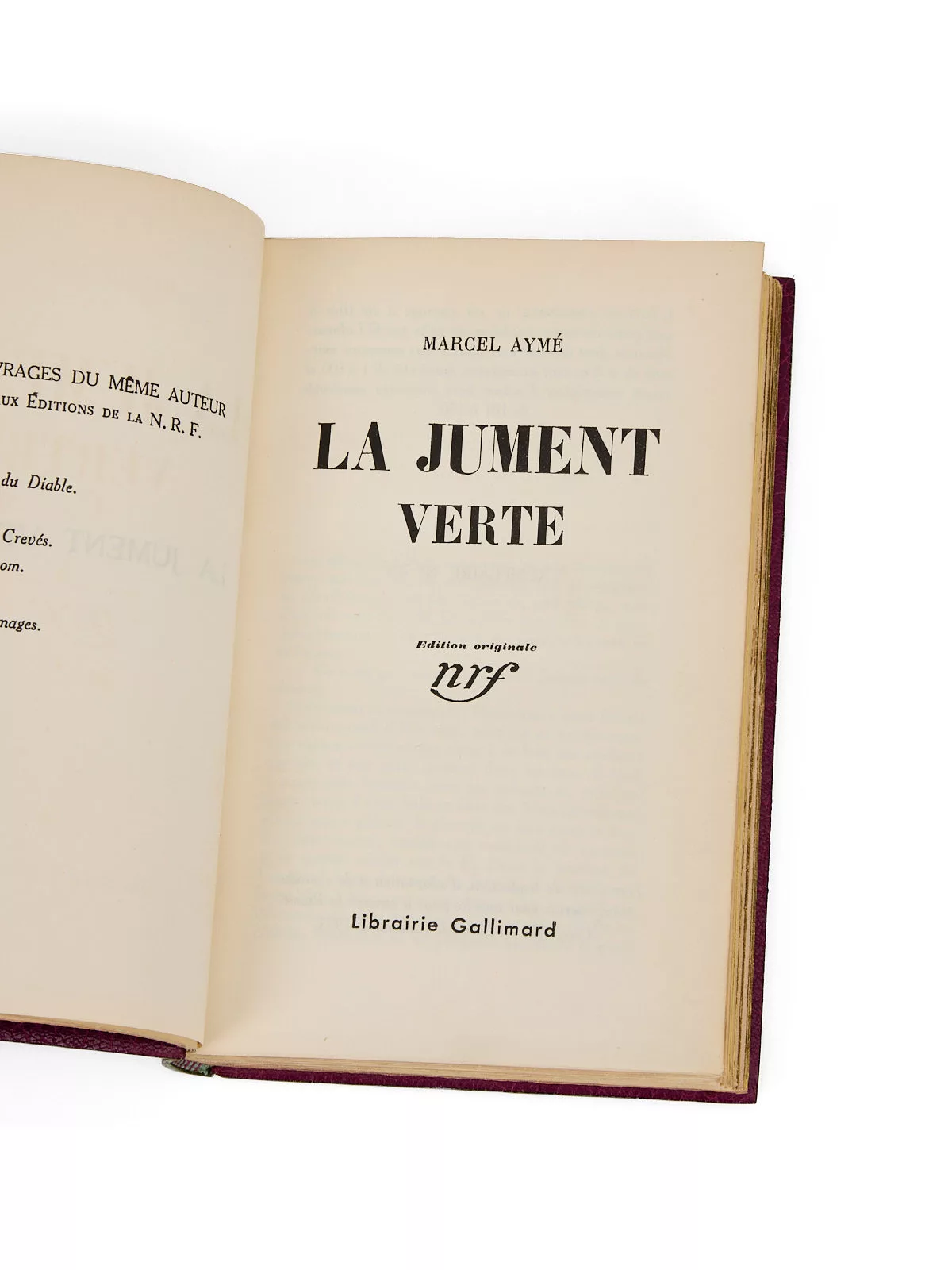
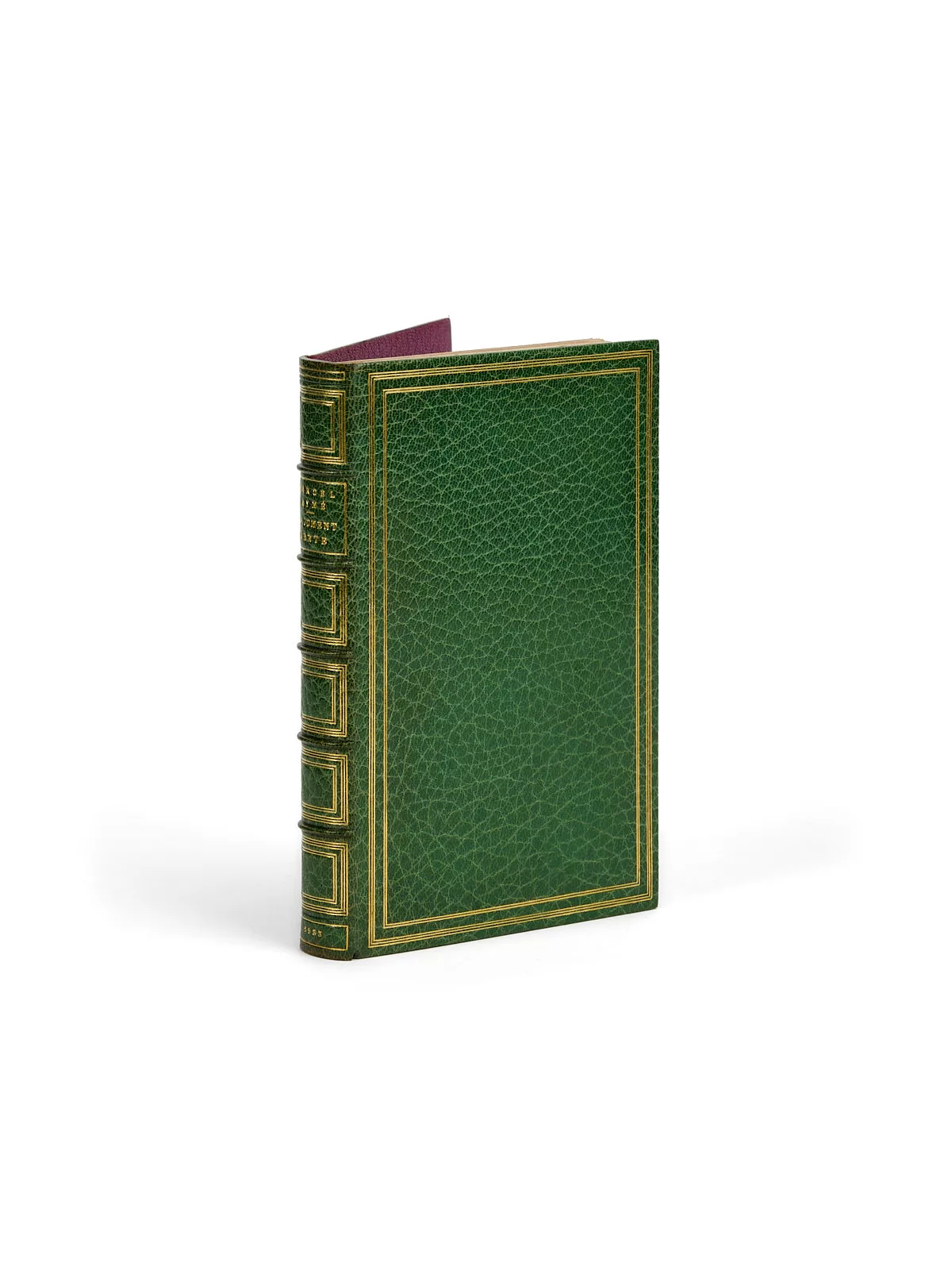
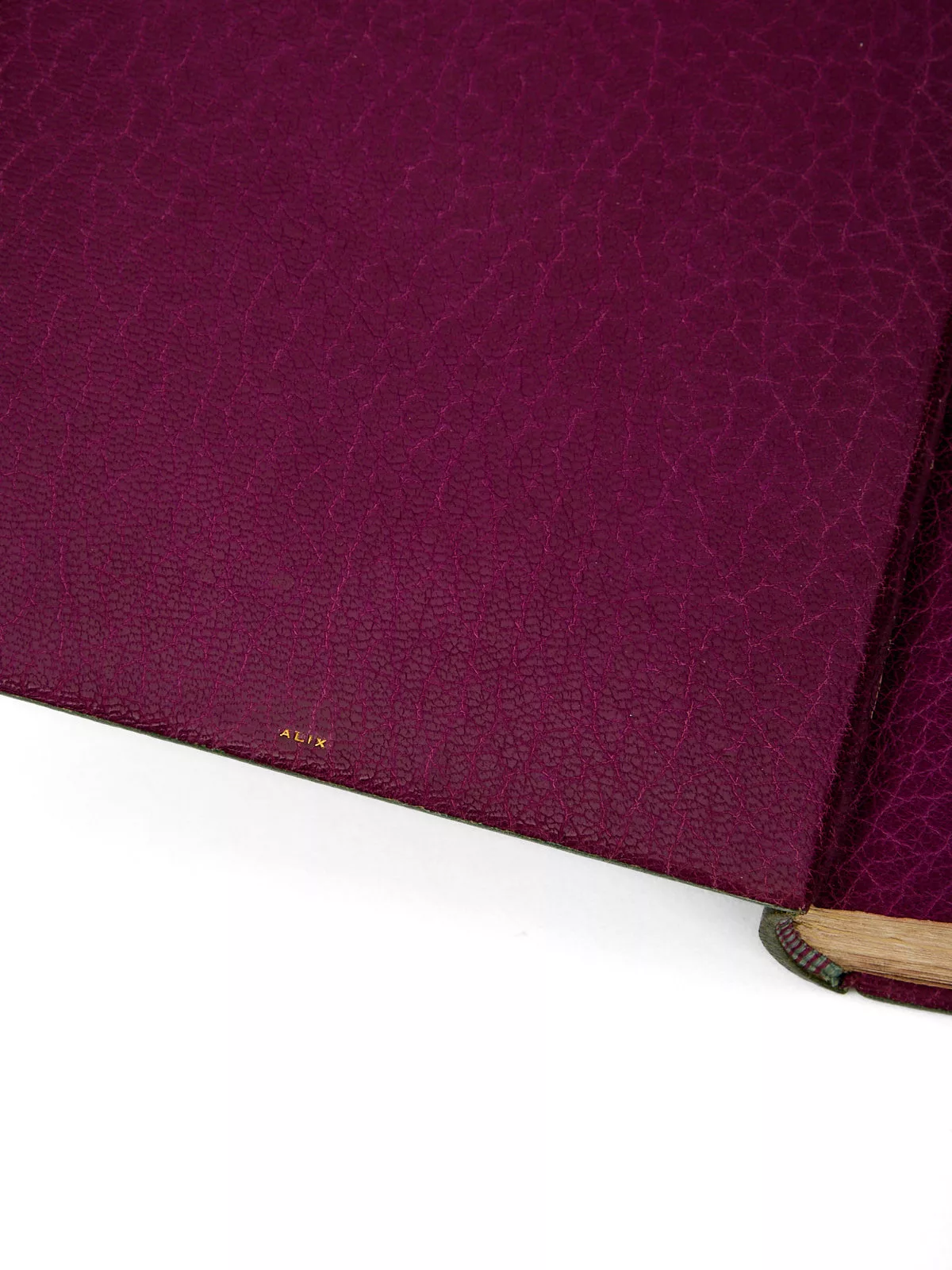
La Jument verte
One of 147 copies from the deluxe issue on vélin pur fil.
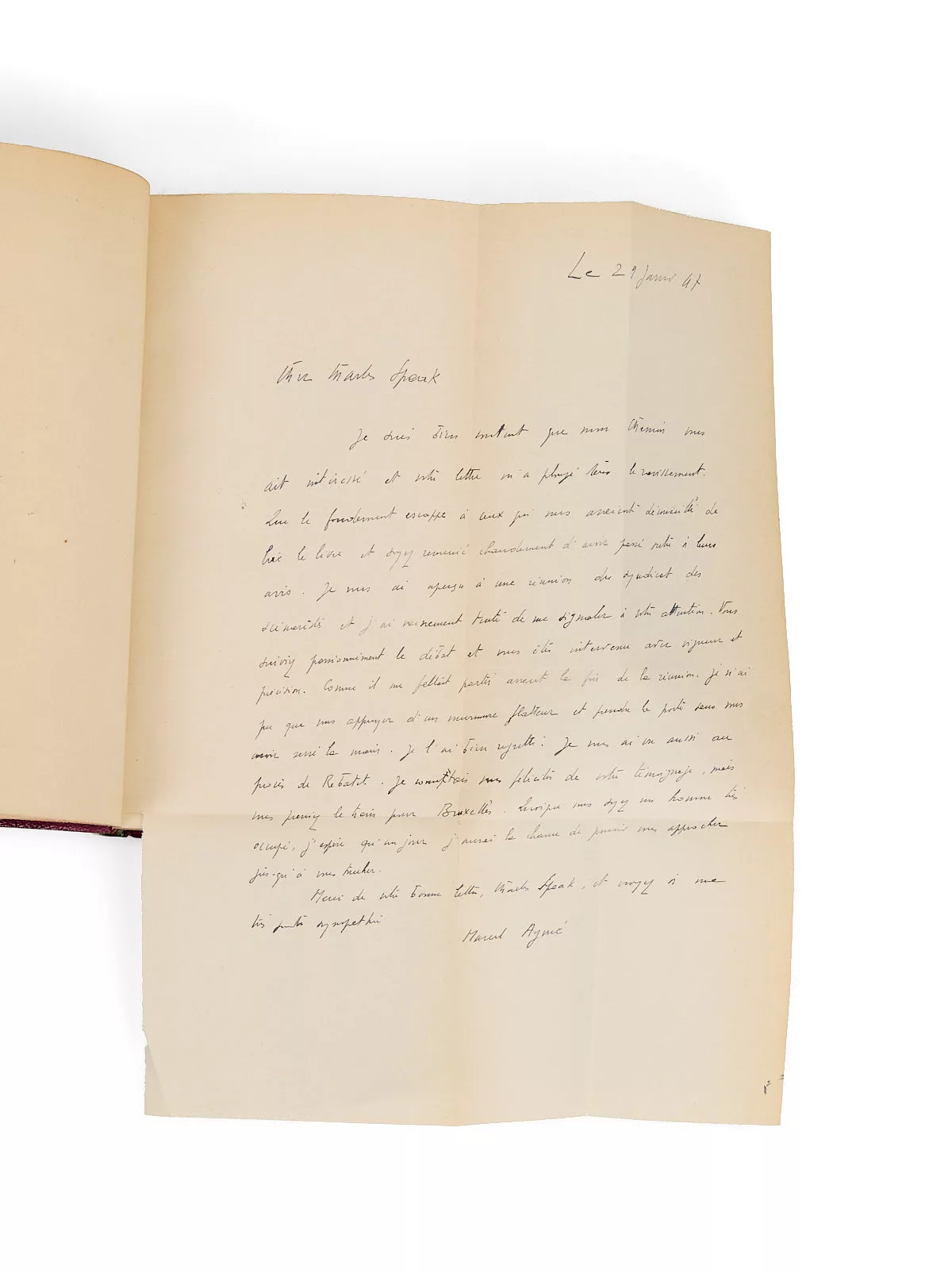
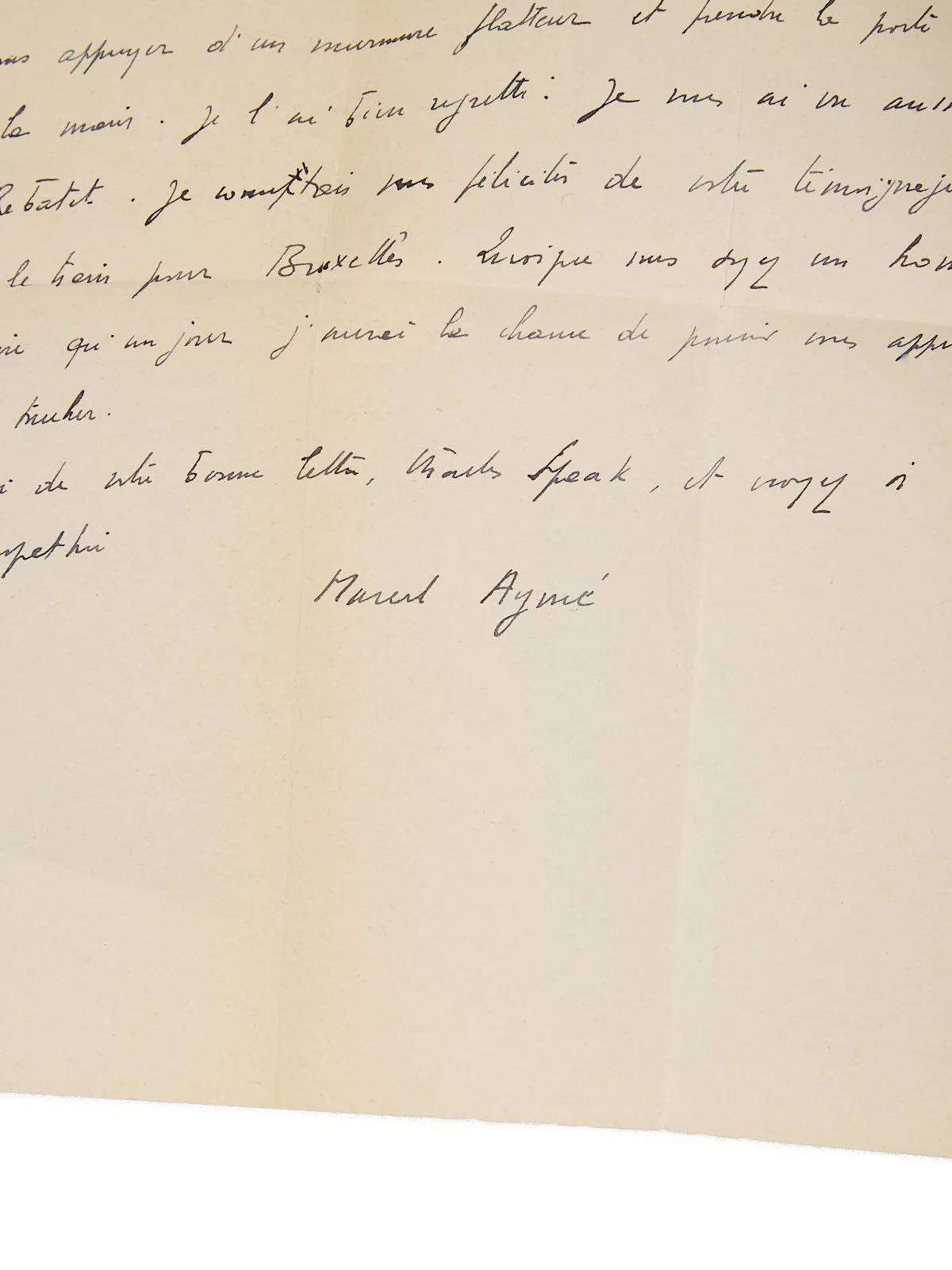
Autograph letter signed, mounted at front: “Mon cher Spaak, Je suis bien content que mon Chemin vous ait intéressé et votre lettre m'a plongé dans le ravissement. Que le fondement échappe à ceux qui vous avaient déconseillé de lire le livre et soyez remercié chaudement d'avoir passé outre à leurs avis. Je vous ai aperçu à une réunion du syndicat des scénaristes et j'ai vainement tenté de me signaler à votre attention. Vous suiviez passionnément le débat et vous êtes intervenu avec vigueur et précision. Comme il me fallait partir avant la fin de la réunion je n'ai pu que vous appuyer d'un murmure flatteur et prendre la porte sans vous avoir serré la main. Je l'ai bien regretté. Je vous ai vu aussi au procès de Rebatet. Je comptais vous féliciter de votre témoignage, mais vous preniez le train pour Bruxelles. Quoique vous soyez un homme très occupé, j'espère qu'un jour j'aurai la chance de pouvoir vous approcher jusqu'à vous toucher. Merci de votre bonne lettre, mon cher Spaak, et croyez à ma très grande sympathie. Marcel Aymé.”
This copy is enriched with an interesting autograph letter signed by Marcel Aymé to Charles Spaak, dated 29 January 1947, discussing Le Chemin des écoliers and the trial of Lucien Rebatet.
Villers-Robert, the village in the Jura where Marcel Aymé spent his childhood, served as the model for Claquebue, the setting of this chronicle of French rural life in the aftermath of the 1870 war. Through family rivalries, passions, and political and religious quarrels, Aymé composes an irreverent satire of nineteenth-century provincial society.
Published in June 1933, La Jument verte was well received by critics. A line from Ramon Fernandez’s review in Marianne, published that July, was notably used in its promotion.
Adapted for the screen by Claude Autant-Lara in 1959, La Jument verte caused a genuine scandal on its release. Deemed obscene, the film was banned to under-18s and subject to municipal bans, notably in Corrèze. In Tours, where it was banned to under-21s, some screenings are said to have taken place with the house lights left on.
An important autograph letter signed by Marcel Aymé to Charles Spaak, one of the leading screenwriters of French cinema from the 1930s to the 1950s.
Born in Brussels, the son of playwright Paul Spaak and brother of statesman Paul-Henri Spaak, Charles Spaak settled in Paris in the late 1920s. He worked notably with Jacques Feyder (Le Grand Jeu, La Kermesse héroïque), Julien Duvivier (La Belle Équipe), Jean Renoir (La Grande Illusion) and Jean Grémillon (Le Ciel est à vous). He later collaborated with André Cayatte on several films dealing with judicial and moral questions, notably Justice est faite and Nous sommes tous des assassins.
In this letter of 29 January 1947, Marcel Aymé warmly thanks Spaak for his reception of his latest novel, Le Chemin des écoliers, published the previous year, and thanks him for disregarding the advice of those who had warned him against reading it. The letter takes on particular significance when Aymé mentions the trial of Lucien Rebatet, author of Les Décombres, sentenced to death in November 1946.
The correspondence between the two men reflects an ongoing literary relationship attested by several notable copies. Known examples include inscribed copies of Travelingue (Piasa, bibliothèque François Mitterrand, lot 48) and of Le Chemin des écoliers (1946), as well as two other works accompanied by autograph letters from Aymé to Spaak: Le Passe-muraille and Le Vin de Paris.
These scattered testimonies sketch the outline of an ongoing relationship between the novelist and the screenwriter, nourished by literary exchanges and shared concerns about cinema and the events of the postwar period.