

La Joie
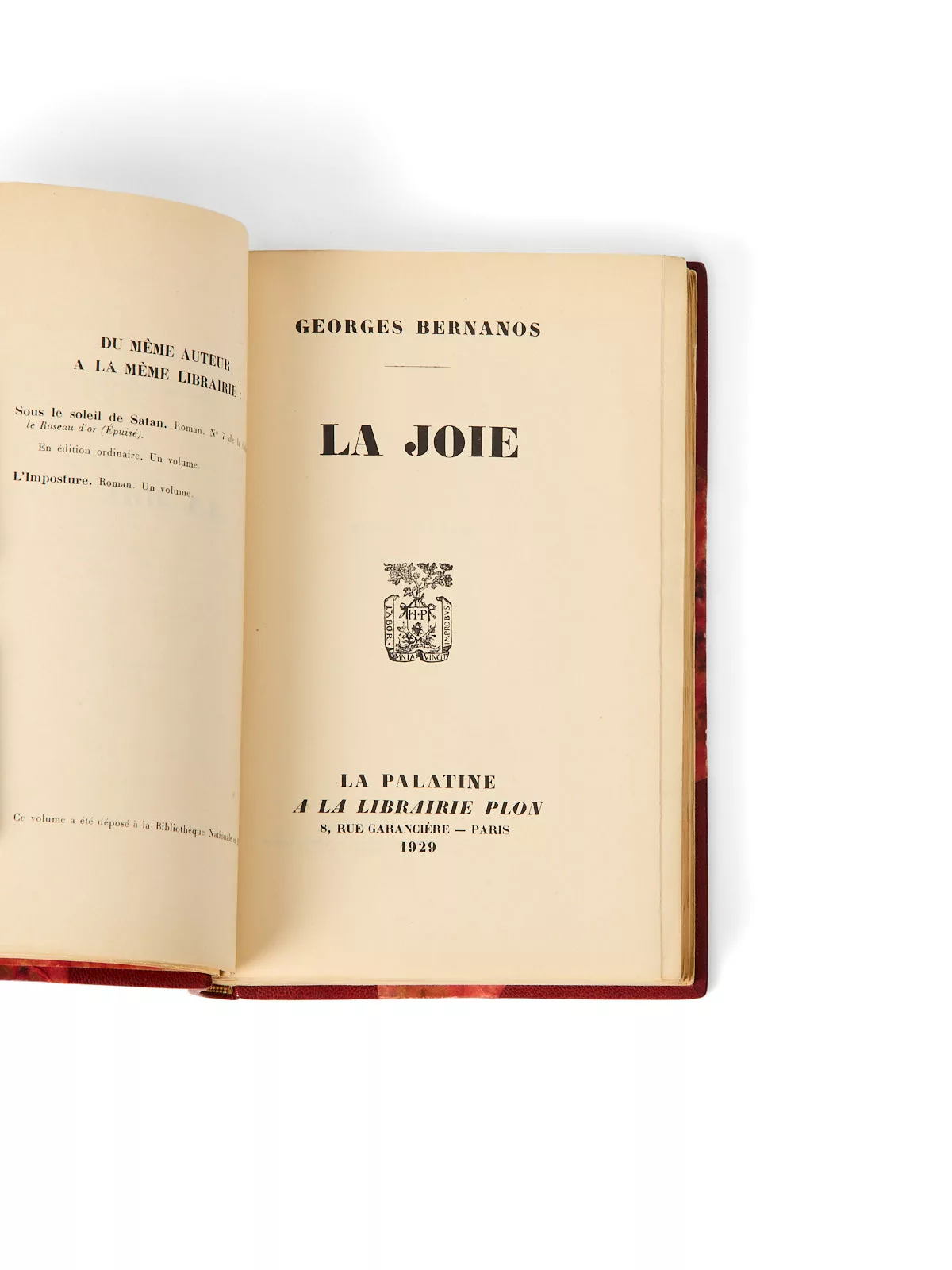
One of 82 copies on Imperial Japan paper (no. 70).
Buoyed by the considerable success of his very first novel, Sous le soleil de Satan, published in 1926, Georges Bernanos threw himself without delay into the feverish writing of L’Imposture, which narrowly missed the Prix Goncourt. Its sequel, the author’s third novel, was entitled La Joie — a joy quite unlike that of M. de Clergerie, a mediocre historian obsessed with his academic ambitions, who lives in his château in Artois. In this novel, Malraux would say, Bernanos “wrote the finest scenes in modern fiction, for their depth and power”; and for Mauriac, “the power of this dazzling work lies in its rough grip, which holds us within this universe of the Fall and Redemption, which is common to us all, believers and unbelievers alike. For one need not have faith to recognize oneself in it […].” Many readers agreed, and La Joie was awarded the Prix Femina.
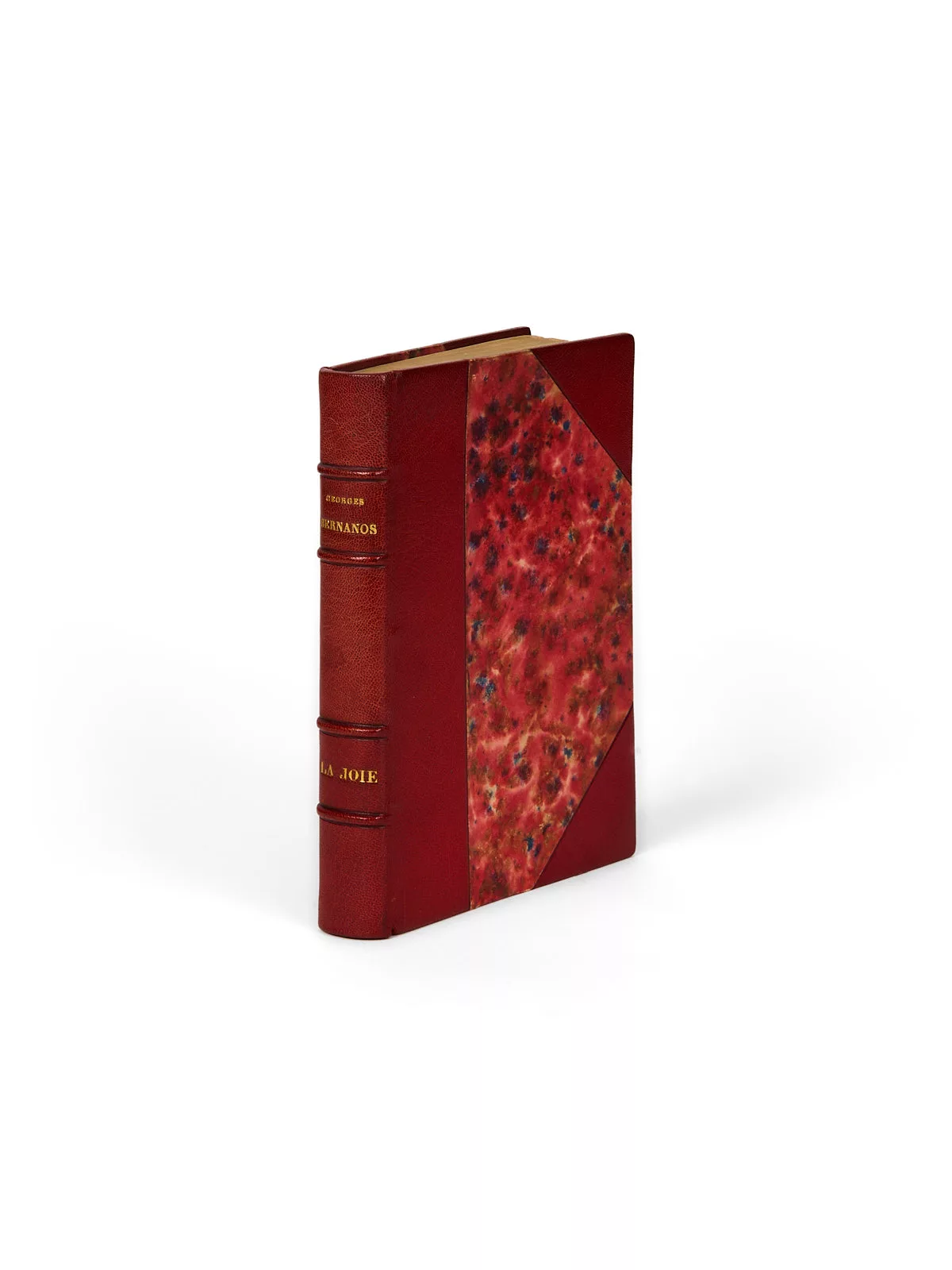
A good copy, in a strictly contemporary half red morocco binding, the work of Auguste Bernasconi, a bookbinder of Swiss origin active in the first half of the twentieth century. Established in Paris, rue de Seine, from 1906, he worked until the 1930s. He later went into partnership with the bookbinder Goix, avenue de Lowendal, until 1948.