

La Joie
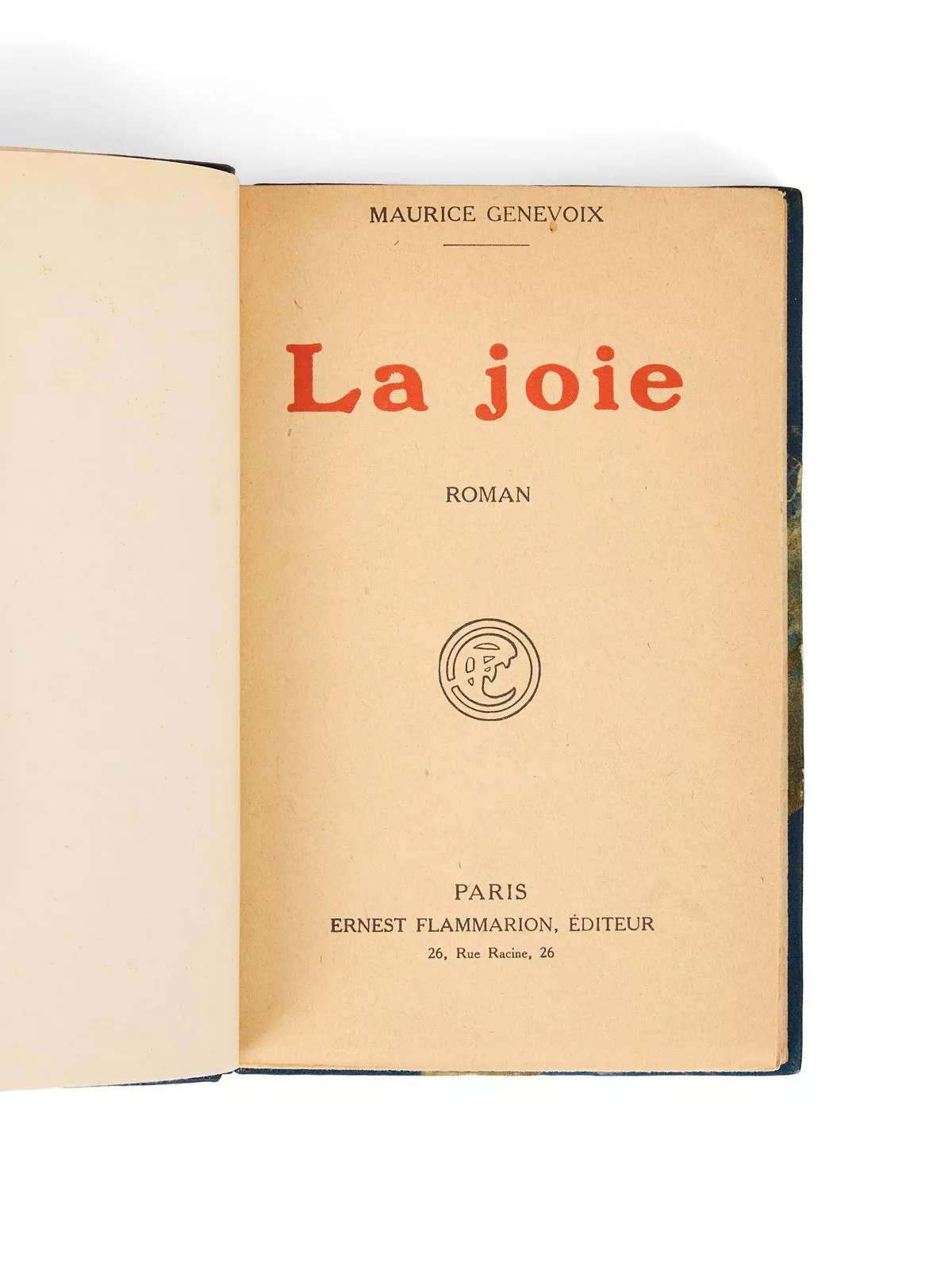
The novel follows a former officer, Pierre Andrianne, who lost a foot in the war and embarks on a political career, campaigning for a legislative election. The meeting that opens the narrative plunges us into the opposing camps: some advocate the military occupation of Germany, others wish to strip the country of its resources, while another, discharged for disability, urges caution and warns against humiliating the defeated enemy.
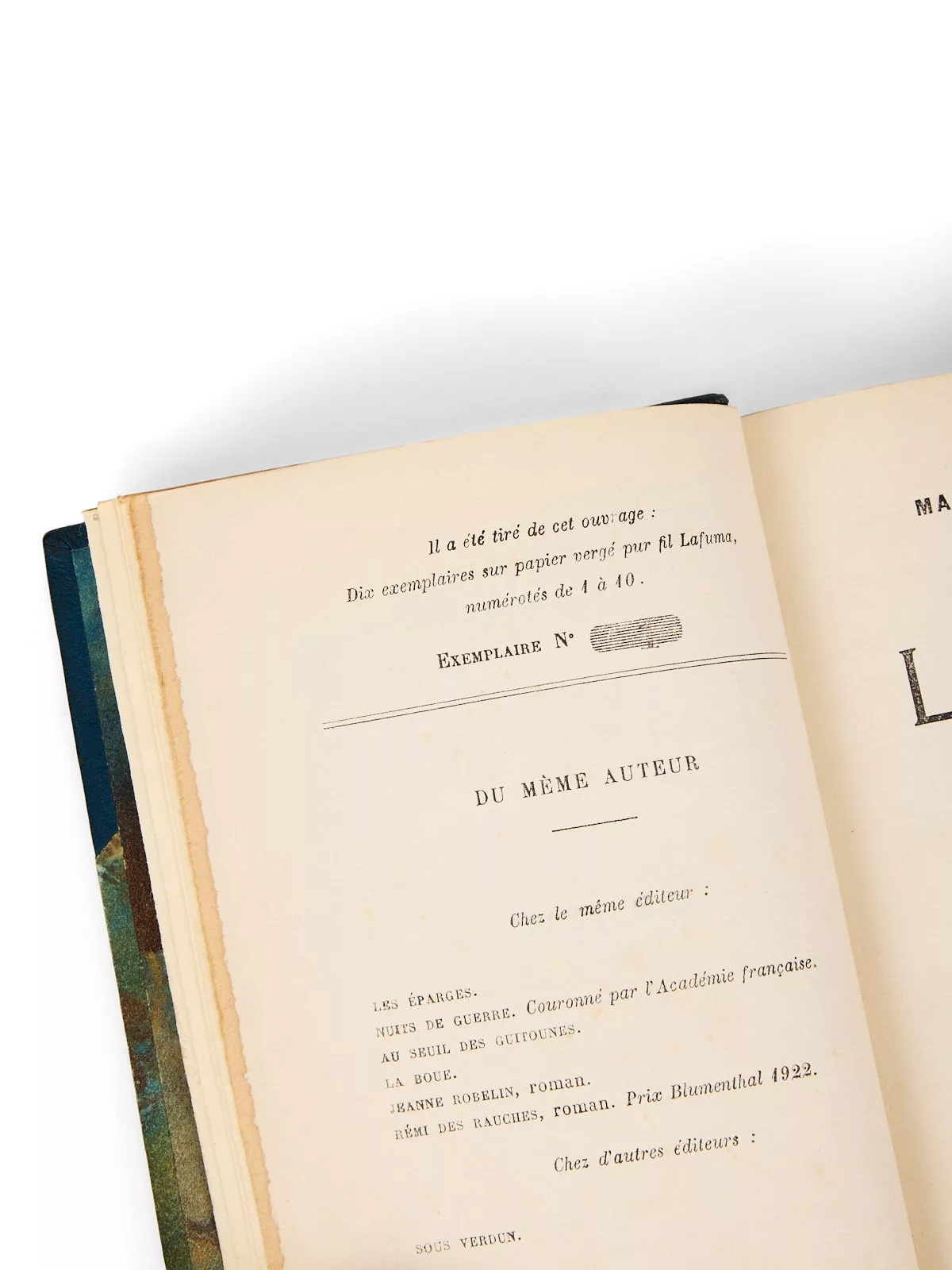
A novel of reconciliation, it follows Les Éparges, Genevoix’s final war narrative, published in 1923. As in Jeanne Robelin, published in 1920, Genevoix views the war from an even greater distance than the rear front, both geographically and literarily. Even so, both narratives have their rightful place among the works that make up Ceux de 14; the 1998 collected edition published by Omnibus incorporated La Joie and Jeanne Robelin, along with La Mort de près, written in 1971.
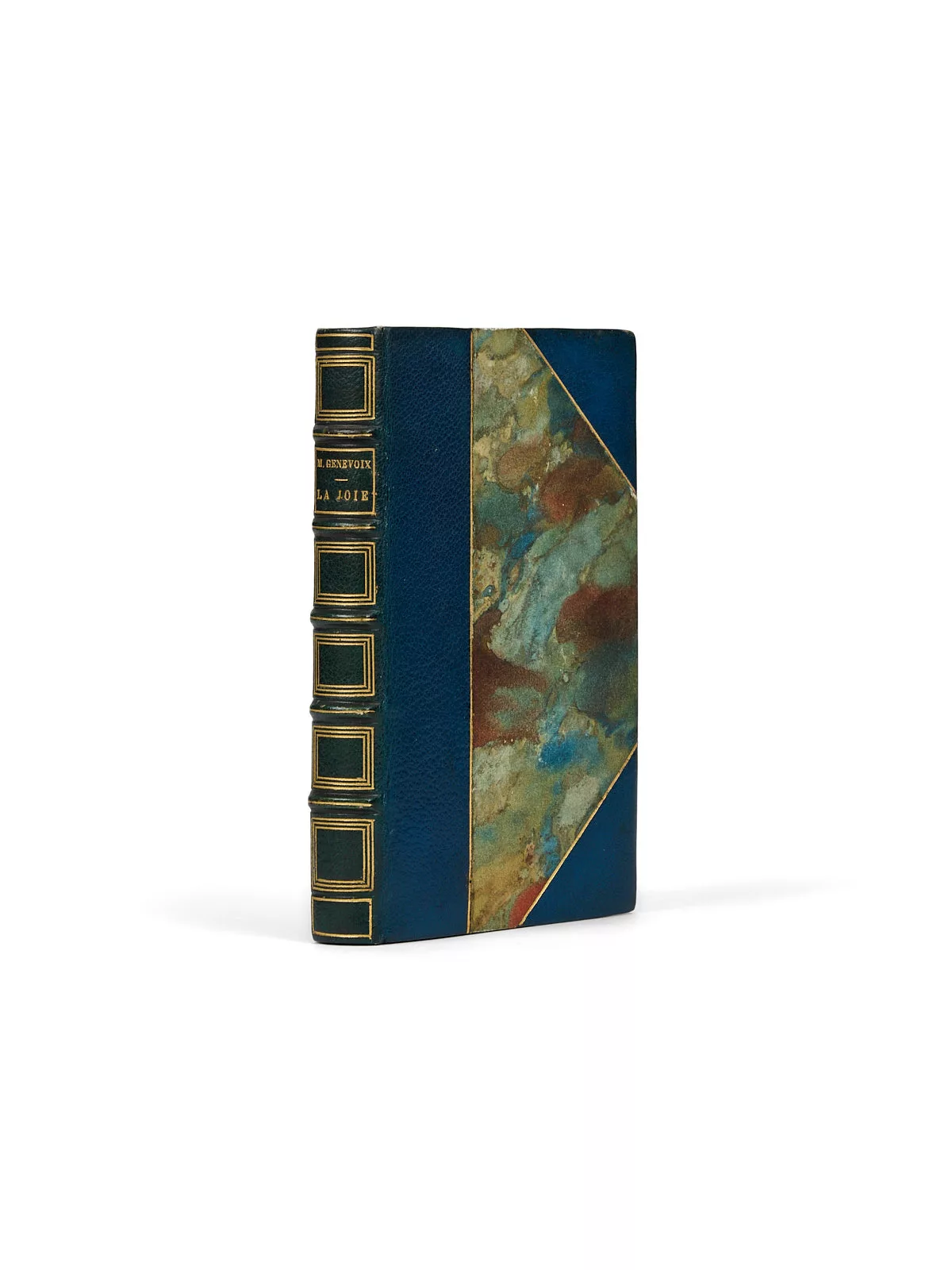
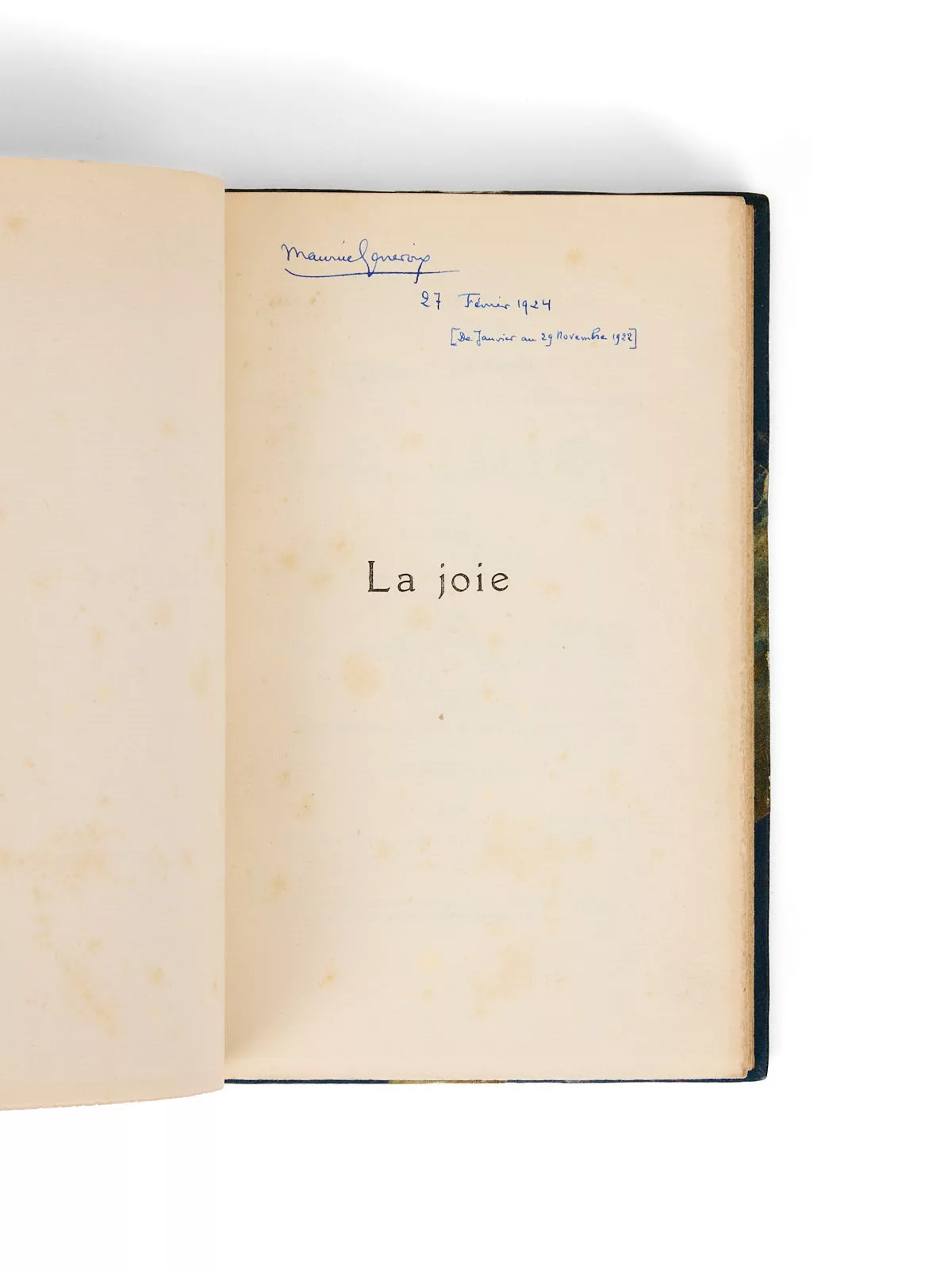
A fine copy, in the uniform binding Genevoix had made for his personal library.
From the library of Maurice Genevoix, at “Les Vernelles,” with bookplate.