

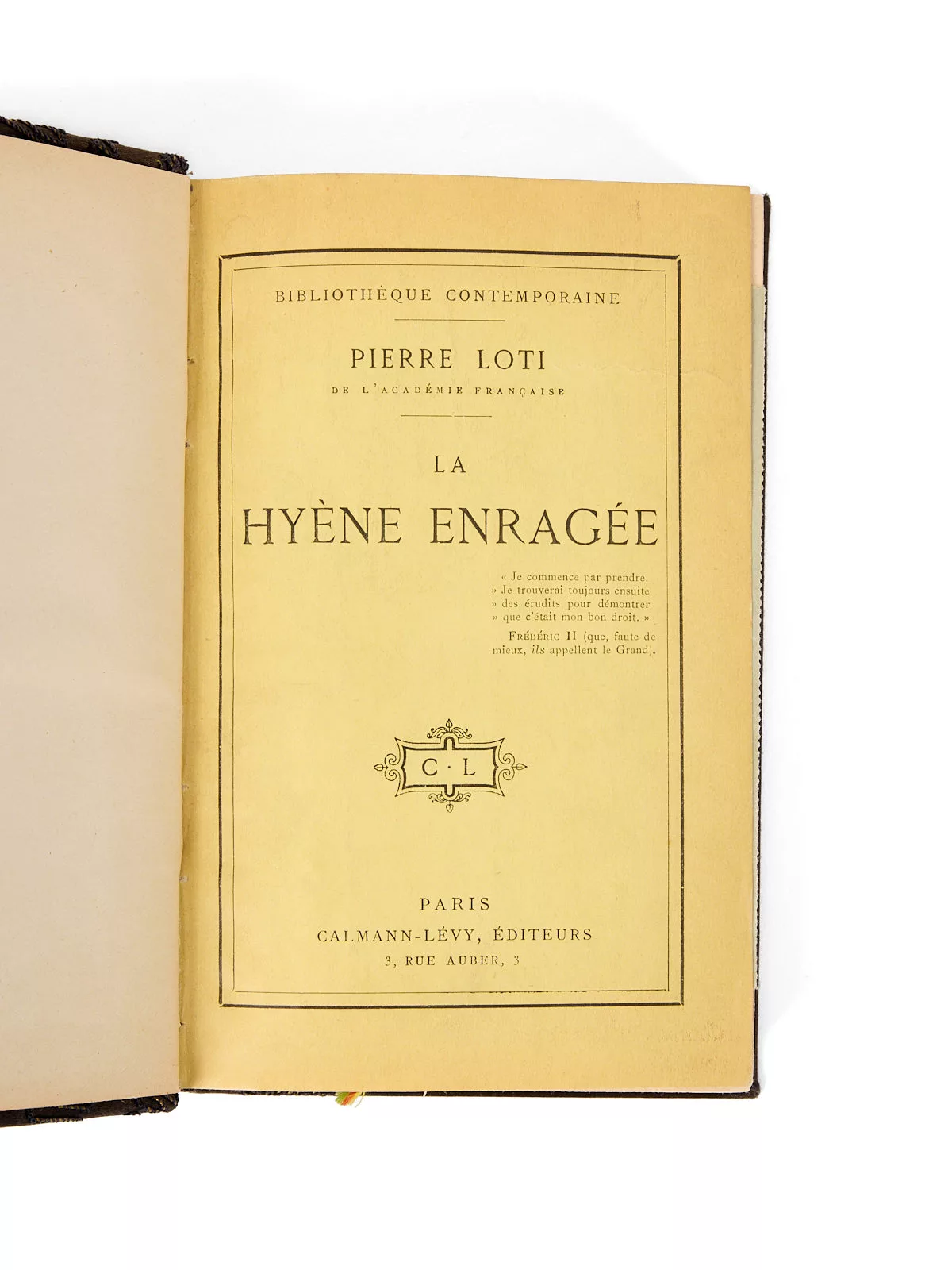
La Hyène enragée
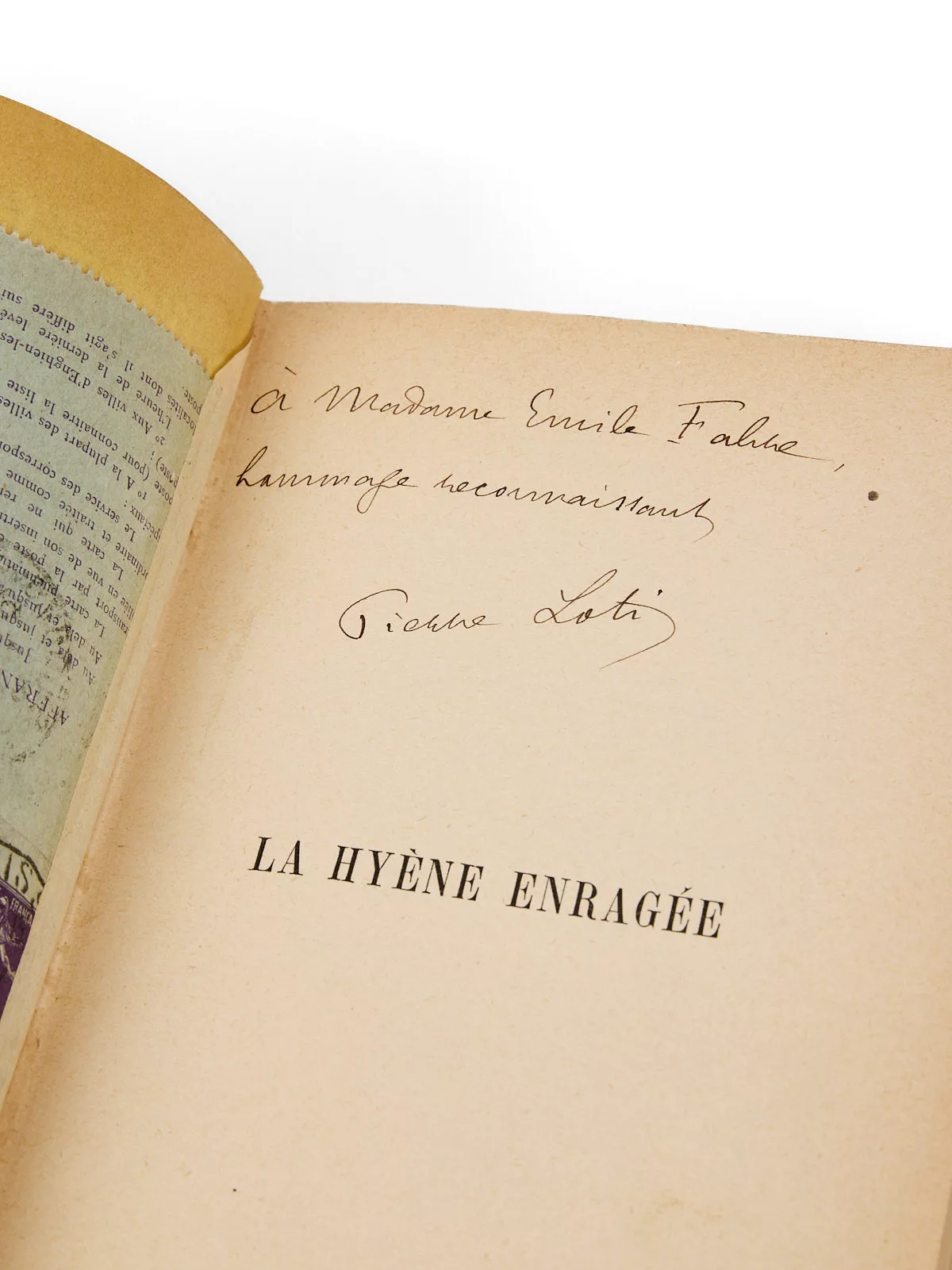
Presentation copy inscribed by Loti: “à Madame Émile Fabre, hommage reconnaissant, Pierre Loti.”
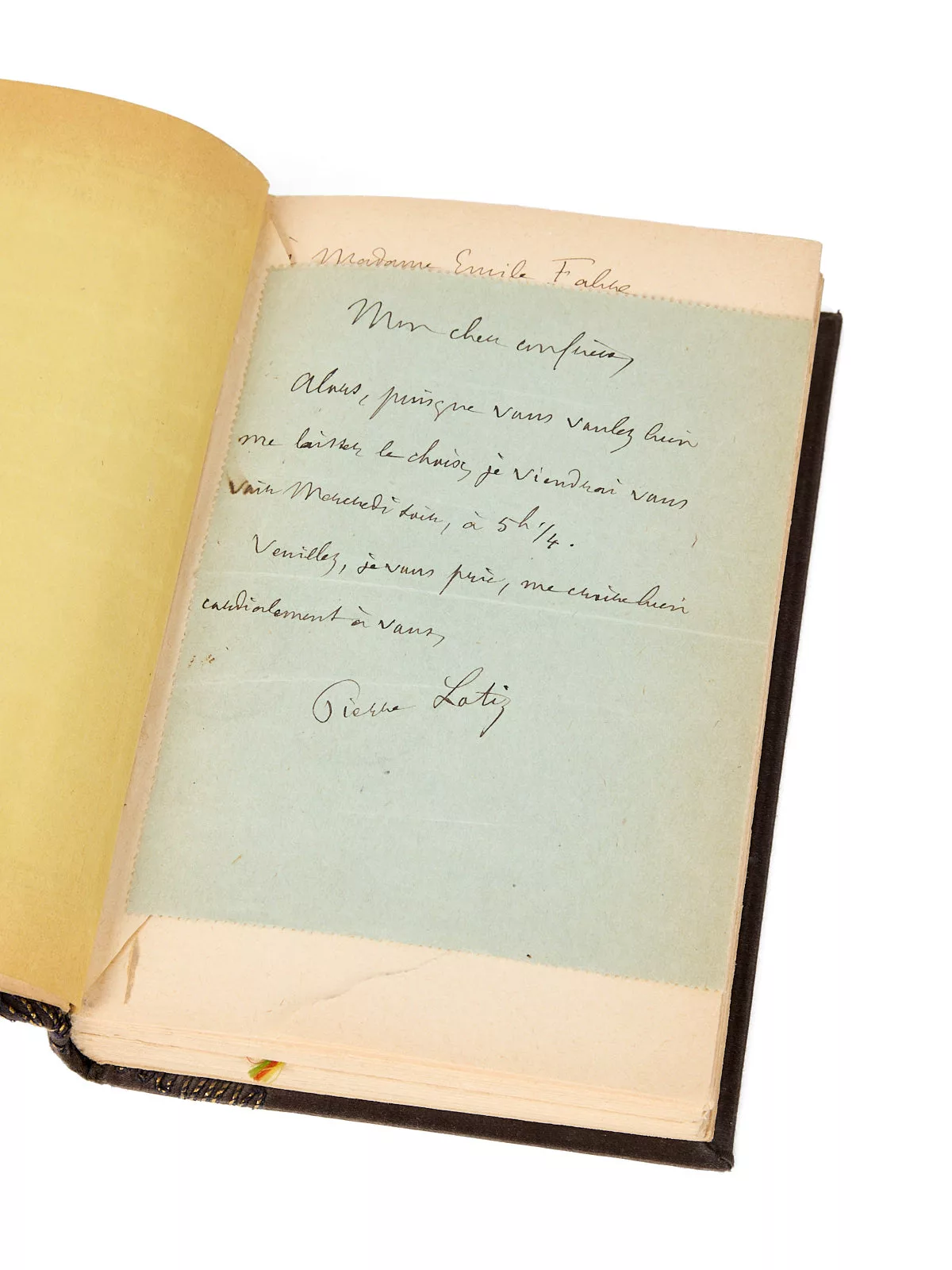
Mounted at front: an autograph note signed on a pneumatic card, addressed “à Monsieur Émile Fabre, directeur de la Comédie française.”
This collection of war writings brings together previously unpublished notes taken between August 1914 and April 1916, along with two pamphlets already published separately: La Grande Barbarie (sold for the benefit of Belgian war victims in 1915) and À Soissons, a text read by Loti at the Institut de France on 25 October 1915.
La Hyène enragée opens with the letter Loti addressed to the Minister of the Navy asking to be assigned to “any post that would bring me closer to the enemy.” As war broke out and his only son Samuel, a sergeant in the 77th Infantry Regiment, left for the front, Loti’s dearest wish was to go himself. But the former naval commander Lucien Viaud, known as Loti, was then sixty-four years old. It took the support of former Prime Minister Louis Barthou and of Raymond Poincaré for him to be finally appointed liaison officer with the rank of colonel to General Gallieni on 25 September 1914. Loti thus returned to service, not in the navy but, to his great frustration, assigned wherever he was needed for diplomatic missions, notably with Turkey, his second homeland. At his insistence, he was occasionally able to get closer to the fighting: the trenches, first-aid posts and front-line hospitals supplied the material for his war articles in La Hyène enragée and L’Horreur allemande.
“All those crosses, all those crosses, garlanded with frost, their arms fringed as if with poor silent tears, frozen before they could fall”: Loti was more a reporter than a combatant in this war, which disgusted him and left him so ill that he was sent home for good in November 1917. “It is not easy to employ this sailor turned soldier of the land,” Marshal Franchet d’Espèrey later wrote.
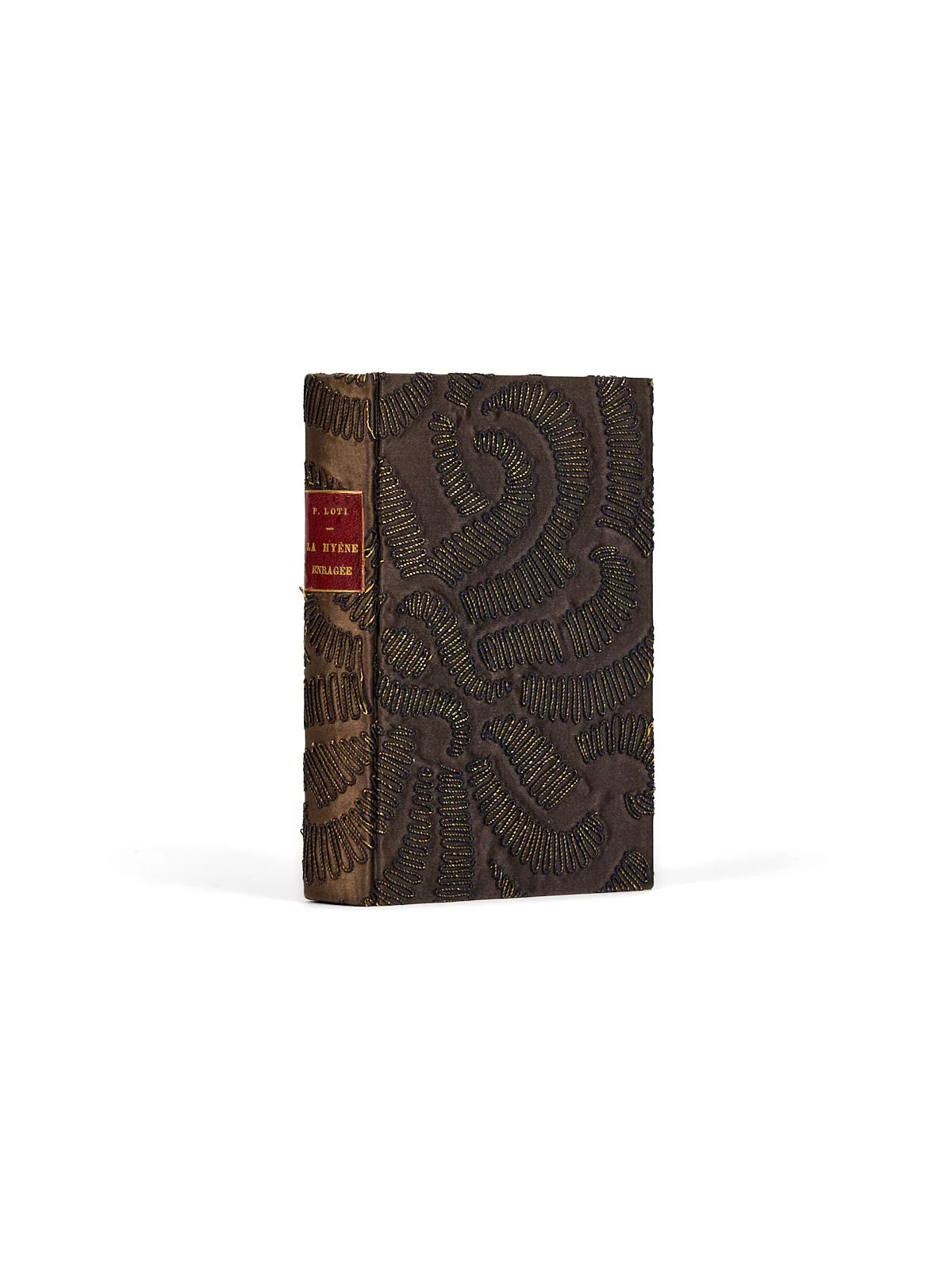
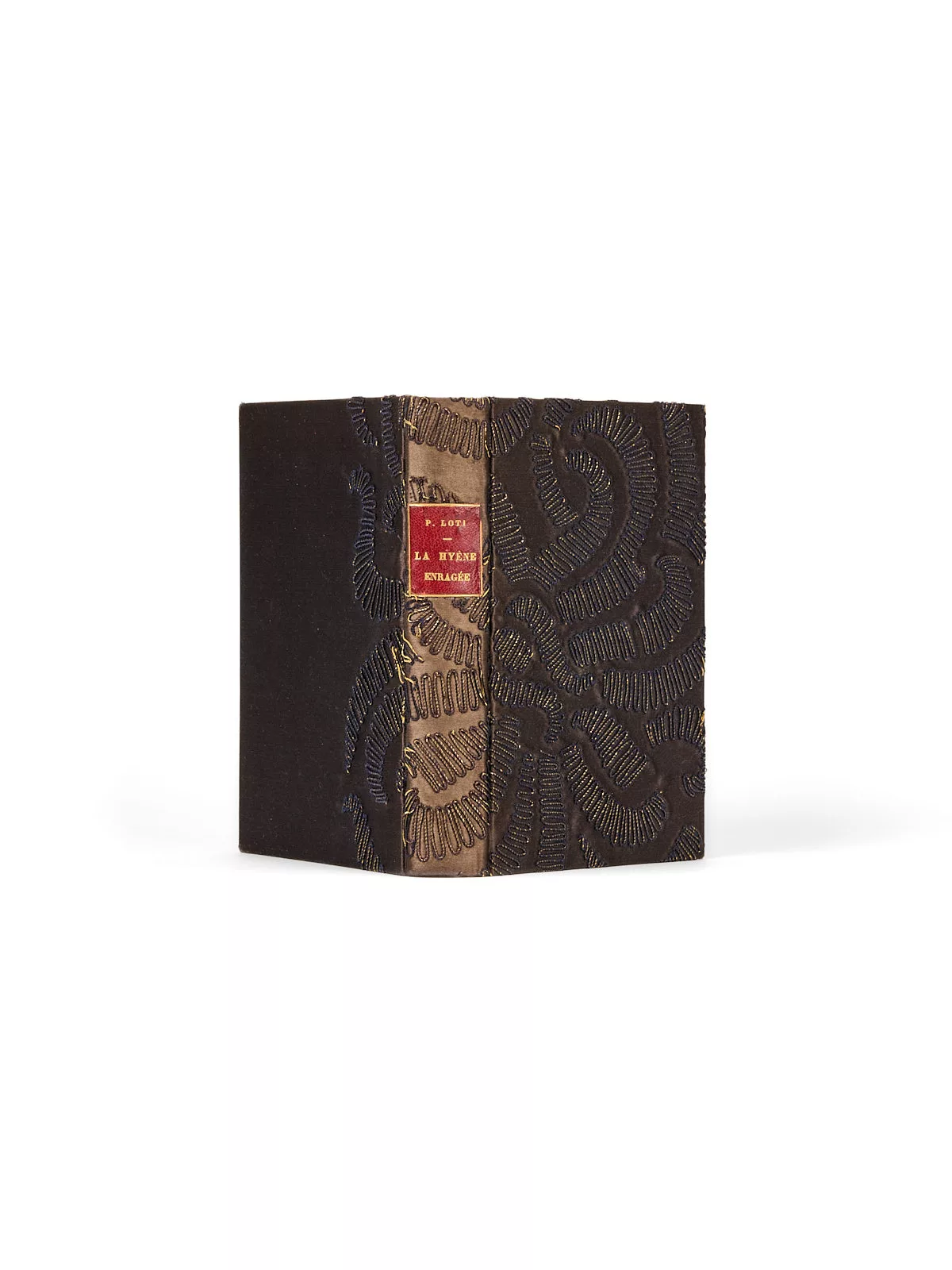
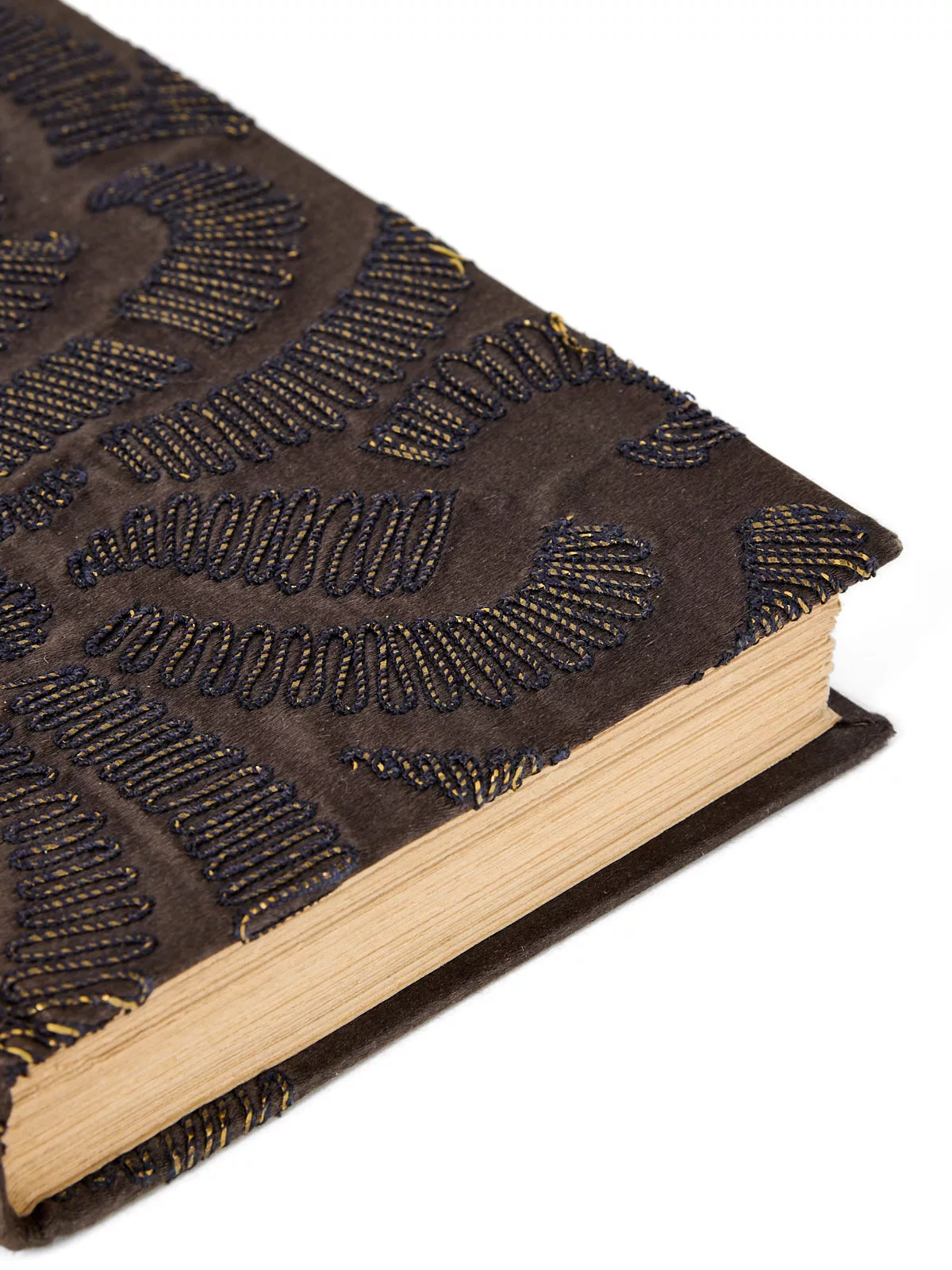
An interesting contemporary binding in the manner of Louise Germain.