


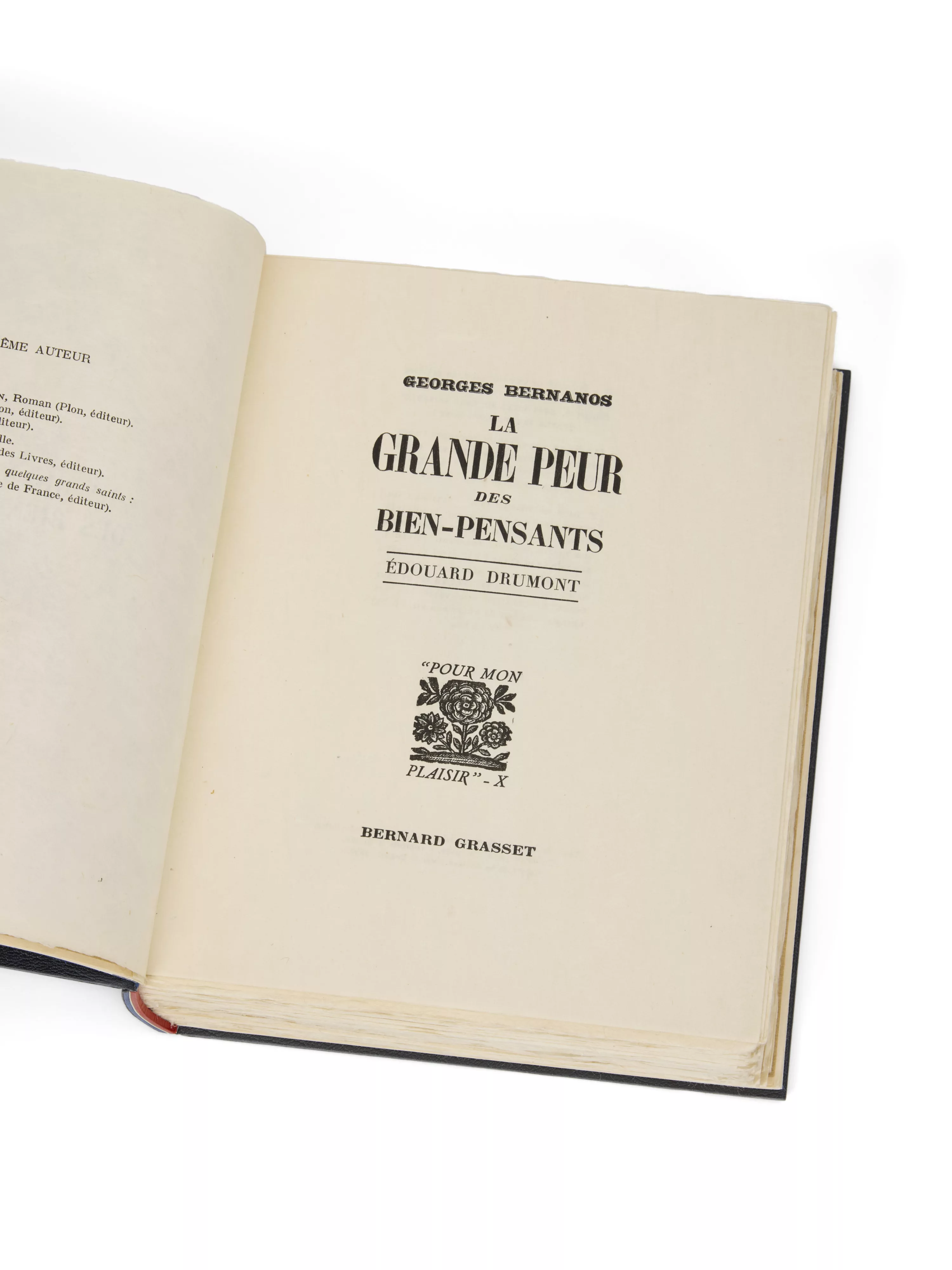




La Grande Peur des bien-pensants
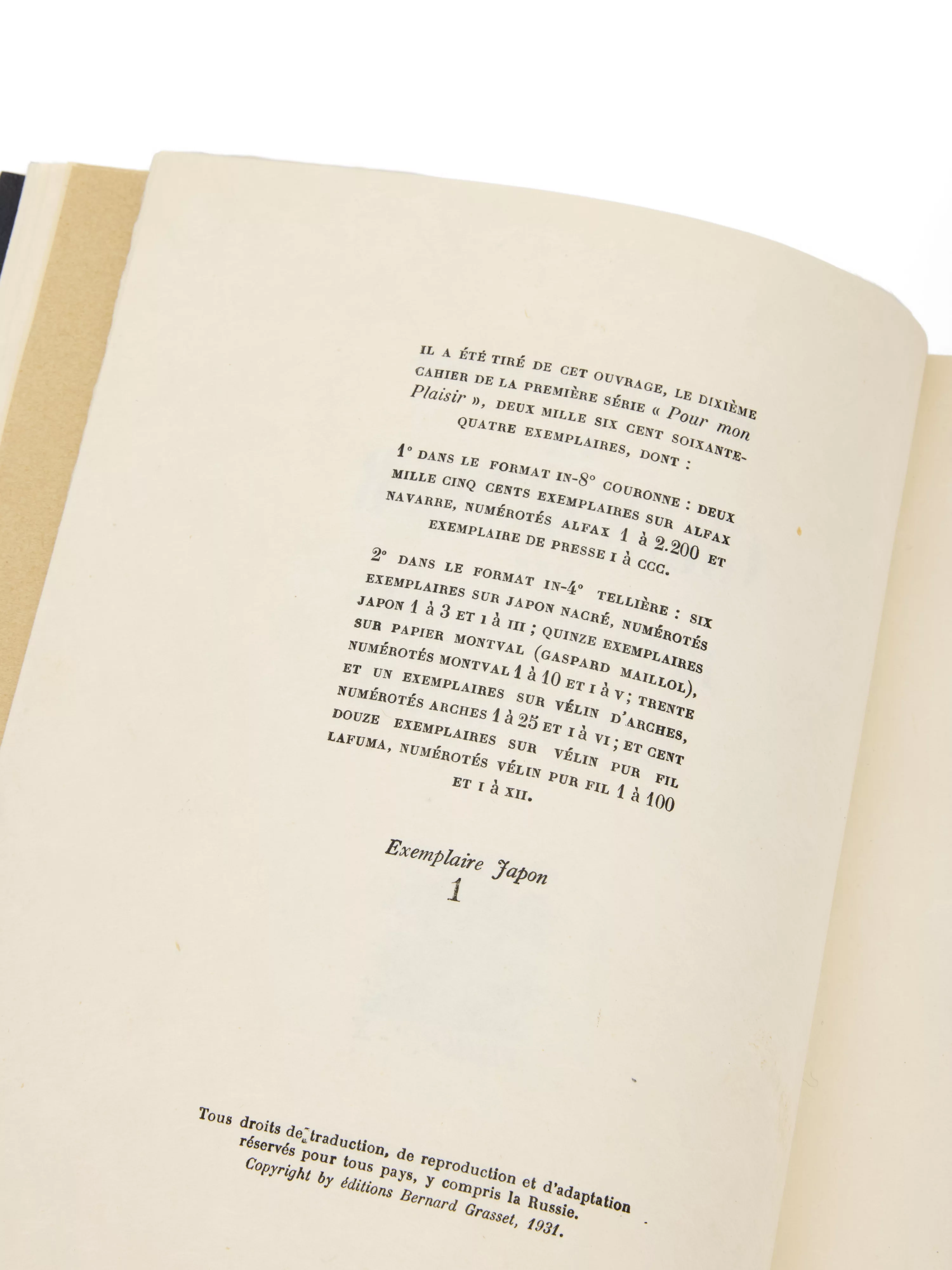
One of the first 6 copies on pearled Japanese paper (no. I).
La Grande Peur des bien-pensants marks an important moment in the history of the French right: the book gathers texts published between 1929 and 1931, some in L’Action française, others delivered as lectures. Its publication preceded the break between Maurras and Bernanos, which took place in May 1932, when the champion of integral nationalism wrote in L’Action française of 16 May his famous “Je vous dis adieu, Bernanos.”
This break was part of an evolution under way in Bernanos for several years, one that would lead him to the salutary positions he took in the following years.
This biography of Drumont is above all a pamphlet denouncing the decline of the nation, fallen into the hands of a conservative bourgeoisie in the early decades of the Third Republic.
“Georges Bernanos is usually seen as a writer very close to L’Action française, if not the Maurrassian writer par excellence. In reality, although he was indeed a convinced Maurrassian in his youth, a militant journalist at L’Avant-Garde de Normandie in 1913–1914, close to the movement at the time of Sous le soleil de Satan and the Vatican’s condemnation of Action française (1926–1927), his break with Maurras in 1932 reveals the full depth of the distance separating him from the royalist movement. It is logical that Bernanos came to condemn Maurras, guilty of complacency toward conquering dictatorships, at the time of Munich and the Spanish Civil War […]. Opposed to the Maurrassian vision of History because he always chose the romanticism of personal adventure over the positivism of political reason, opposed to the ‘Christless Catholicism’ of Maurrassian France in the very name of the God of the Gospel, he built his work as a writer on a spiritual quest that remained, in the end, entirely foreign to the ideas and values of that newspaper […]” (Denis Labouret, “Georges Bernanos et l’Action française: histoire d’un malentendu”).