

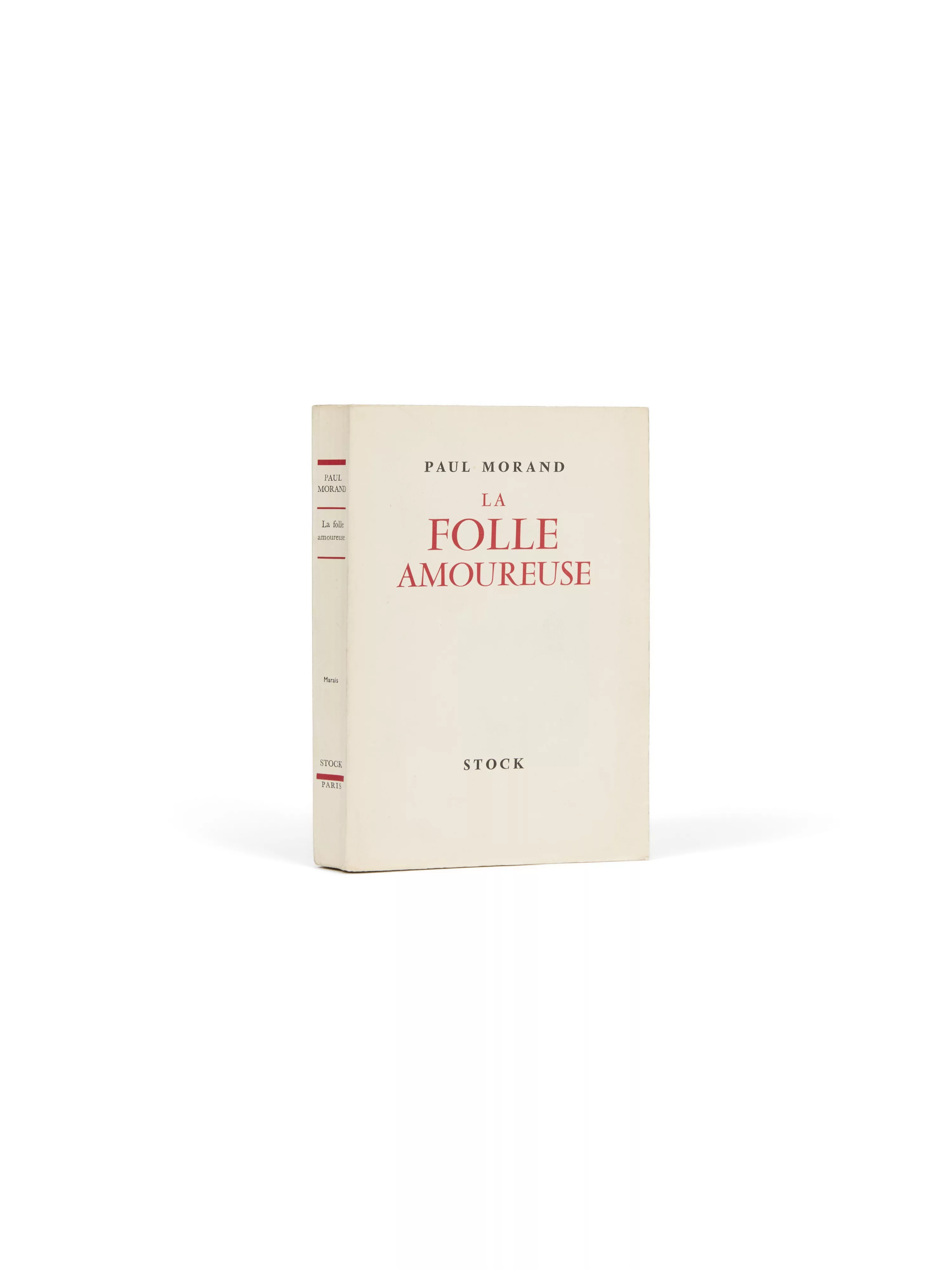
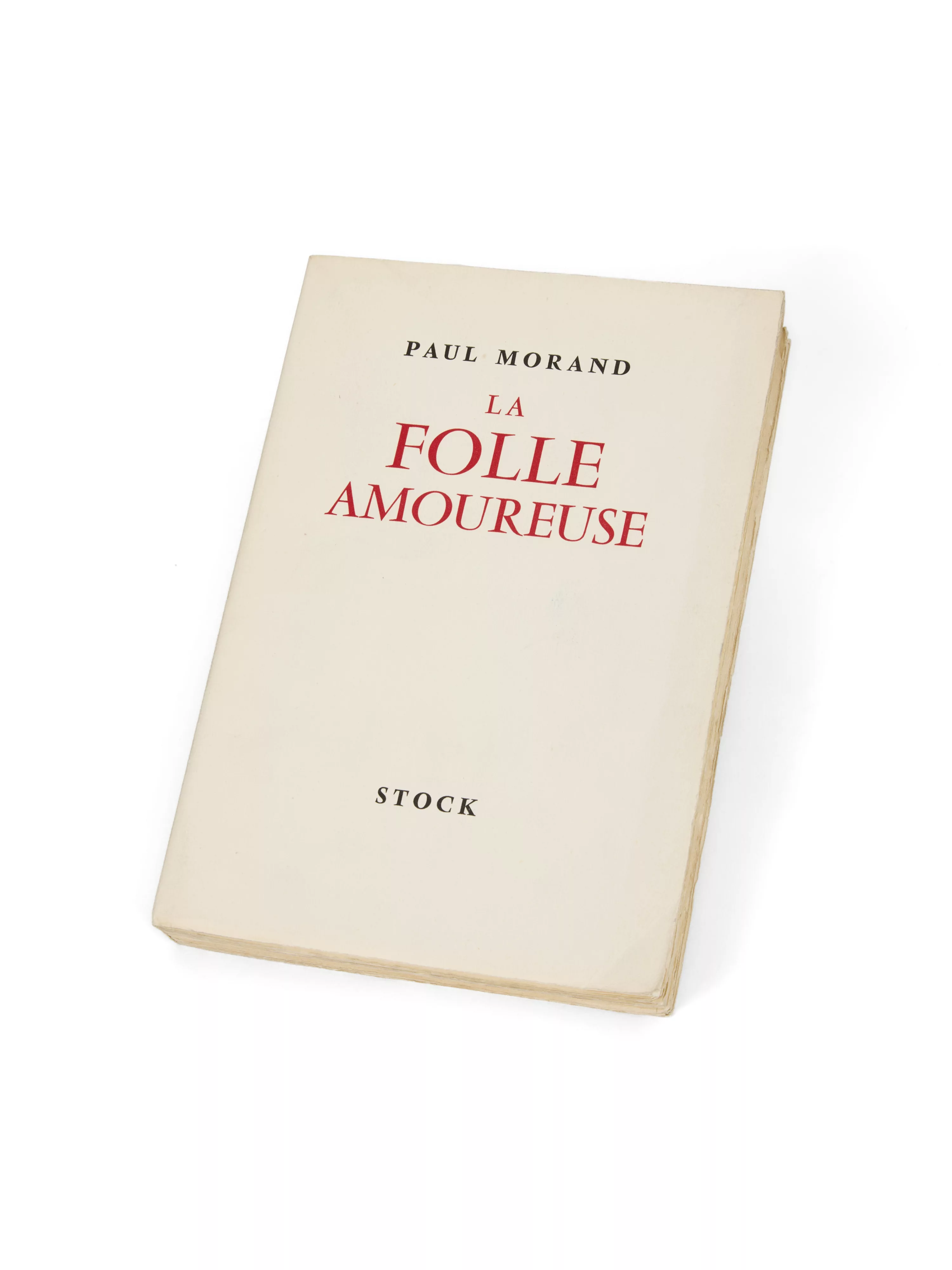
La Folle amoureuse
One of the first 300 copies on tinted chiffon vellum from the Papeteries du Marais (no. 51) — the only deluxe paper.
Following Hécate et ses chiens, Paul Morand continues his exploration of passion and desire, here in a darker register. The collection brings together four stories: La Folle amoureuse, La Clef du souterrain, Le Dernier Jour de l’Inquisition and Parfaite de Saligny.
The latter is one of Morand’s finest achievements as a short-story writer: set in revolutionary Vendée, it traces the passion of Loup de Tincé for a young aristocrat seduced by the new ideas, a passion thwarted by the upheavals of History. The man’s steadfast love meets the woman’s successive enthusiasms, until an ending in which collective violence merges with intimate tragedy. The speed of the narrative, its shifts of tone and the force of its conclusion give this long story the density of a novel. Catherine Rihoit, in La Bibliothèque idéale de Bernard Pivot, calls it “one of Paul Morand’s finest stories,” while Alain Peyrefitte saw in it a “drama of the Purge,” noting that Morand acknowledged having put much of himself into it.
The story had already appeared in 1947, following Le Dernier Jour de l’Inquisition, published by La Table ronde.
A crease on the back cover.