

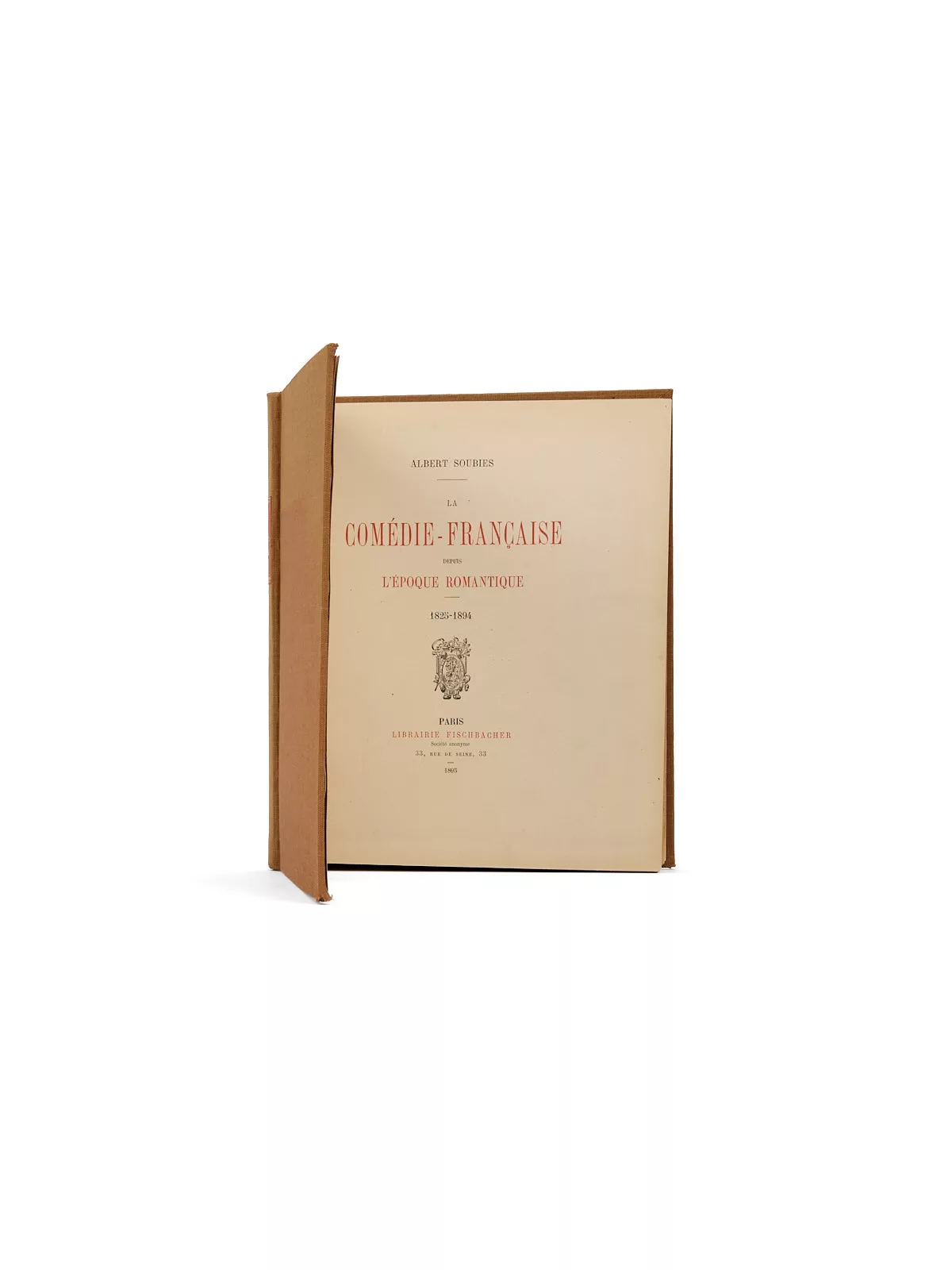
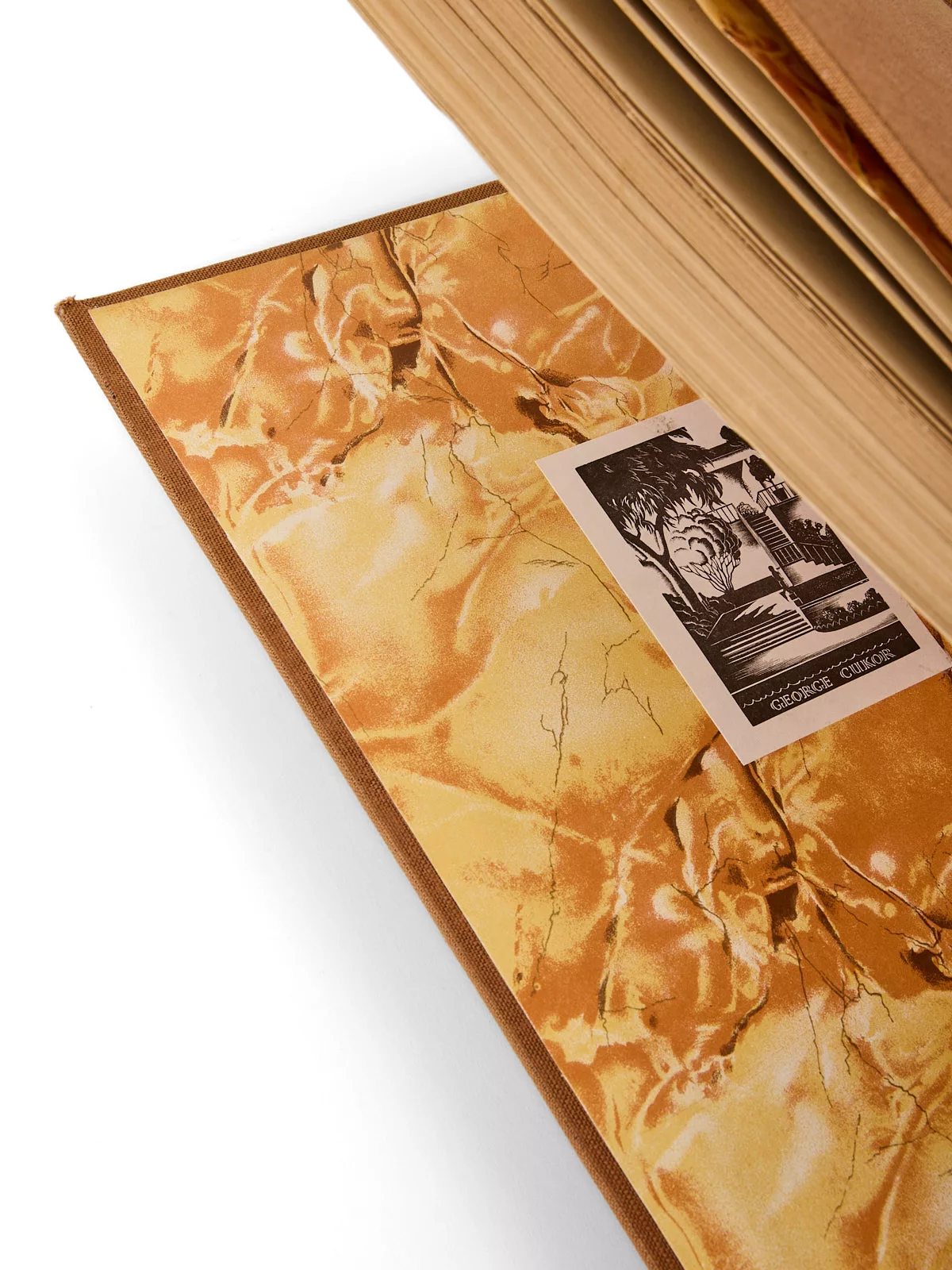
Copy of the American filmmaker George Cukor, with his bookplate.
Unsurprisingly, this reference monograph on the Comédie-Française belonged to the library of the great American director George Cukor.
In the New York of the 1900s, where Cukor grew up, the theater was largely influenced by European models, “notably French theater, which remained the dominant foreign influence there until the end of the decade […] The construction of the star system had already begun there since the end of the nineteenth century, particularly around the strong presence of internationally renowned European actresses such as Eleonora Duse, Gabrielle Réjane and Sarah Bernhardt.” Was Greta Garbo, who would later act in Cukor’s films, not nicknamed the American Sarah Bernhardt?
Cukor, who began his career in the theater and whose theatrical culture is well documented, shows, for instance in his work as a screenwriter, a close analysis of the original text of the play he adapted for the screen, as in the case of Camille (1936): “Examination of the genesis of Cukor’s film reveals that the screenplay partly returned to Alexandre Dumas’s French version.”
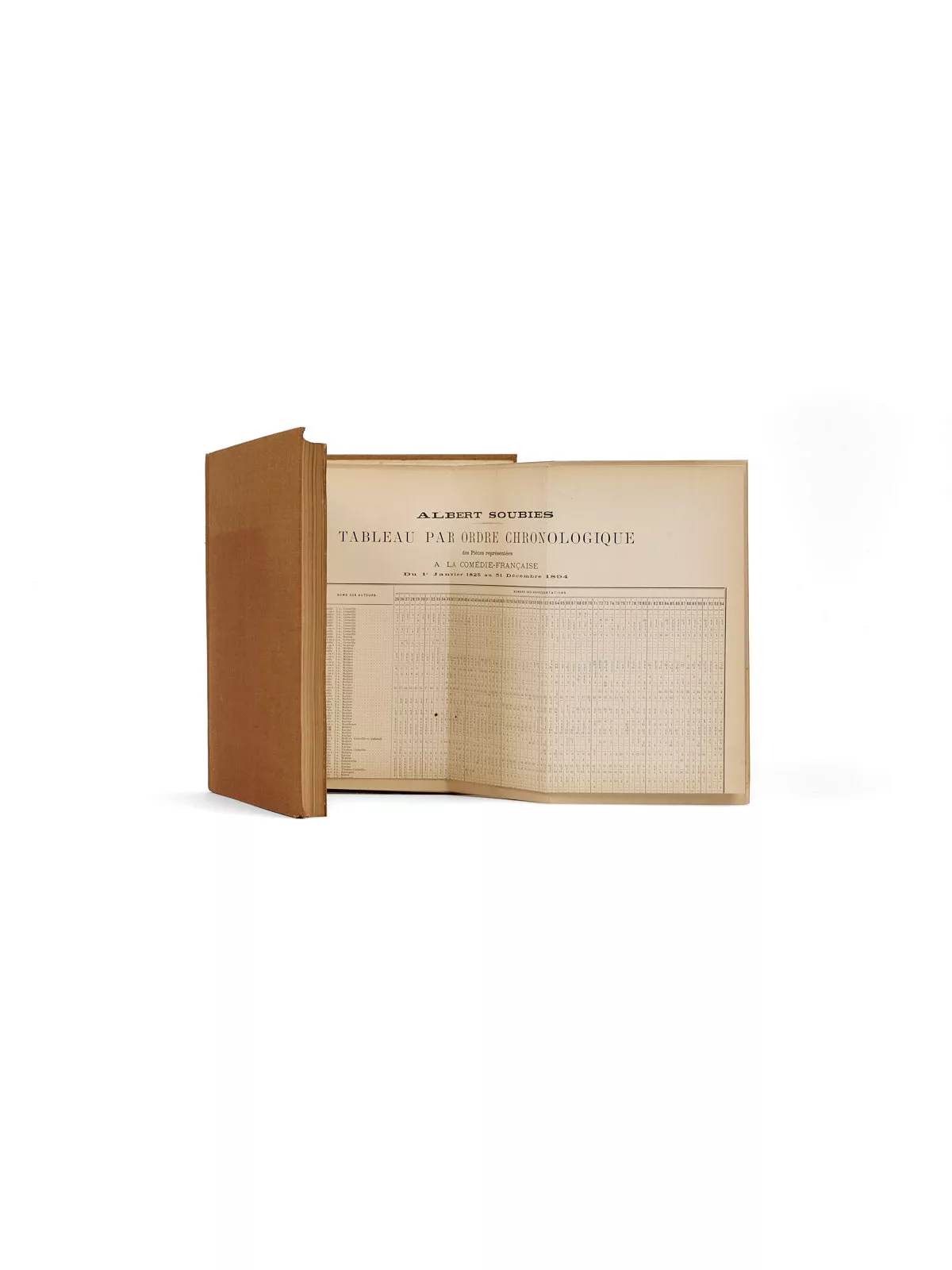
This monograph provides, in addition to a complete history of the Comédie-Française, the list of plays performed from 1825 to 1894: actors, performances, premieres, revivals, etc.
An interesting provenance.
Marguerite Chabrol, “Garbo/Bernhardt: morceaux de bravoure mélodramatiques,” Théâtre.