

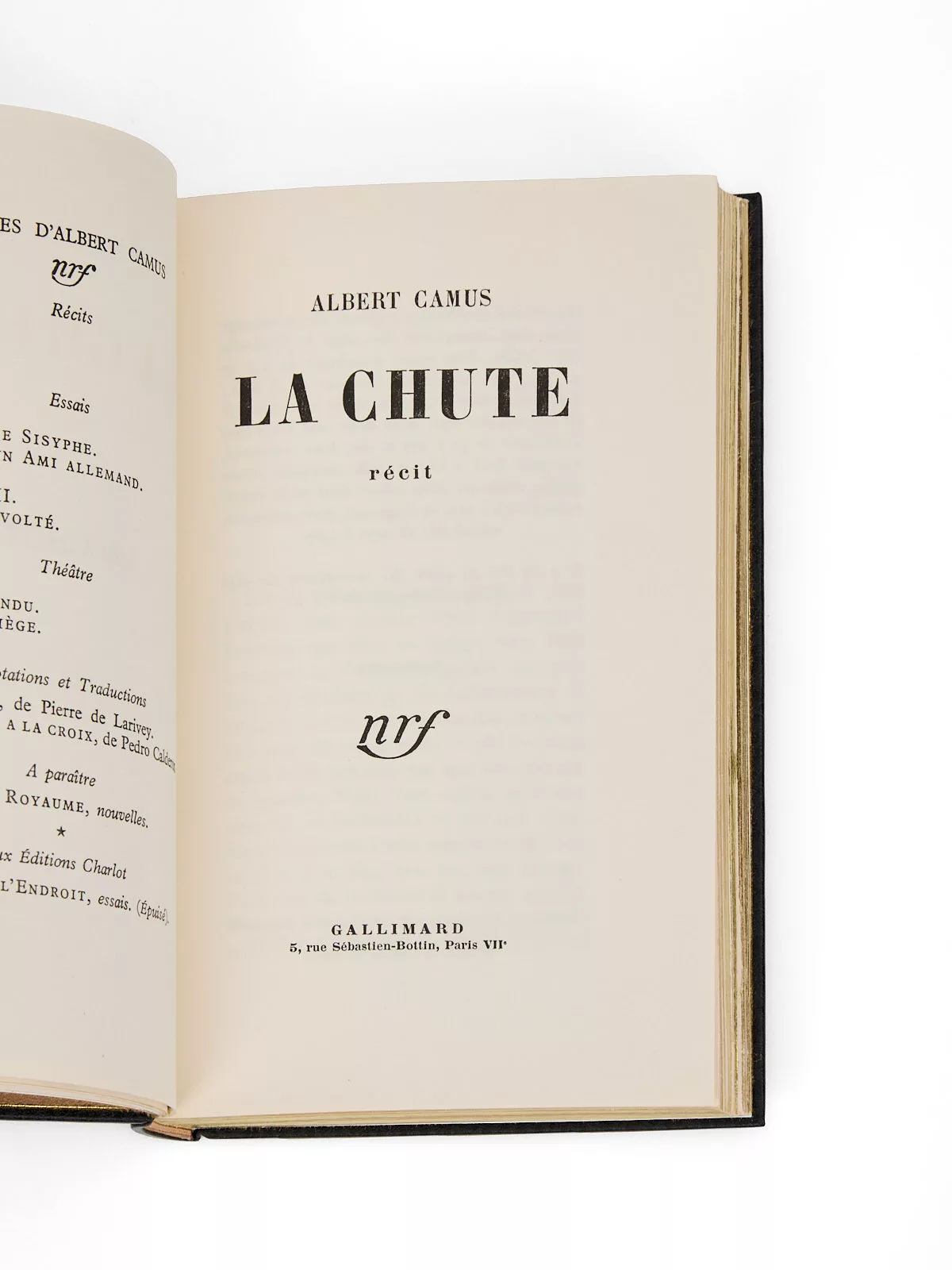

La Chute
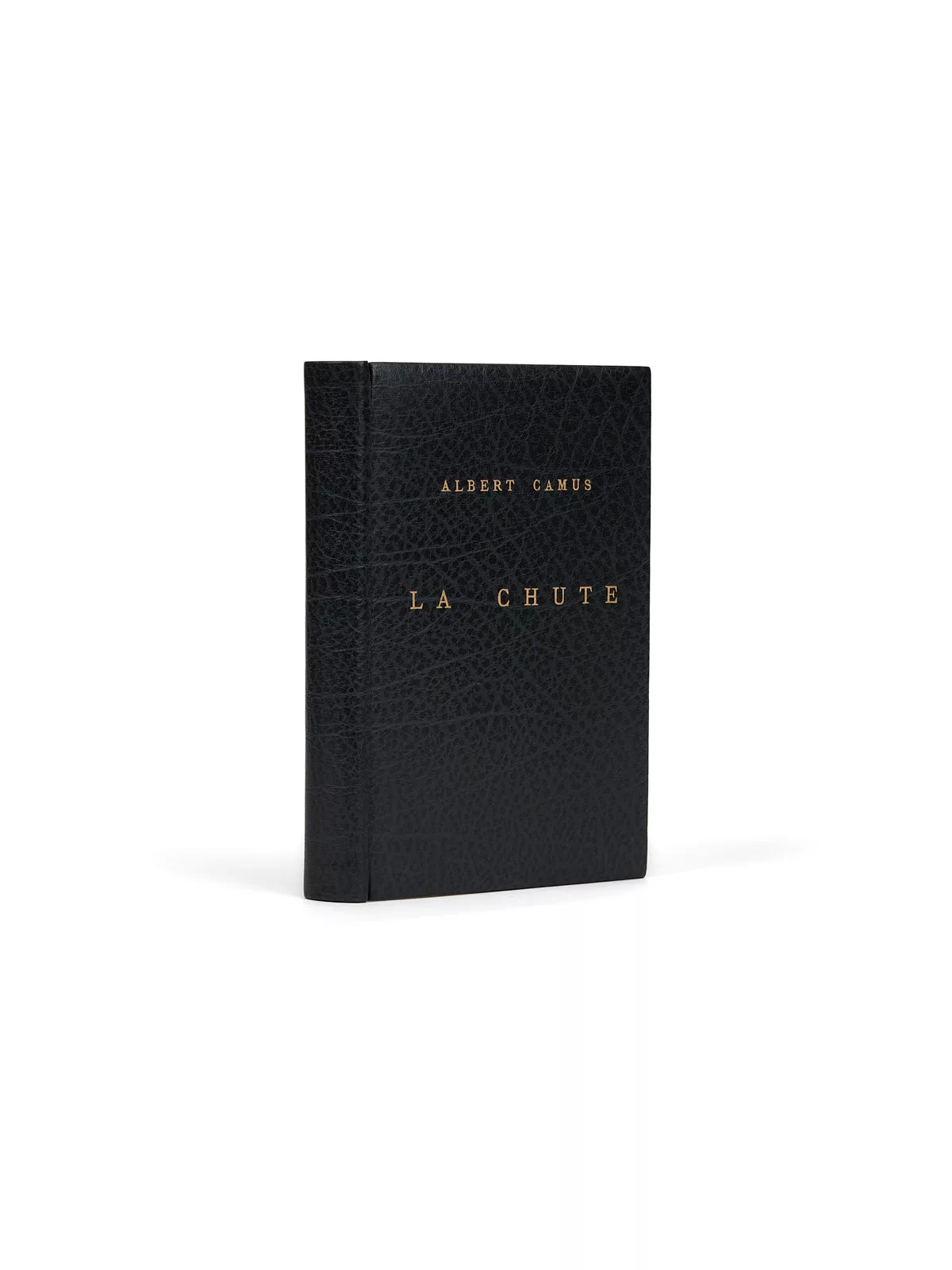
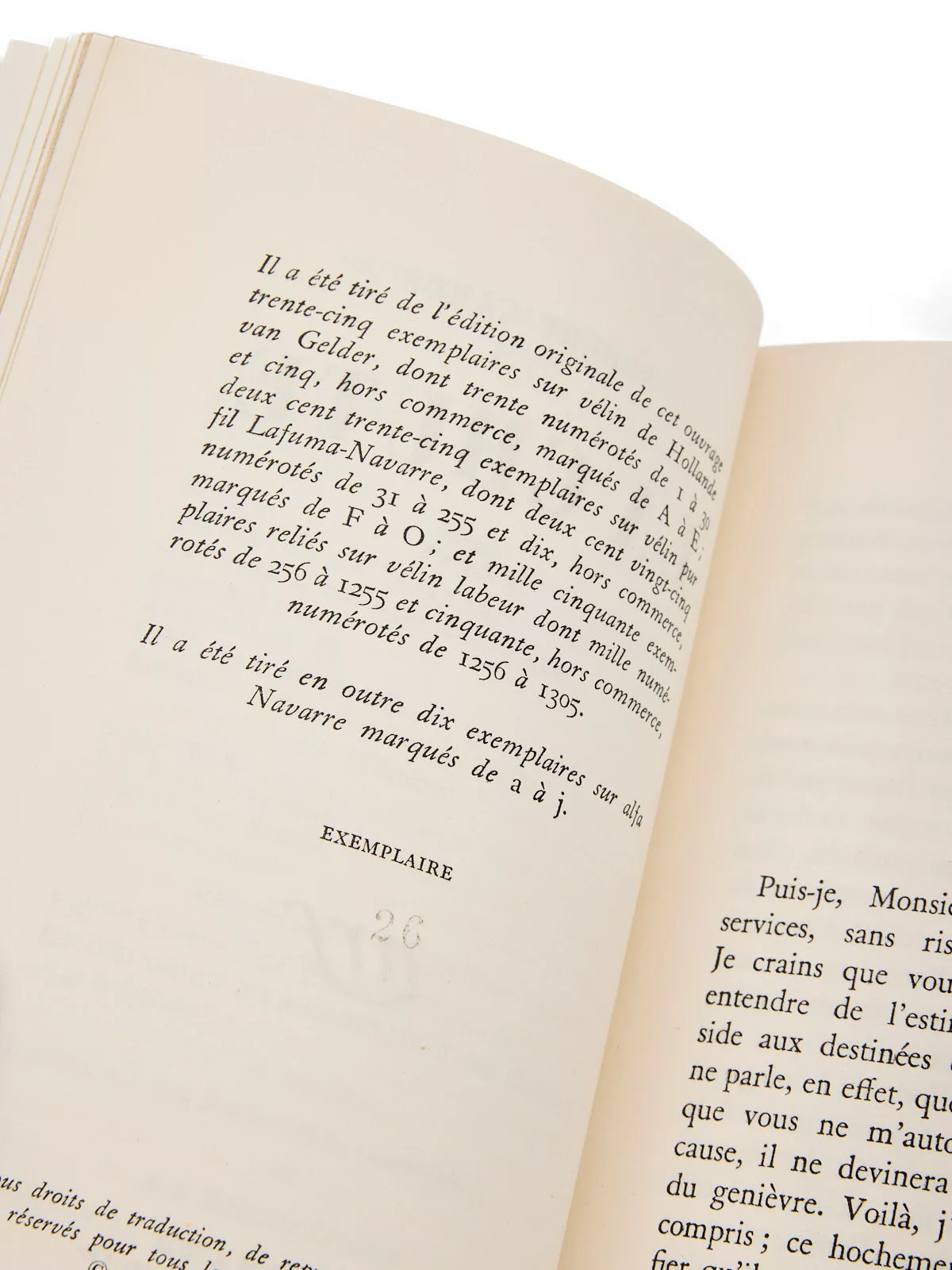
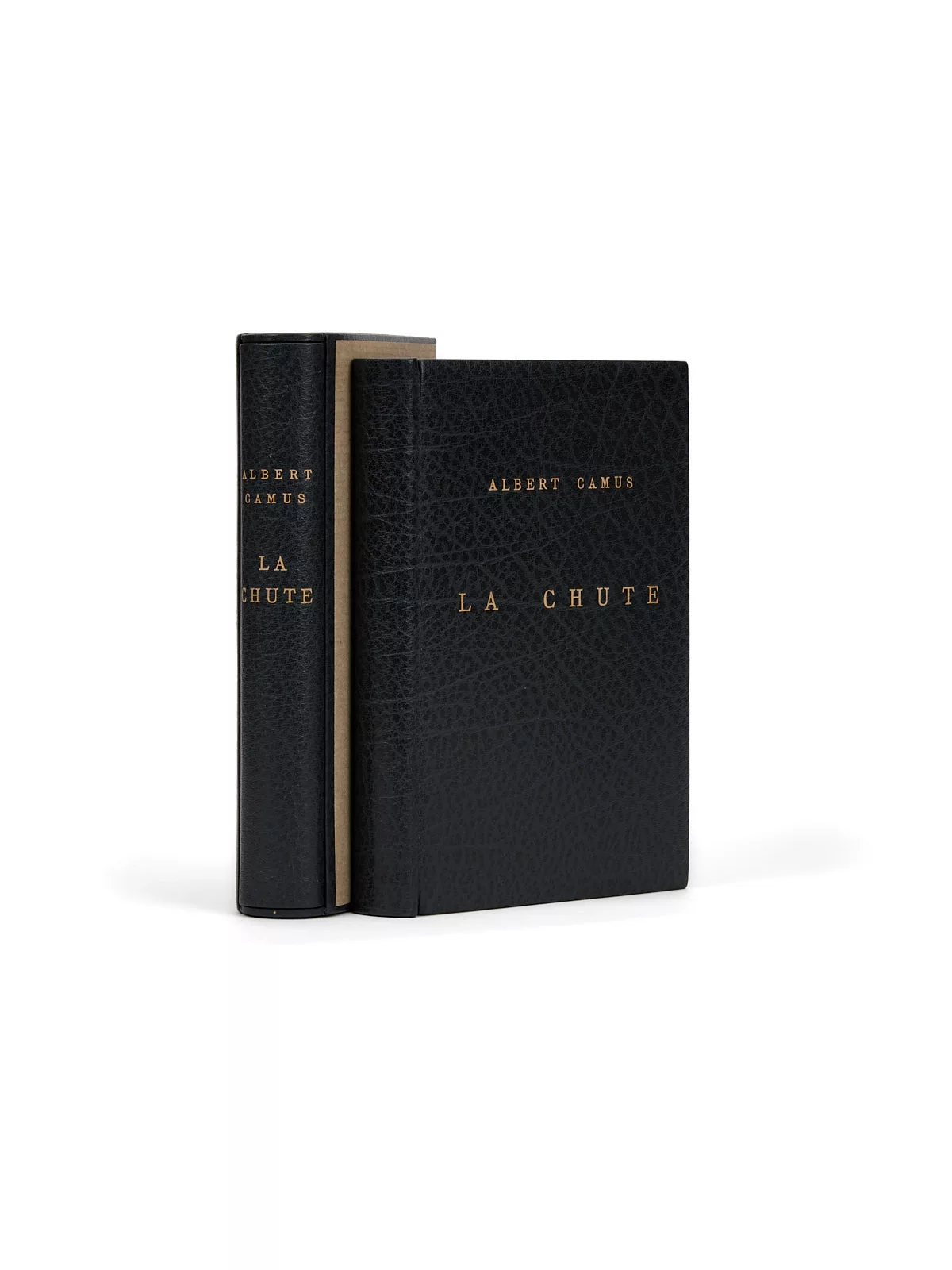
One of 35 copies on vélin de Hollande (no. 26) — after ten author's copies on alfa paper.
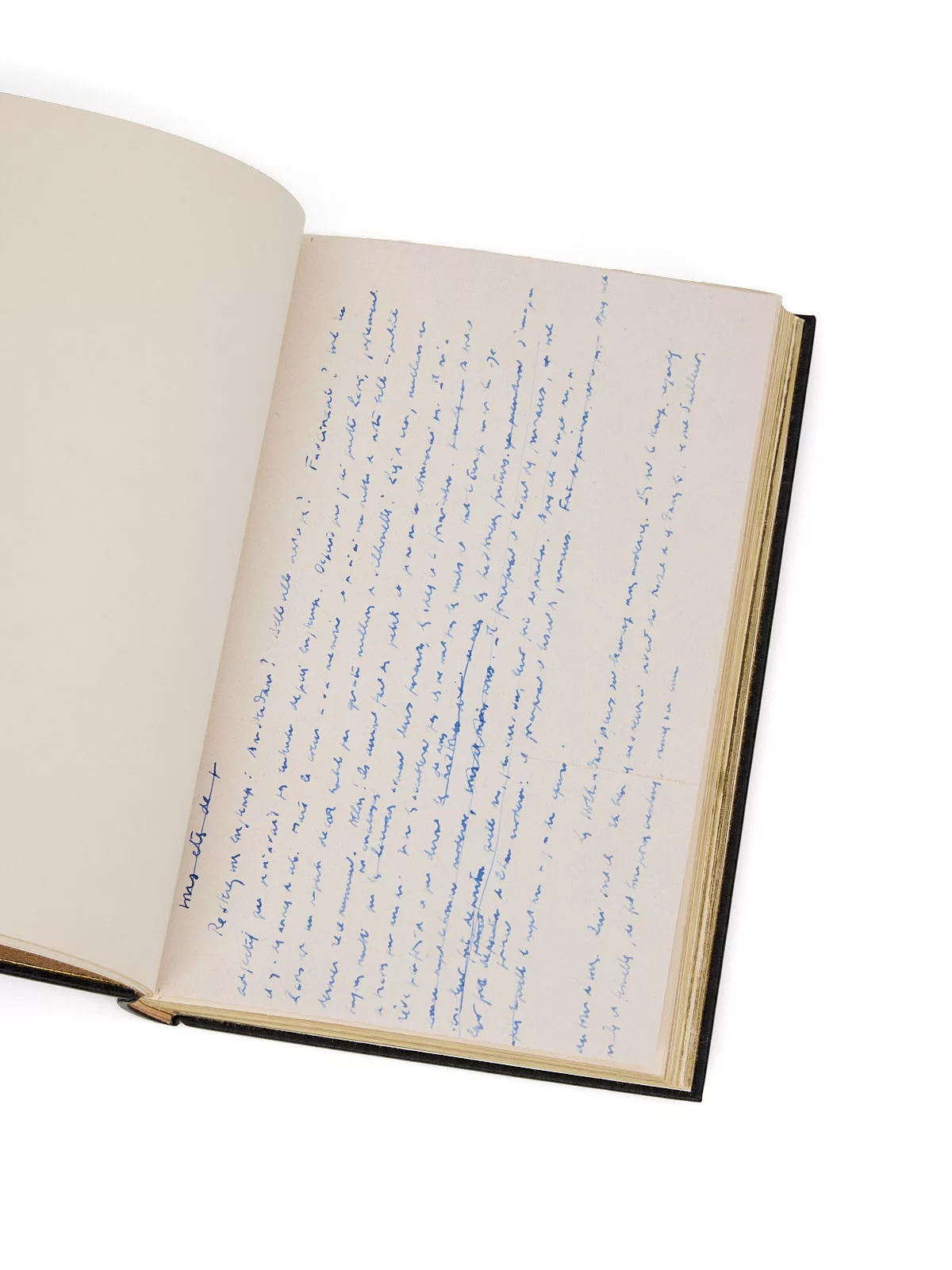
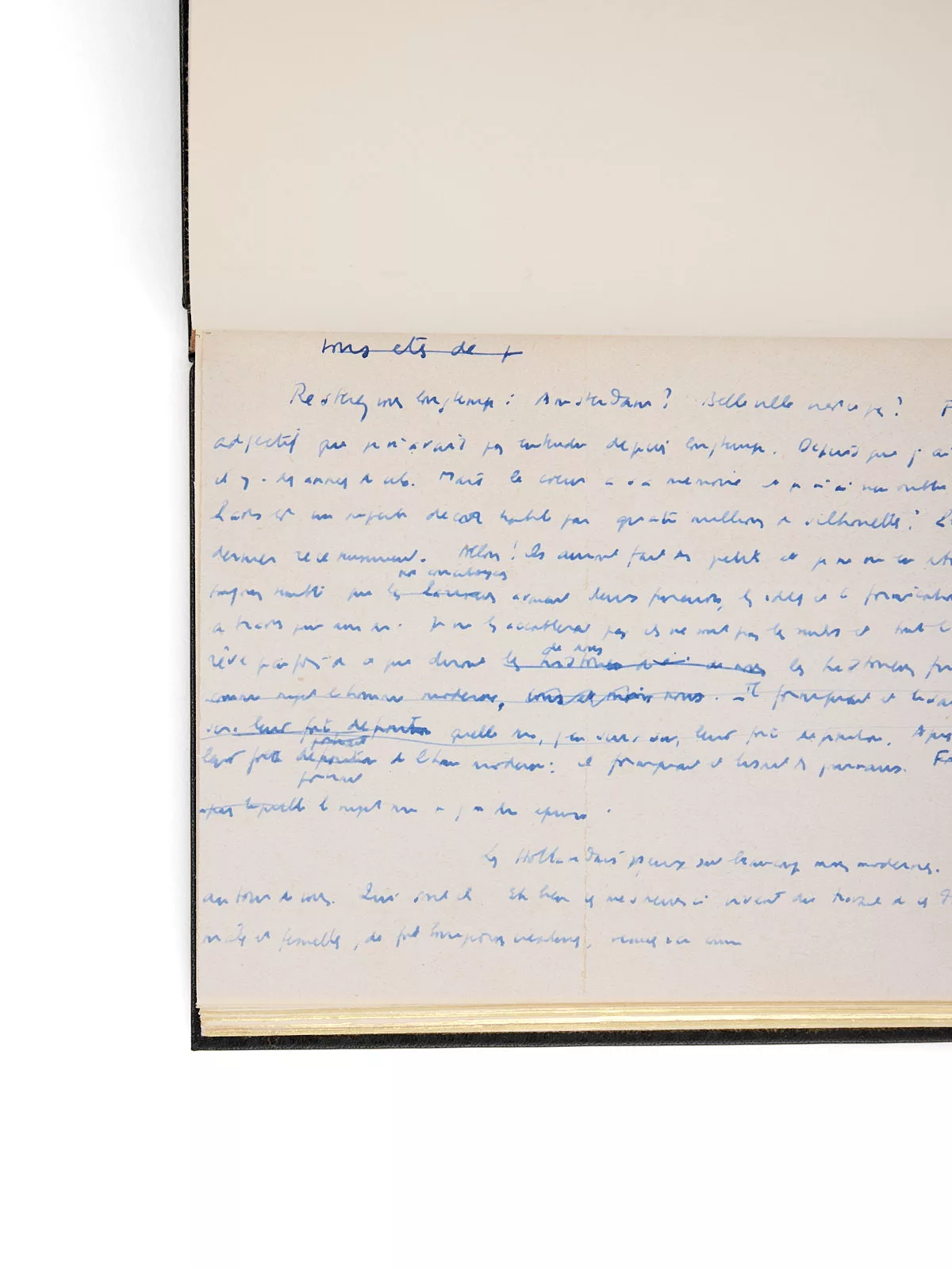
Mounted at front, a page of the manuscript.
In 1956, alongside his journalistic work, Albert Camus was writing for the theater and composing several short stories between 1954 and 1956. He intended them for L’Exil et le Royaume, which would appear the following year. One of them, however, diverted him from his original plan: “La Chute, before becoming a long narrative, was part of L’Exil et le Royaume. This collection comprises six stories (…). A single theme runs through them, that of exile, from interior monologue to realistic narrative. The six stories were moreover written in succession, although they were later revised and reworked separately (…). Exile, in its own way, shows us the paths, on the sole condition that we know how to reject both servitude and possession.”
La Chute — whose original title is unknown — was removed from the planned collection as early as the beginning of 1956, as it had grown too long, and Camus developed the text into the novel we now know.
Under a title suggested by Roger Martin du Gard, La Chute went on sale on May 16 and achieved immense commercial success. Those who had ironically predicted “the fall of Camus” fell silent. Most readers saw the text as a kind of autobiography, as his contemporaries repeatedly suggested to him. Camus invariably denied this: “My only point in common with Jean-Baptiste Clamence — with whom people insist on identifying me — would be his lack of imagination,” he declared in Le Monde.
A very fine copy enriched at the front with a substantial working draft, with several variants and corrections (16 lines, in blue ink). The text corresponds to the fifth paragraph at the beginning of the novel: the “hero,” Jean-Baptiste Clamence, introduces himself and describes his surroundings in Amsterdam, where he approaches a compatriot in a disreputable bar, the Mexico-City, and offers to act as his interpreter with the bartender.
“Will you be staying in Amsterdam for a while? A beautiful city, isn’t it? Fascinating? Now there’s an adjective I haven’t heard in a long time. Not since I left Paris, in fact, years ago now. But the heart has its own memory, and I have forgotten nothing of our beautiful capital. Paris is a superb stage set inhabited by four million silhouettes […]. The Dutch, for their part, are far less modern. They take their time, living day by day. What do they do? Well, these gentlemen live off the work of those ladies. They are, moreover, male and female alike, thoroughly bourgeois creatures, who came here, as [usual, out of mythomania or stupidity].”
This is the last novel Camus completed, divided into six parts, its events unfolding over five consecutive days. A year later, he would be awarded the Nobel Prize in Literature.
Accompanying the volume is a typed letter signed by Suzanne Agnely, Albert Camus’s secretary, written on his behalf and addressed to André Devaux:
Paris, 21 February 1958.
1 p. on 1 leaf (135 x 210 mm), on NRF letterhead.
“M. Albert Camus has just left Paris for a trip of about three months. Before his departure, he asked me to write to you on his behalf to thank you for your letter and your interest, and to send you a manuscript page of La Chute. […]”
A student in the hypokhâgne class at the Lycée Henri-IV in Paris, André Devaux studied during the Second World War under Ferdinand Alquié. He then specialized in philosophy and continued his studies at the Sorbonne, where he attended the courses of René Le Senne. An agrégé of the University, he began teaching at lycées in Laon and Rouen, as well as at the teacher-training college in Besançon. He was later appointed lecturer at the Sorbonne, where he served for many years as deputy director of the philosophy department. A philosopher and specialist in the work of Pierre Teilhard de Chardin and René Le Senne, he also produced foundational studies on Saint-Exupéry and Charles Péguy, and was a leading specialist on the work of Simone Weil.
He wrote several texts devoted to Albert Camus (Albert Camus devant le christianisme et les chrétiens, 1968; Albert Camus et l’hellénisme, 1970), and his writings on Weil include numerous quotations from Camus’s work. In his essay published in Science et Esprit, he quoted several passages from La Chute, a novel in which, in his view, “Camus honors the crucified man, but fails to see the Redeemer.”
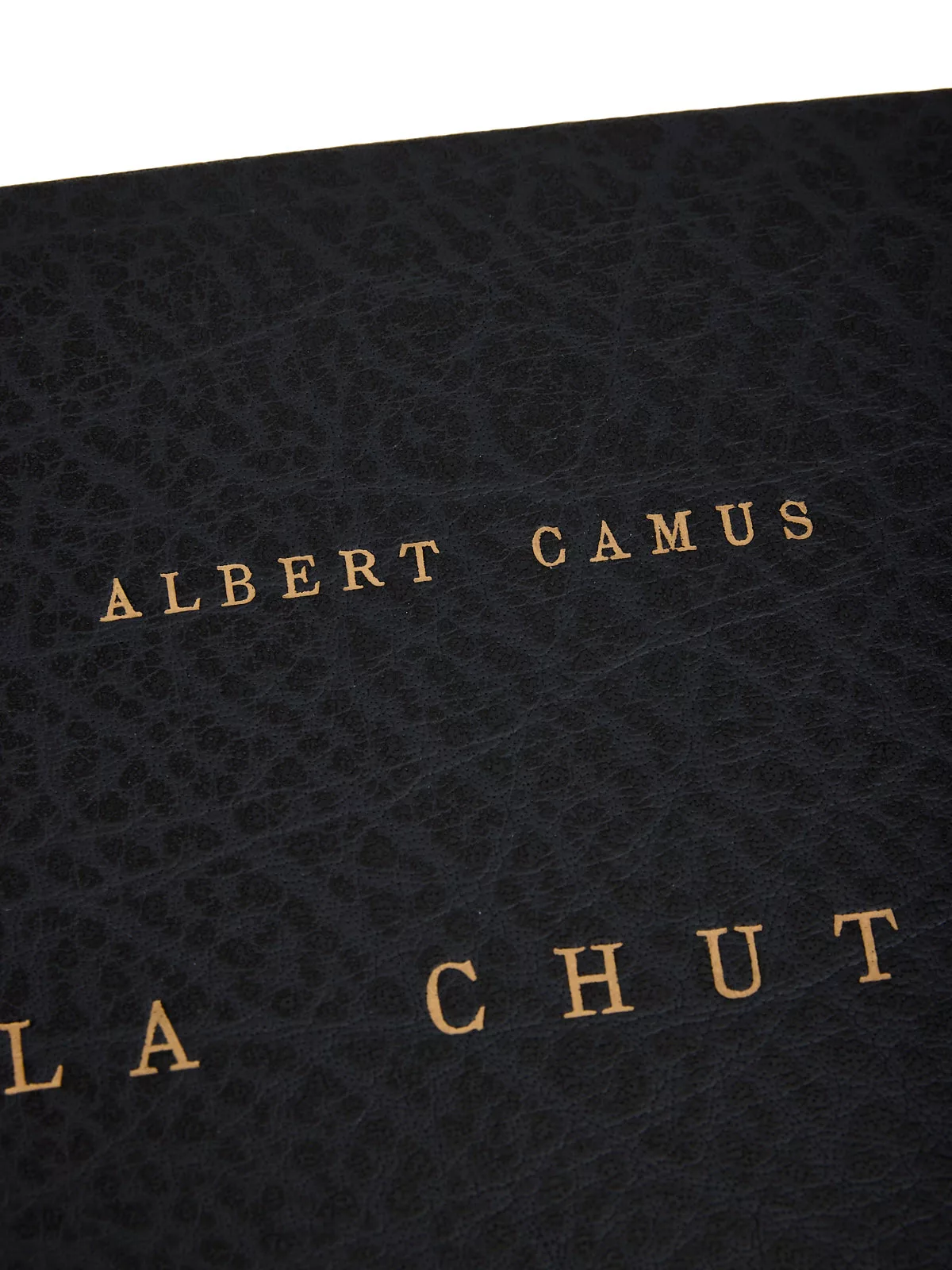
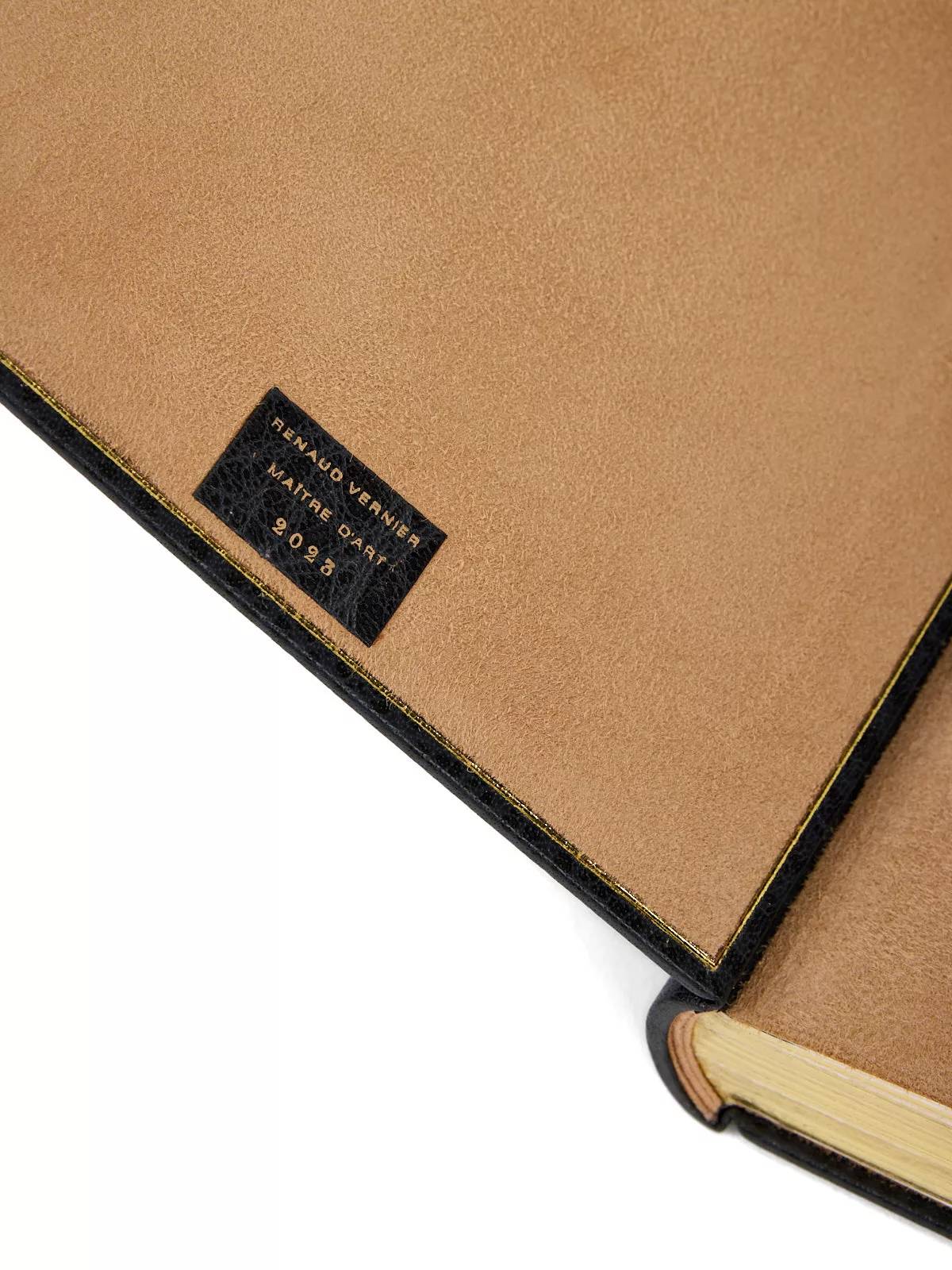
A copy beautifully bound by Renaud Vernier.