

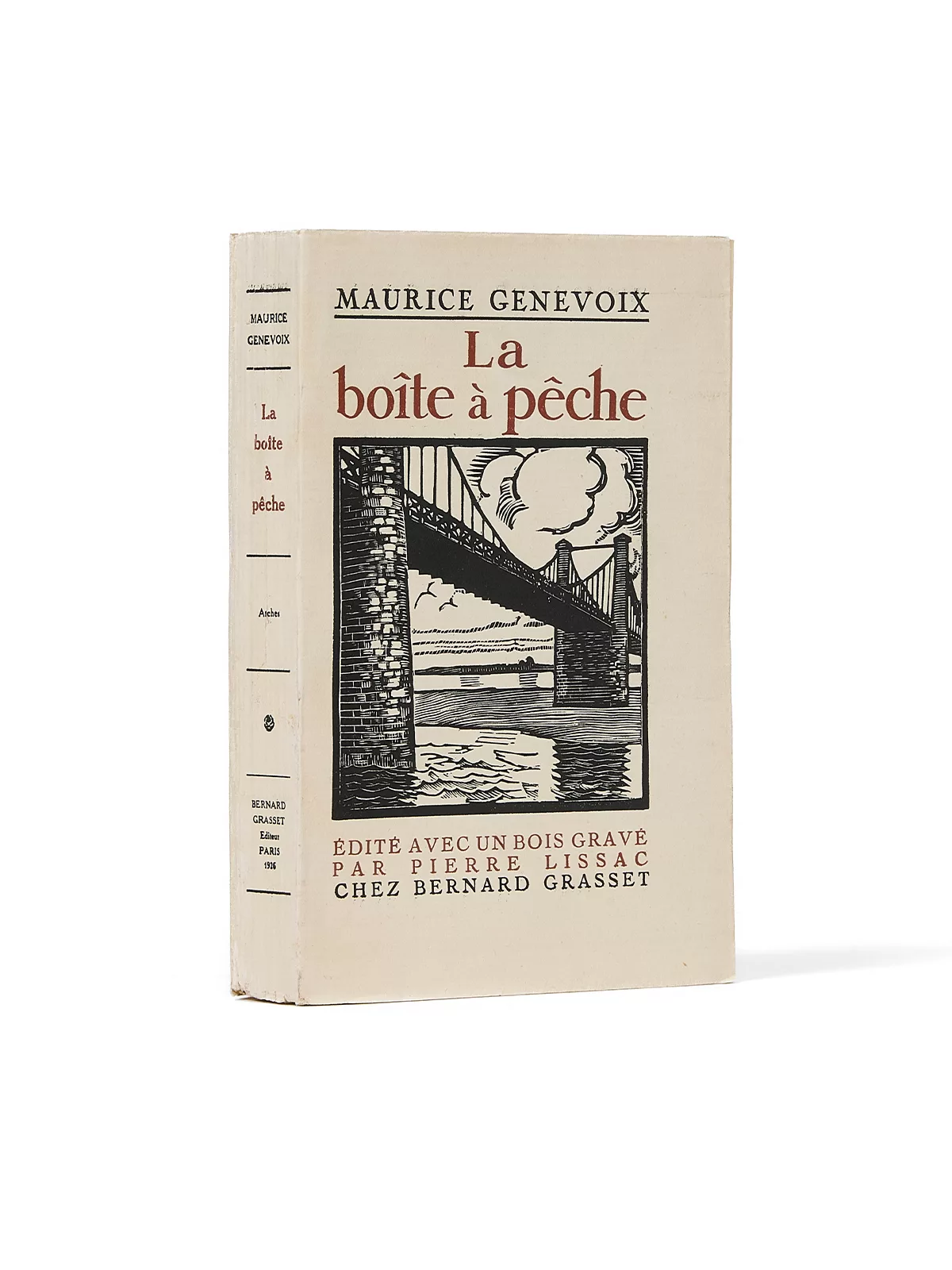
La Boîte à pêche
A year after Raboliot (Prix Goncourt 1925), settled in his father’s house in Châteauneuf-sur-Loire, where he had returned to live after the war, Maurice Genevoix turned to the river of his childhood. Four years earlier he had already given readers a wonderful Rémi des Rauches, which made much of the Loire through the figure of a visionary cooper and an evocative style. The river was already omnipresent there, even becoming the dedicatee of the novel.
La Boîte à pêche is, at first sight, an almost ethnographic evocation of the various forms of fishing practiced on the Loire, and of the deep pleasure they provide: a “regional” novel, which Parisian intellectual circles quickly classed, with their customary narrow-mindedness, among “regionalist” writings. Genevoix, however, forcefully — and tenderly — claims this vein: for him it is an answer to barbarity, an antidote to war, as he writes in his foreword, paying tribute to three guiding figures: Najard, his fishing master; Bailleul and Jeanneret, his childhood, school and fishing companions.
It was thanks to the success of Raboliot, Rémi des Rauches and La Boîte à pêche — three texts steeped in a vocabulary of exceptional sensory richness — that Genevoix was able, in 1928, to acquire the house of Les Vernelles, at Saint-Denis-de-l’Hôtel. There he set up a study facing the Loire, and there he wrote a large part of his future work.
From the library of Maurice Genevoix (bookplate).