

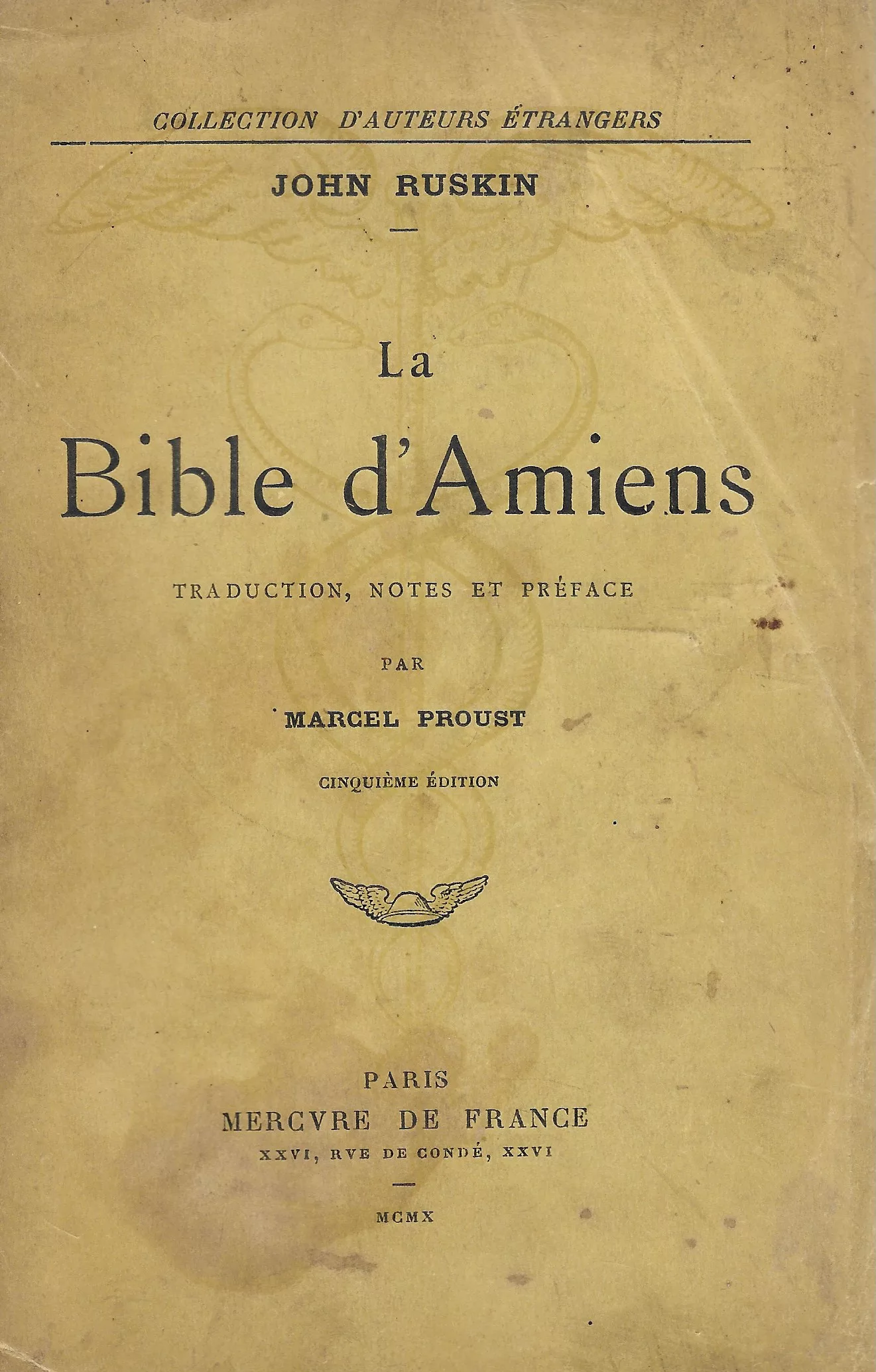
La Bible d’Amiens Traduction, notes et préface par Marcel Proust
Numbered copy.
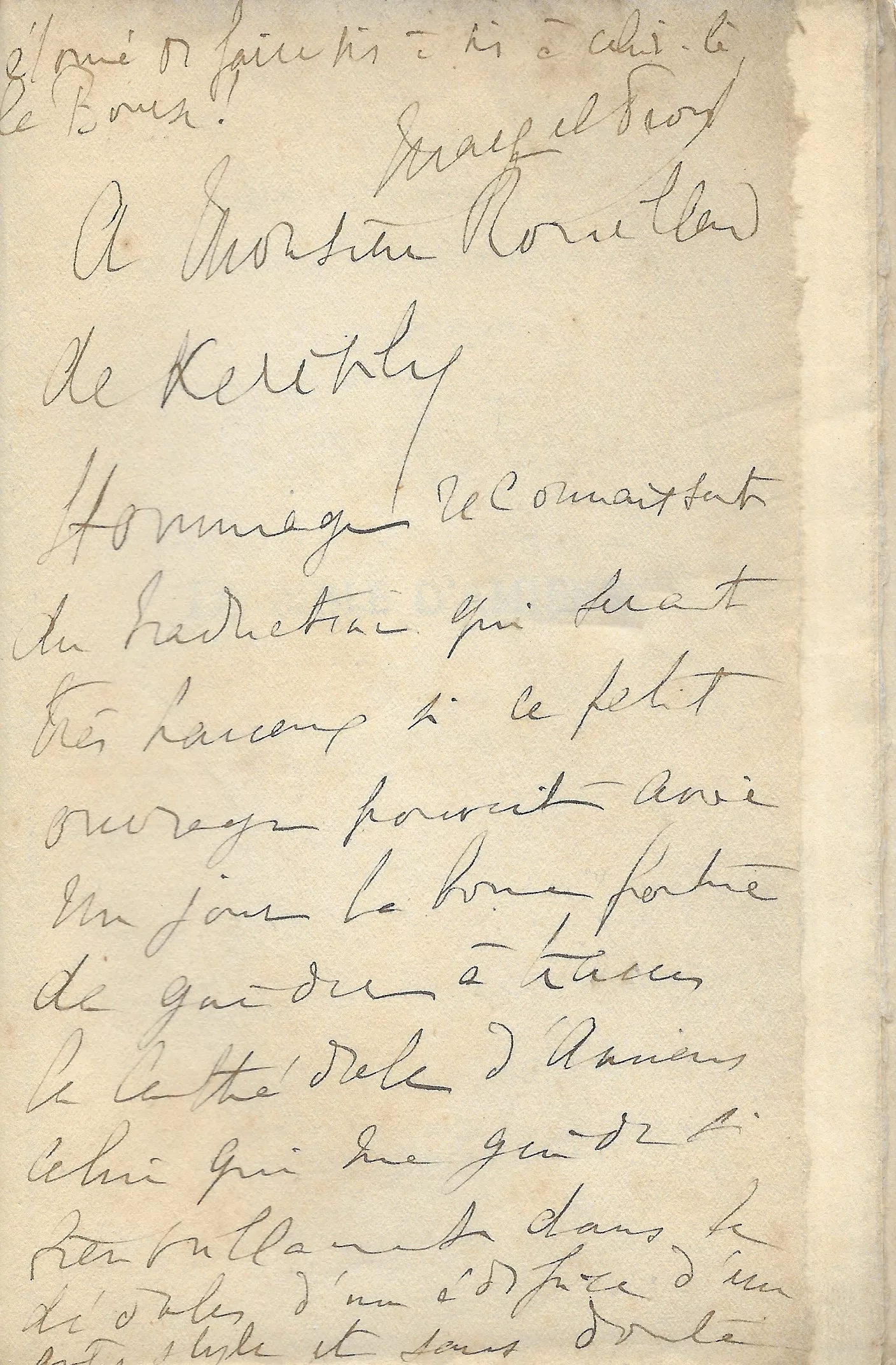
Presentation copy inscribed by Proust to Monsieur Roullard de Kerethy:
“à Monsieur Roullard de Kerethy (...) Hommage reconnaissant du traducteur qui serait heureux si ce petit ouvrage pouvait avoir un jour la bonne fortune de guider à travers la cathédrale d'Amiens celui qui me guida si brillamment dans les dédales d'un édifice d'un autre style et sans doute étonné de faire vis à vis à celui-là, la Bourse ! Marcel Proust.”
Marcel Proust became interested in Ruskin’s work in the autumn of 1899, immersing himself in the writings of the man he called “this great man” after discovering the chapter entitled “The Lamp of Memory” in The Seven Lamps of Architecture. A few months later, on learning of the art critic’s death, he wrote at once to Marie Nordlinger, an English friend and cousin of Reynaldo Hahn, expressing both his sorrow and his wish to ensure the permanence of Ruskin’s work. He then prepared several tributes to Ruskin, in the form of obituary articles and notes, which, considerably expanded and revised, would become the paratexts of his future translation of La Bible d’Amiens. It was an arduous task, since Proust barely knew English: his mother produced a word-for-word draft, which he then reworked with the advice of Nordlinger and of Robert d’Humières, Kipling’s translator. After four years of work, and enriched with a personal commentary on art and creation, Proust completed his preface, translation and notes.
This copy was presented by Marcel Proust to one of his banking contacts, whom he appears here to be thanking for a successful investment. An avid reader of the financial columns of Le Figaro, Les Débats and the Courrier de la Bourse, and well informed by friends and acquaintances in banking circles — chief among them his principal advisor, Lionel Hauser — Proust, though no expert, took a keen interest in the financial life of his time. Between 1907 and 1922, Hauser acted as physician to the Proust fortune, regularly battered by ill-advised investments: in 1915 the writer’s assets had fallen by nearly 60%. Proust often claimed, half in jest, to be ruined, remarking to Céleste Albaret after a failed stock-market venture: “Papa used to say I would die on straw; I believe he was right.”