

Kill
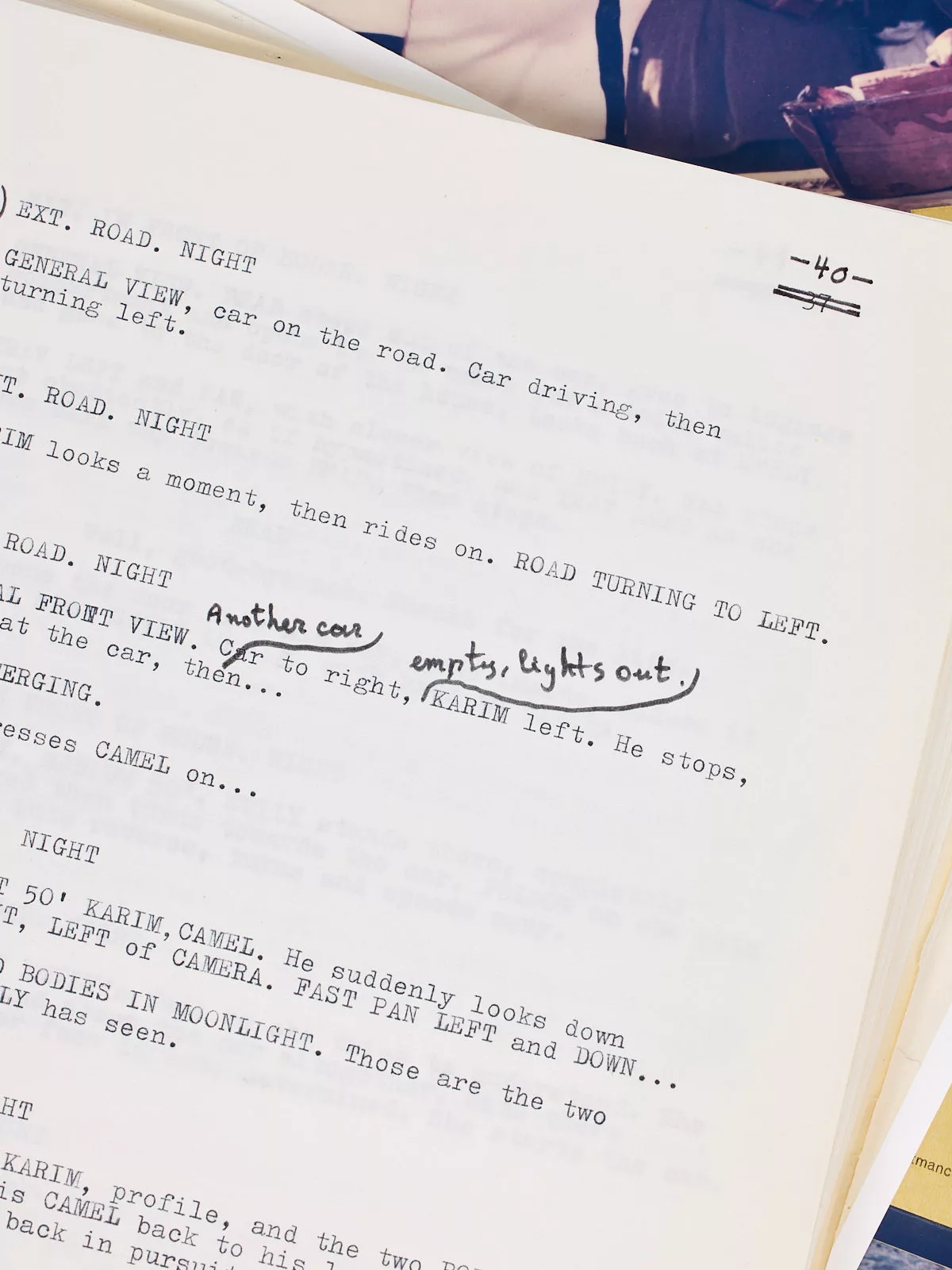
The screenplay and technical shooting script are entirely written by Romain Gary, with some thirty autograph corrections throughout the document.
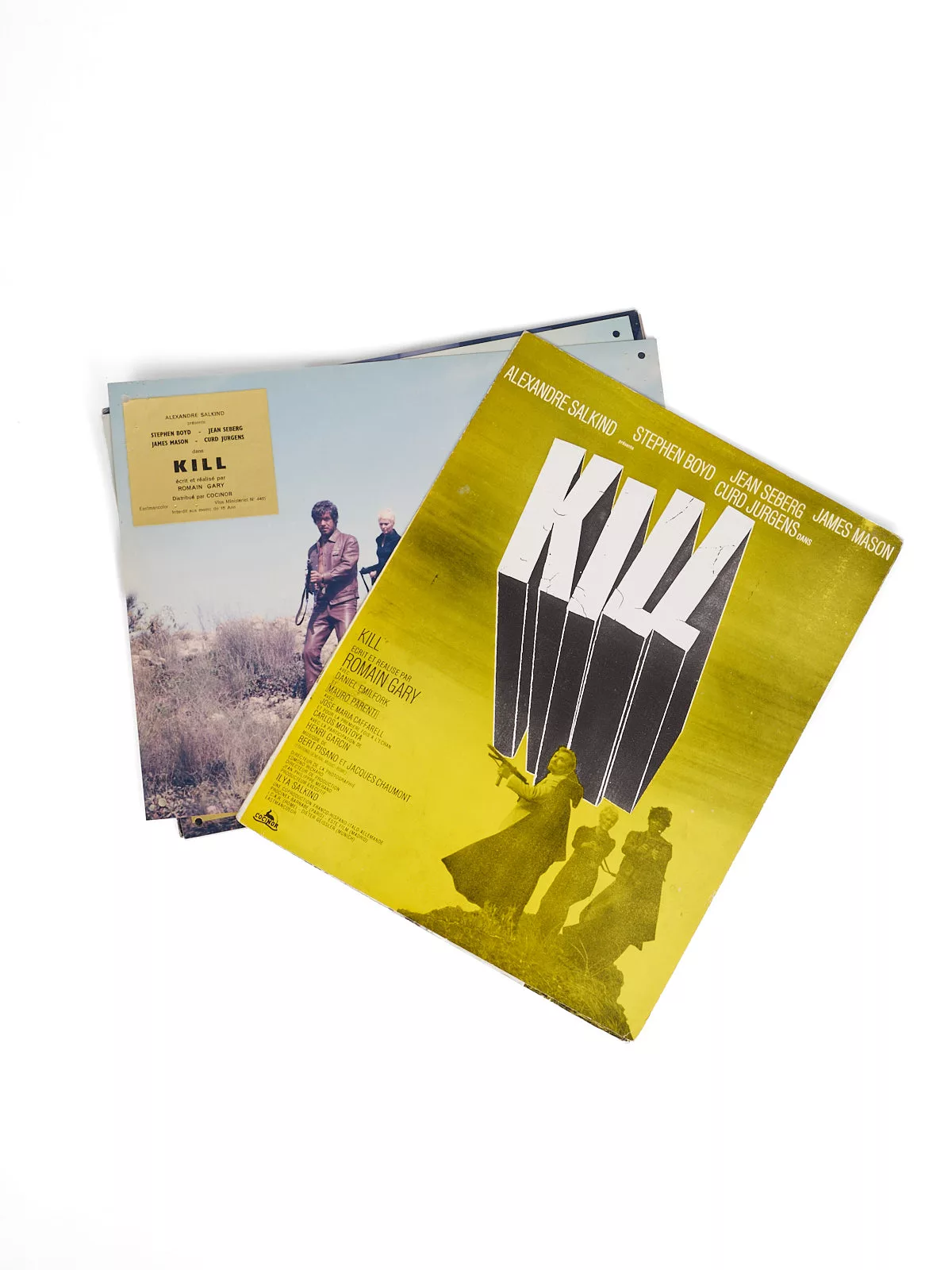
The screenplay and technical shooting script were written entirely by Romain Gary; this is his own personal copy, enriched with various photographs from the film.
It is not known how many copies were made of this screenplay, written entirely in English owing to the international nature of the production, overseen by Alexander Salkind, a French-Mexican producer of Russian origin who would achieve fame and fortune six years later by producing the three Superman films. At the time, the cast assembled was James Mason, Stephen Boyd, Curd Jürgens, Jean Seberg and Henri Garcin, called upon to work superhuman wonders to make the film a success.
The (slender) plot: a young woman, Emily (Jean Seberg), the young wife of a senior Interpol official, is stranded miles from civilization and owes her survival to the intervention of Killian (Stephen Boyd), a man ready to do anything to destroy a gang of drug traffickers. A veritable war ensues, drawing Emily into a world of violence and corruption that reveals her husband is not quite the incorruptible policeman he appeared to be.
The film was shot during the winter of 1971 in two Spanish cities, Madrid and Alicante, with Romain Gary directing and Jean Seberg starring. It premiered in Marseille on 19 January 1972, and was also released under the titles Police Magnum and, in the United States, Kill Kill Kill. It must be said plainly that the film is no masterpiece, falling far short of Les oiseaux vont mourir au Pérou.
Critics were unkind to Gary: “The drug problem is a serious one, and Romain Gary a serious man. That this talented novelist, former diplomat, journalist and occasional filmmaker (Les oiseaux vont mourir au Pérou) should have undertaken to denounce on screen those responsible for the most ignoble of traffics seemed a good omen […]. But so many erotic-exotic scenes, motorized chases and serial shootouts drag Kill down to the level of genre pulp. A jumble of clichés, in extreme confusion, in which the promised and expected indictment is lost” (Le Monde).
In an interview given at the time, Romain Gary tried to defend the film: “I need to make people share the disgust I feel for drugs and their traffickers. The first thing to do is to instill in people the most total disgust […]. To give a sense of infamy. To me, they are Nazis. The public must be made to laugh at their corpses […]. On the international level, there is no real fight. Governments do not do what is necessary to bring legitimate pressure on producing countries, for fear of losing clients in other economic sectors.” The intention was laudable, but the result, from a cinematic standpoint, was far from convincing. The film flopped.
“Romain my love, […] When you made the film, with so little help from anyone around you, it was in part to save my life. In the literal sense of the term. No one — least of all myself — thought I would even be capable of working again, that I would find the psychic resources and physical strength. And you knew that finding the discipline and strength to work again was a matter of survival for me.” Jean Seberg wrote this letter after the film’s release, after Gary had indeed tried to give her a reason to get up and live. The film changed nothing, and the couple divorced the following year.
The whole comes from the Gary archive sold to the Musée des lettres et manuscrits, and can be traced to the Artcurial sale that dispersed its contents during the Aristophil sales (Paris, Artcurial, 2020, no. 446).