

“Jocelyn is a sensitive and passionate man whom circumstances and virtue lead into the priesthood, and who becomes a village priest.” This is how Lamartine himself introduces his hero, a figure of renunciation, sacrificed love and religious sublimation.
Subtitled an episode and presented as a “journal found in the papers of a village priest,” Jocelyn was for Lamartine “a fragment of an intimate epic,” which, according to his note to the reader, must “be read as it was written”: “It is the dream of a heart of sixteen.” On 14 November 1835, as the work neared completion, Lamartine wrote to a friend: “Tomorrow I finish copying the eight thousand verses I promised Gosselin.”
Once the work was finished, another task began: launching it into the literary world. Lamartine pursued this with remarkably modern energy, soliciting critics, friends, influential readers and society connections. He does not, however, appear to have anticipated the scale of its success. A few days after publication, he wrote to Virieu: “Jocelyn […] has made a bigger splash than I expected. It is a furor, a frenzy. It surpasses the unanimous success of the Premières Méditations. It is being read in every professor’s course, in every school, and it is selling by the thousands.” To Sainte-Beuve, he confided that Jocelyn “triumphs hour by hour in the hearts of women”; to Cazalès, that he spent his time “answering perfumed notes.” This time, fame also brought money: “My poem is an unprecedented success. It is magnificent! I did not expect it! My publisher tells me I will earn 400,000 francs!”
The book’s success owes much to its very nature, at once a narrative poem, a novel in verse, and a lyrical confession built on sacrifice and the elevation of suffering through faith.
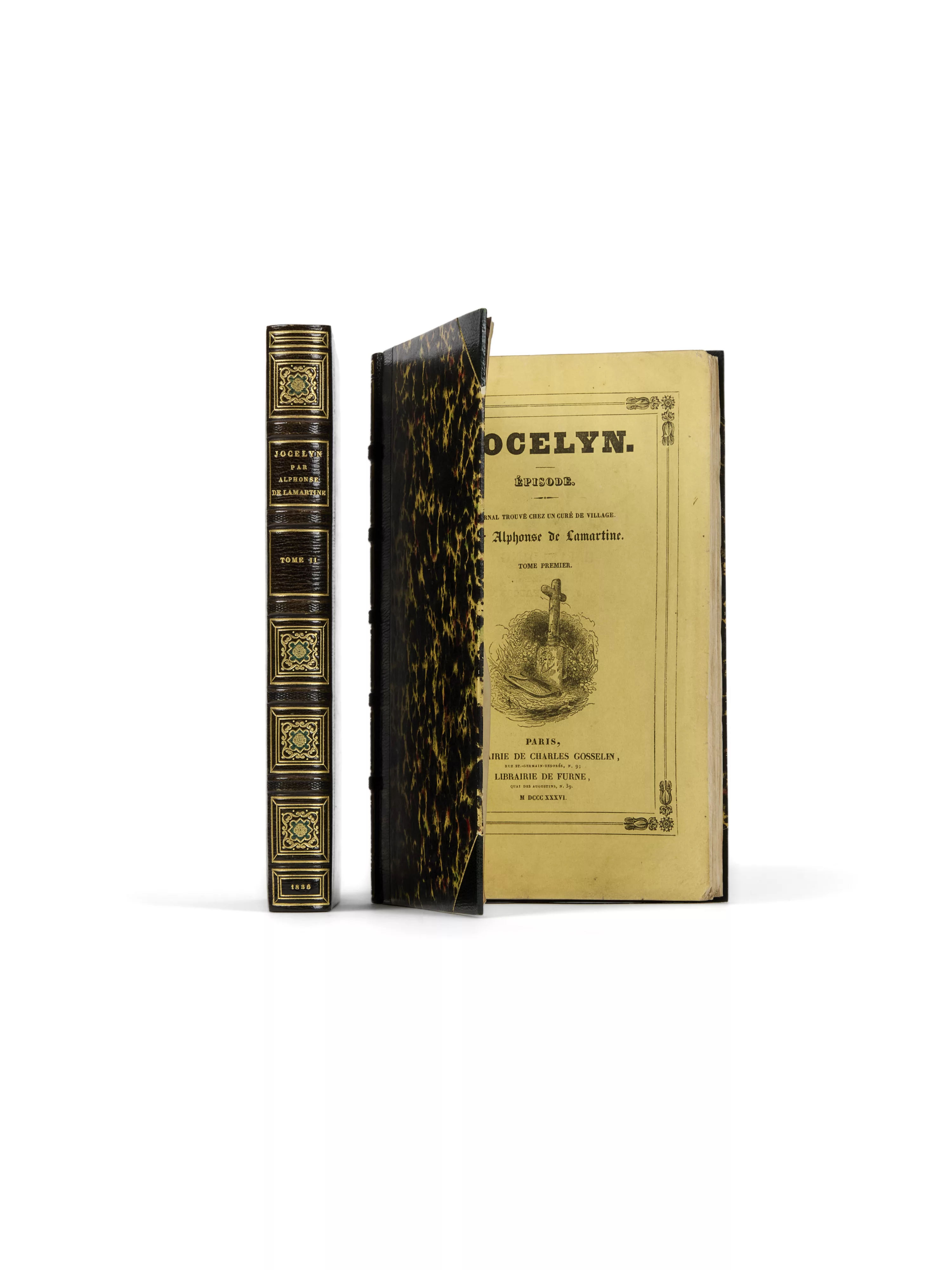
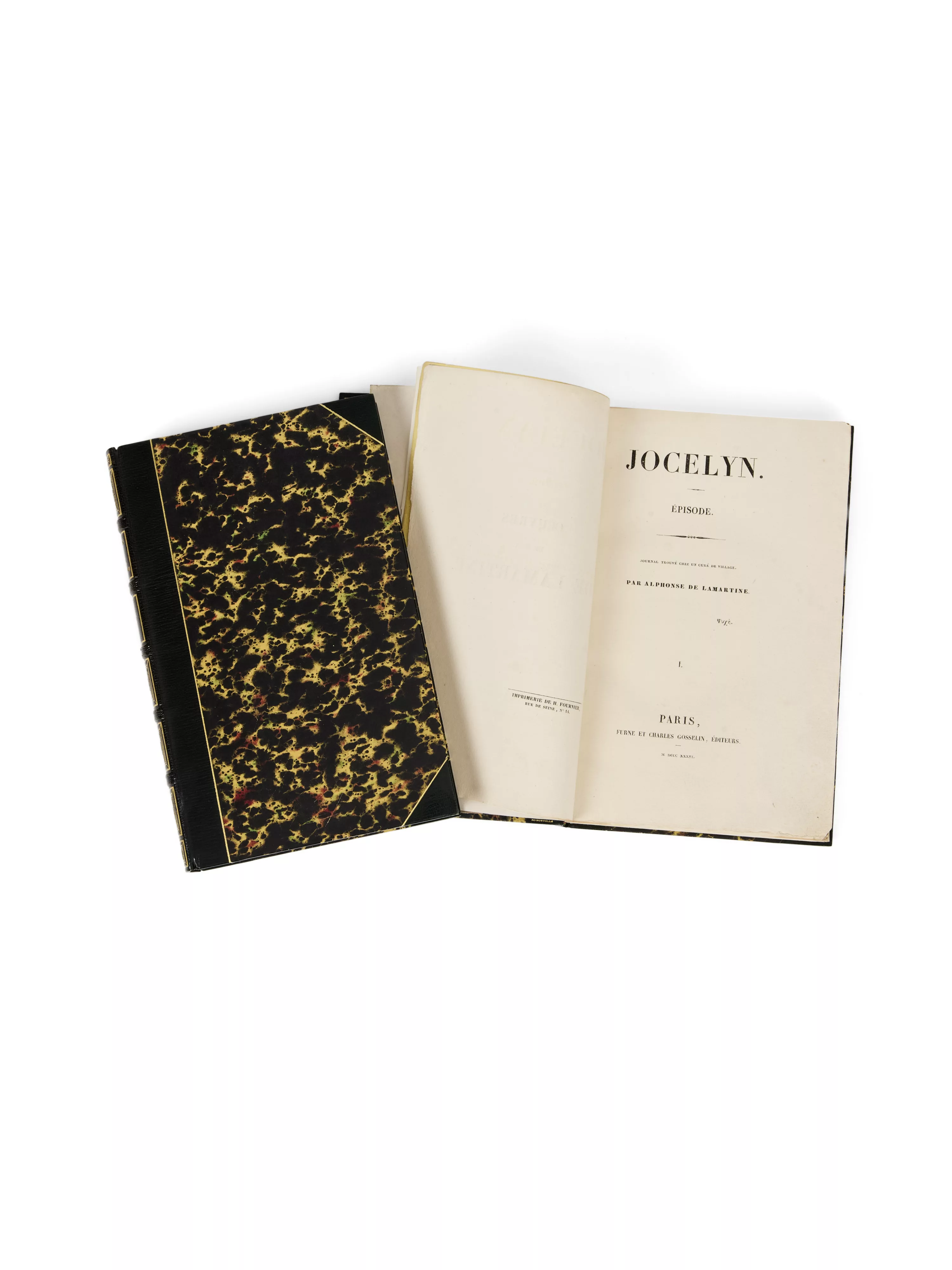
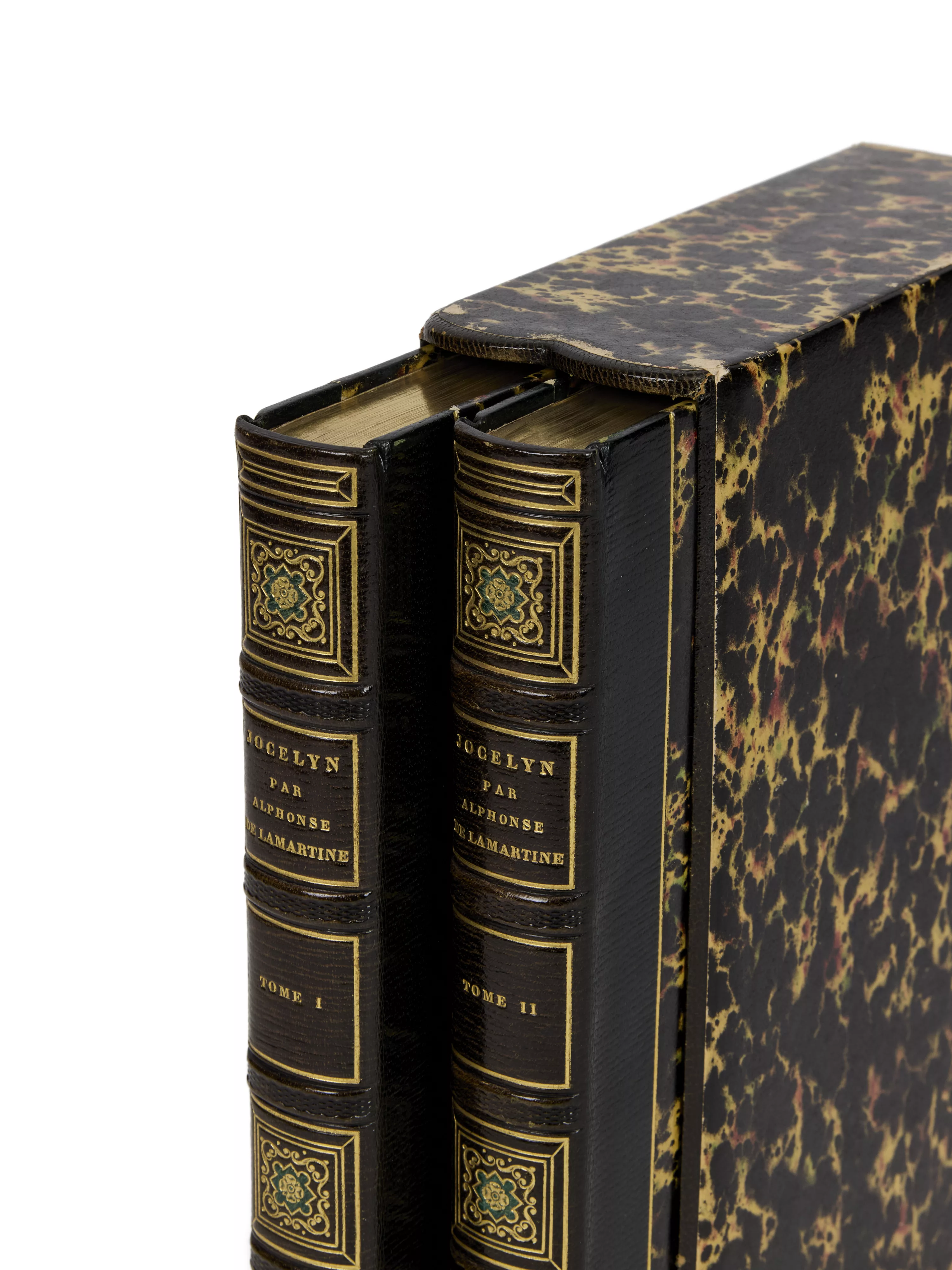
A fine copy, bound over the original wrappers in an attractive pastiche binding by Alain Devauchelle.
Carteret, II, 24: “A major work by the poet. Rare in fine condition.”