

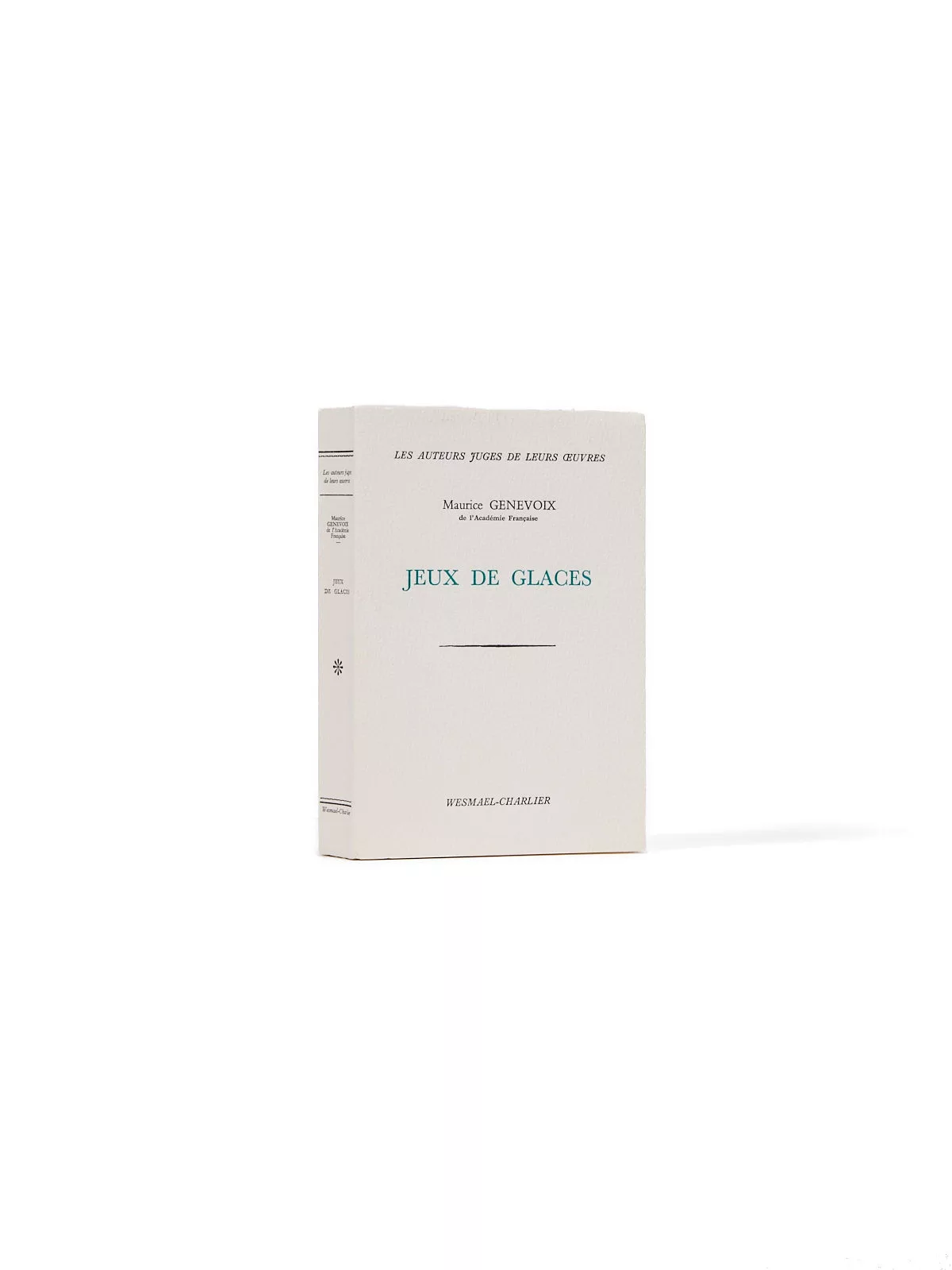
Jeux de glaces
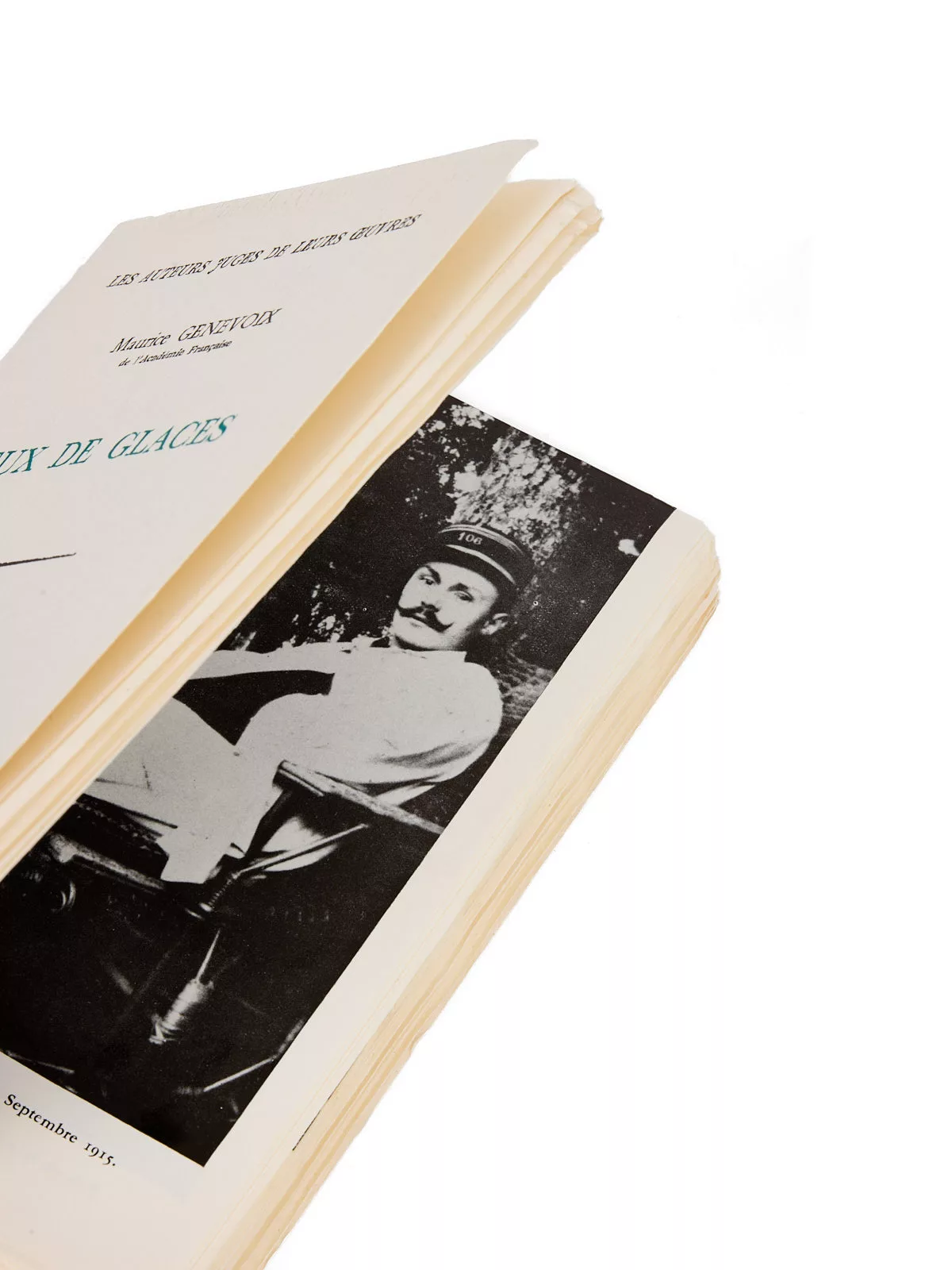
Published in the series “Les Auteurs jugent de leurs oeuvres,” this short and often overlooked volume is a precious personal testimony. Far from a simple autobiography, Jeux de glaces explores what Maurice Genevoix considered foundational to his work: fertile solitude, his childhood in Châteauneuf-sur-Loire, the loss of his mother at age twelve, his years as a boarder at the Lycée Pothier in Orléans and, of course, his experience of the war.
Genevoix portrays his own books as so many facets of a single vision: his war narratives, but also his regionalist writings, his travel books, his “novel-poems,” and his moralist reflections. He dwells in particular on the genesis of Raboliot, explaining that the book was not the product of direct or documentary notation, but of a long process of mental reconstruction, nourished by memory and inner silence. He sets out here a craftsman-like and deeply interior conception of literature, close to that professed by his friend Maurice de Vlaminck in painting — a parallel not lost on the painter’s wife, Berthe de Vlaminck, who wrote to him on 4 August 1961, shortly after the book’s publication:
“Quelle belle et honnête profession de foi, mon ami […]. Tu es vraiment l’artisan de ton oeuvre. Ce que tu écris en «faveur de l’isolement et de la concentration intérieure», c’est exactement ce que pensait Vlaminck en peinture… Tu as bien exprimé ta pensée avec une âme de peintre. C’est beau!” (in Maurice Genevoix 1890-1980, catalogue de l’exposition, Mairie de Paris, 1980, p. 87).
It is notably in this volume that Genevoix recounts and explains, for the first time, the circumstances of the “non-meeting” with the man who was the imagined model for Raboliot, the poacher Alphonse Depardieu, known as Carré. “He was not the last to claim, perhaps to believe, that he had served as my model. And truly I owe much to this man who did not come, one autumn day in 1924, to the back room of the rustic inn where I waited for him in vain” (p. 90).
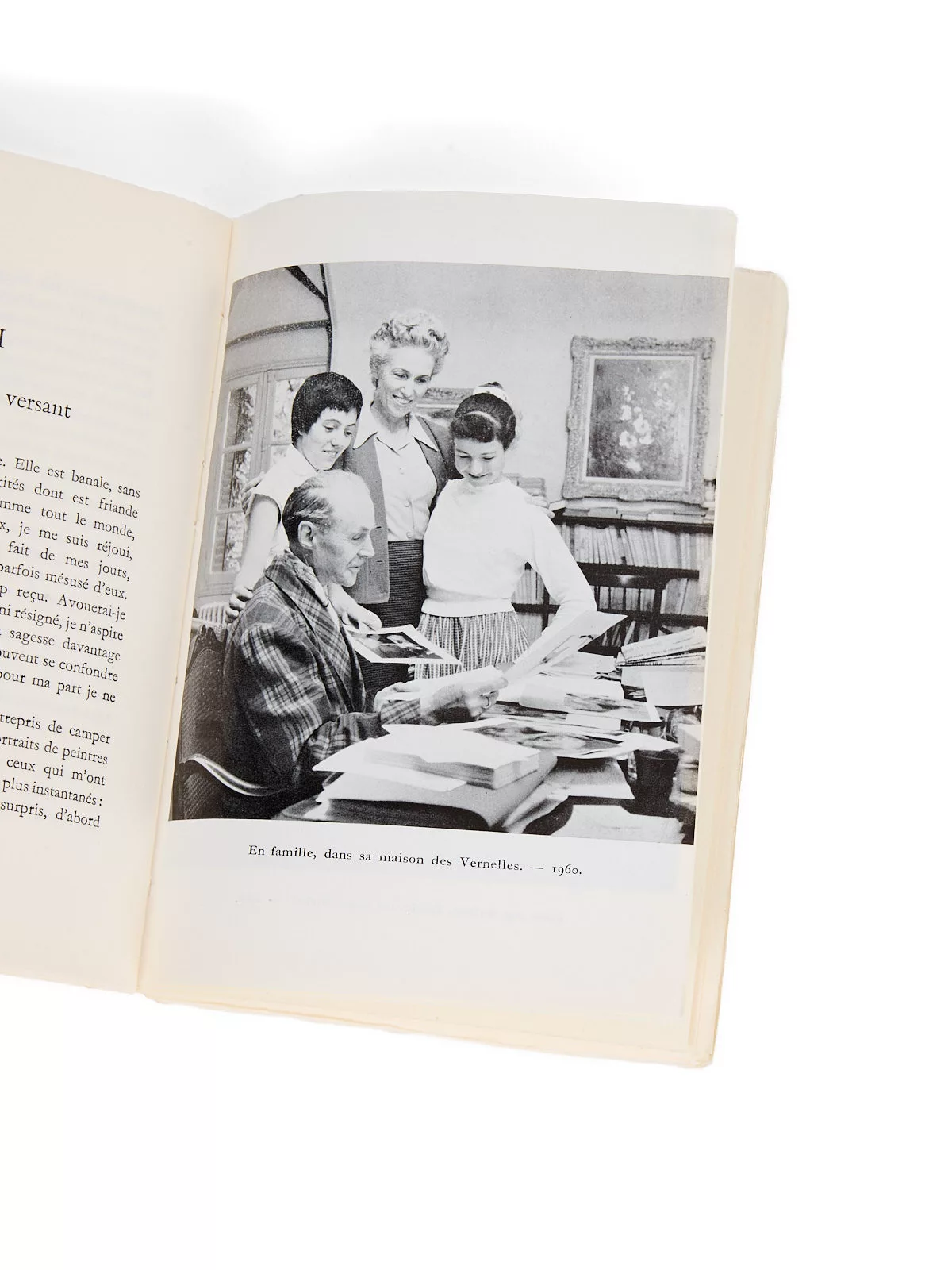
From the library of Maurice Genevoix, at “Les Vernelles” (bookplate).