

Jérôme 60° latitude Nord
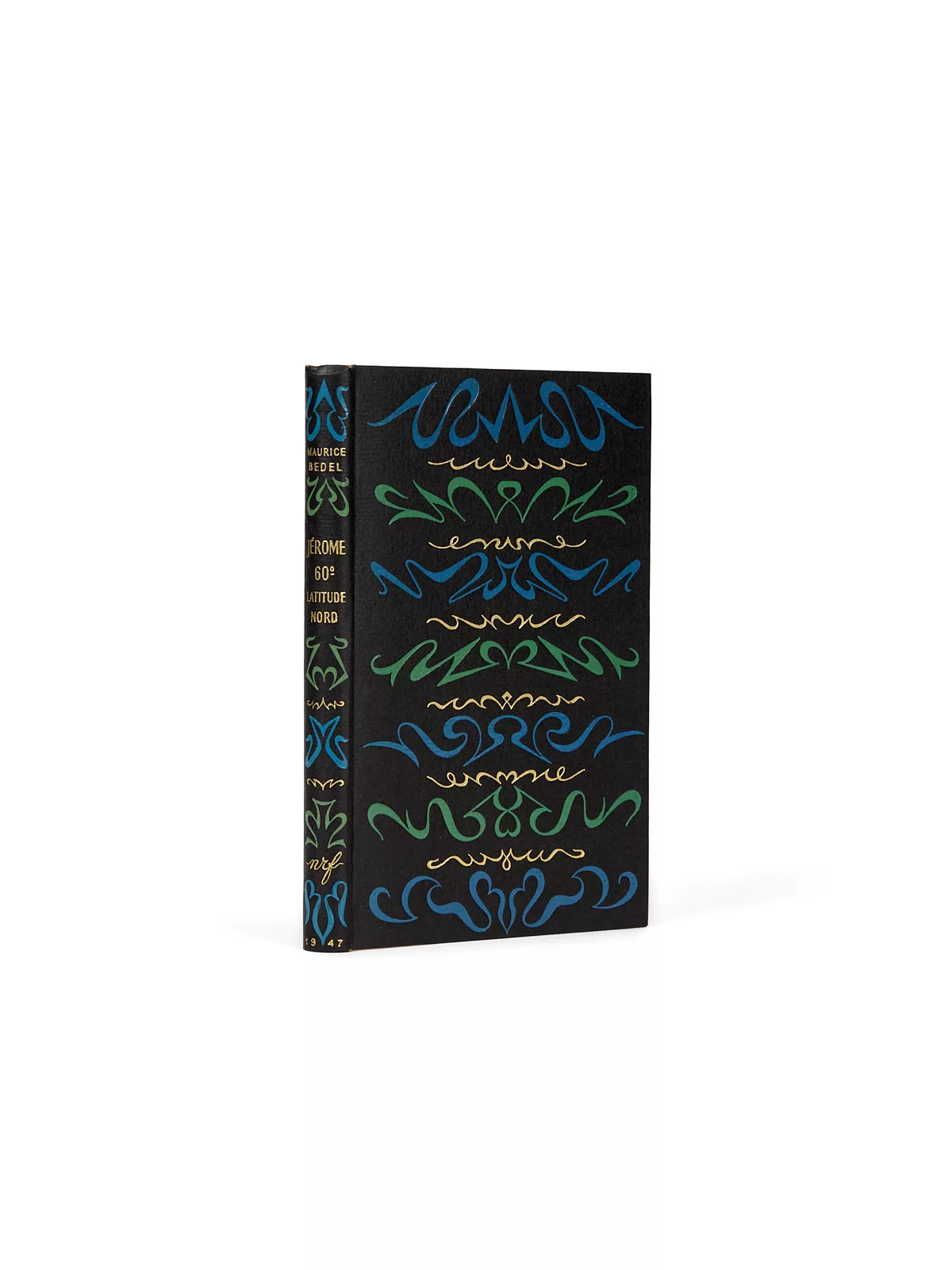
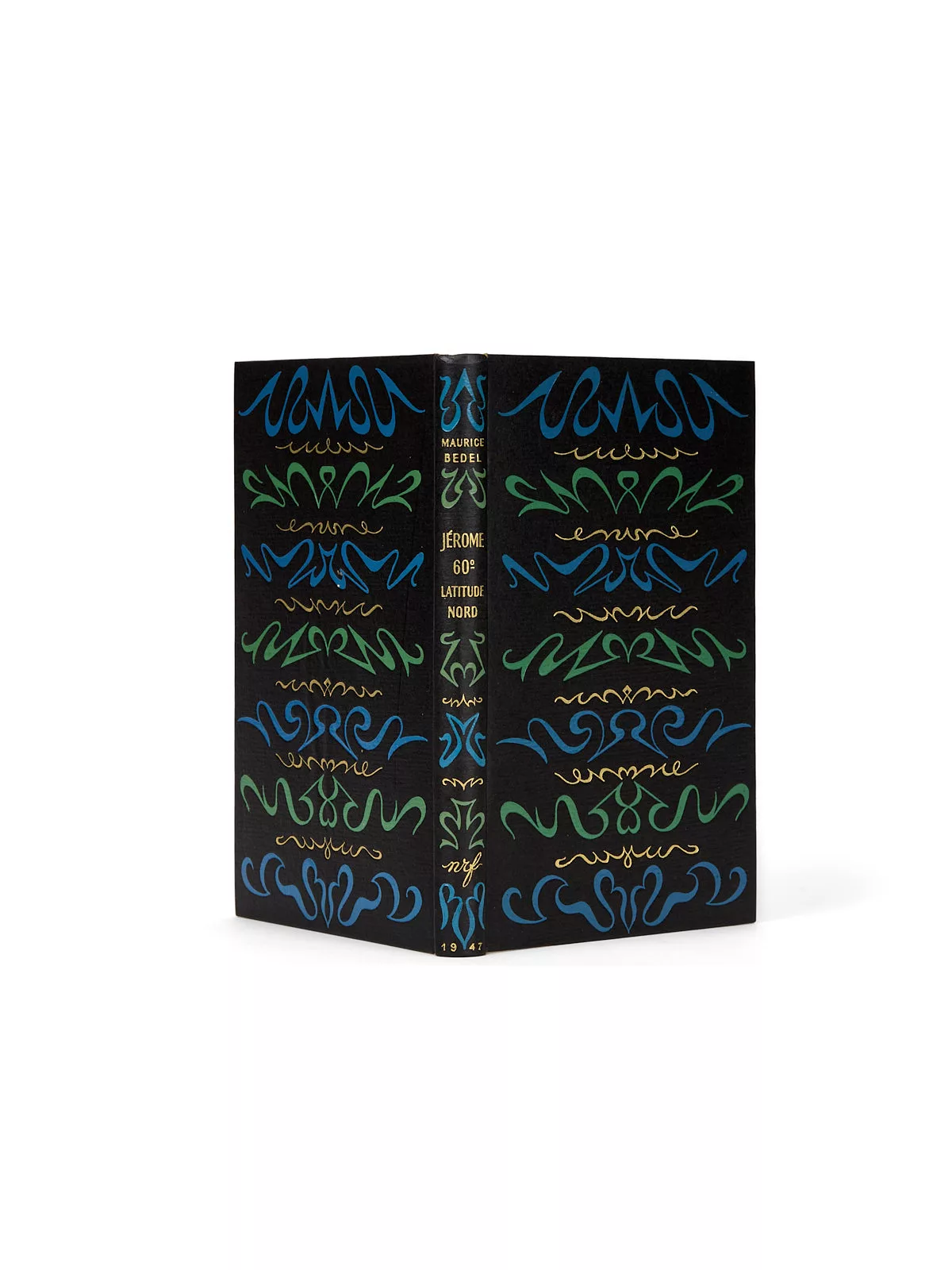
One of 1,040 copies on alfa paper, bound after the design by Paul Bonet (no. 258).
The novel won the Prix Goncourt in 1927, beating out Georges Bernanos’s L’Imposture, though the latter had been ardently championed by Léon Daudet. Maurice Bedel’s victory had something of a happy accident about it. Unknown in the literary world, he had reportedly submitted his manuscript almost naively, after inquiring with the cashier at the Gallimard bookshop on boulevard Raspail; she directed him to Roland Saucier, the shop’s manager, who passed the text along. A few months later, Bedel learned that it would be published — and soon after, that he had won the Goncourt.
Trained as a physician, with a doctoral thesis on periodic obsessions, Bedel was also a novelist, traveler and essayist who had first published poetry under the pseudonym Gabriel Senlis. Jérôme 60° latitude nord is less a Nordic novel than a fantasy of observation: a journey through an imagined Norway, blending social satire, ethnographic curiosity and a comedy of romantic manners. The plot takes its hero to Christiania — the former name of Oslo — where the sense of displacement owes as much to the landscape as to the local customs of the heart.
The Goncourt’s success was not without reservations. Bedel was accused of owing a debt to Morand or Giraudoux, and, above all, of a portrayal of young Norwegian women judged frivolous, even indiscreet.
Bedel, for his part, found an unexpected new presence in the twenty-first century with the publication of his Journal de guerre 1914-1918, unpublished for nearly a hundred years. Begun on 1 August 1914 in a mood of patriotic fervor, the diary ends on a note of dark, almost testamentary clarity: “Les temps sont noirs. L’horizon est barré. Il ne faudra pas que l’on croie dans cent ans que c’était gai, la Victoire.”
From the “Prix Goncourt” library of Gérard Pouguet, with bookplate.