

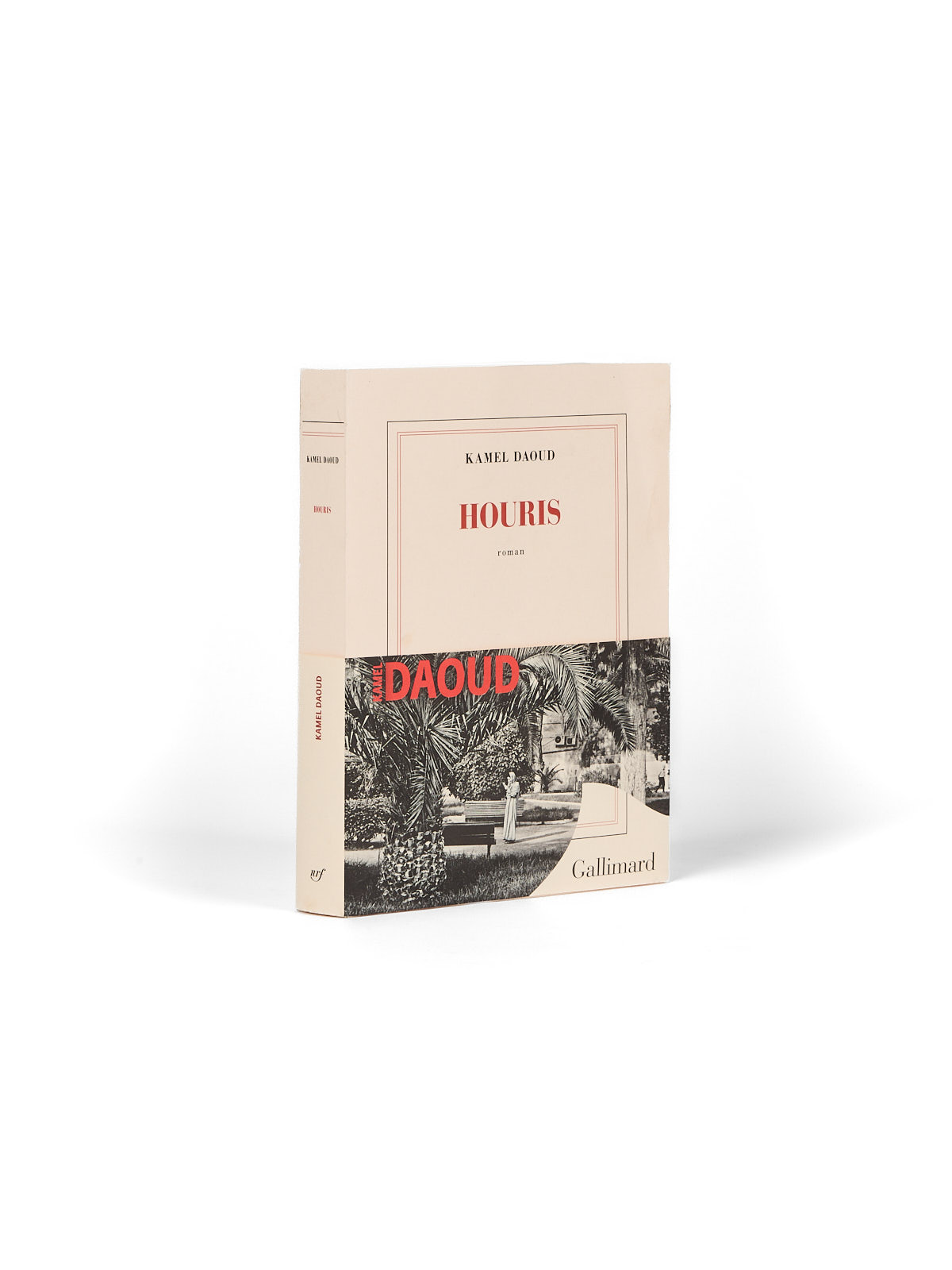
Houris
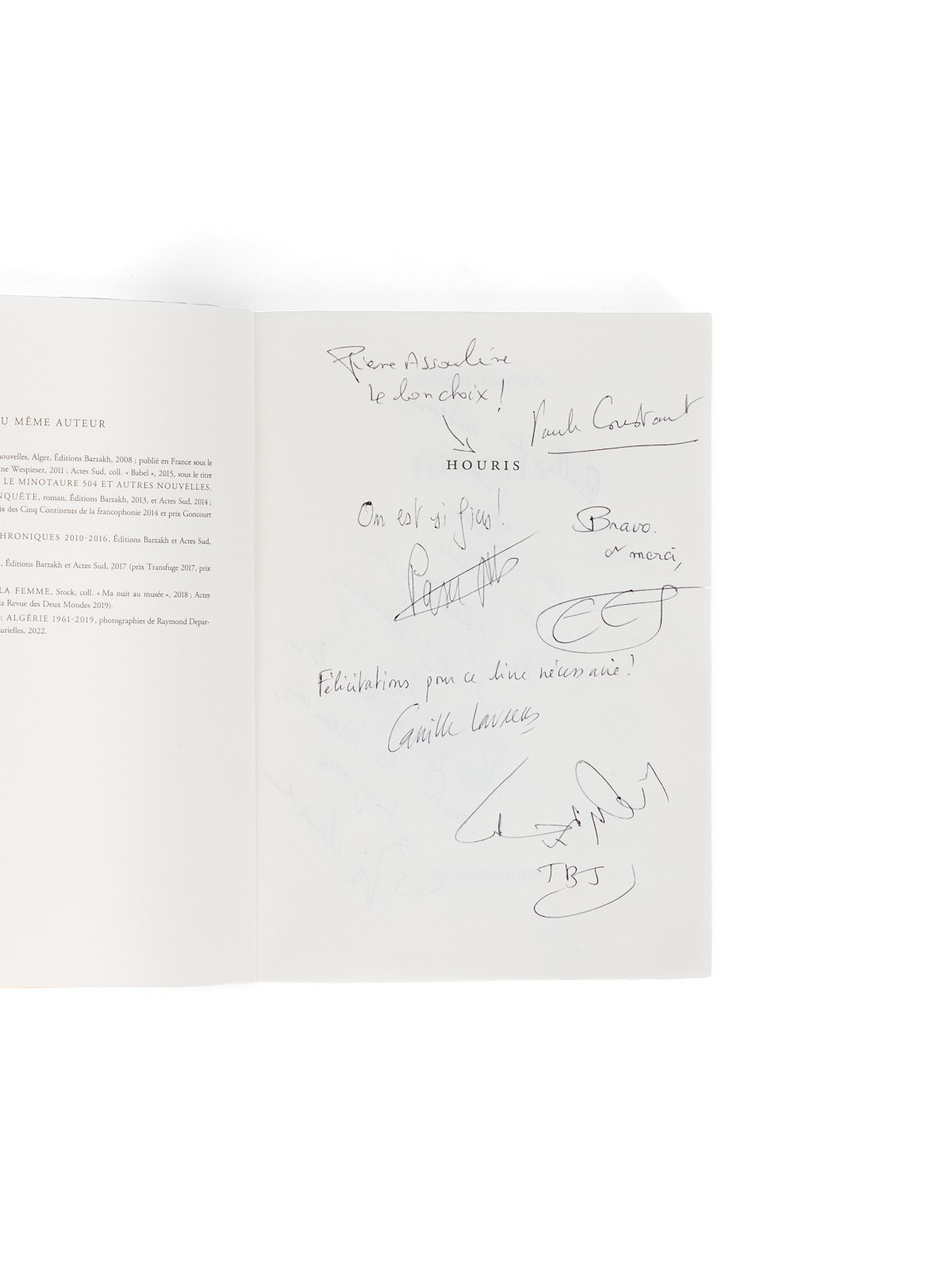
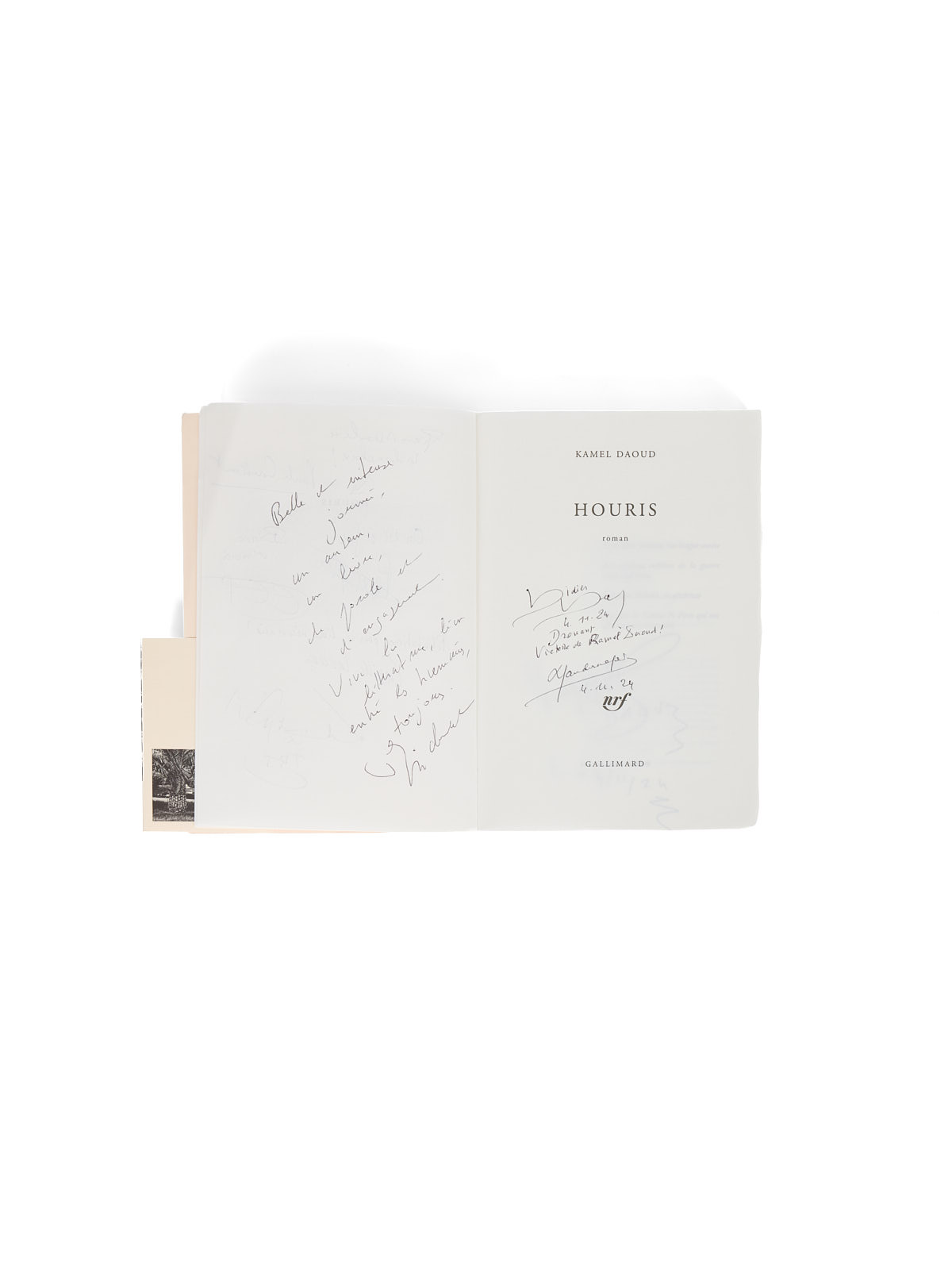
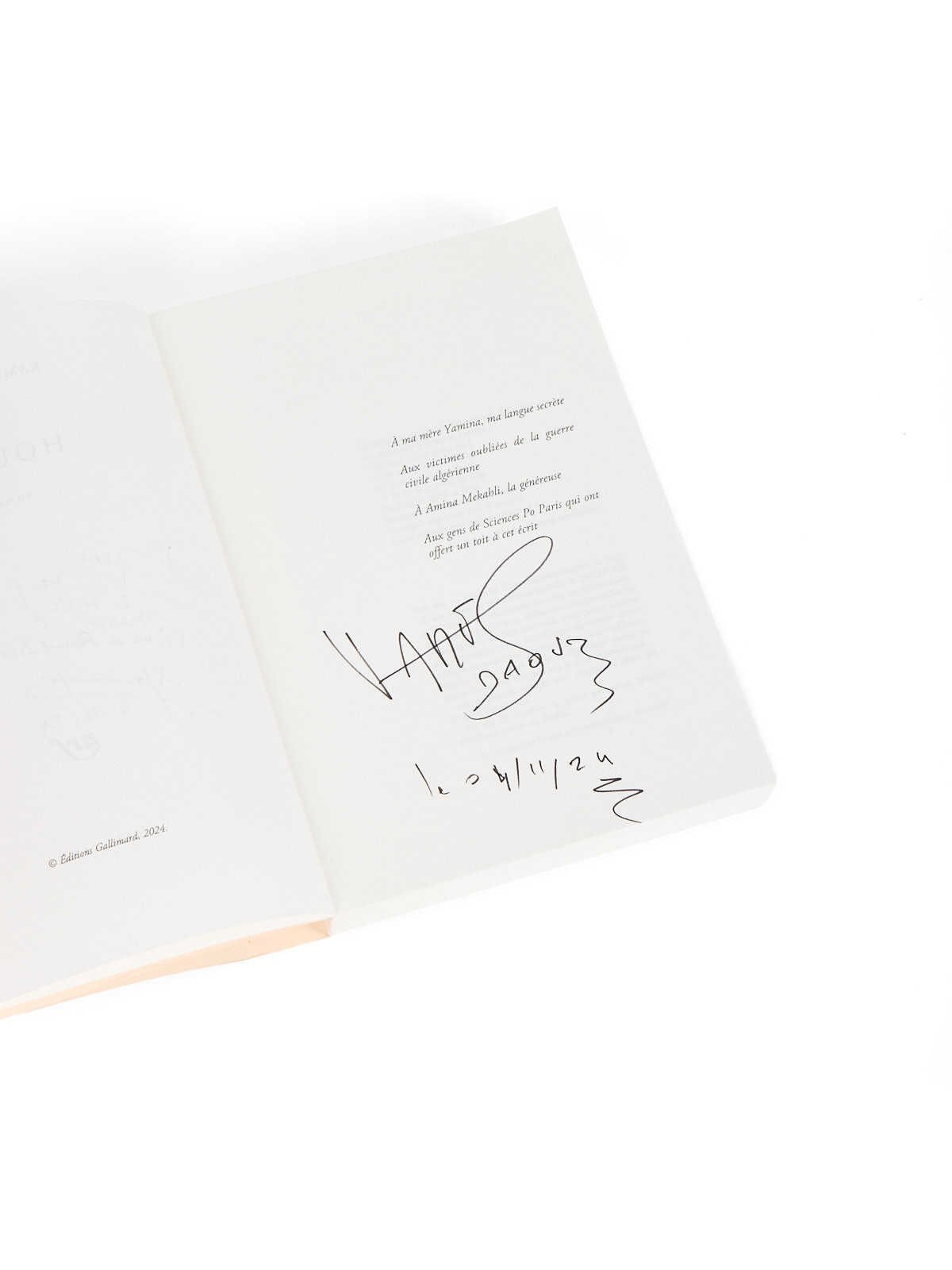
The only copy signed by the entire Prix Goncourt jury and by the laureate, Kamel Daoud, on the very day the prize was awarded, 4 November 2024, in the Salon Goncourt of the restaurant Drouant, where all were seated together.
Publisher's wraparound band. A photograph of the writer is included, taken on his arrival at Place Gaillon, before joining the members of the Académie.
In Muslim tradition, houris are the beautiful celestial beings, eternally young and virginal, promised to those who defend Islam — through their ideas, their faith, their conduct toward others — or who fall on the field of battle. Daoud’s novel is a searing evocation of Algeria’s “Black Decade” (1992–2002), told through the voice of a woman — or rather through her quest to recover that voice, since Aube had her throat slit on 31 December 1999, at the age of five, during a final Islamist massacre that annihilated a thousand villagers, including her father, mother and sister. A cannula has allowed her to breathe ever since, a “smile” running beneath her chin from ear to ear — 17 centimeters: the trace of the knife in the flesh of a survivor.
An exceptional copy.