


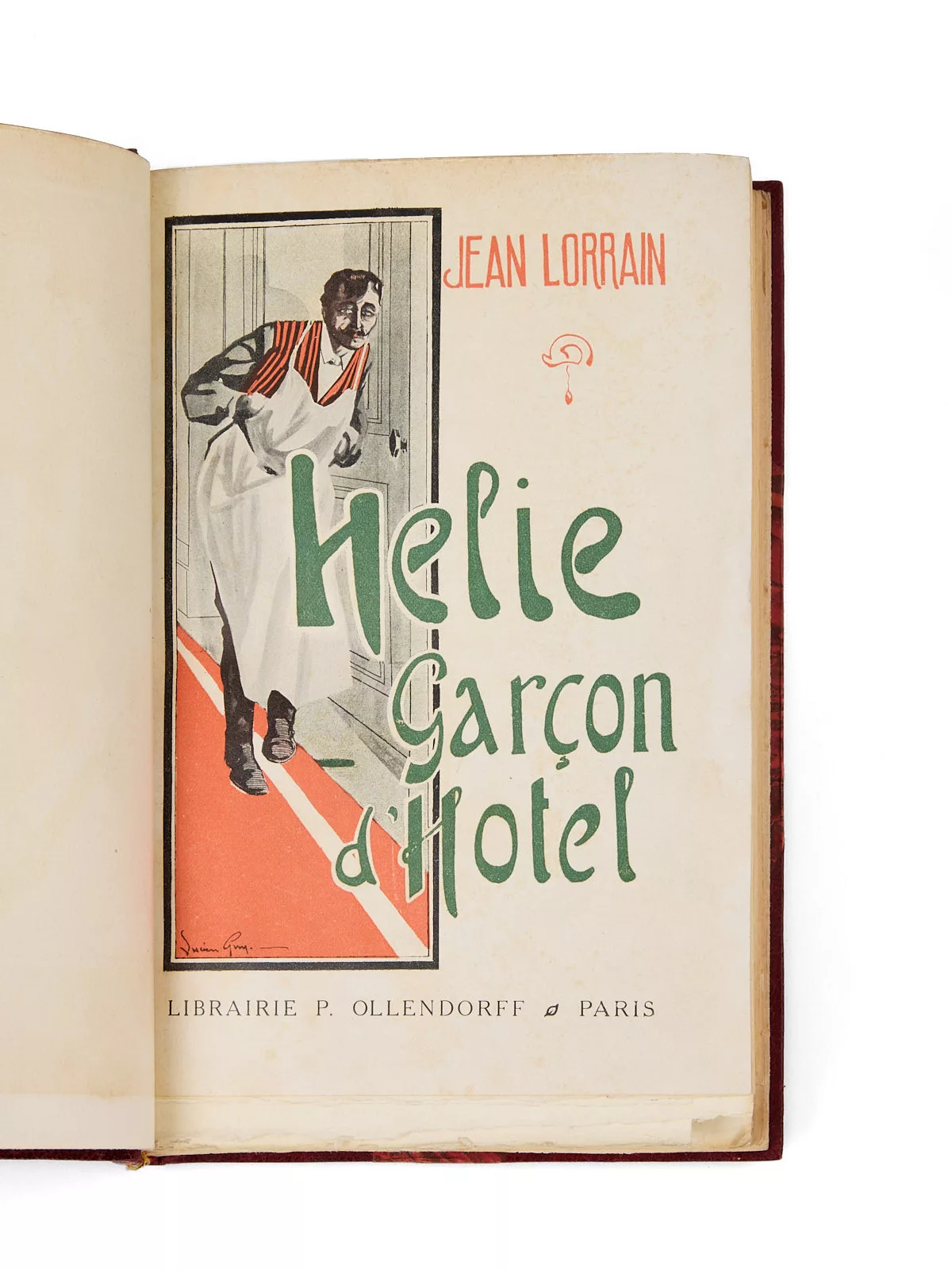
Hélie, garçon d’hôtel
One of 12 copies on vergé de Hollande paper (no. 12).
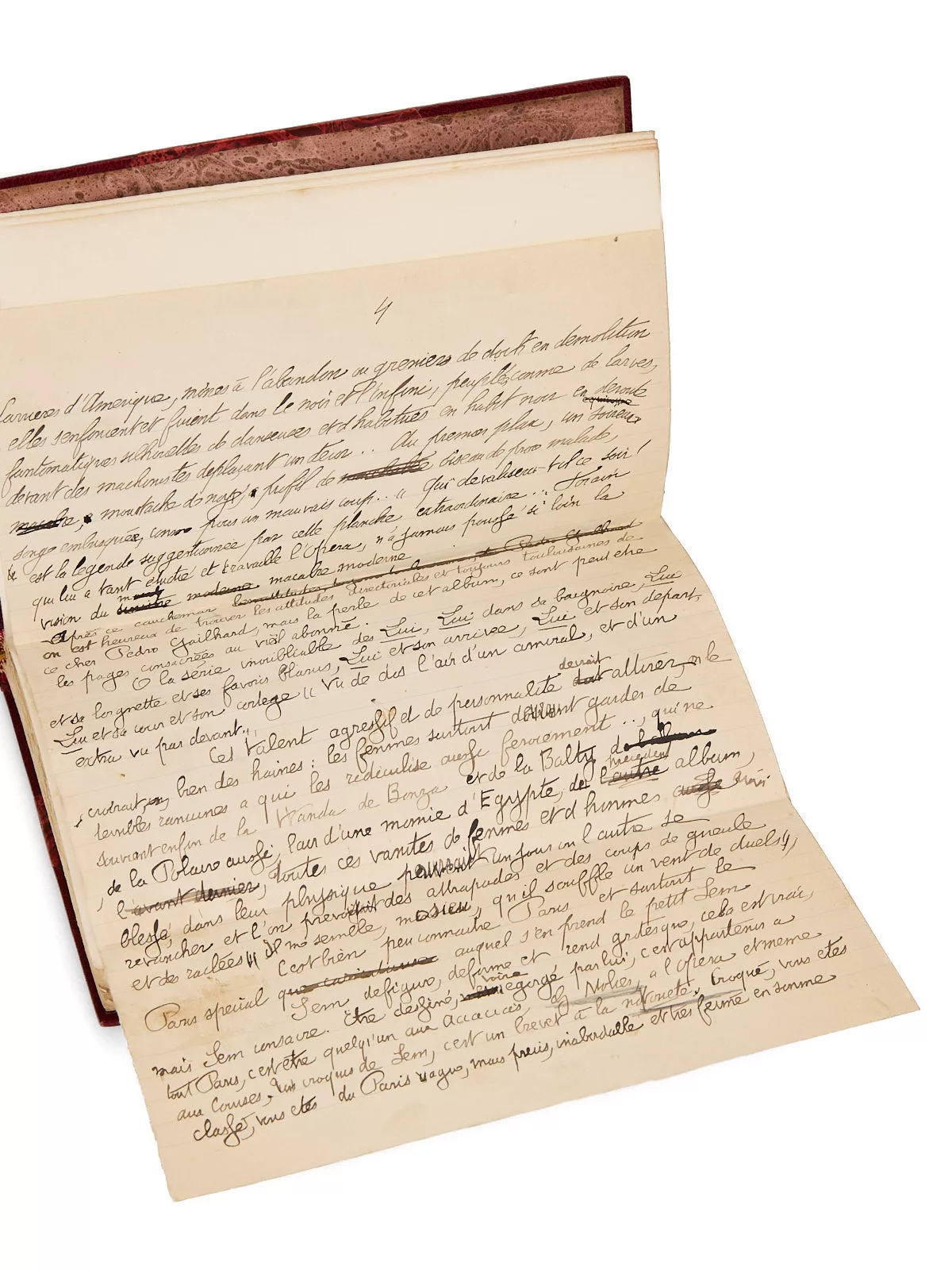
Mounted at front: an autograph fragment of an article on the caricaturist Sem (1 page on 1 leaf, 195 x 300 mm), in which Lorrain discusses “L'Album rouge,” in which the artist caricatured the singer and director of the Opéra at Cap d'Ail, Pedro Gailhard, poking fun at his “directorial and ever so Toulousain airs…”
“If Lorrain is forgotten, it is no doubt because he left no great single work. He wrote too much for that. He was a writer of the industrial age, a journalist, a man who could churn out pages and juggle up to ten writing projects at once […]. In the same vein, Maupassant has survived Lorrain. Is that because he was the better writer, or because Lorrain is harder to approach? What is interesting about Lorrain is that he made no secret of his homosexuality, and did not hesitate to cross-dress — as a cocotte, a dancer, an acrobat, a Viking — with astonishing daring. He brought what might be called male prostitutes, butchers, wrestlers and street toughs into polite society, for the benefit of women and men alike […] and also through bolder descriptions, as in the very modern Hélie garçon d’hôtel, which openly recounts the life of a gigolo” (Benjamin Berton, interview in Commune on the subject of Dirty Dandy, 2025).
Hélie garçon d’hôtel also carries a sharp challenge to social hierarchies, in which the servants are forever intent on “setting the record straight” about the “abjections of their masters.”