

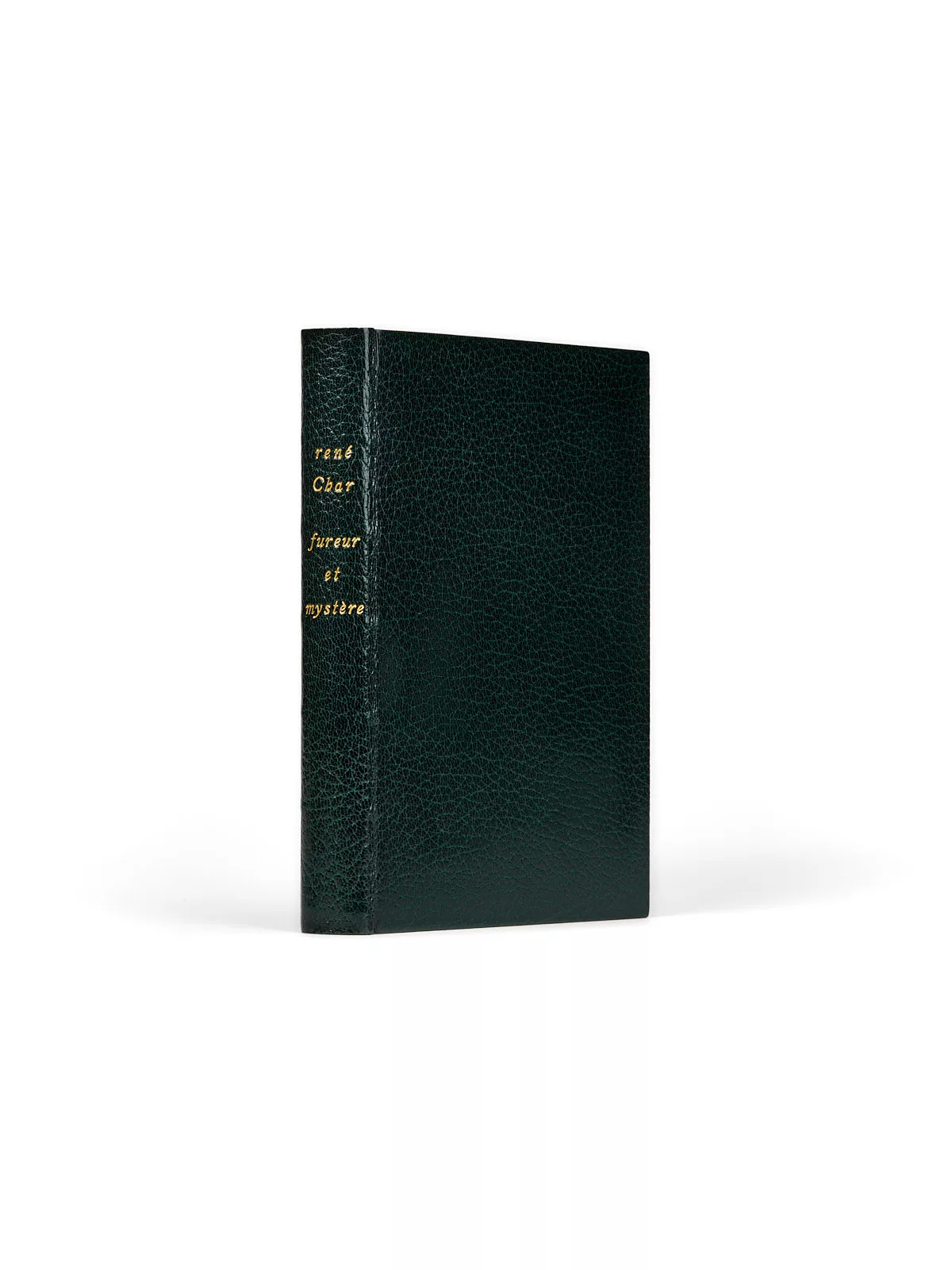
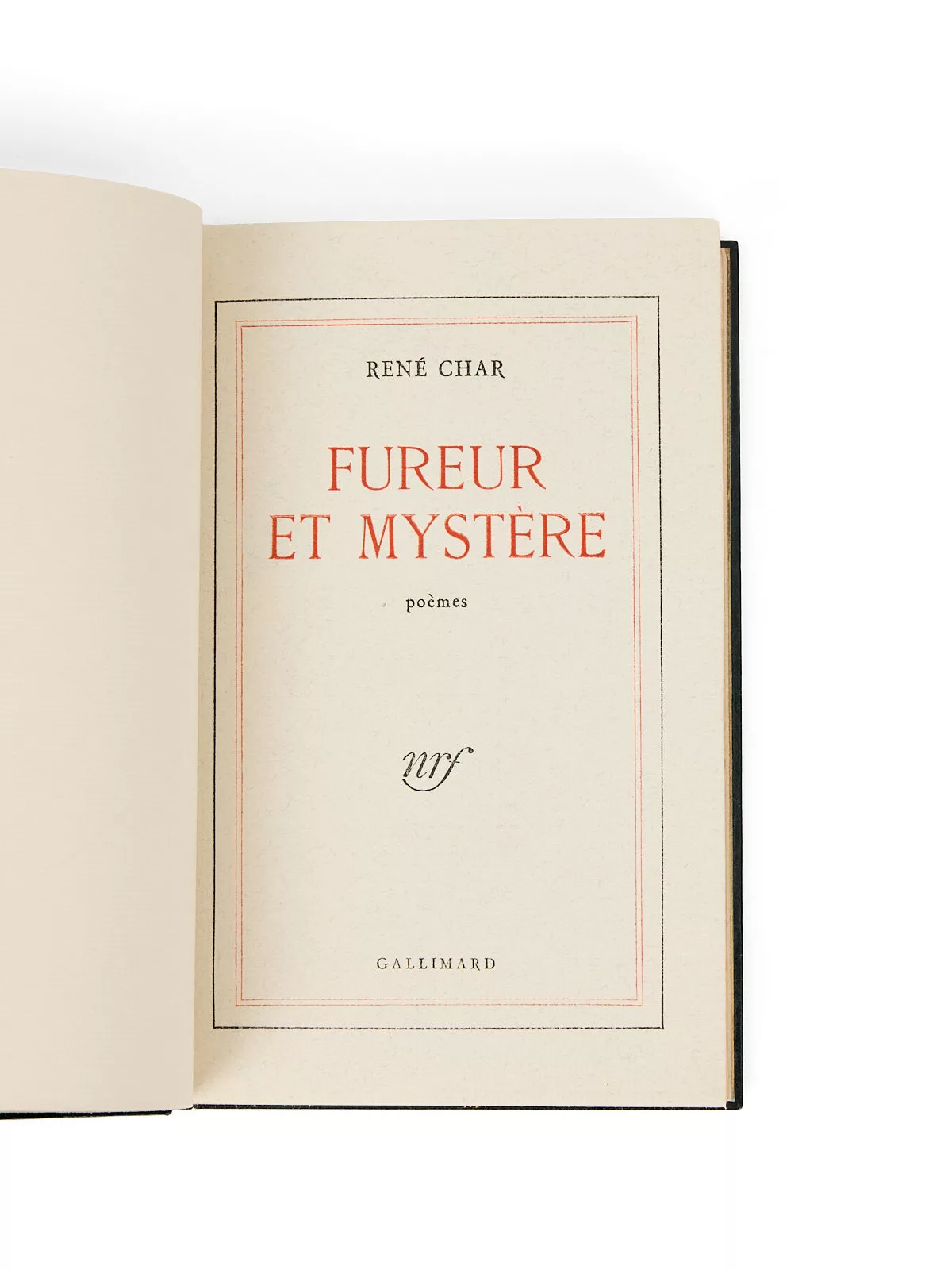
Fureur et Mystère
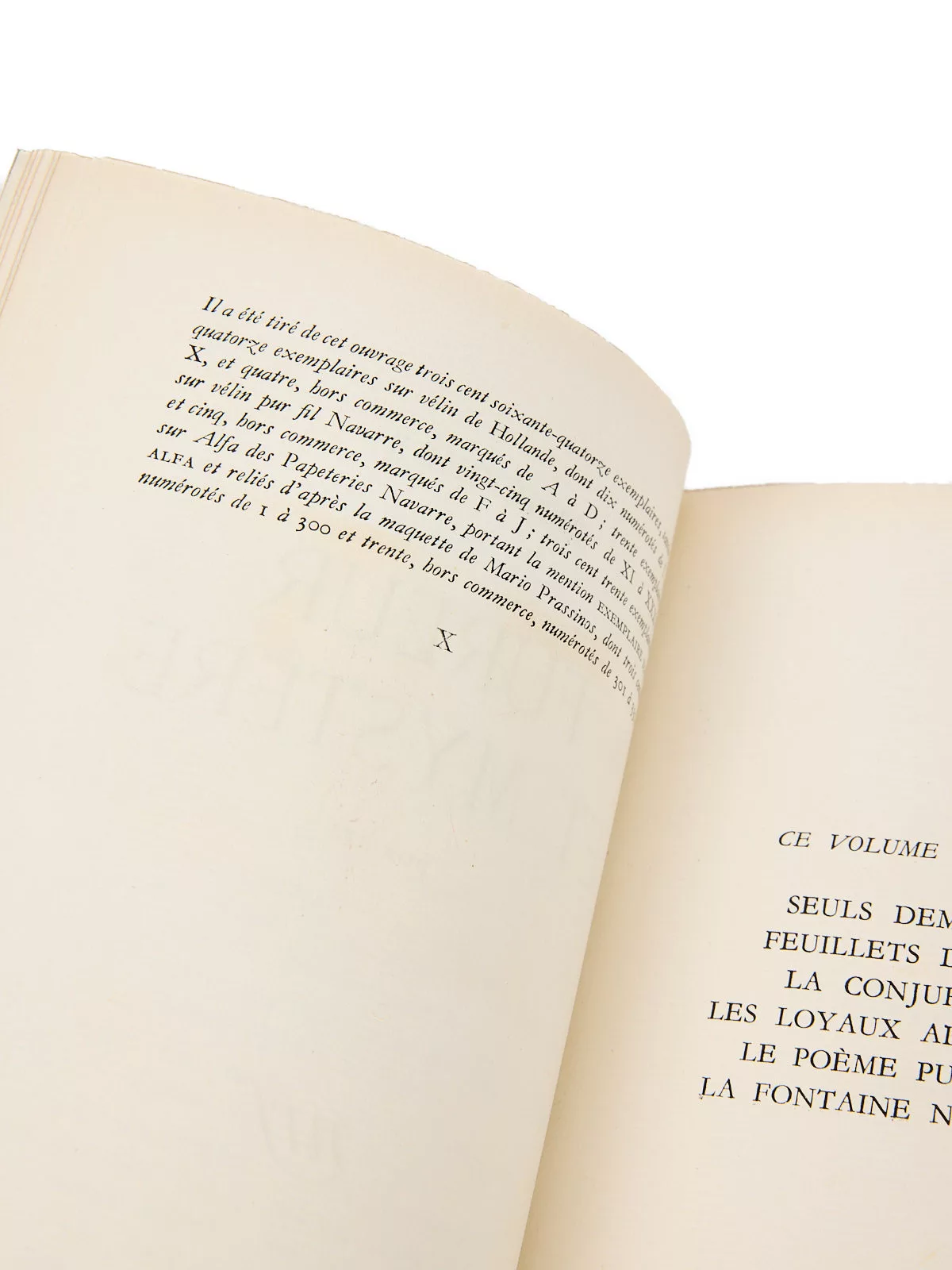
One of 14 copies from the deluxe issue on vélin [vergé] de Hollande (no. X).
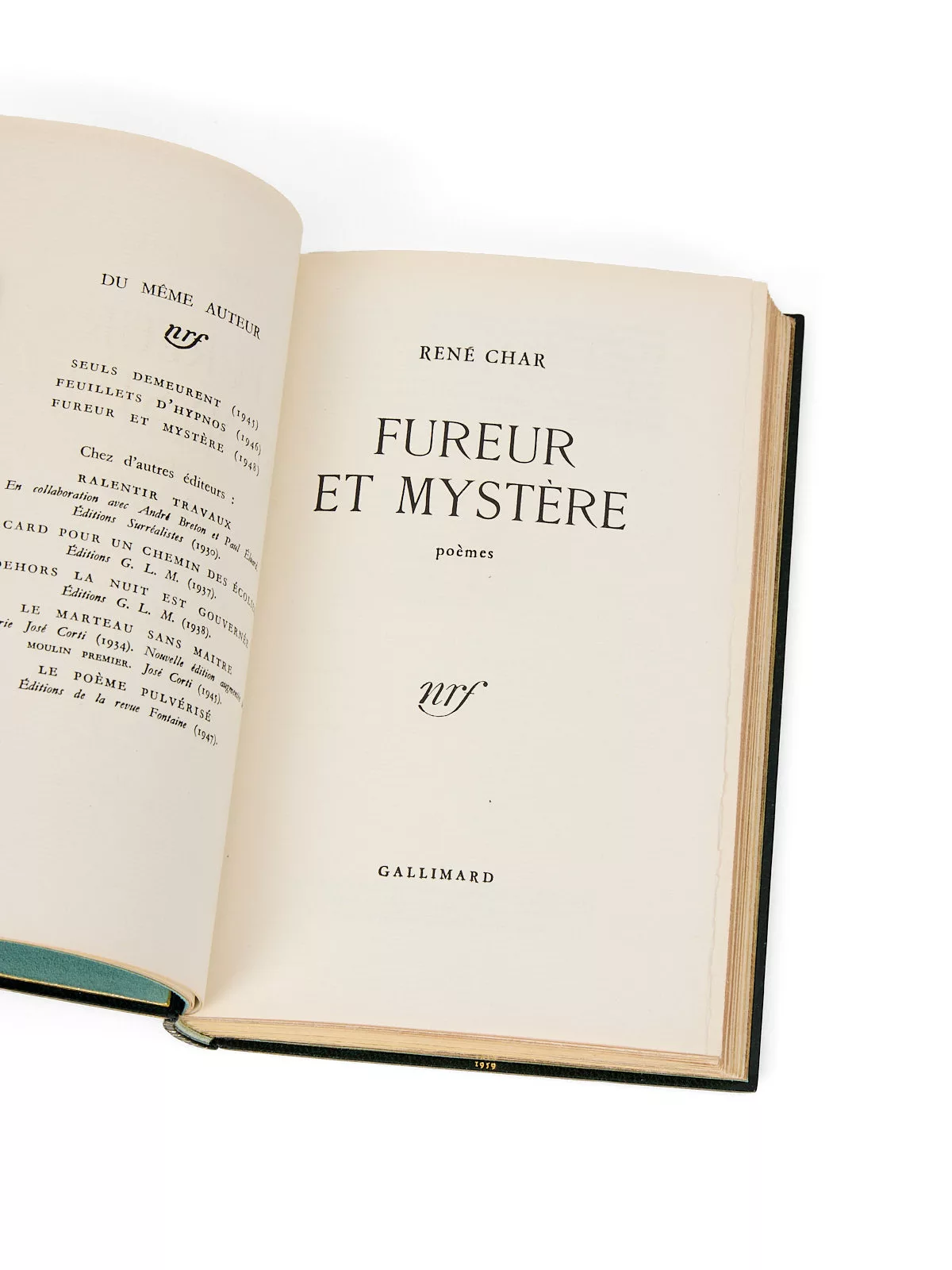
Fureur et Mystère brings together, with variants, the three essential postwar collections — Seuls demeurent, Feuillets d’Hypnos and Le Poème Pulvérisé — augmented by three further poems: “La Conjuration,” “Loyaux adversaires” and “La Fontaine narrative.” Despite the collections that preceded it from 1928 onward and the twenty or so books that followed until the poet’s death in 1988, Fureur et Mystère stands as a central work. At the end of the war, having returned to his native Vaucluse, Char resumed his poetic activity and produced a collection of exemplary maturity. Its title, which marked his break with Surrealism, made him more than ever “the hammer without a master” and a fierce partisan of freedom.
Like Seuls demeurent and Feuillets d’Hypnos, also conceived, matured and written during the war, Char had envisioned a collective volume as early as 1941: “Should the whole of my poems ever see the light of day (?!), I would rather like this general title: Fureur et Mystère. It is a little solemn, but the juxtaposition of these two words is a city of attics and of steps that are not millionaires” (letter to J.-C. Mathieu, vol. 2, p. 111).
The copy received by Albert Camus in autumn 1948 prompted these words: “I hold René Char to be our greatest poet, and Fureur et Mystère the most astonishing thing French poetry has given us since Illuminations and Alcools.”
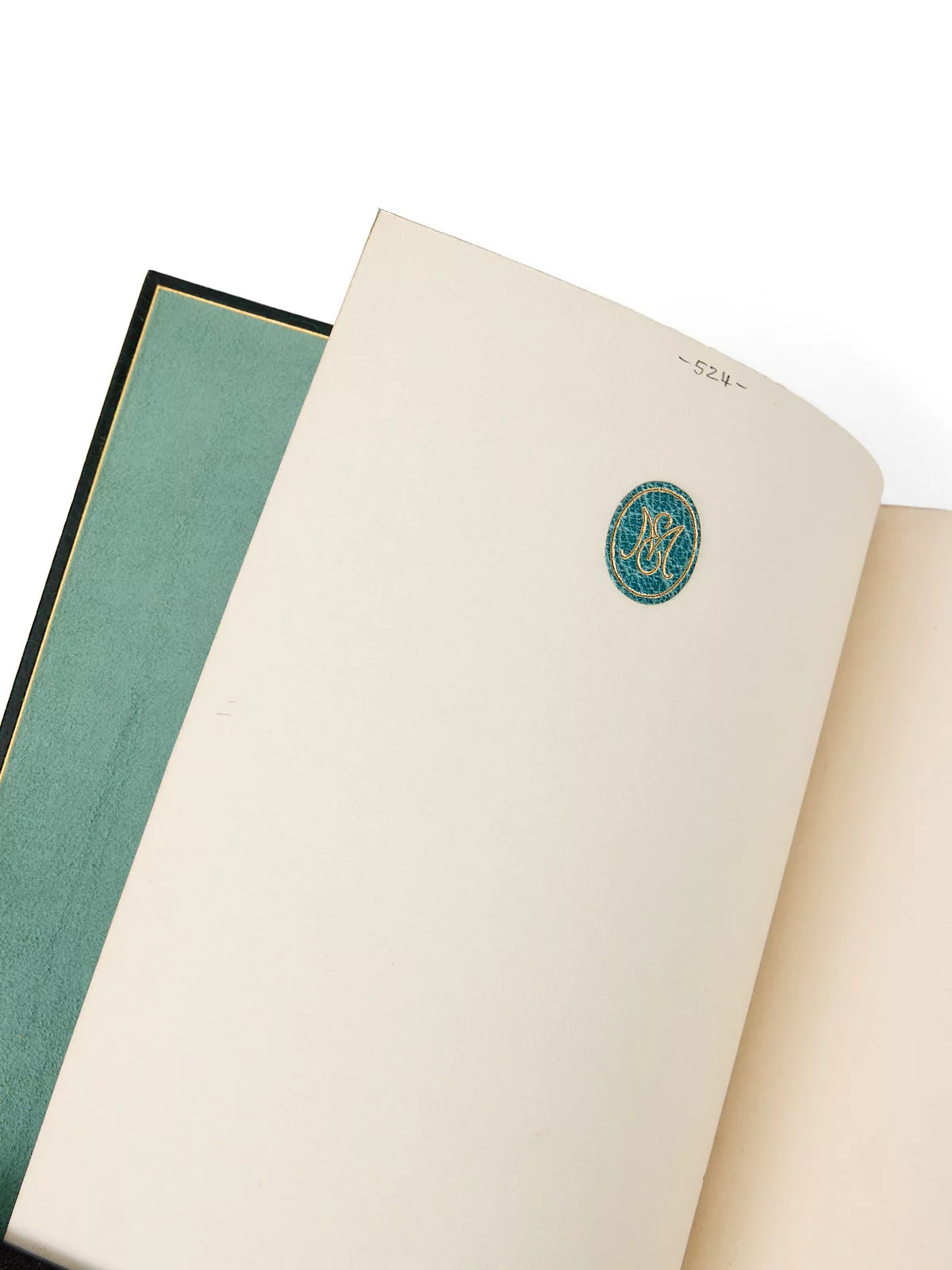
From the library of Edmée Maus (bookplate).
A choice copy, in perfect condition.
L’Herne, Biblio., p. 268, no. 110; P.A.B., Bibliographie des ouvrages de René Char, no. 26; Dictionnaire Char, p. 255, “Char’s most famous collection, undoubtedly his most important.”