

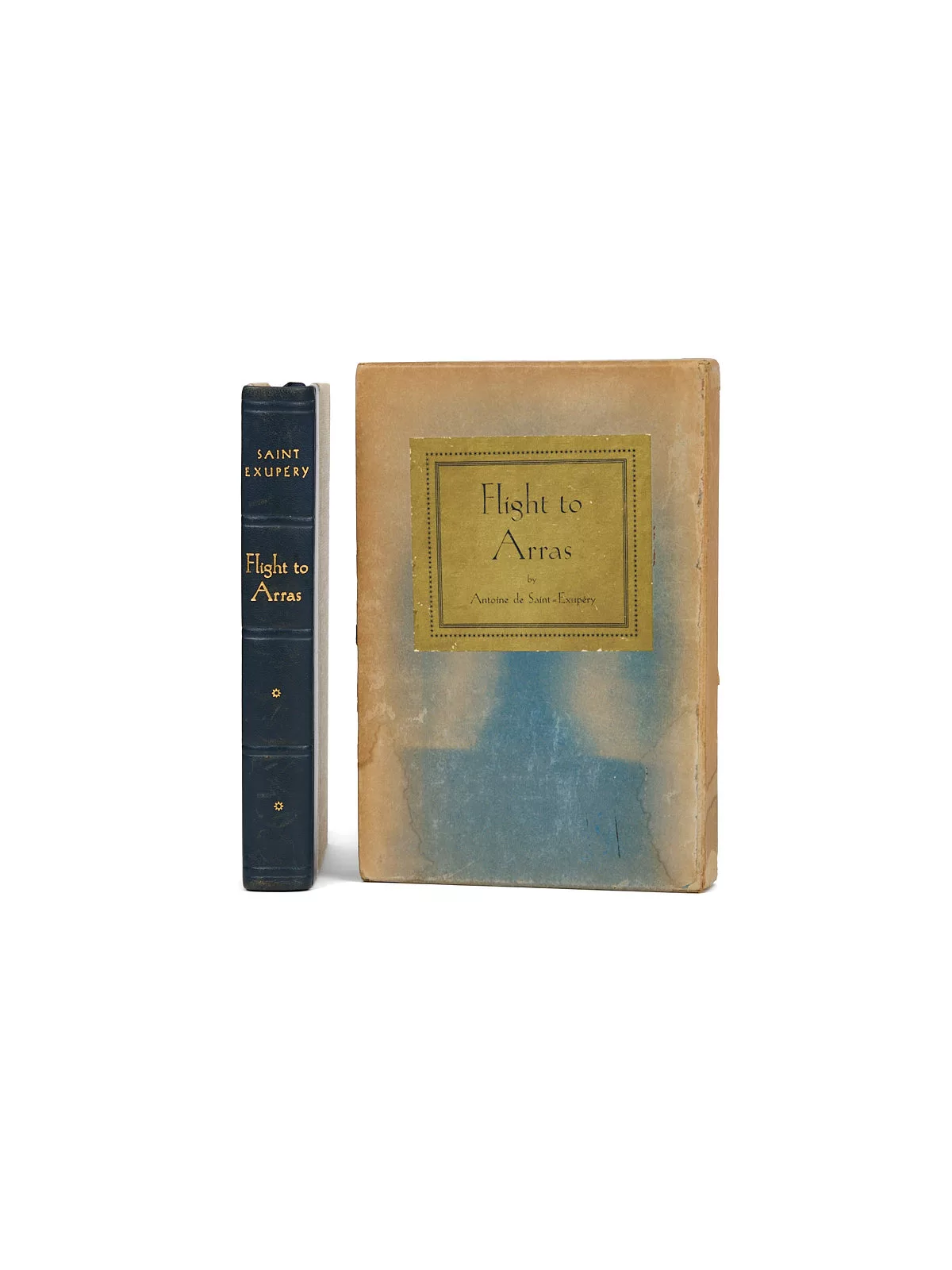
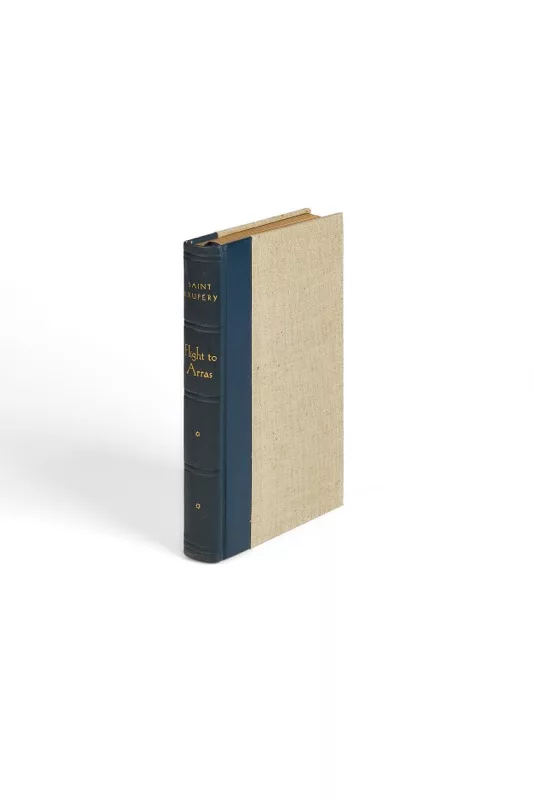
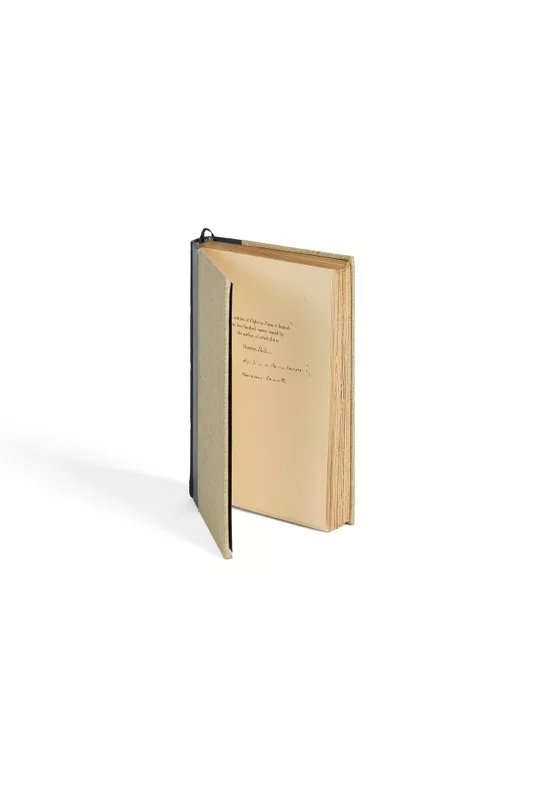
Flight to Arras
On 23 May 1940, Captain Saint-Exupéry flew a reconnaissance mission over the city of Arras. His aircraft was riddled with bullets and an oil tank was pierced by a shell. Saint-Exupéry nevertheless managed to return to the base of Group 2/33 with his crew safe and sound. For this feat he was awarded the Croix de guerre with palm and cited in the order of the Air Force on 2 June 1940.
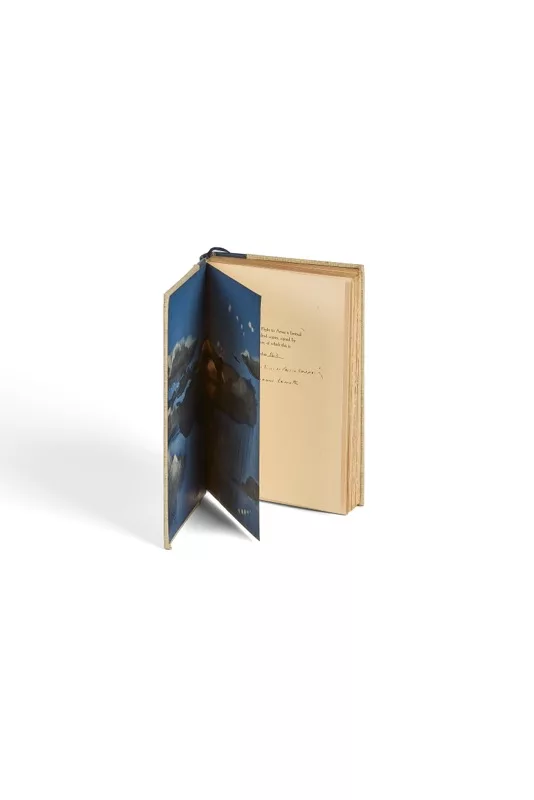
This mission provided the title for Flight to Arras. When Pilote de guerre was completed, the text first appeared in English, in January 1942, in the Atlantic Monthly, with illustrations by his friend Bernard Lamotte. These were retained for the book edition, with beautiful painted endpapers by Lamotte for the deluxe printing. At the same time, the French text was published by Éditions de la Maison française, without illustrations.
“In truth, this book is a great and beautiful book, perhaps the true book of the war of 1939,” wrote Pierre Mac Orlan in Les Nouveaux Temps on 8 January 1943. From its publication, it enjoyed great success in the United States: “This narrative and Churchill’s speeches constitute the best response the democracies have ever found to Mein Kampf” (Edward Weeks, in The Atlantic, quoted in Schiff, p. 363). Americans were deeply moved by the account, and the book topped the bestseller lists for six months, helping to correct the image of France in the eyes of public opinion and politicians.
Saint-Exupéry’s voice seems to have been heard. John Barbeen wrote in The Chicago Herald on 29 March 1942: “The critics do not merely praise the writer’s talent. They bring into the press the idea of a deeper France, different from the general staff in perpetual retreat […]. They convey the absurdity of flying, pursued by German fighters, when in nine months it had not been possible to obtain aircraft able to withstand the cold of the upper atmosphere.”