

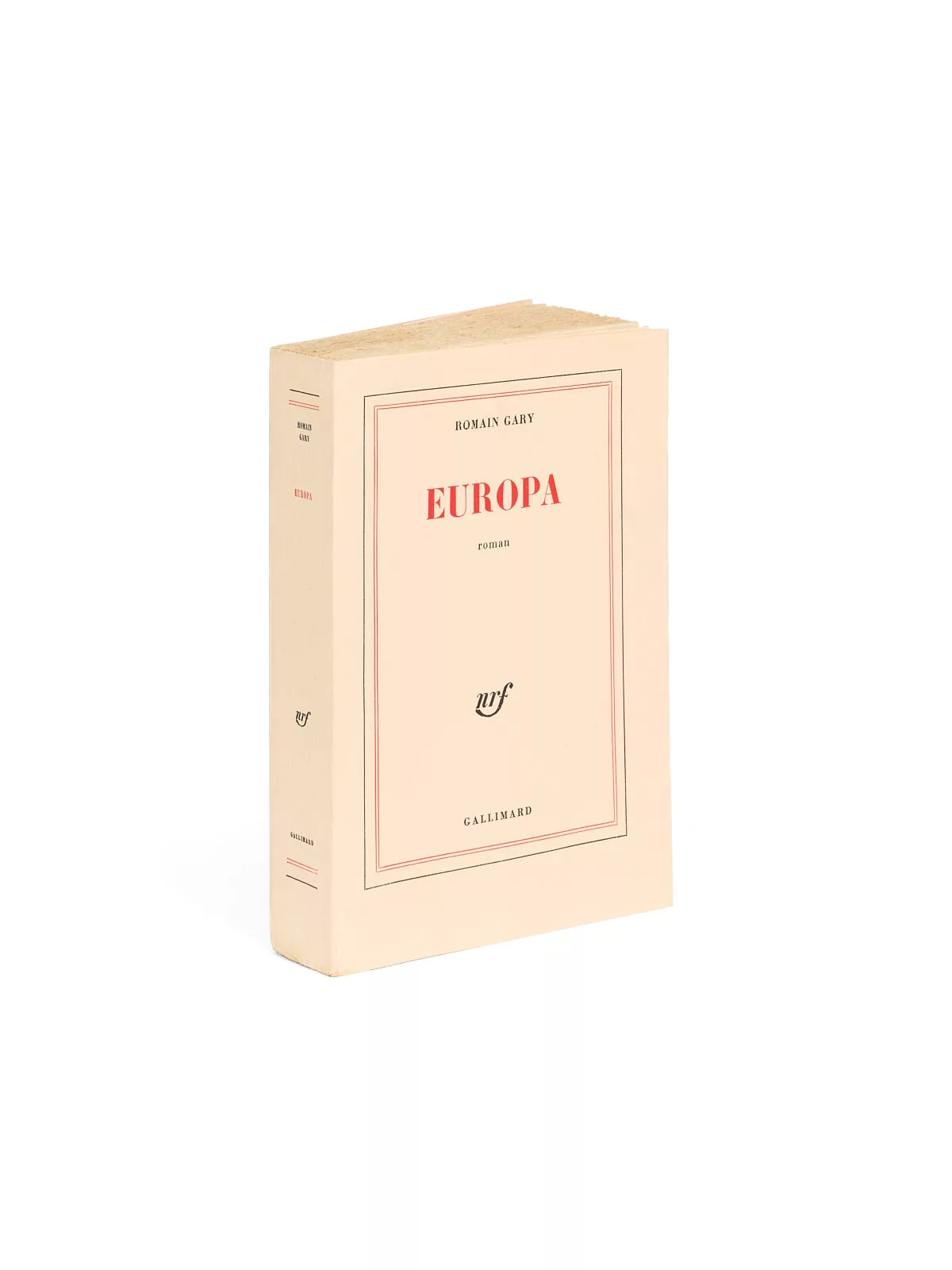
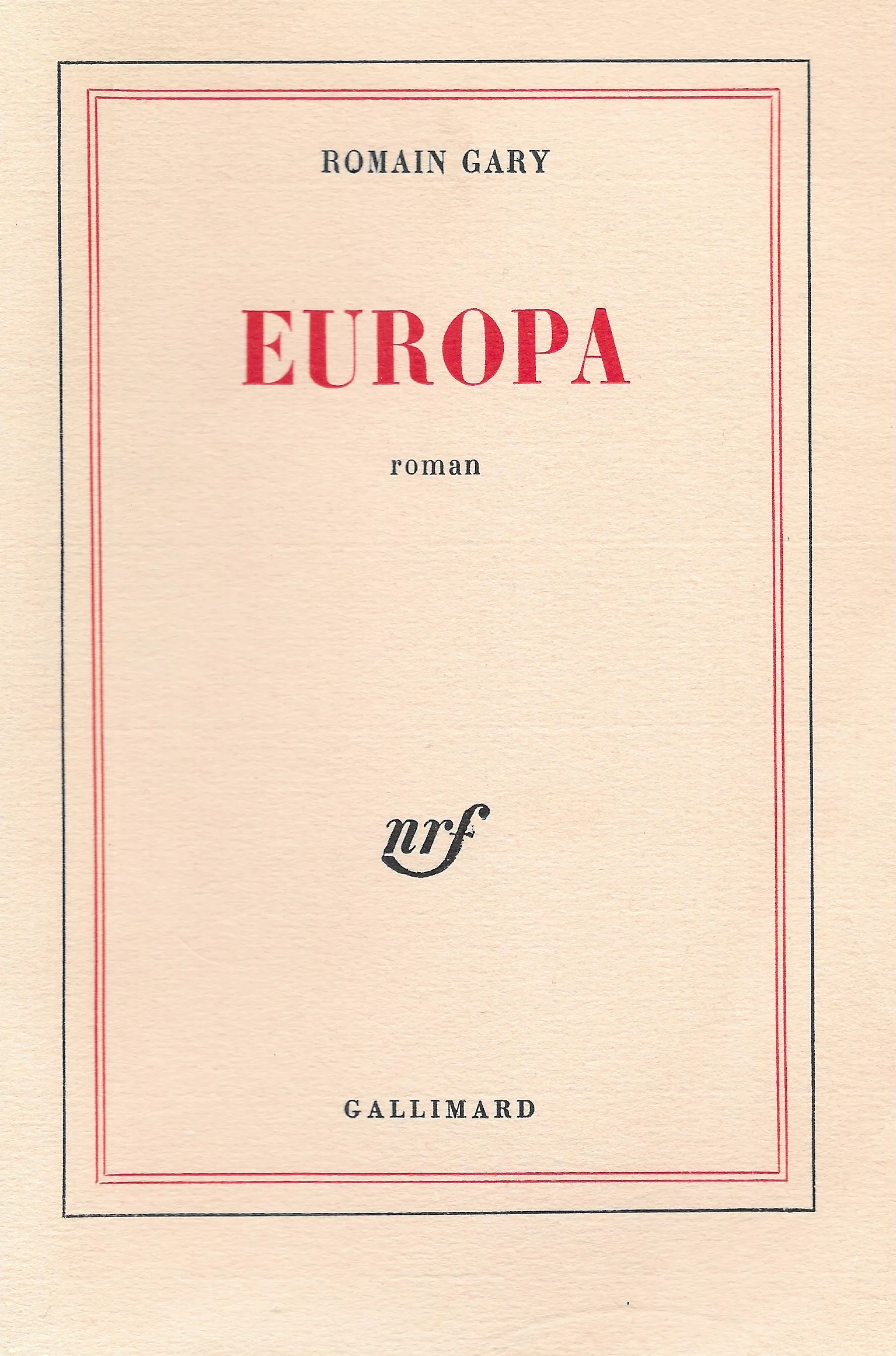
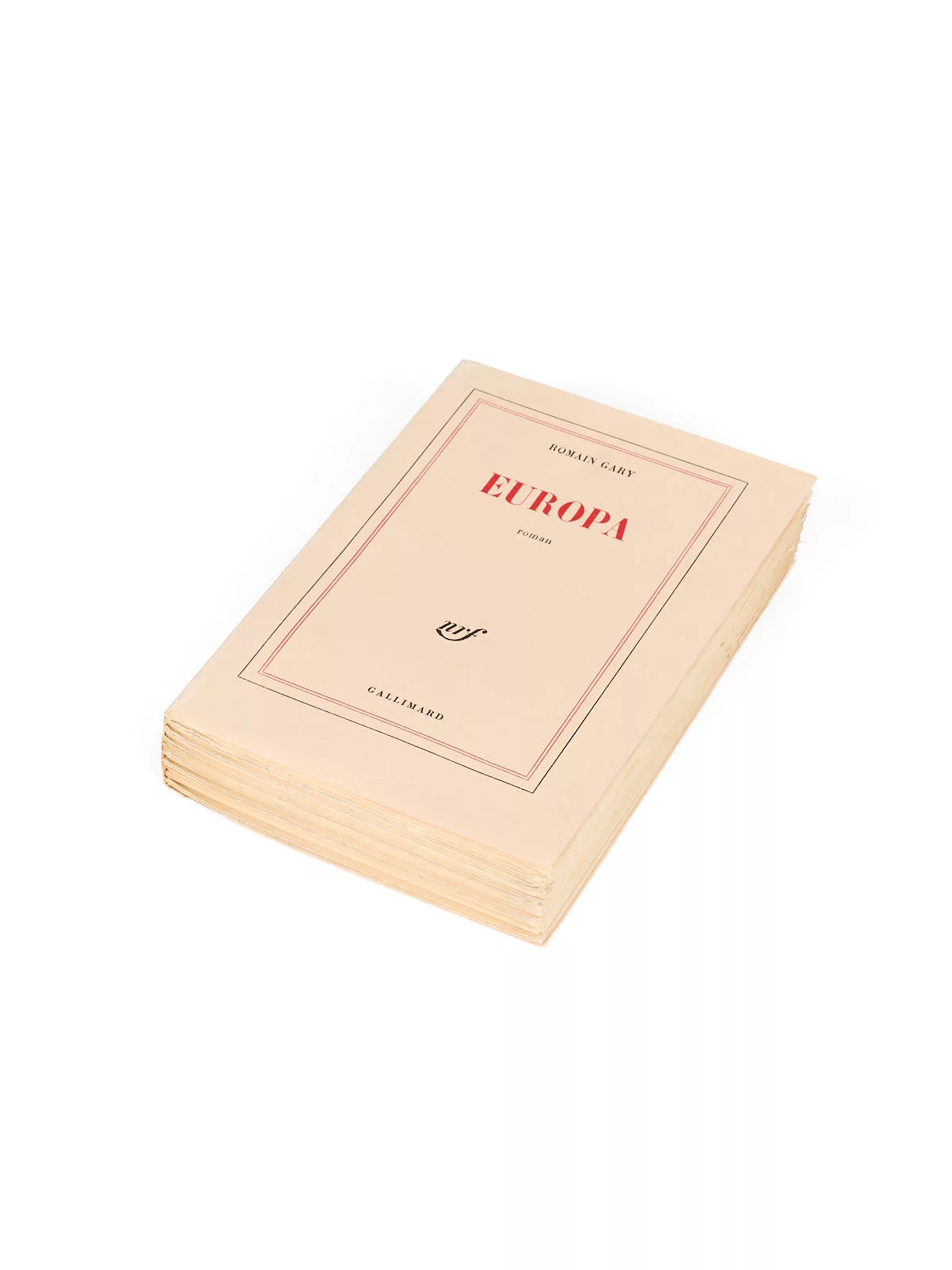
Europa
One of 25 copies on vélin de Hollande, the first in the limitation (no. 3).
Against a backdrop of a quest for identity, Gary explores intimate wounds, questioning by implication the identity of this fledgling communal space, for which he announces the end of culture, “soluble in the market economy”: Europe, “insofar as it means anything at all, is above all apartheid: culture on one side, social reality on the other […]. It never managed to become what might have given it life: a lived realization of its own imagination.” Gary goes further still. In his “Note for the American edition of Europa,” he attacks “fine European culture,” capable of deception and betrayal: “when the Nazi death squads were preparing to machine-gun their victims, mothers holding babies in their arms were exempted, for that reason, from digging their own graves: such delicacy must surely have belonged to Kultur. Likewise, when the French army, during the Algerian War, began applying electric torture to the genitals of captured rebels, the general then in command had submitted his own testicles to the same treatment before having it applied to others — which, no doubt, was equally a matter of culture.”
On publication, the book was savaged by critics. Some have even suggested that this contributed to Gary’s decision to write under the pseudonym Ajar. In any case, he was deeply affected by the reception, and considered this one of his most important books.