

Emile Verhaeren, sa vie, son oeuvre
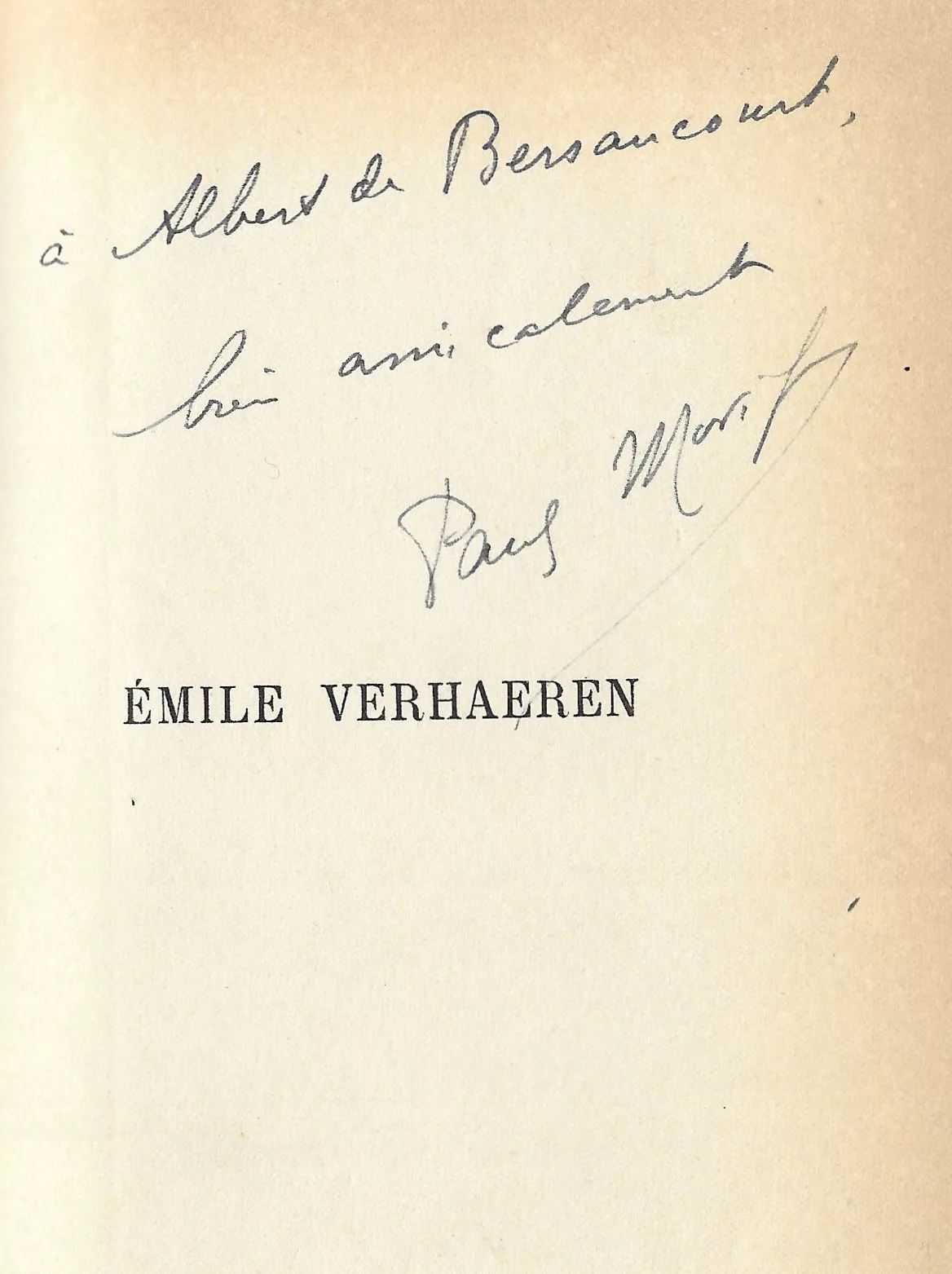
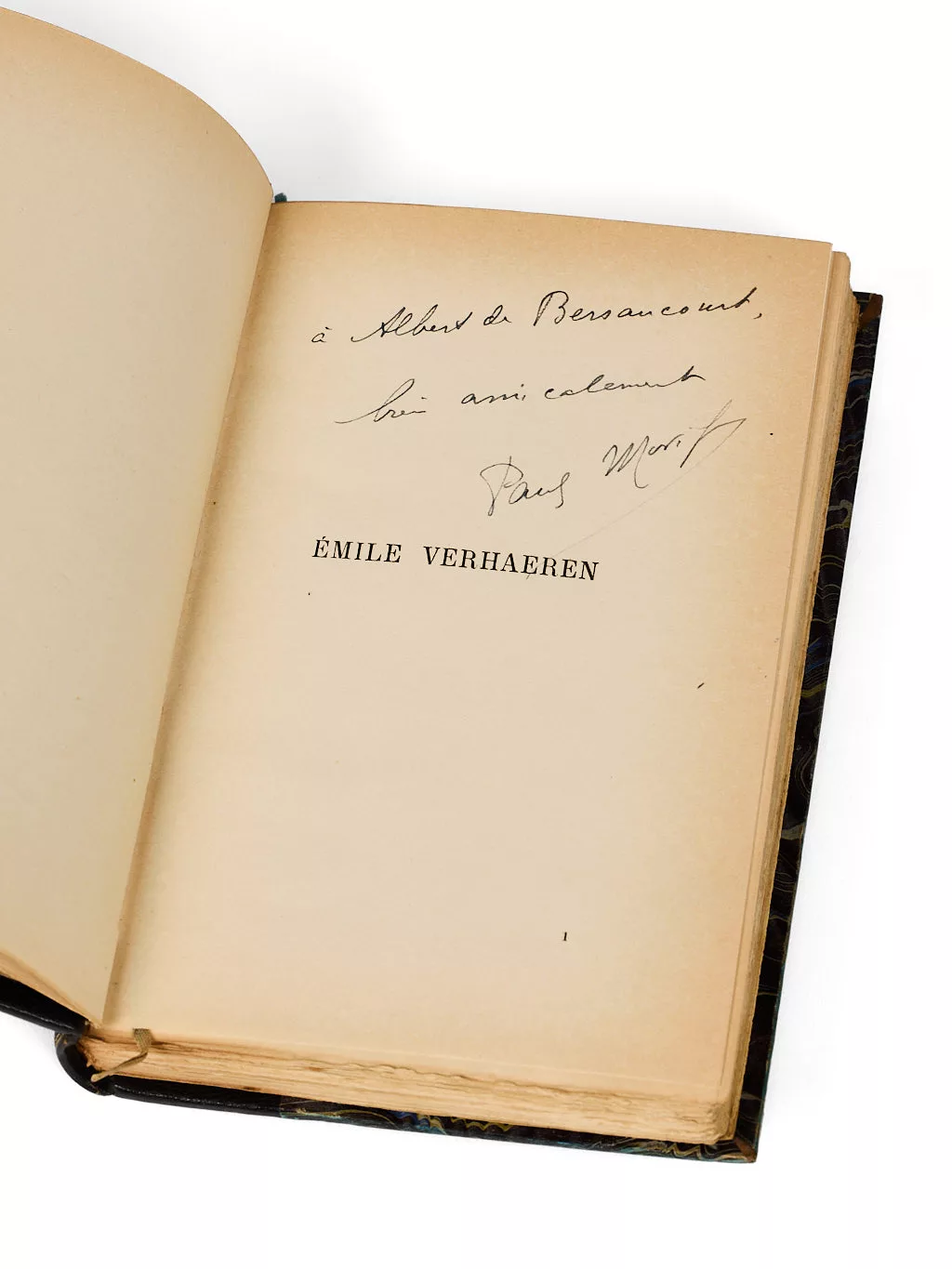
Signed presentation inscription by the translator: “à Albert de Bersancourt, bien amicalement, Paul Morisse.”
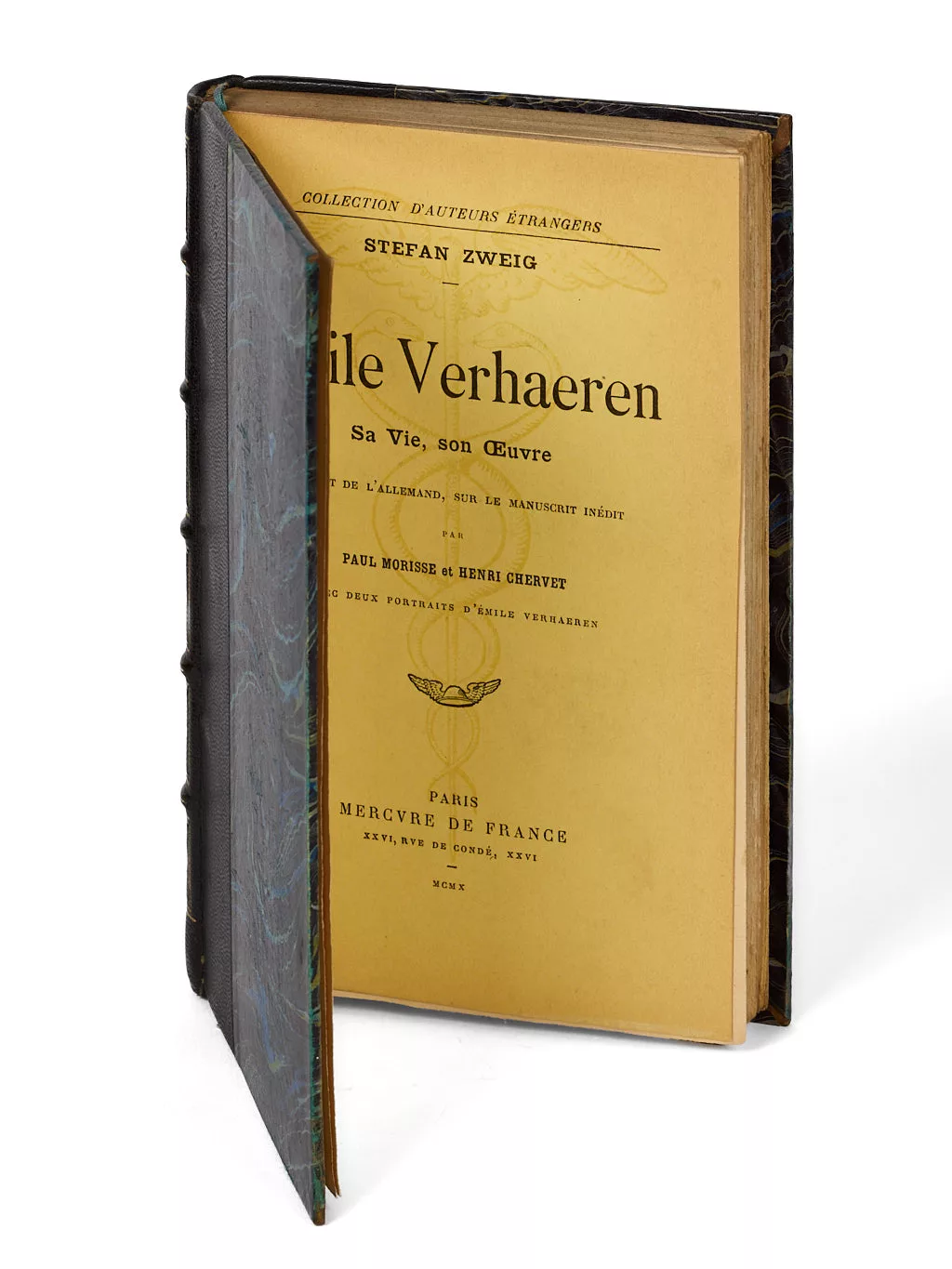
In 1910, Stefan Zweig published this study devoted to the celebrated Belgian poet, author of Villes tentaculaires, whom Zweig regarded as embodying that republic of letters representing the quintessence of the European spirit. Zweig was fascinated by every aspect of Verhaeren’s work: its intensity, its expression of the Flemish soul, and the power with which it captured the forces of the modern world — industry, urbanization, the working masses. “All the manifestations of modern activity are reflected in Verhaeren’s work and transmuted there into poetry,” he wrote. Above all, Verhaeren appeared to Zweig as one of the great voices embodying Europe, a theme he would return to thirty years later from Brazil, shortly before his suicide: “And so it was that for two hours I studied that unforgettable face, that high brow furrowed seven times by the plough of bad years, and above it, the cascade of curly rust-colored hair, the robust structure of the face over which stretched a brown skin, tanned by the winds, the chin jutting forward like a rock, and, on the thin lips, the long and powerful drooping mustache, in the manner of Vercingetorix.”
Spine slightly faded.