

Éducation européenne
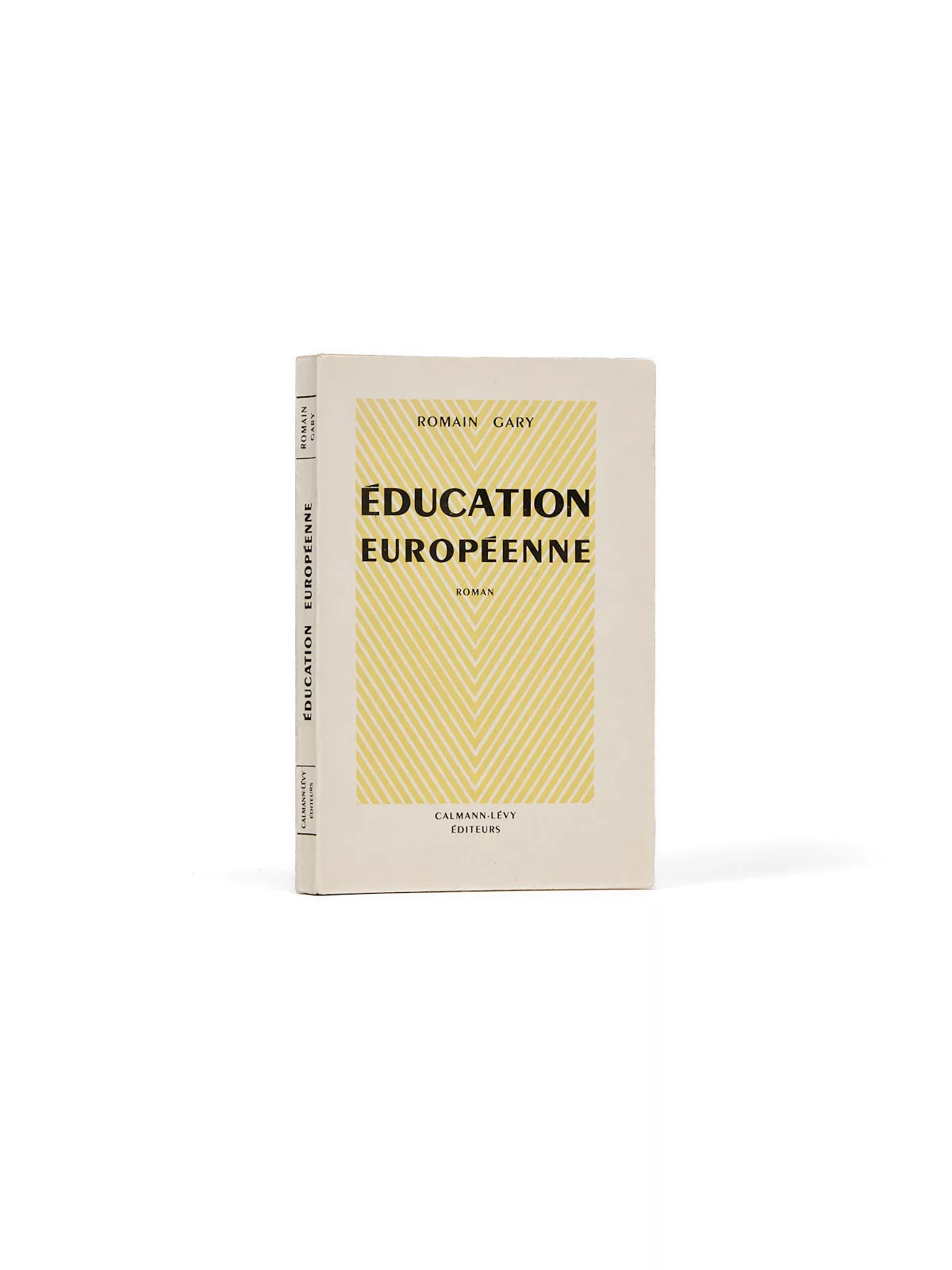
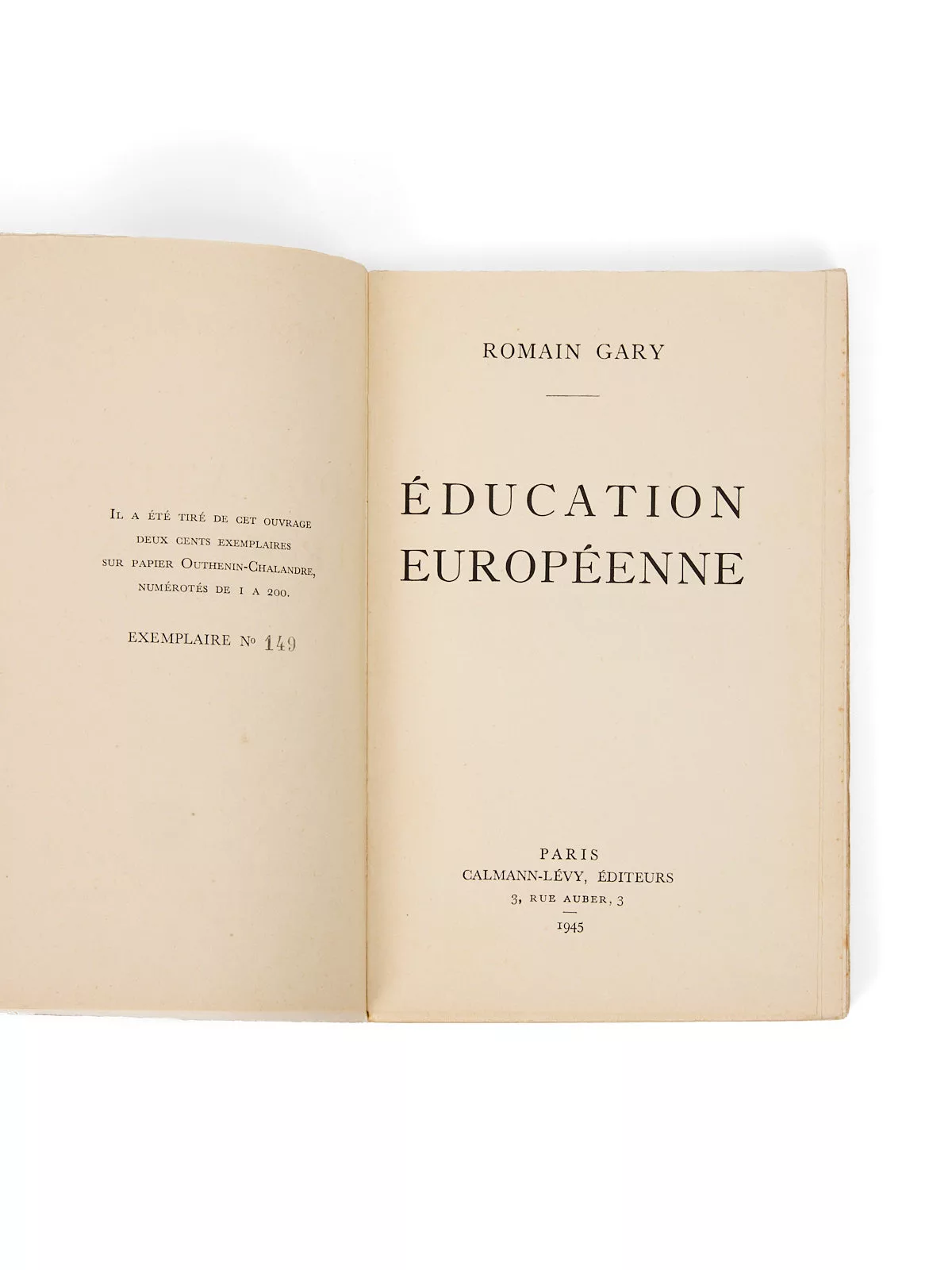
One of the first 200 copies on Outhenin-Chalandre paper (no. 149) — the only deluxe paper.
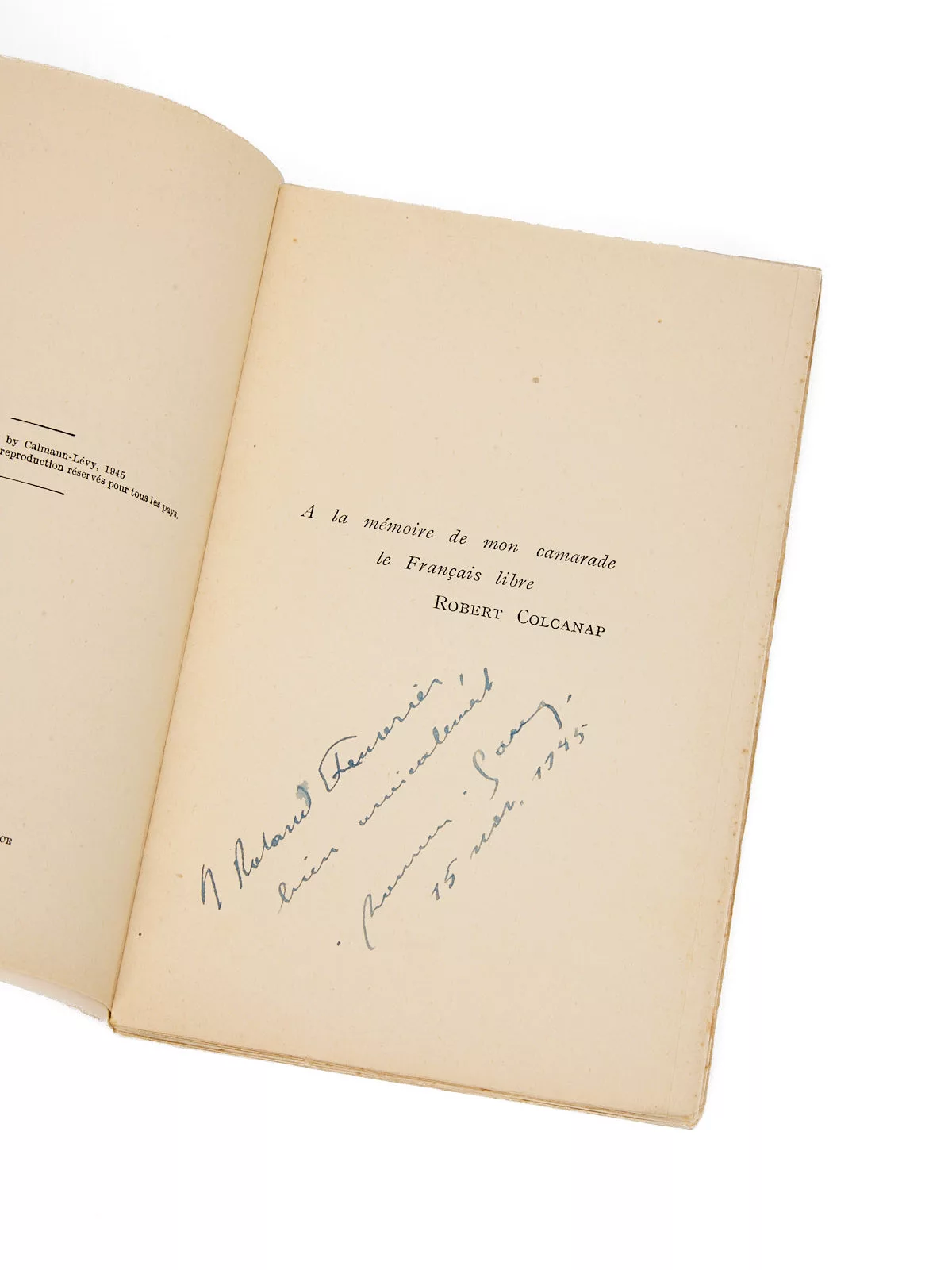
Inscribed and signed: “À Roland Feuvrier, bien amicalement Romain Gary, 15 nov. 1945.”
The only “Feuvrier” known in Gary’s circle before, during and after 1945 is Charles Feuvrier, a name that recurs several times in the author’s life, dating back to the Lorraine Squadron. No “Roland” is known. Did Gary, at the start of this relationship, mistake his companion’s first name, or does the inscription — if it is not a nickname (a sort of over-familiar first name, in this case) — designate someone else?
It seems unlikely that the copy would have been given to a complete stranger, especially a deluxe copy. The hypothesis of Charles-Valère Feuvrier therefore appears possible, if not probable. Few inscribed copies are known: this one, and those of Maurice Nadeau, Francis Dumont (an associate at Calmann-Lévy), Maria Errázuriz, Pierre Calmann and Raymond Aron — all close acquaintances, either through London or through the publishing circle of his first book.
If this is indeed Charles Feuvrier, it is a major provenance: he and Gary remained connected for a long time, as he served as Gary’s witness at his marriage to Jean Seberg on 16 October 1963. An army general at the time, he headed military security, whose mission was “to prevent Soviet intelligence from infiltrating the French army, but above all to monitor the activities of the FLN.” It was thanks to his efforts — and to a plane chartered from the Villacoublay base — that the couple flew discreetly to Corsica, to the small village of Sarrola-Carcopino, where their union was celebrated.
This was a “defense secret” operation that Gary had requested from the highest authorities of the State in exchange for his participation in several clandestine missions against the OAS. General de Gaulle himself gave his blessing. A native of Damprichard, in the Doubs, Feuvrier also arranged for the “false” registration of the birth of the couple’s son, Diego (actually born in Barcelona on 17 July 1962), in Charquemont, a nearby town: he declared the birth on 26 October 1963, ten days after the wedding, and fifteen months after the actual birth of their only child. Promoted to air division general a few weeks later, Charles Feuvrier became chief of staff of the French delegation to the North Atlantic Standing Group in Washington, before being elevated to air corps general and serving, between 1965 and 1967, as head of the French military mission to the NATO Military Committee.
In November 1945, Gary and Feuvrier both returned to France after two years spent together in London within the Lorraine Squadron. For Gary, this marked the beginning of a diplomatic career alongside that of a writer; for Feuvrier, the start of a great career as a military officer and administrator. A month after receiving this inscription, Feuvrier took command of the Avord air base, near Bourges — the very base where Gary earned his military pilot’s wings in 1939.