

Drapeau olympique
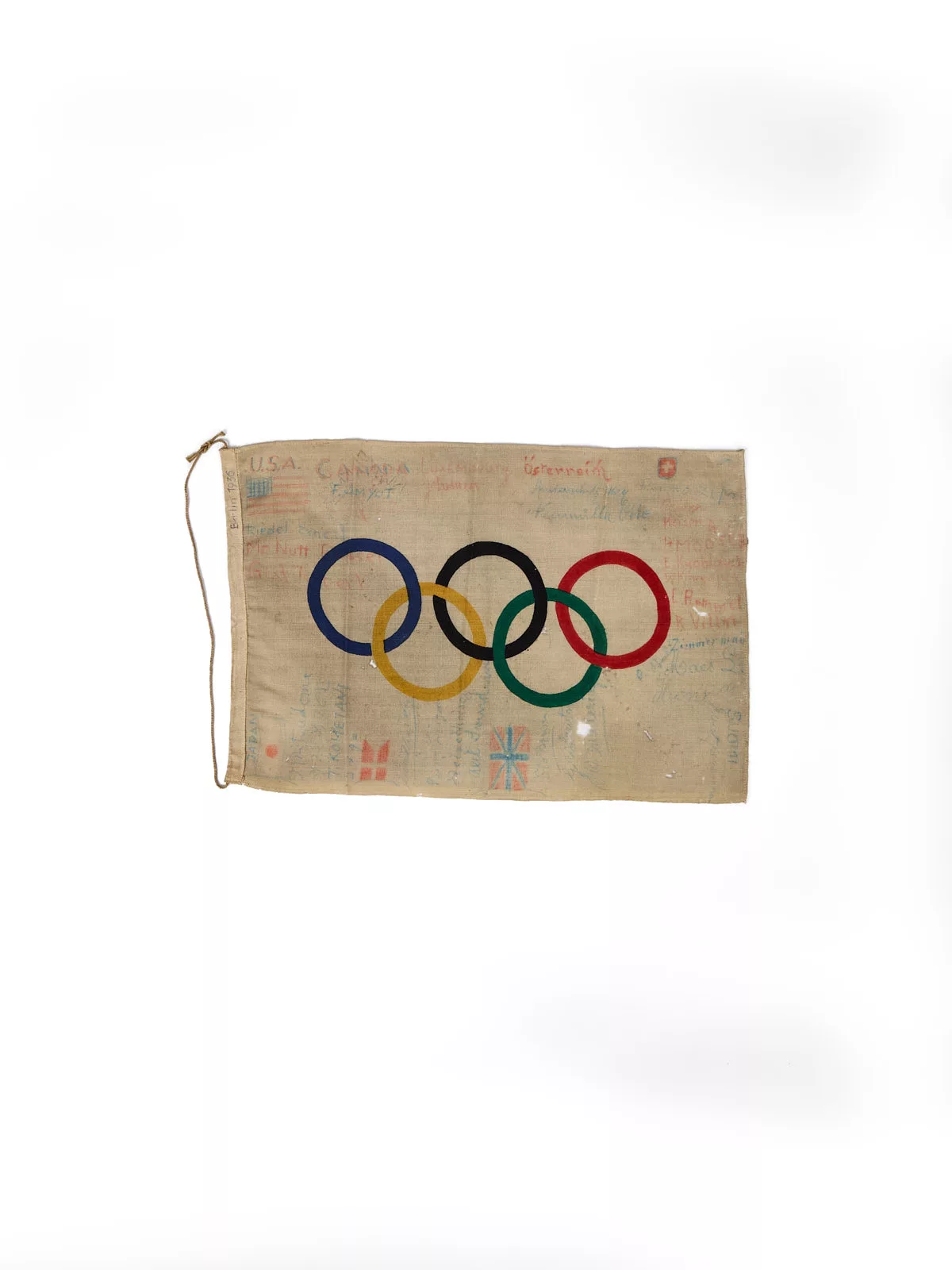
Designed in 1913 by Pierre de Coubertin, initiator of the revival of the Olympic Games, the Olympic flag was officially presented at the Paris Olympic Congress in June 1914. However, it was not until 1920, at the Antwerp Games, that the ringed flag flew for the first time — the 1916 Games, planned for Berlin, having been canceled because of the Great War.
In 1931, the International Olympic Committee awarded Berlin the organization of the 1936 Summer Games. This choice marked Germany’s return to the international stage following the period of isolation it had endured after the Great War. In the meantime, Adolf Hitler had come to power. The Games, held as planned, opened on August 1, 1936. Hundreds of athletes paraded in the Berlin stadium for this eleventh Olympiad, team by team, in alphabetical order. This was the first edition to inaugurate a new Olympic ritual: that of the flame and the Olympic torch relay. The runner Fritz Schilgen entered the stadium carrying the torch, relayed from the site of the ancient Games at Olympia, Greece, and lit the cauldron. For the first time, at the instigation of Professor Carl Diem, the Olympic flame was introduced into the opening ceremony of the Games. It was also the first major event broadcast live on television.
In the particular context of the “Nazi Games,” the four gold medals won by the Black American athlete Jesse Owens in sprinting and long jump represent an important symbol in the history of the modern Olympic Games, standing in resistance against the propaganda used by Hitler, notably through cinema, with the films of Leni Riefenstahl.
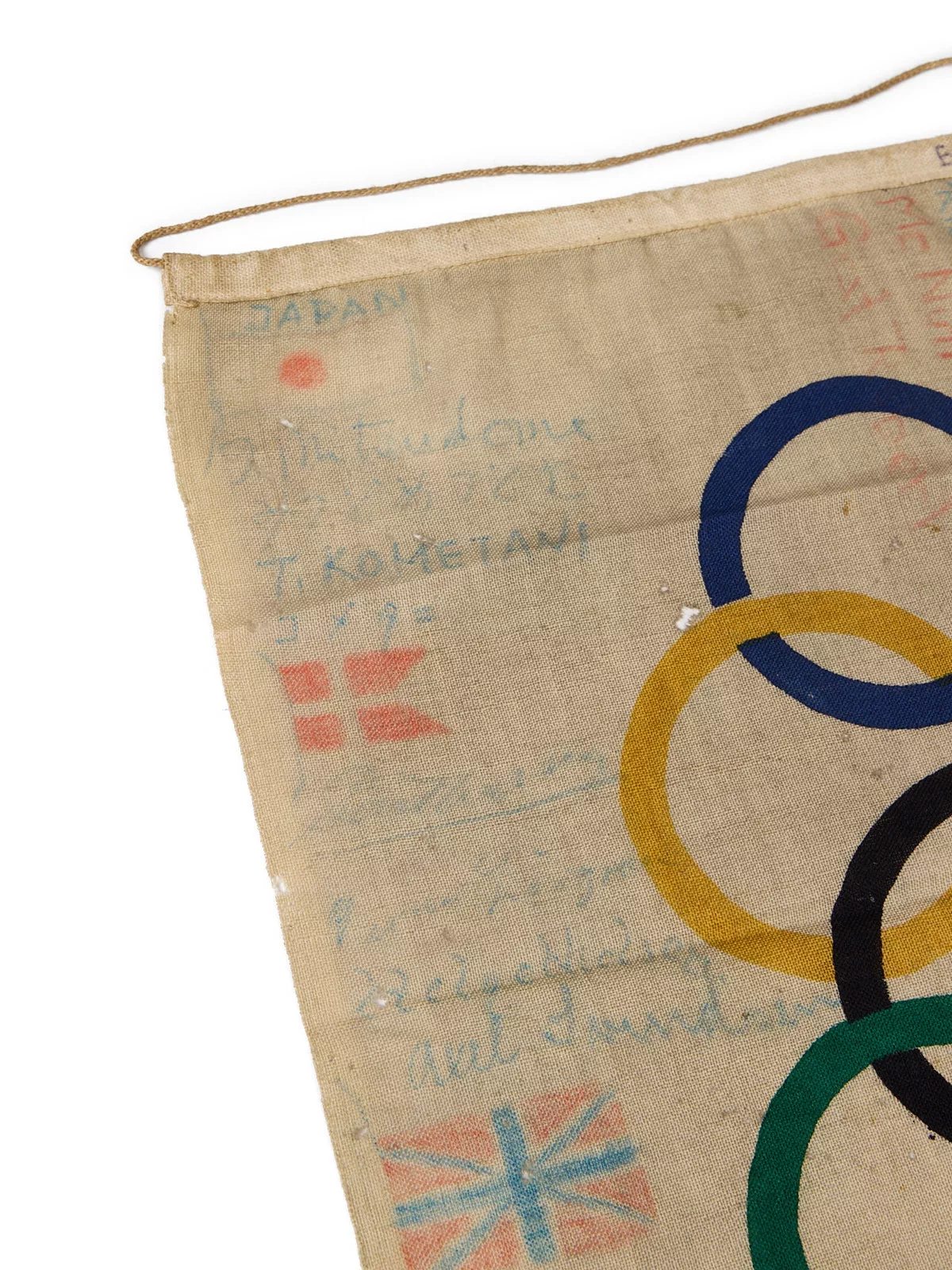
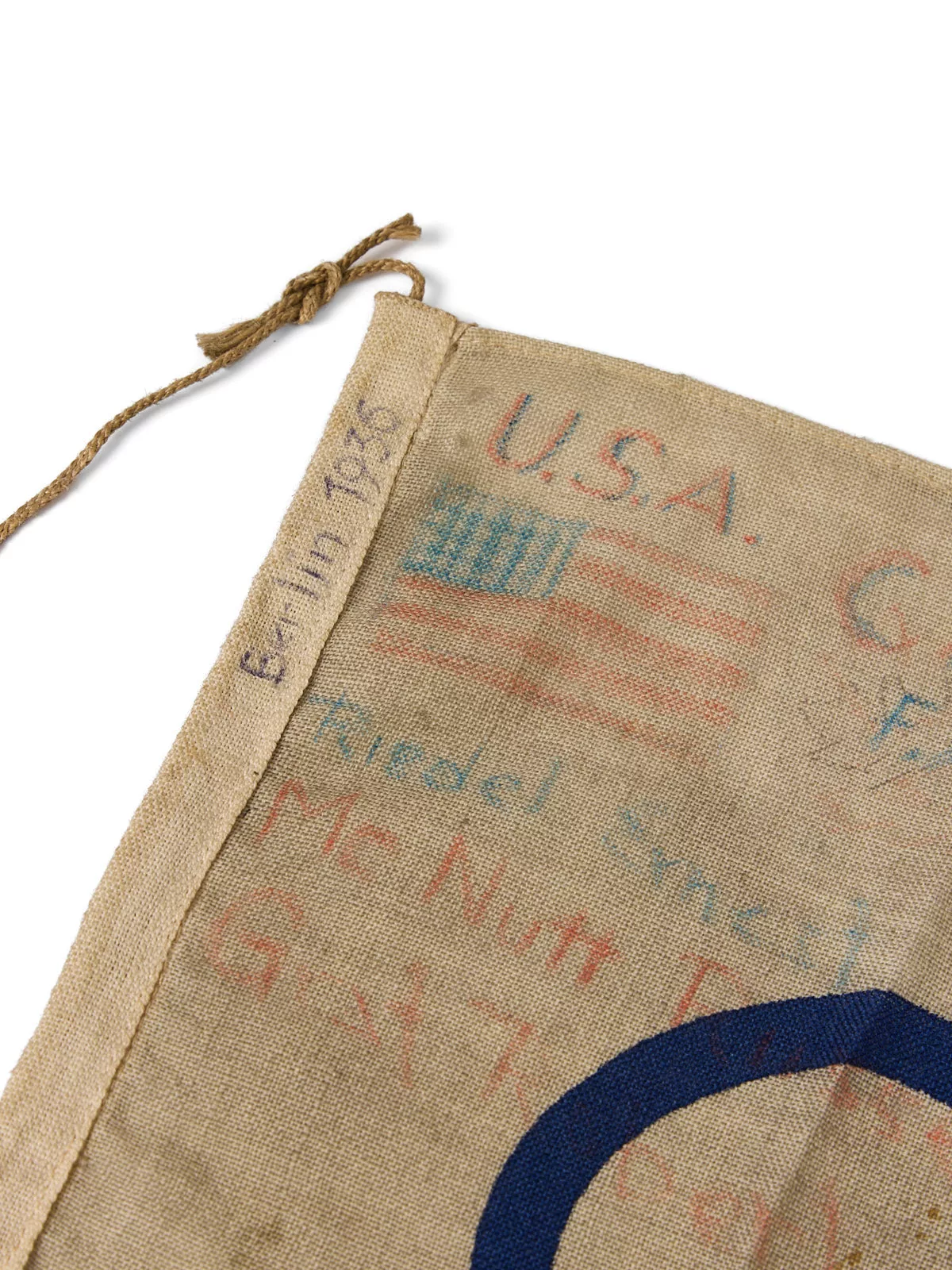
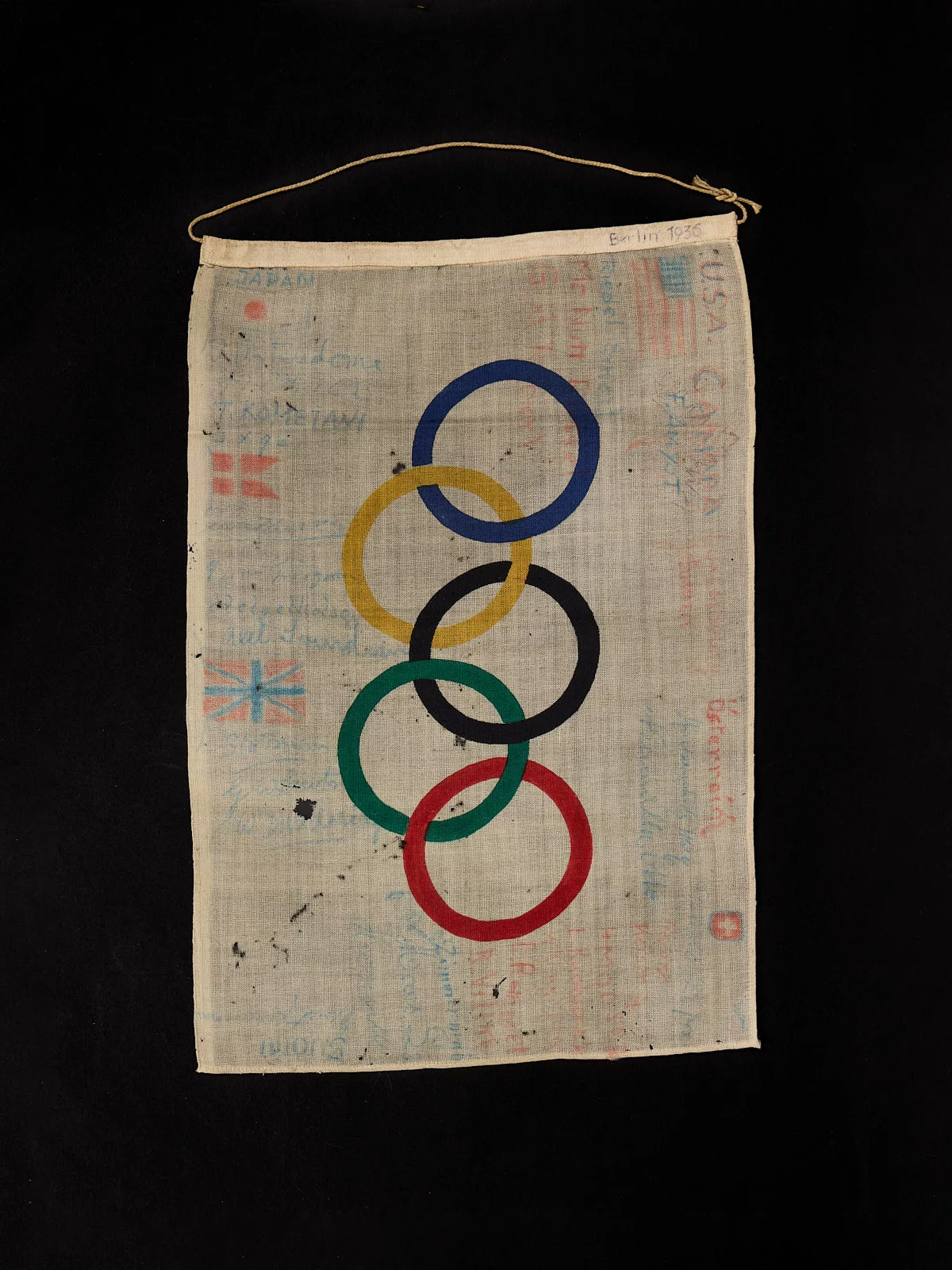
Nineteen sports and 129 events made up the program of the 1936 Olympic Games. Three new Olympic disciplines were introduced, including canoe-kayak: the events were contested at the Grünau nautical center, and this flag was very likely one of those used at the venue. It was then signed, probably at the end of the events, by various athletes from several delegations, including those of Canada and its gold medalist in the single canoe event, Francis Amyot; the United States (Ernest Riedel, bronze in the single canoe, Clarence Mc Nutt, Robert Graf); Belgium (Louis Mees); Switzerland (Bruno Lips, Hans Mooser); Great Britain (George Lewton, John Dudderidge); Austria; Denmark; and Japan.