

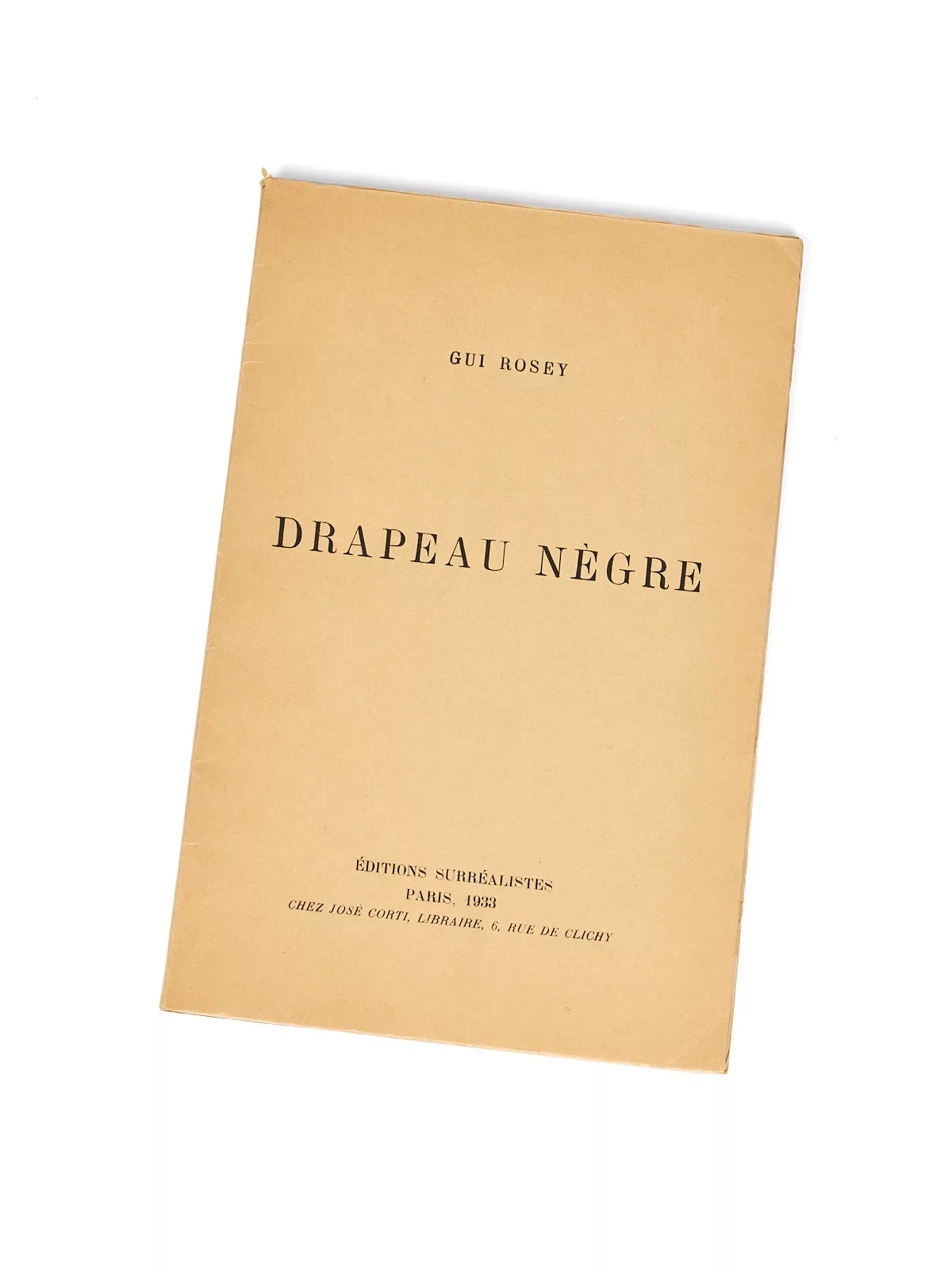
Drapeau nègre. Avec un dessin d’Yves Tanguy
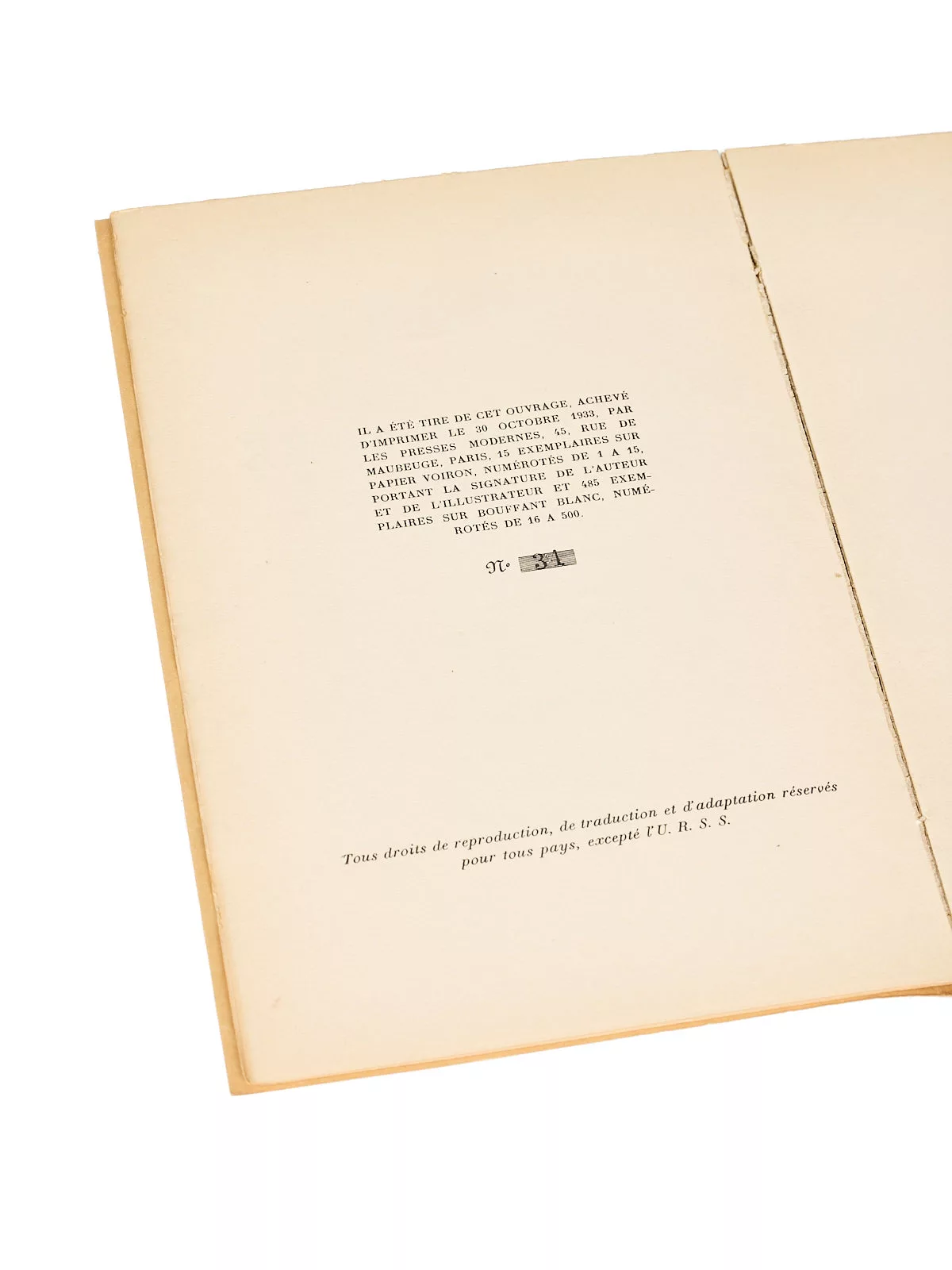
One of 485 copies on bouffant white paper (no. 34), after 15 copies on vergé de Voiron.
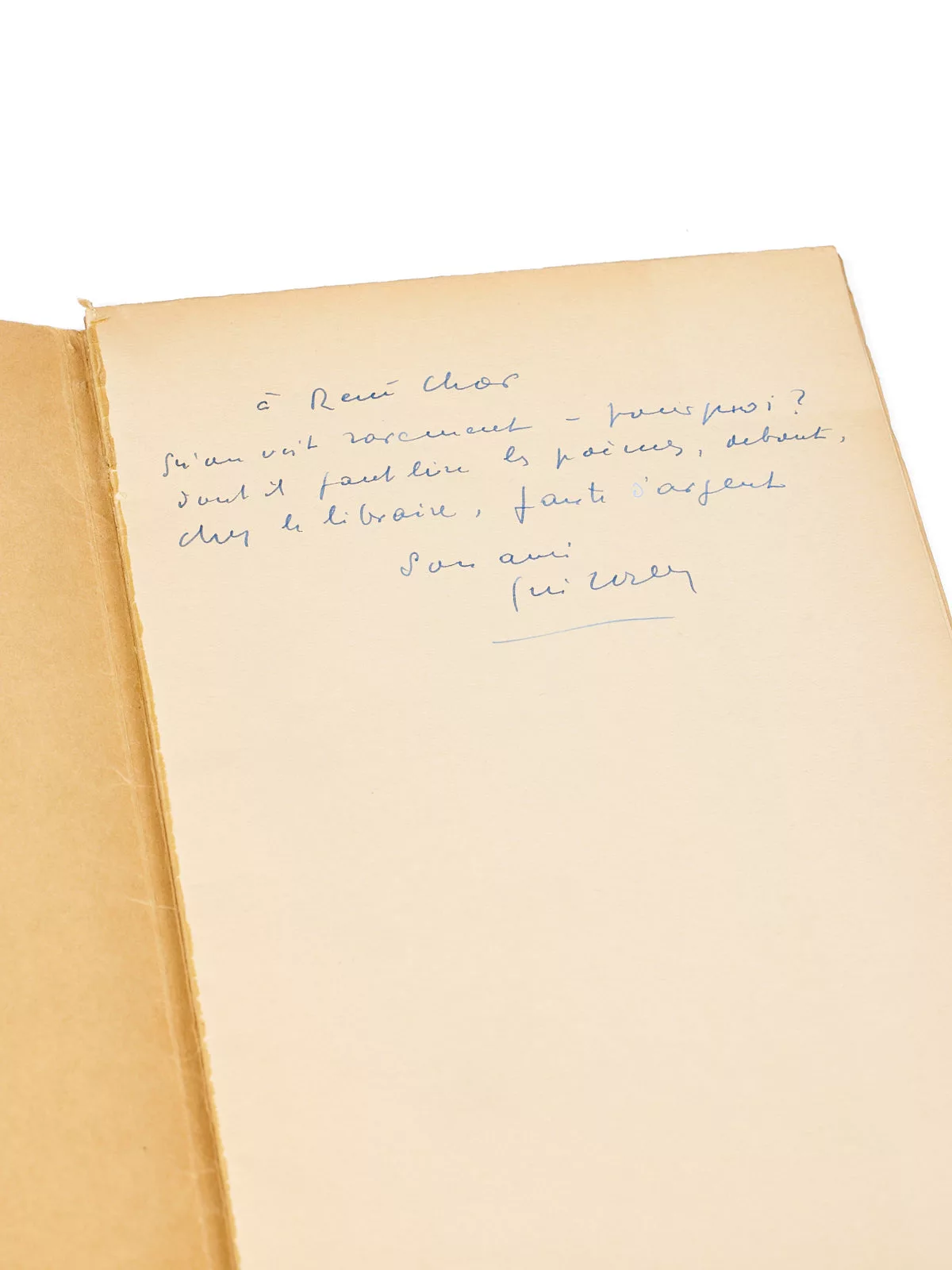
Presentation copy inscribed by Rosey to René Char: “à René Char, qu’on voit rarement – pourquoi ? dont il faut lire les poèmes, debout, chez le libraire, faute d’argent. Son ami, Gui Rosey.”
A Surrealist poet who joined the Paris group in 1932, and a friend of André Breton and Benjamin Péret, Gui Rosey is largely forgotten today, absent from literary and academic history. Yet he published widely, and three collections — Drapeau nègre, issued by Éditions surréalistes, and Seconde ligne de vie and Tirer au clair la nuit, both from Éditions Corti — stand out as remarkable. A secretive, even guarded personality, Rosey absorbed automatic writing and dreamlike metaphor into poems marked by a highly personal romanticism. Libertine touches and erotic allusions punctuate his often pessimistic work: “We, the mighty neighbors of nothingness (…), are but tumblers stirred by the instinct of self-preservation in a jar where one breathes the alcohol of eternity.”
He vanished completely in the summer of 1941 in Provence, to the point that everyone around him believed him dead. He resurfaced twenty years later, after a most secretive journey through Central Europe, having produced or recounted nothing of it.