

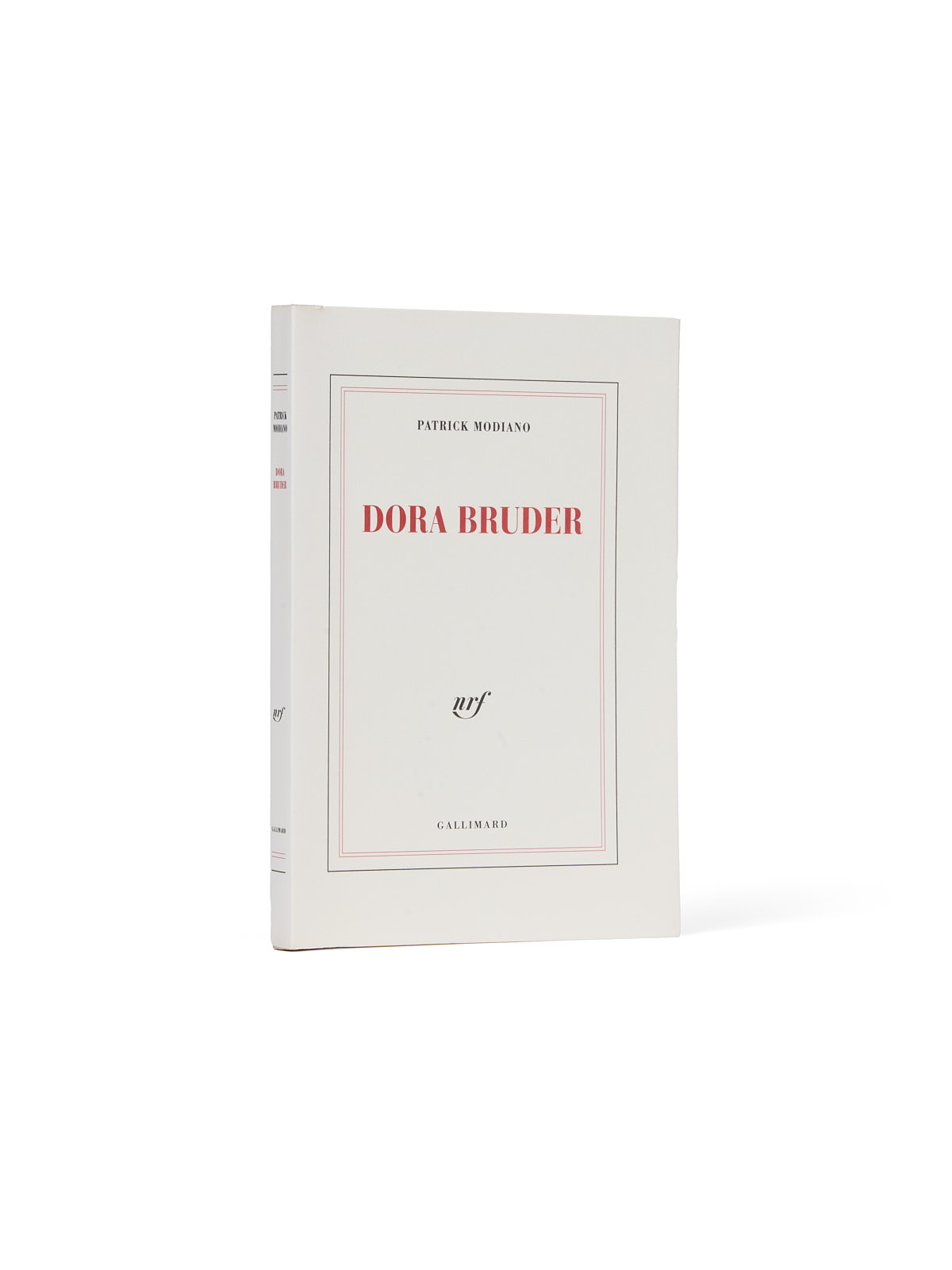
Dora Bruder
At the end of 1988, Patrick Modiano read, in the December 31, 1941 issue of Paris-Soir, a missing-persons notice for a young girl, Dora Bruder: “1.55 m, oval face, gray-brown eyes, gray sport coat…” These lines haunted the author of La Place de l’Étoile, who then undertook a meticulous and obsessive investigation into this sixteen-year-old girl, rescuing her from oblivion and anonymity.
Today, Modiano states, “Dora Bruder has become a symbol. She now represents, in the memory of the city, the thousands of children and adolescents who left France to be murdered at Auschwitz, those whose photographs Serge Klarsfeld tirelessly gathered in his memorial book [Le Mémorial des enfants juifs déportés de France, FFDJF, 1994], so that we might know their faces […]. Like many before me, I believe in coincidences, and sometimes in a kind of clairvoyant gift among novelists — though ‘gift’ is not quite the right word, since it suggests a kind of superiority. No, it is simply part of the craft: the effort of imagination that this profession requires, the need to fix one’s mind on points of detail — obsessively, so as not to lose the thread or give in to laziness — all this tension, this mental exercise, can no doubt eventually produce brief intuitions ‘concerning past or future events,’ as the Larousse dictionary puts it under the entry ‘Clairvoyance.’”
As issued.