

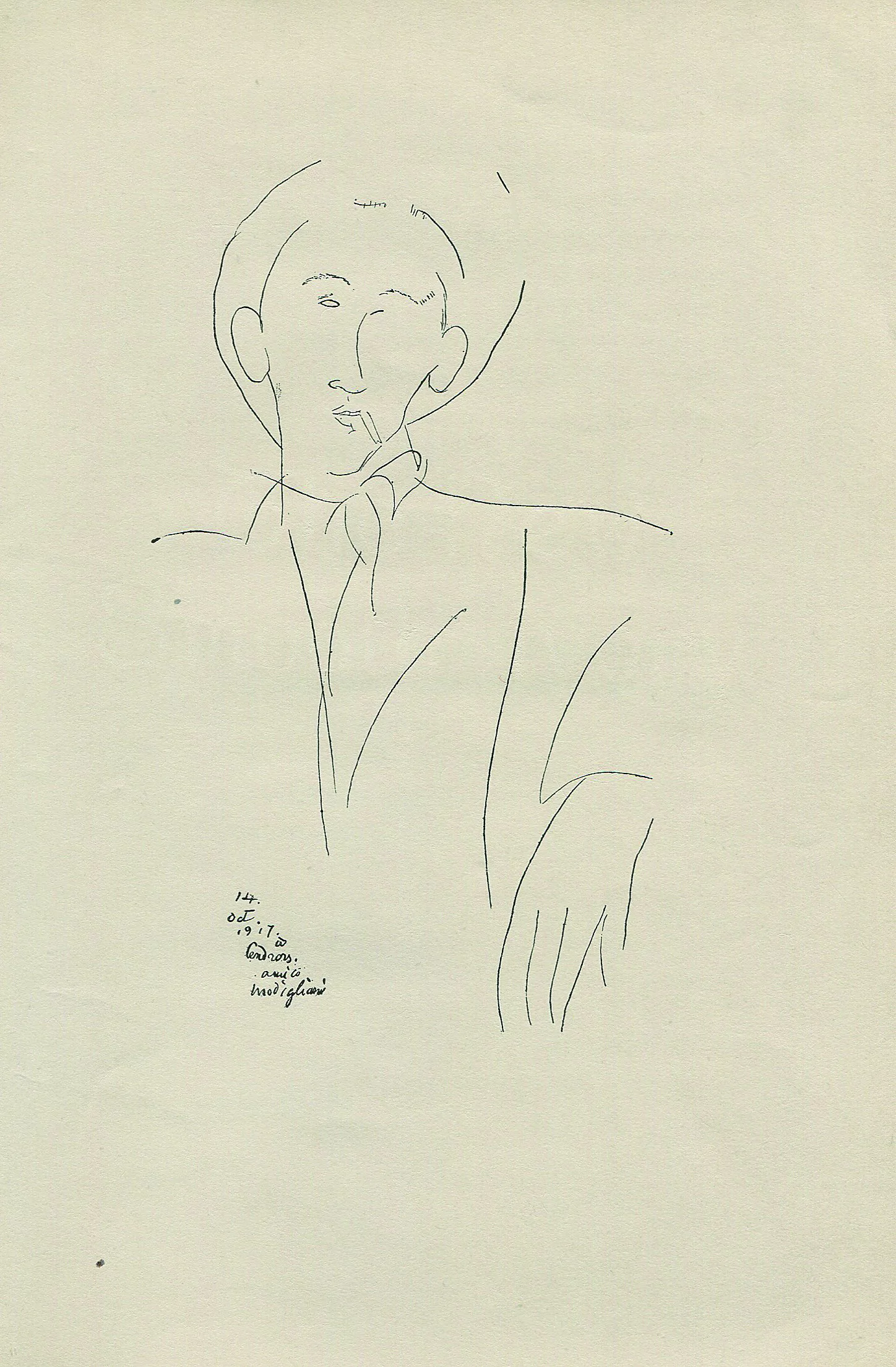
Dix-neuf poèmes élastiques
One of 1,050 copies on Alfa paper (no. 213).
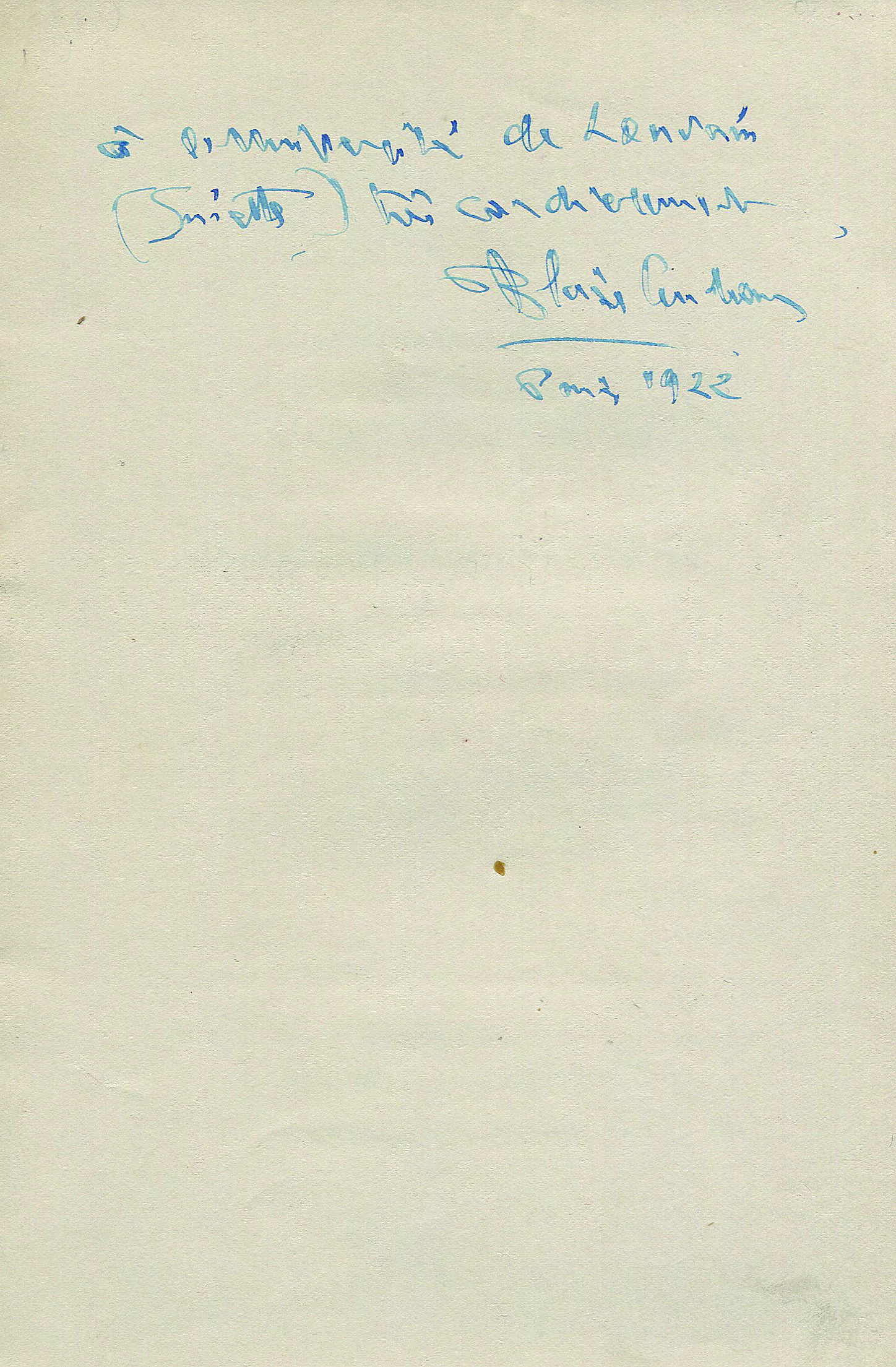
Signed presentation inscription: “à l'Université de Louvain (Guiette), très cordialement, Blaise Cendrars, Paris 1922.”
Guiette’s first public display of his passion for young French poetry was a lecture he gave in December 1920 at the Cercle de littérature française of the Université Catholique de Louvain, before an audience of professors and scholars whom he had to charm and convince.
Entitled “Un poète d’aujourd’hui, Monsieur Blaise Cendrars,” the lecture championed the Swiss writer, with whom Guiette subsequently corresponded. Less than a year later, the young student and the poet finally met, in December 1921, in Paris. Robert Guiette remained there until February 1922. It was Cendrars who guided him through the French capital, introducing him to poets, publishers and painters, and showing him all manner of places. Overwhelmed by these encounters, Guiette recounted this adventure in two letters to his mother, describing his visits and conversations: “Just imagine, Cendrars didn’t know it was at Louvain that I had spoken about him (…) I proposed giving a lecture on Cendrars with a reading of the whole film [La Fin du Monde] while stills of Fernand Léger’s lithographs were projected on the screen…” (Letter to his mother, February 1922). For Guiette, Cendrars was “the man of the moment and of life (…) THE modern poet, the poet of cities, of cosmopolitanism, of jazz-band, of cinema, of machines, of the crude word, of irony and of today’s humanity. Gone is idealism, gone is the mal du siècle, gone is art for art’s sake; here is the taste for objective reality, pragmatism, the joy of living (…). Cendrars is the very model of the poet.”
It was very probably on the occasion of this visit to Paris, and this first meeting with Cendrars, that the poet inscribed this copy of Dix-neuf poèmes élastiques, mischievously addressed to the University of Louvain, where Guiette had celebrated him a year earlier.