

Dix-neuf poèmes élastiques
One of 10 first copies, réimposé, on China paper (no. 6), with a second plate portrait of Cendrars by Modigliani, reproduced in black (as for the 40 réimposé copies on Holland paper).
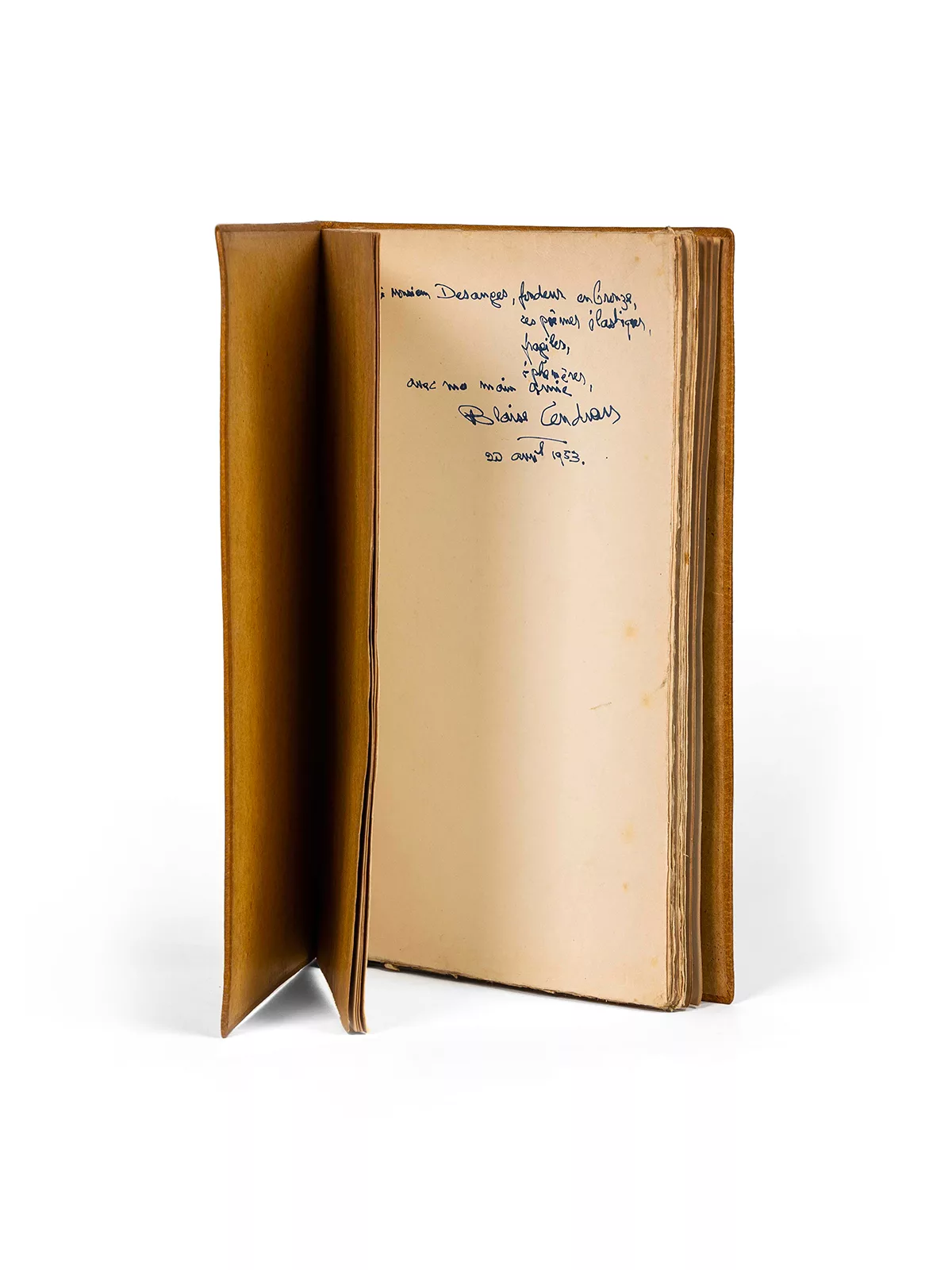
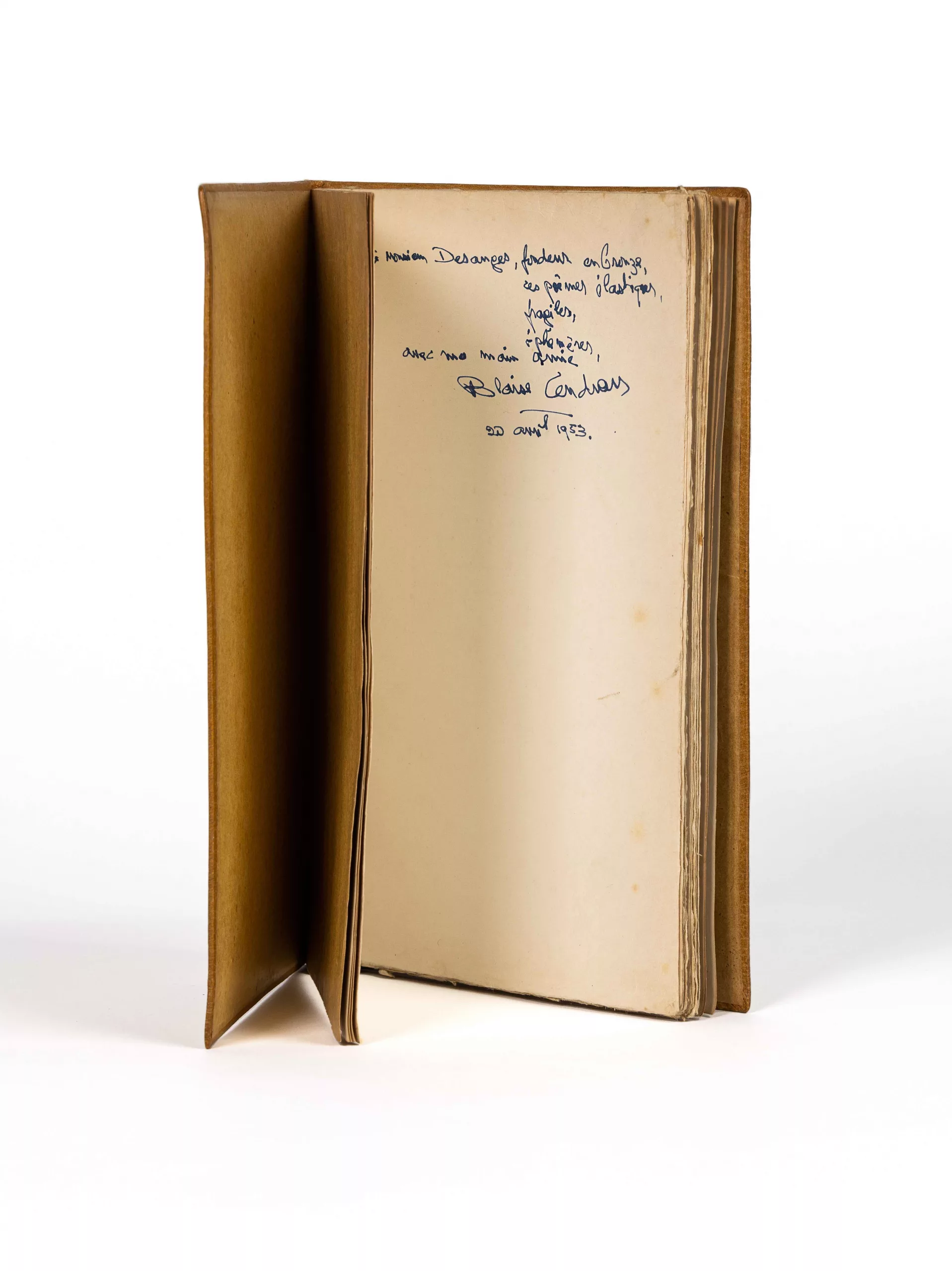
Signed presentation inscription: “à monsieur Desanges, fondeur en bronze, ses poèmes élastiques, fragiles, éphémères, avec ma main amie Blaise Cendrars 20 avril 1953.”
1919 was a fruitful year for Blaise Cendrars: alongside the birth of his daughter Miriam, he published three major texts: Dix-neuf poèmes élastiques at Au Sans Pareil, the poetry collection Du Monde entier at Éditions de la Nouvelle Revue française, and La Fin du Monde filmée par l’Ange Notre-Dame at Éditions de la Sirène, with landmark compositions by Léger.
Dix-neuf poèmes élastiques is the fourth volume in the Littérature series at Au Sans Pareil. The illustrator chosen for the frontispiece this time was Amedeo Modigliani, following titles illustrated by J.-L. Forain (Arthur Rimbaud’s Les Mains de Jeanne-Marie), André Derain (André Breton’s Mont de Piété), and the author himself (Jacques Vaché’s Lettres de Guerre).
In his afterword, Cendrars wrote this curious note: “Born of a meeting, a friendship, a painting, a polemic or a reading, the poems that precede belong to the much-derided genre of occasional poems. With two or three exceptions, they were published by foreign journals, Le Mercure de France, Vers et Prose, Les Soirées de Paris and Poème et Drame, meaning that their elders, the already established poets and the so-called avant-garde, refused my collaboration. At that time in France it was not a good thing to be a genuine young man among “the young.” B.C.”
At least two copies on green paper (those of Jacques and Debeer) are known. These too are réimposé, with the second portrait.
Margins of the wrapper soiled, some foxing.