

Discours de Suède
One of the copies stamped as a review copy.
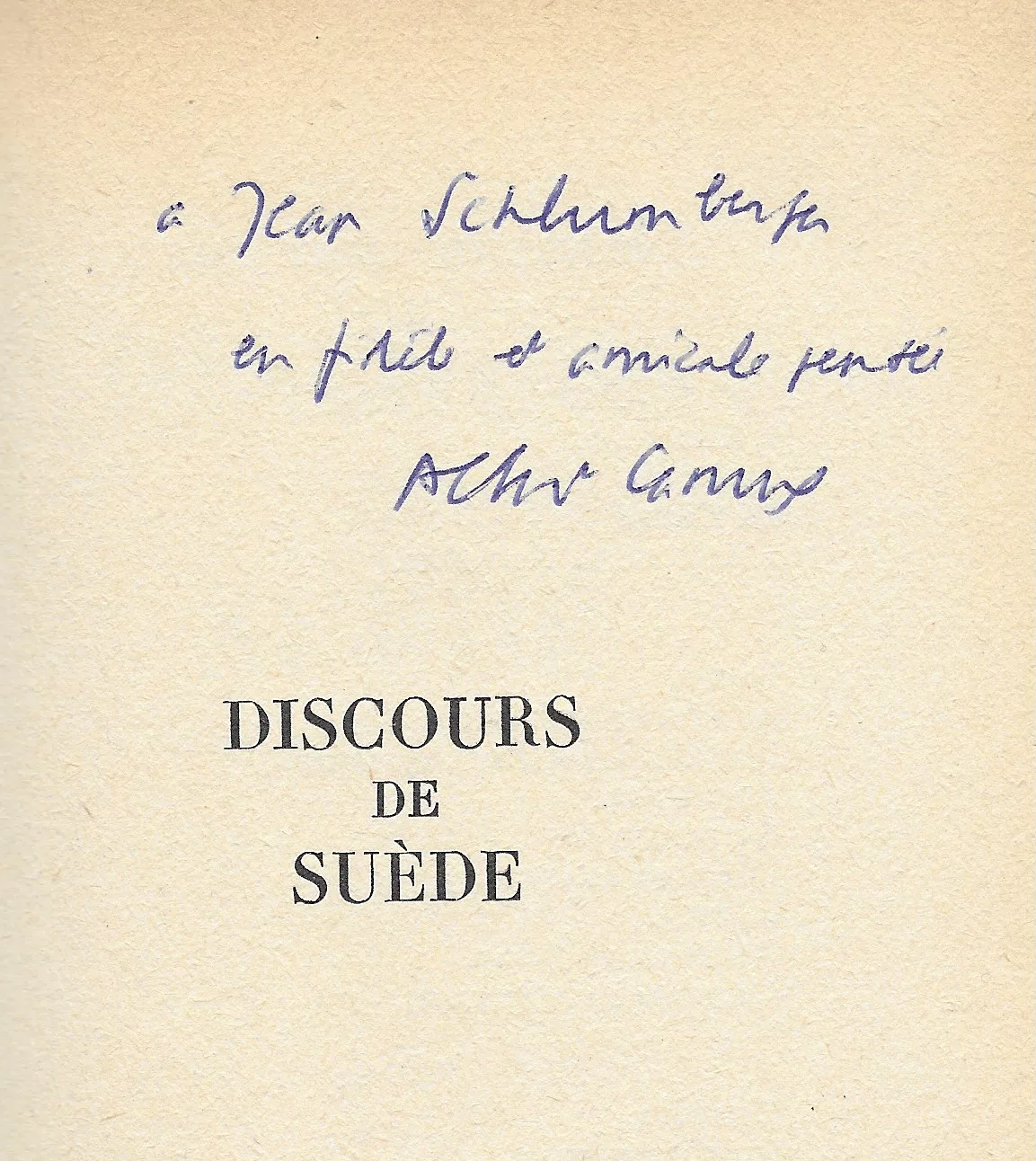
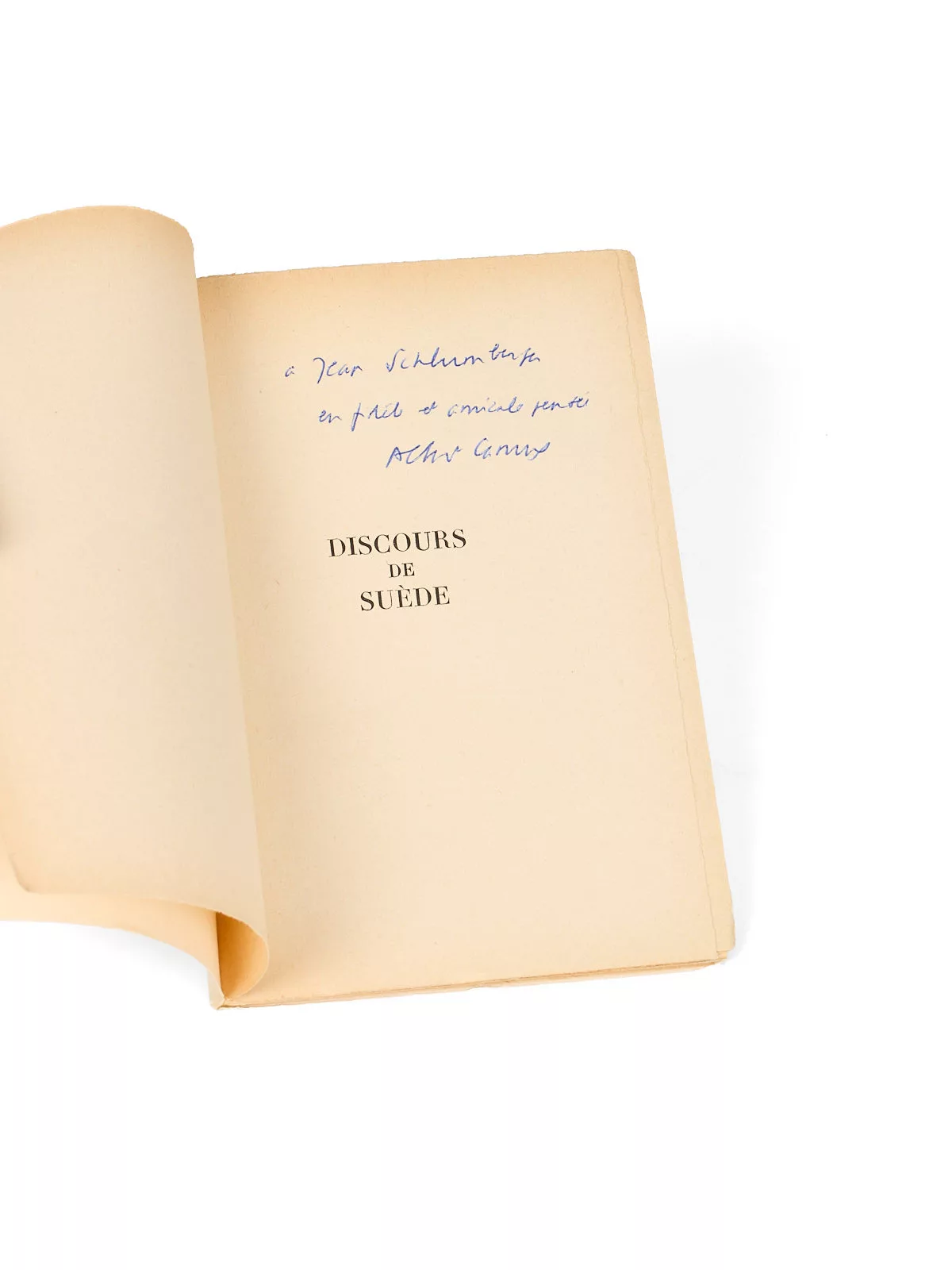
Presentation copy inscribed by Camus to Jean Schlumberger: “à Jean Schlumberger, en fidèle et amicale pensée, Albert Camus.”
These speeches were written with some advice from Martin du Gard, recipient of the 1937 Nobel Prize, for whom Camus had agreed to write the preface to the complete works in the Bibliothèque de la Pléiade the previous year. Martin du Gard advised his junior to proceed with modesty: “Abandon all will, all preference, during these few days…,” offering practical advice on how to dress, how to behave, and how to prepare small notes in order to “improvise” toasts (“The Swedes have a mania for rising, on any occasion, glass in hand”), and, above all, to write a speech that was brief yet significant: “A man like you, who has this opportunity to address an international audience, ought, in my opinion, to make an important, substantial, meaningful statement, one that will be remembered.” This became the Discours de Suède, or “the art of living in a time of catastrophe.”
A fine copy inscribed to Jean Schlumberger, one of the four founders of the Nouvelle Revue française in 1908, together with Gide, Copeau and Ruyters, before they were joined by Gaston Gallimard for the destiny we know. Camus had published his entire body of work with this publisher since L’Étranger in 1942.
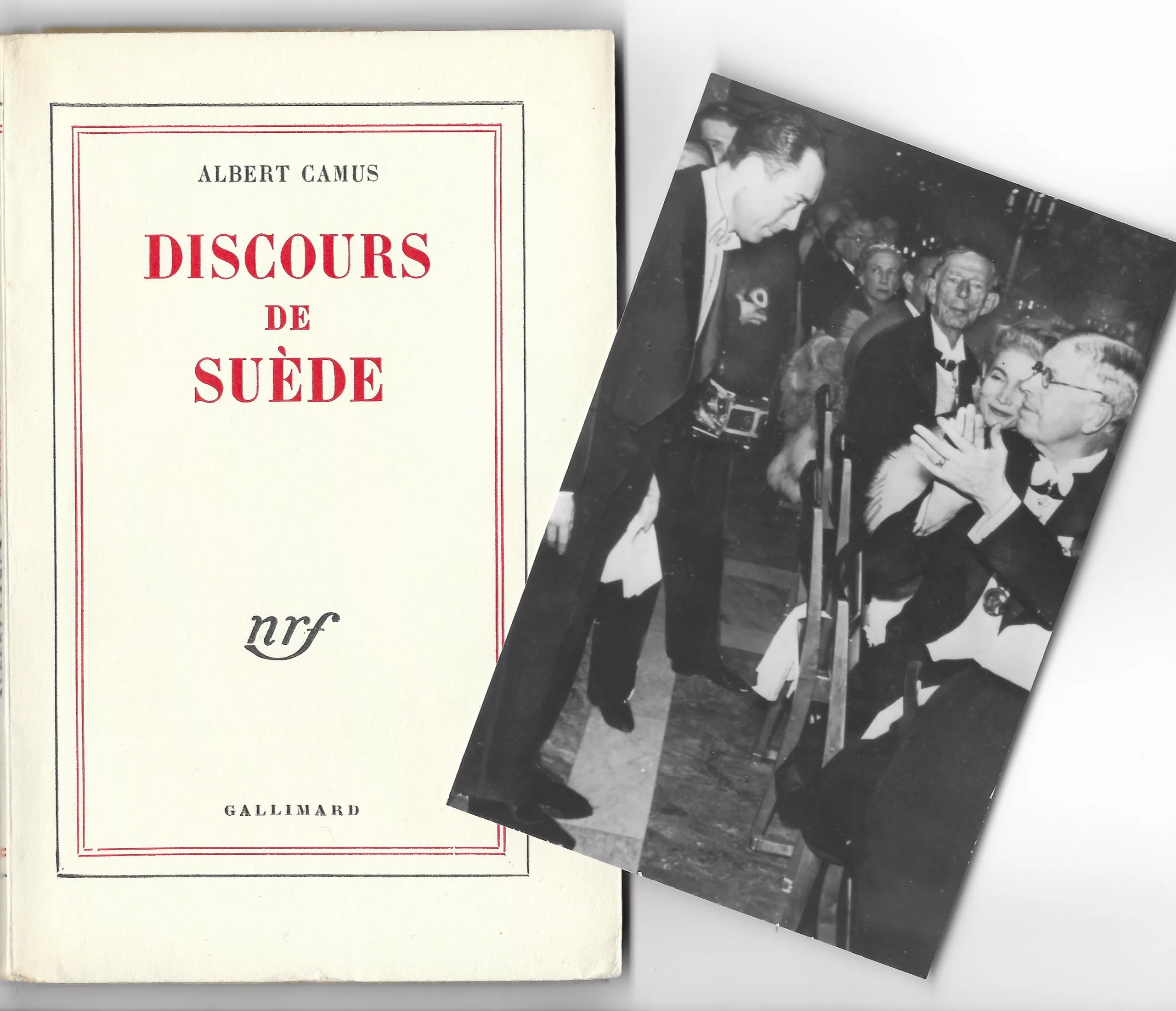
The copy is enriched with a photograph of Camus — a copy print — shown at the Lourmarin exhibition (2013, with stamp on verso): it shows the author being congratulated by King Gustav VI Adolf of Sweden at the gala dinner on December 10, 1957 in Stockholm.