

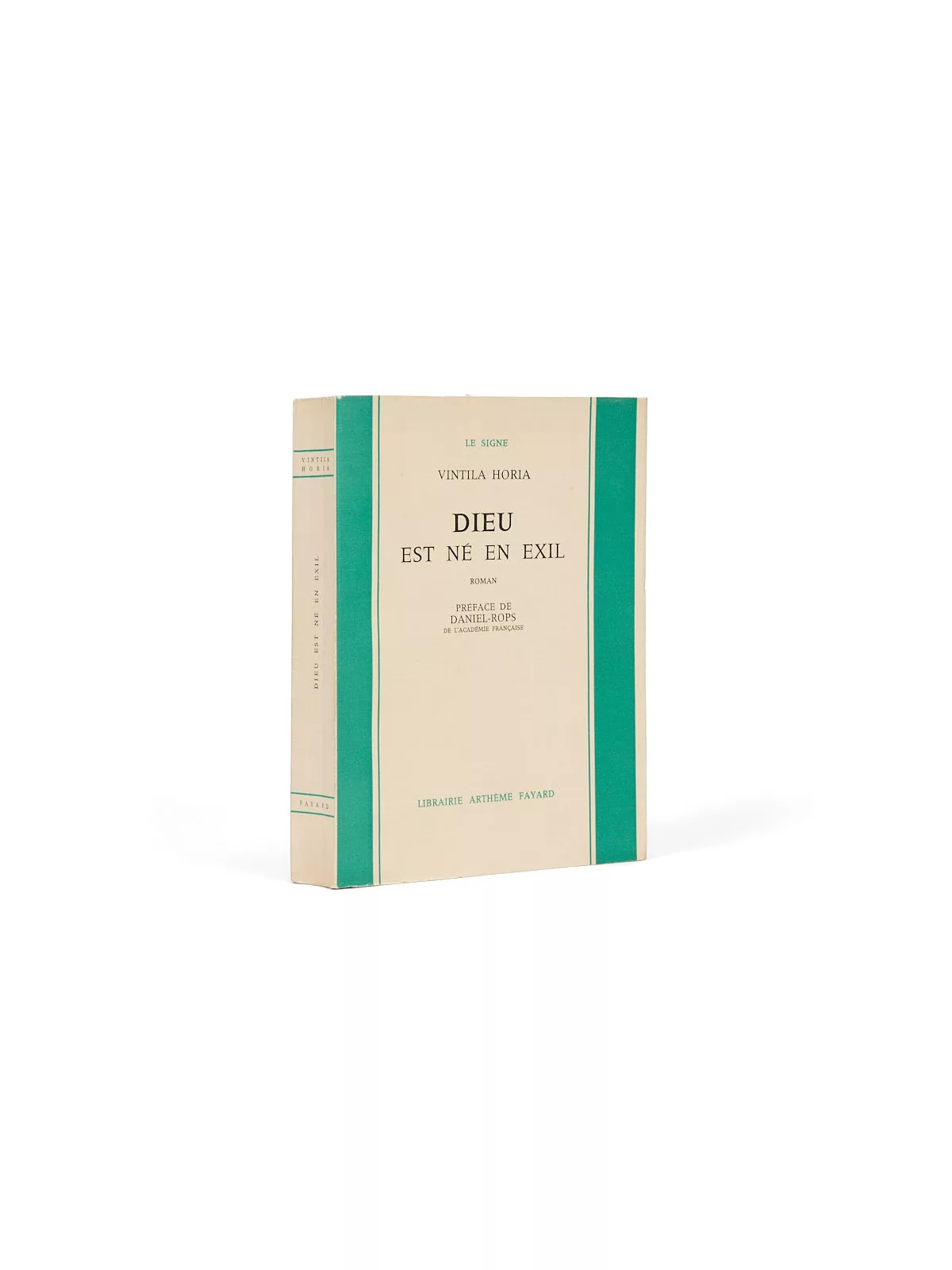
Dieu est né en exil
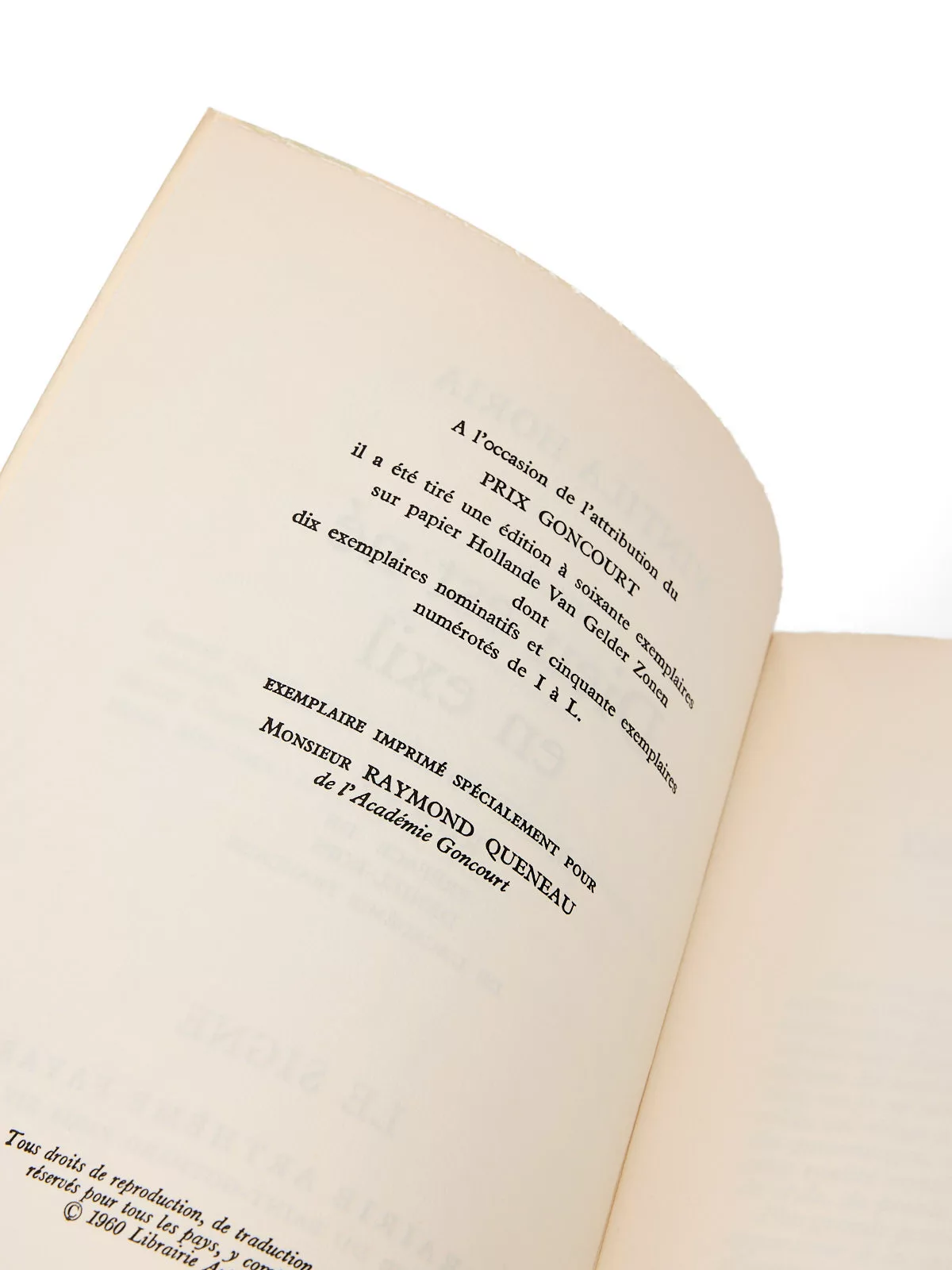
One of the first 60 copies on Hollande paper, this one among the 10 copies reserved for members of the Académie Goncourt, printed for Raymond Queneau.
Prix Goncourt, 1960. Presented as the fictional diary of Ovid during his years of exile at Tomis, on the shores of the Black Sea, this novel caused a sensation before becoming a scandal. In ample, meditative prose, Vintila Horia explores the condition of the exile, condemned to endless banishment, yet discovering in his ordeal a spiritual path: “Dieu est né en exil” (“God was born in exile”). Praised for its literary beauty, the book seemed to herald a major career, and was awarded the prize on Monday, 28 November 1960, ahead of Henri Thomas and Albert Simonin. Pierre Desgraupes announced the news to the winner, who was waiting, together with Thomas, for the results in the restaurant across the street.
But triumph quickly turned to controversy: the press revealed that the author, a Romanian émigré, had once belonged to the fascist Iron Guard regime. The shockwave was immense: under pressure from the ensuing polemic, Horia officially renounced the prize, although he was never formally stripped of it by the Académie. “I renounce the prize, out of love for France and out of respect for the Académie Goncourt.” The case remains unique in the history of the prize.
A nominative copy presented to Raymond Queneau, one of the ten members of the Goncourt jury — a member since 1951. This deluxe printing, produced on the very day of the announcement, is exceedingly rare and stands as a record of one of the most controversial episodes in the history of the Prix Goncourt, in which literary glory turned into political scandal.