


Cyr-François-Natalis Rondot, born March 23, 1821 in Saint-Quentin and died August 26, 1900 (aged 79) in Lyon, was a French economist, art historian and numismatist who was entrusted with several official missions abroad and was attached to the French embassy in China. He played an active role in developing the Lyon silk industry during the 1850s and inaugurated the Musée d’Art et d’Industrie de Lyon, forerunner of the Musée des Tissus et des Arts décoratifs, in 1864.
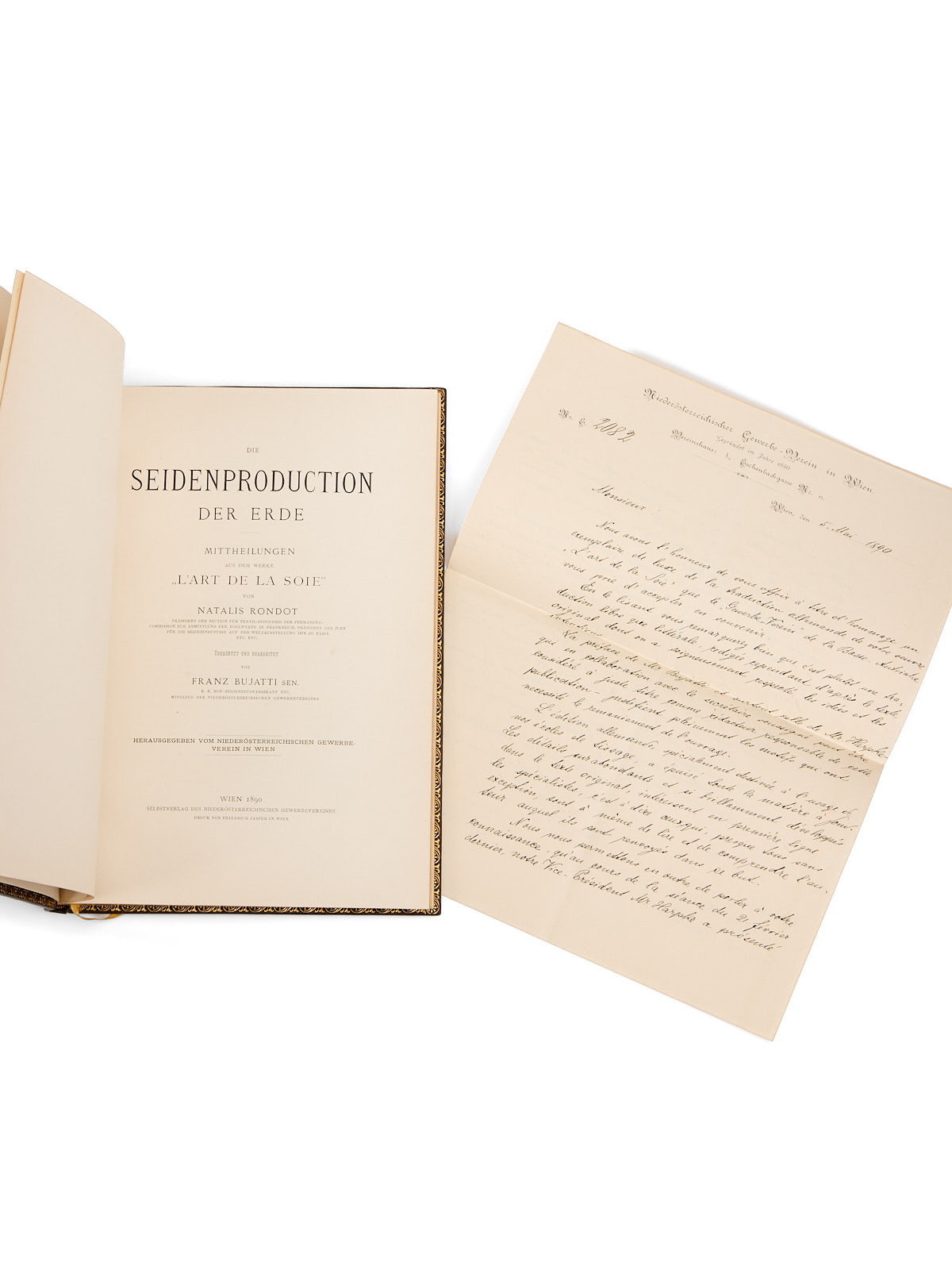
After ending his career as an industrialist in 1869, Rondot devoted himself to the study of art and artists, producing a considerable body of books, articles and notices. His L’Art de la soie was published in two volumes between 1885 and 1887 and met with resounding success.
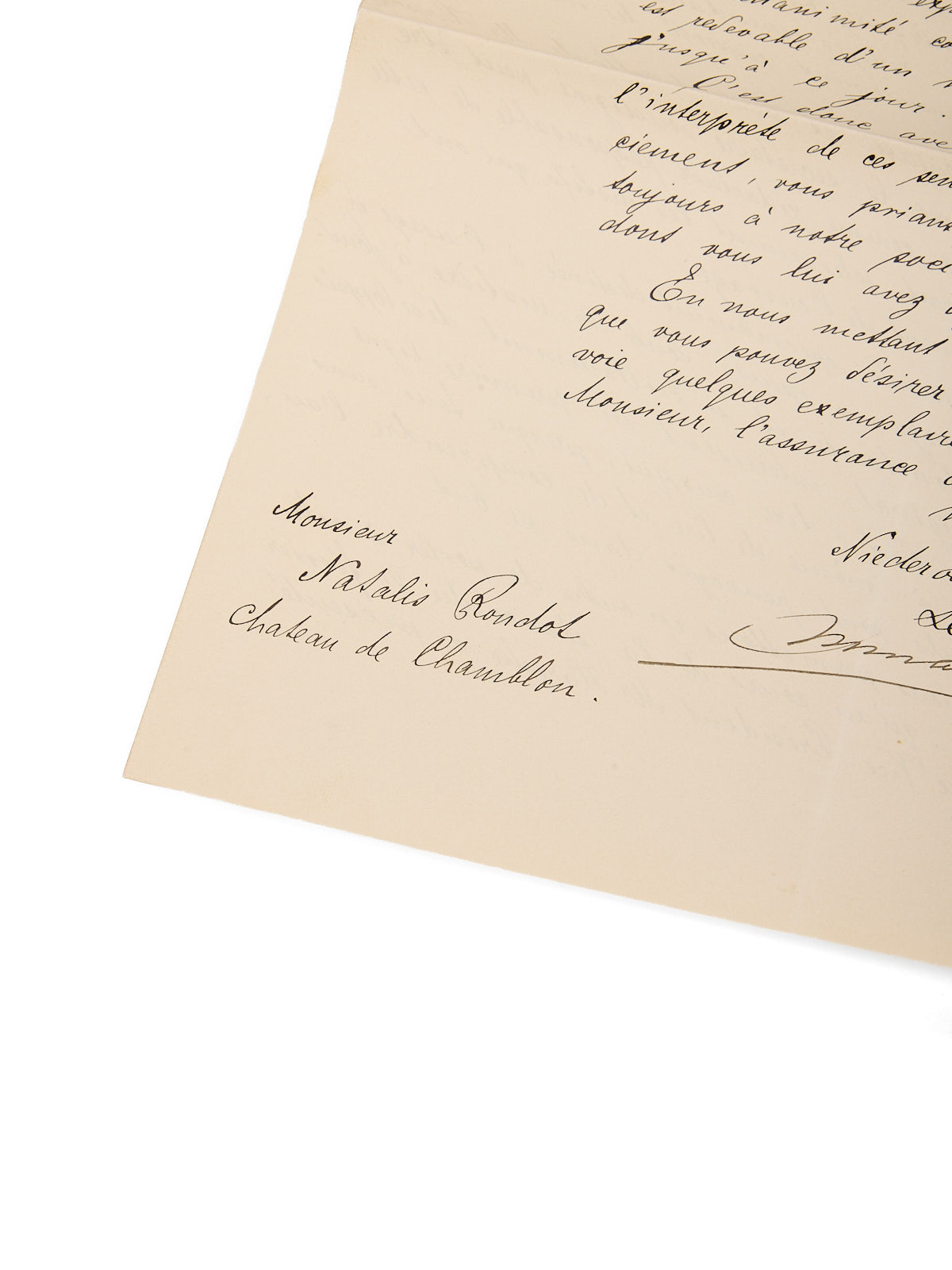
This first translation of his work appeared in Vienna in 1890: this copy is the one presented to the author by his publisher, the president of the Association of Merchants of Lower Austria, then encompassing the central region of Austria around the capital, Vienna — the most developed and wealthiest region of the Austro-Hungarian Empire.
At that time, Vienna was renowned for silk manufacture and trade: several major houses supplied the Court with silk and cashmere gowns for ladies. Mulberry cultivation had begun as early as the eighteenth century, first in Hungary and along the banks of the Danube. Sericulture developed under the encouragement of Maria Theresa and Joseph II, both great enthusiasts of silk.
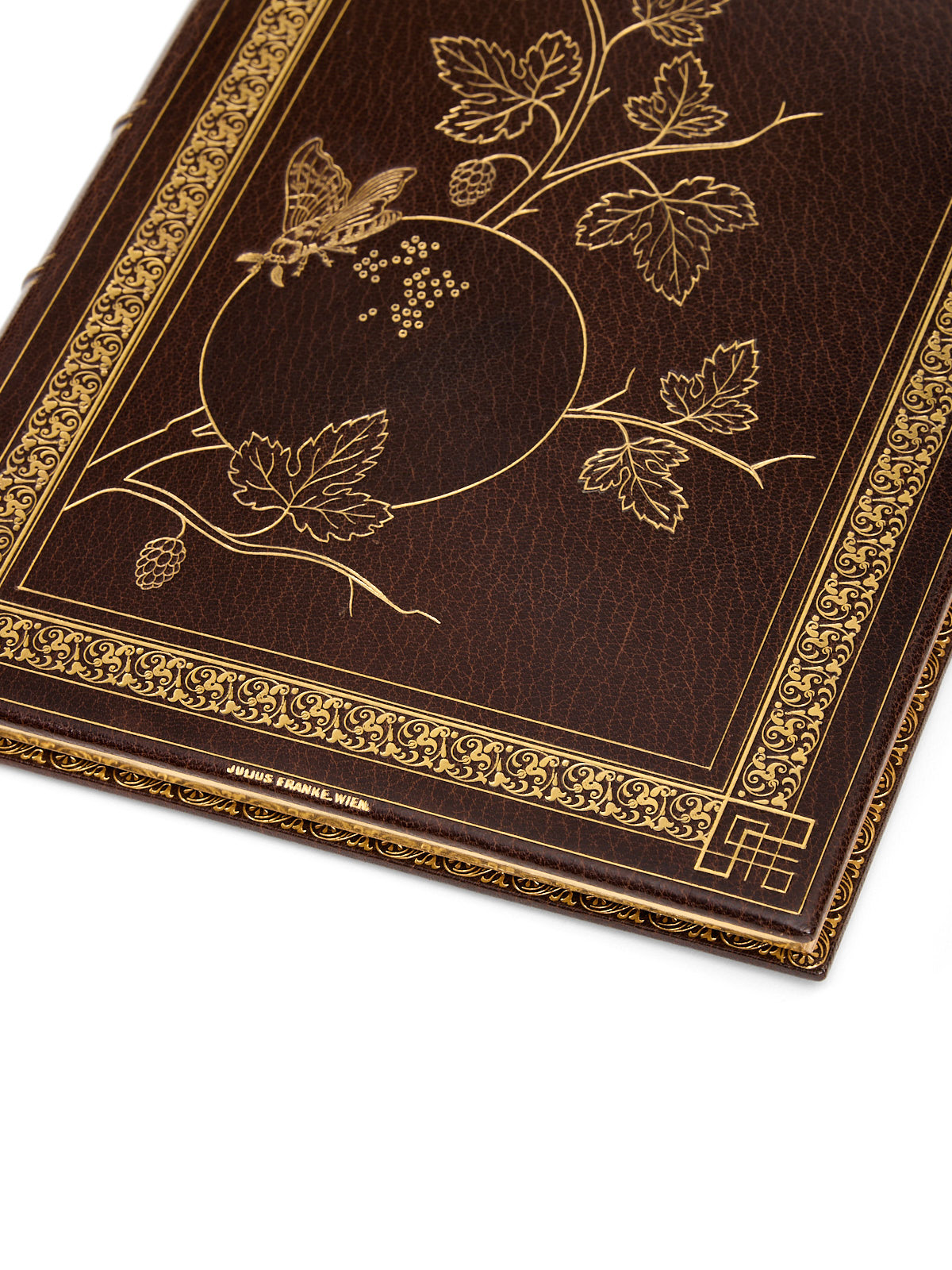
A fine binding by Julius Franke (1839–1894), a Viennese bookbinder established in the center of the city. His workshop would go on to earn the prestigious title of “K.K. Hofbuchbinder” — “bookbinder to the Imperial and Royal Court.”