

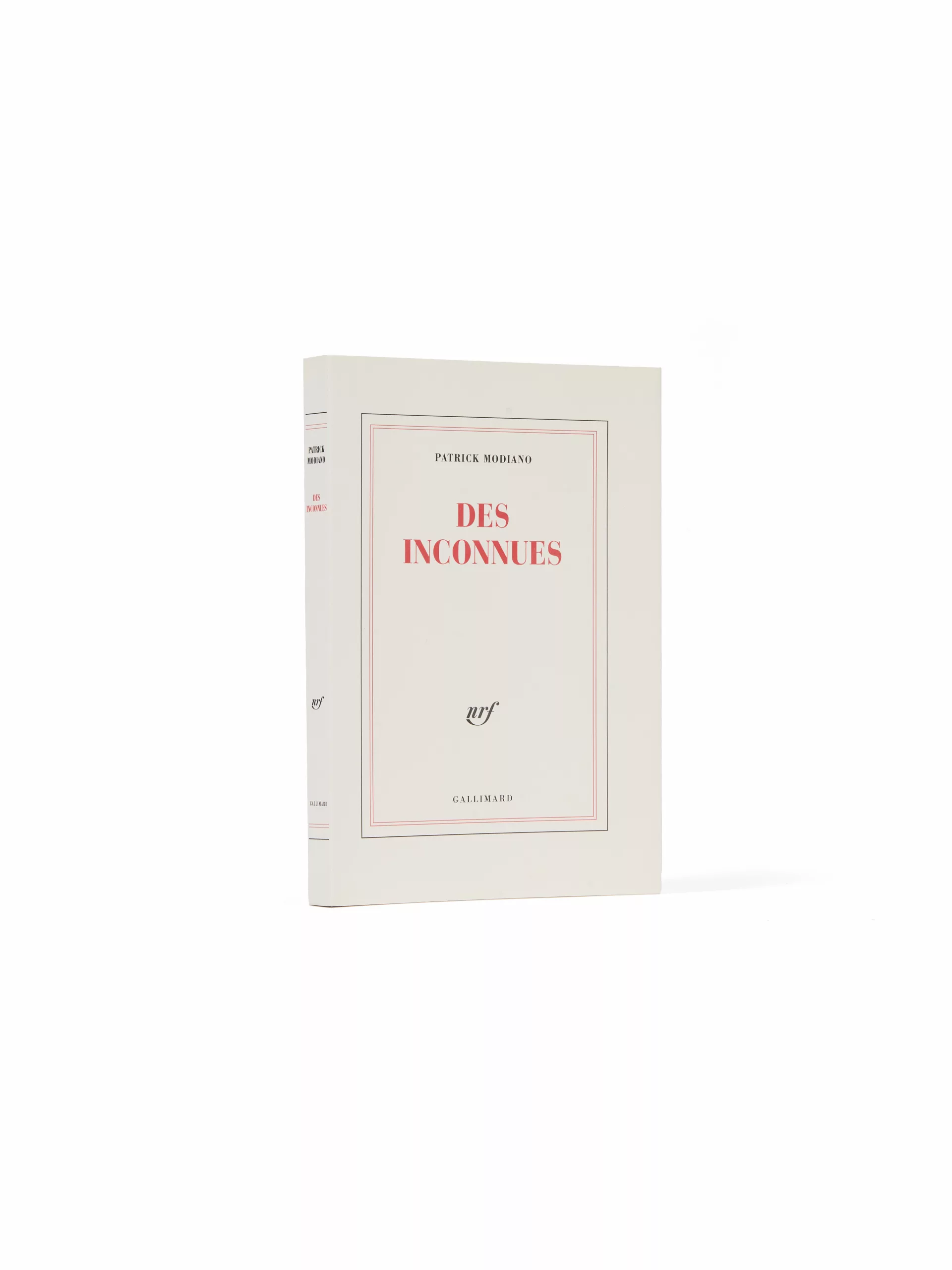
Des inconnues
A singular work in Modiano’s œuvre, Des inconnues represents a rare foray into the short story form: three untitled récits (I, II, III), narrated in the first person, in which three young women poised between adolescence and youth wander a Paris that is unfamiliar or imagined, caught between vague dates and precisely rendered places. The second story had appeared the previous year in the magazine Elle under the title “Aux jours anciens.”
“Since I am incapable of writing a book of pure fiction, I mixed my own memories with those of the girls I met in the 1960s. Like the heroine of the second story, I suffered from living in a boarding school near Annecy, the Collège Saint-Joseph de Thônes, and, like her, I escaped from it to return to Paris by train. Like the heroine of the first story, I lived through that troubled atmosphere at the end of the Algerian War. The very rare times I saw my father were in Geneva. I was sixteen, they would come to fetch me from boarding school, I would cross the border, and I would arrive in the lobby of the Hôtel du Rhône, where I witnessed a mysterious ballet of diplomats, FLN leaders and somber-looking men in ties — a very strange, very secretive atmosphere. Finally, like the young woman of the third story, I knew, also near Annecy, followers of Gurdjieff, and I was struck to see that they were always recruited among intellectuals in a state of physical despair.” (Interview with Jérôme Garcin, Le Nouvel Observateur, 1999).
On October 9, 2014, Modiano’s work was crowned with the Nobel Prize in Literature “for the art of memory with which he has evoked the most ungraspable human destinies and uncovered the life-world of the occupation,” as explained by the Swedish Academy and its permanent secretary Peter Englund, who called the author “the Marcel Proust of our time.” He became the fifteenth French author to receive the prize.