

Derrière le miroir
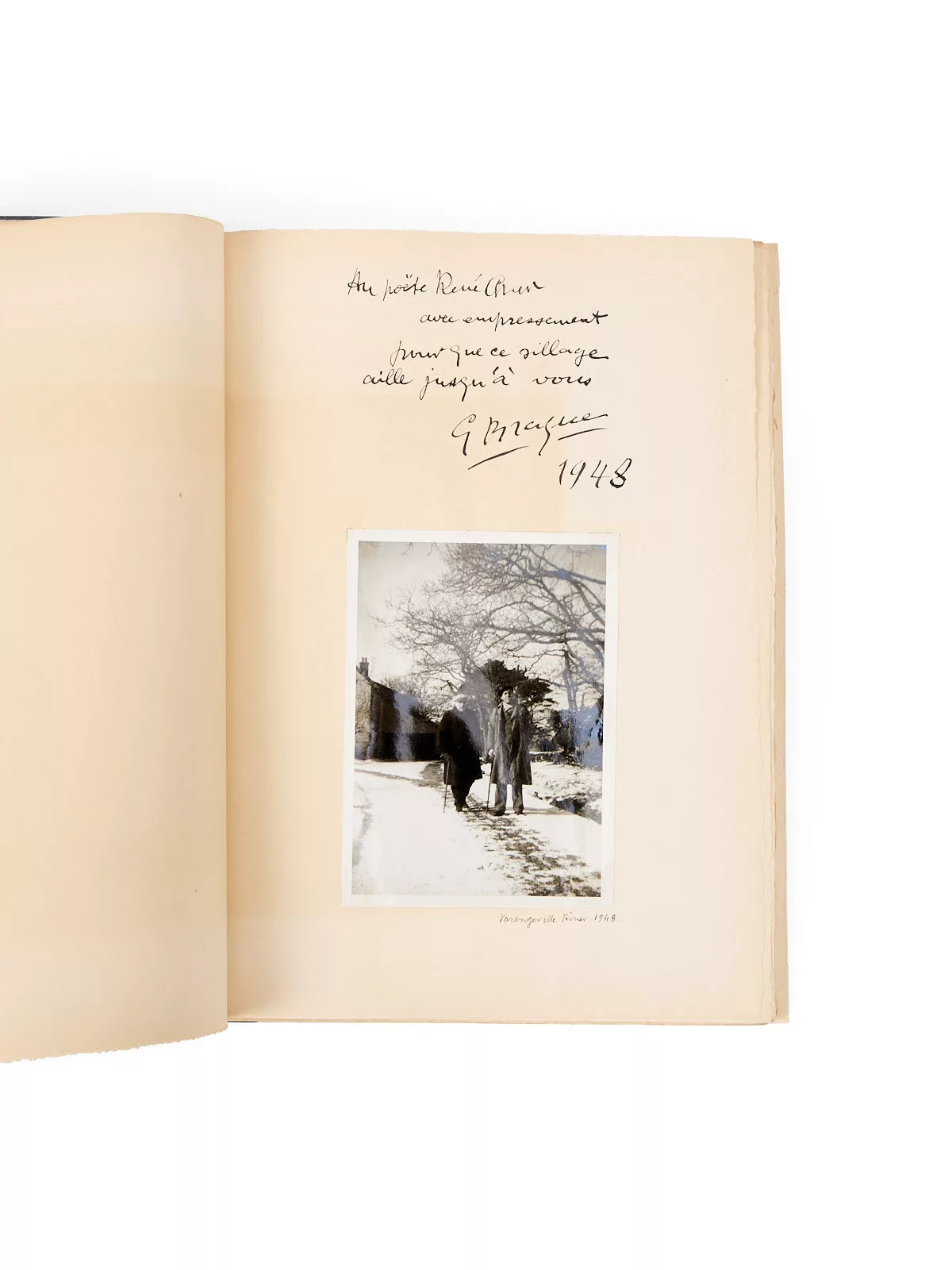
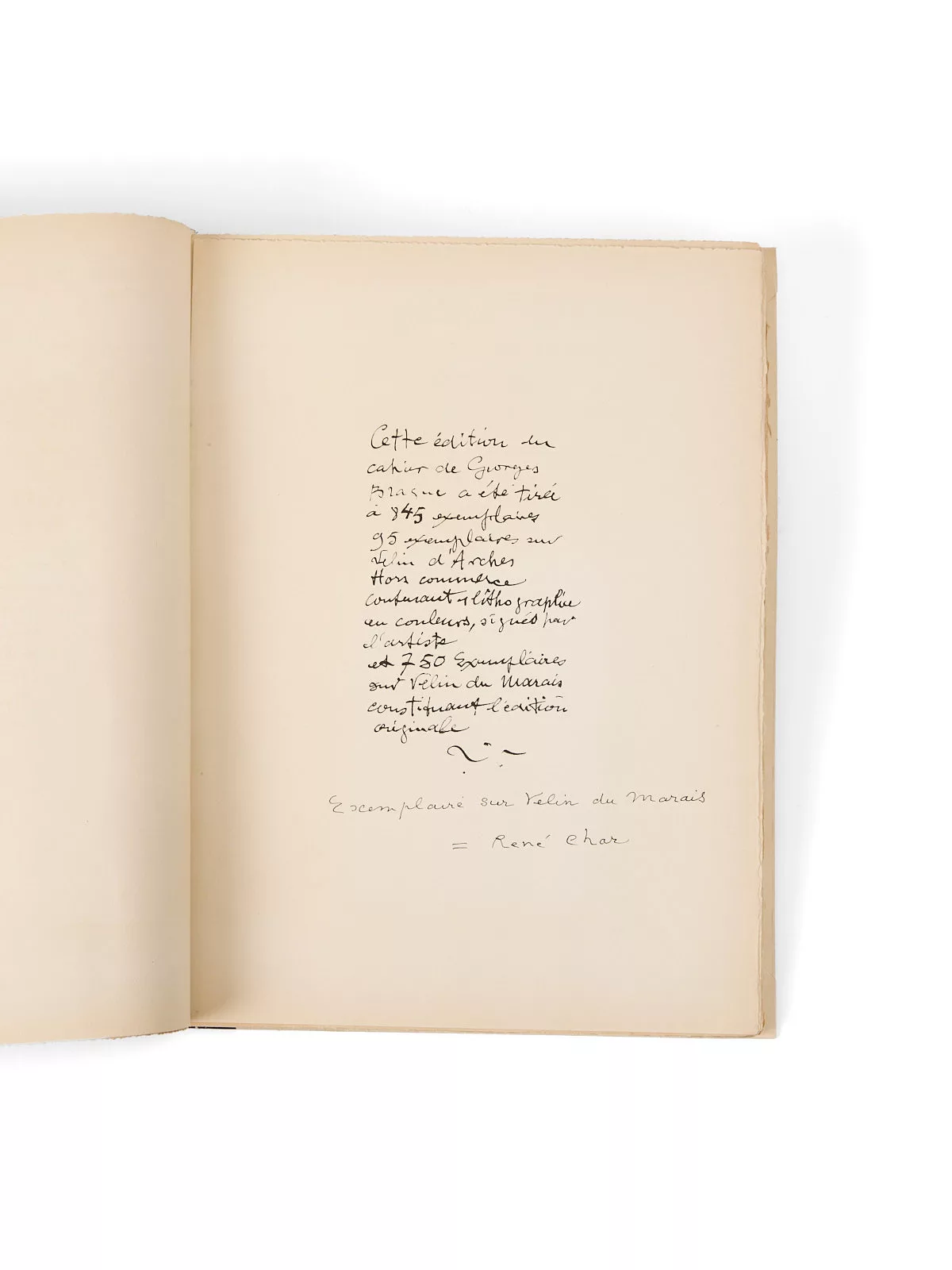
René Char's copy, numbered by hand, enriched with a mounted photograph captioned by Char: “Varengeville Février 1948.”
Signed presentation inscription: “Au poëte René Char, avec empressement, pour que ce sillage aille jusqu'à vous. G. Braque 1948.”
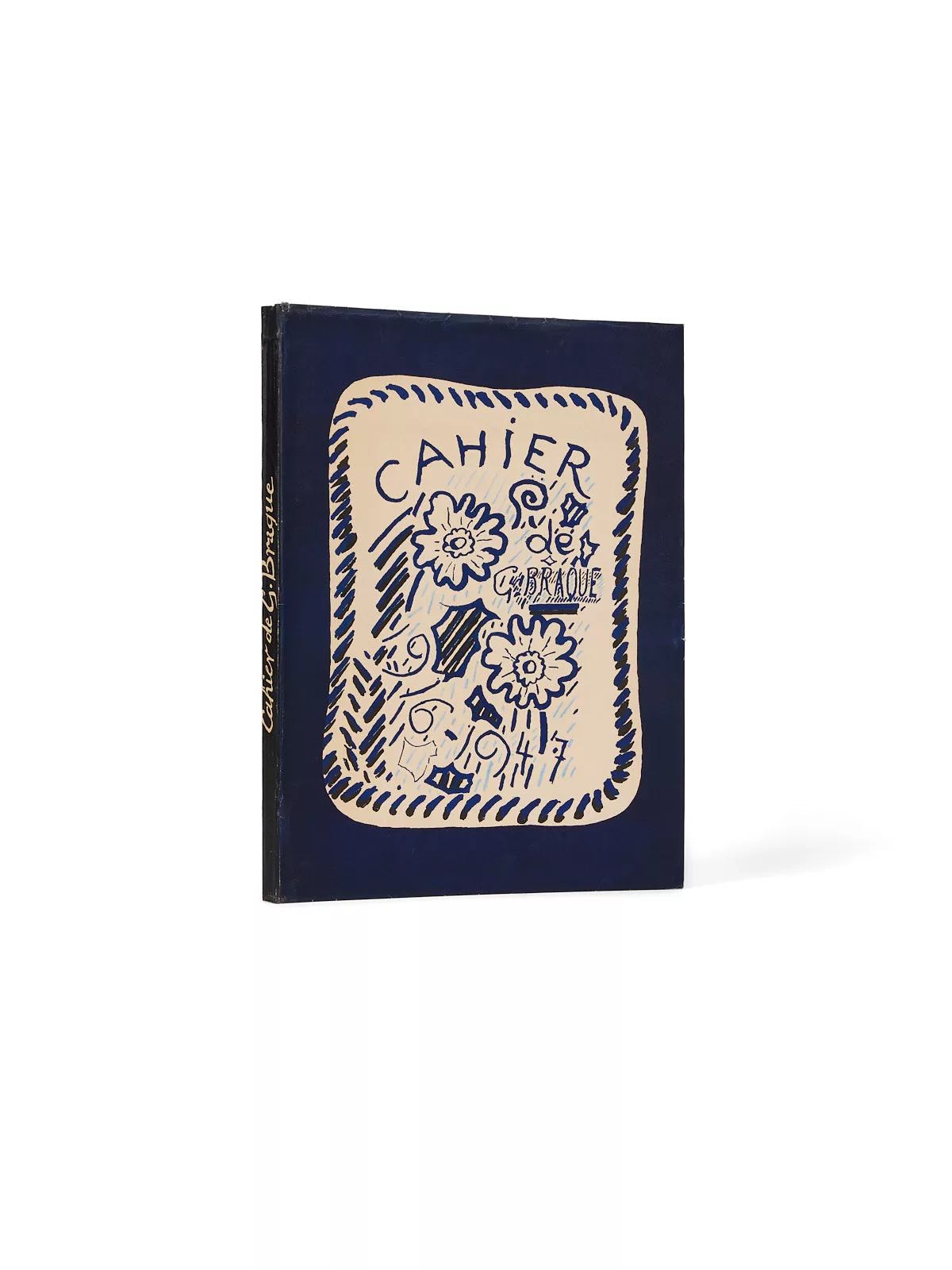
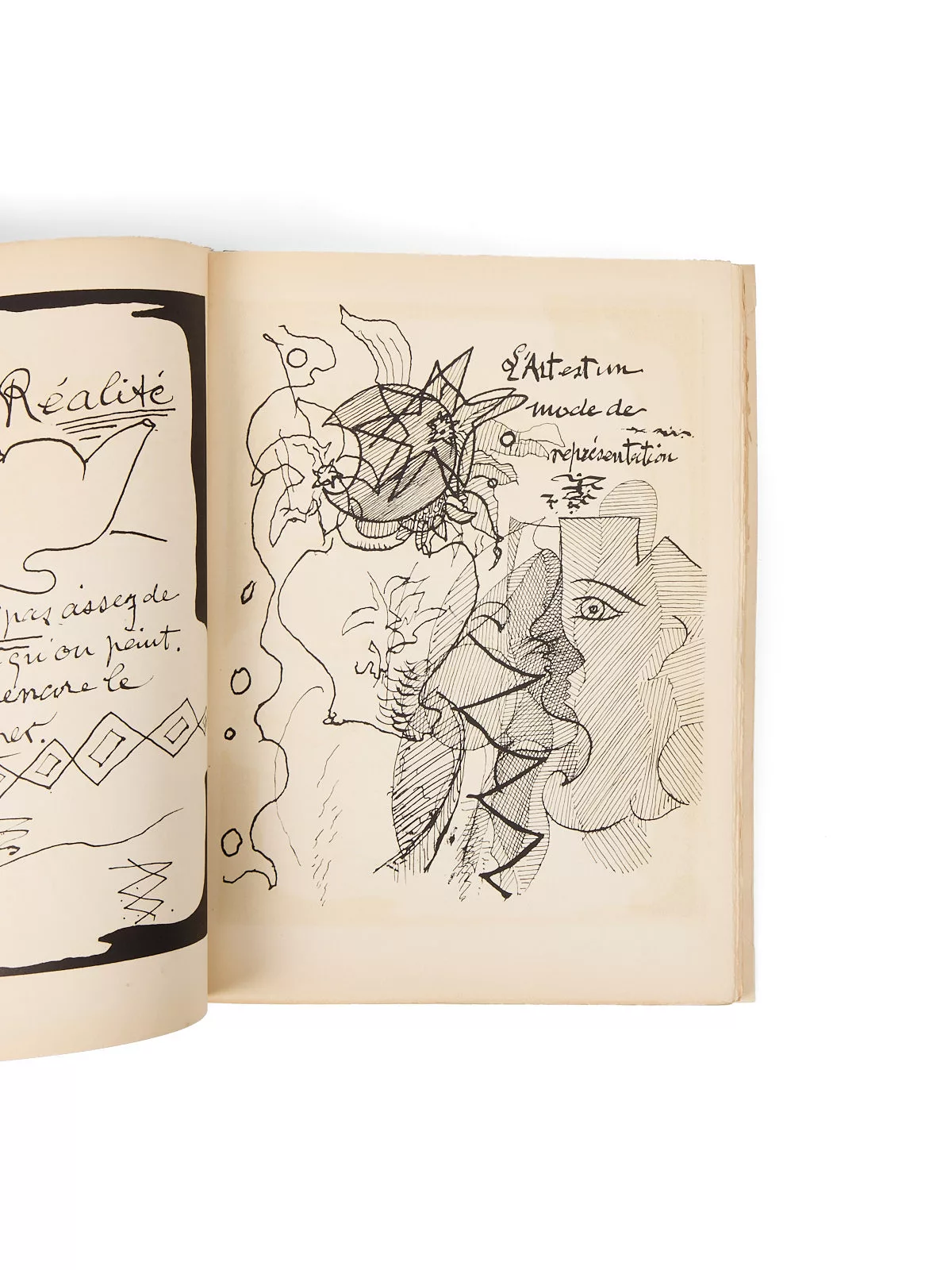
This is the first issue devoted to Georges Braque, published a year after his meeting with Aimé Maeght, his future dealer. Braque had met Char in 1947 and immediately agreed to contribute a text, in May, for the first issue of Derrière le miroir devoted to the artist, on the occasion of Braque’s first exhibition at Galerie Maeght in Paris (Derrière le miroir, Georges Braque, no. 4, June 1947). Following the exhibition, Maeght published the Cahier de Georges Braque, 1917–1947, the culmination of Braque’s reflections on art. Char and Braque first met in September, on the margins of the first Avignon Festival created by Jean Vilar with Char’s help, at the exhibition of modern art organized by Yvonne Zervos. The rapport between the two men was immediate. Braque stayed at Les Busclats, Char’s home, that same autumn, and in turn invited Char to Varengeville-sur-Mer, the Normandy house he owned with his wife Marcelle.
A remarkable document: this photograph is the earliest known image of the two men together, and this print is unpublished. It was taken by Mariette Lachaud, the daughter of the Braques’ cook. “One day, the painter gave her a camera,” recalls Joanne Snrech, curator at the Musée des Beaux-Arts de Rouen. “Mariette Lachaud then began photographing daily life in the house. There is a still largely unexploited archive. The photographs are not always of great quality, but she is always there at the right moment. She captures very intimate instants. It is a precious record.” A variant of this photograph, showing Char looking at Braque, is known; it would be used fifteen years later for the edition of 21 copies of Ainsi va l’amitié, published by PAB in 1962, which contained four photographs by Mariette Lachaud — the only published record of the friendship between the poet and the painter.
This fifth print, of which only this original print exists, was given to Char to enhance his copy. Char lost no time in captioning and dating it, thus answering his friend’s inscription. The “wake” evoked by Braque would take on real substance, leading the two men toward a lasting friendship and several major collaborations. The first came the following year, inspired by the stay at Varengeville: Braque’s illustrations for Le Soleil des eaux (Matarasso, 1949), which introduced the bird motif. Just before this, Char had written a preface to Héraclite d’Éphèse (Cahiers d’Art), on a text by Yves Battistini, illustrated with an etching by Braque. In 1950 followed the important text “Sous la verrière” (in Derrière le miroir, no. 25–26, January 1950), a “sovereign conversation” in which Char establishes a dialogue between the poet and the painter, who “lets some light into” his painting, which the poet likens to a “truth… Along the way, what matters is to found a new love from beings and objects hitherto indifferent.” These were followed by La Bibliothèque est en feu (Louis Broder, 1956), À Braque (PAB, 1956), Jeanne qu’on brûla verte (PAB, 1956), Cinq poésies en hommage à Georges Braque (PAB, 1958), Le Ruisseau de blé (PAB, 1960), Nous ne jalousons pas les dieux (PAB, 1962), and, finally, the crowning achievement, Lettera Amorosa (Engelberts, 1963), their last collaboration, presented at the exhibition Georges Braque – René Char at the Bibliothèque Doucet: the book crowns a friendship in which, as Georges Blin notes in his preface, “the mutuality of understanding answers that of listening.” Braque died on 31 August, and by 5 September Char had already written a marvelous short tribute, Songer à ses dettes, published in the NRF in October and then by PAB in January 1964. In it, he expresses sorrow and gratitude toward the man who had shown him where his duty, if not his calling, lay: “the one who will have placed our hands above our eyes to teach us to see better.”
The following year, Braque received the Grand Prize of the 24th Venice Biennale, the first held since the war.
A fantastic copy.