

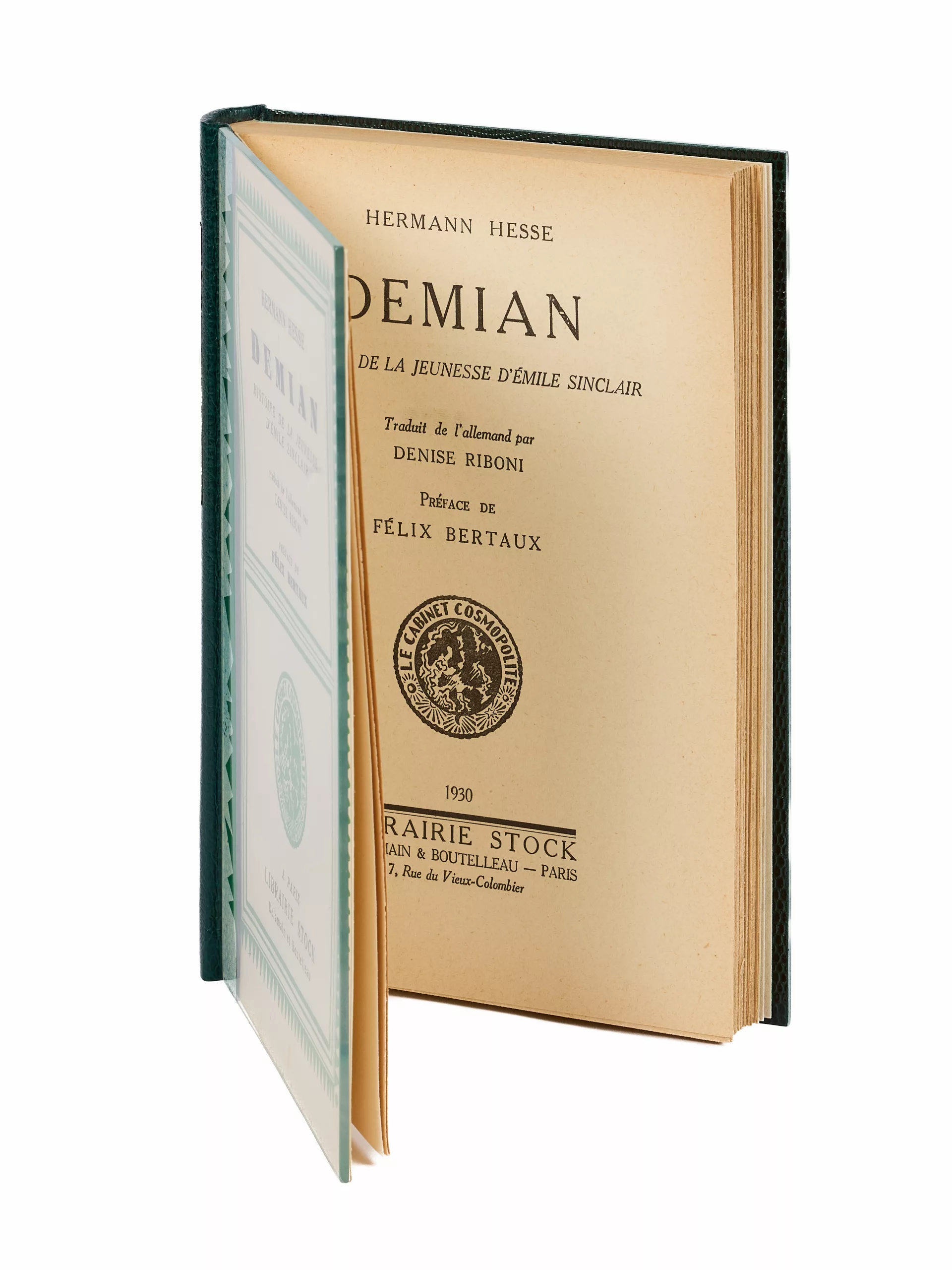
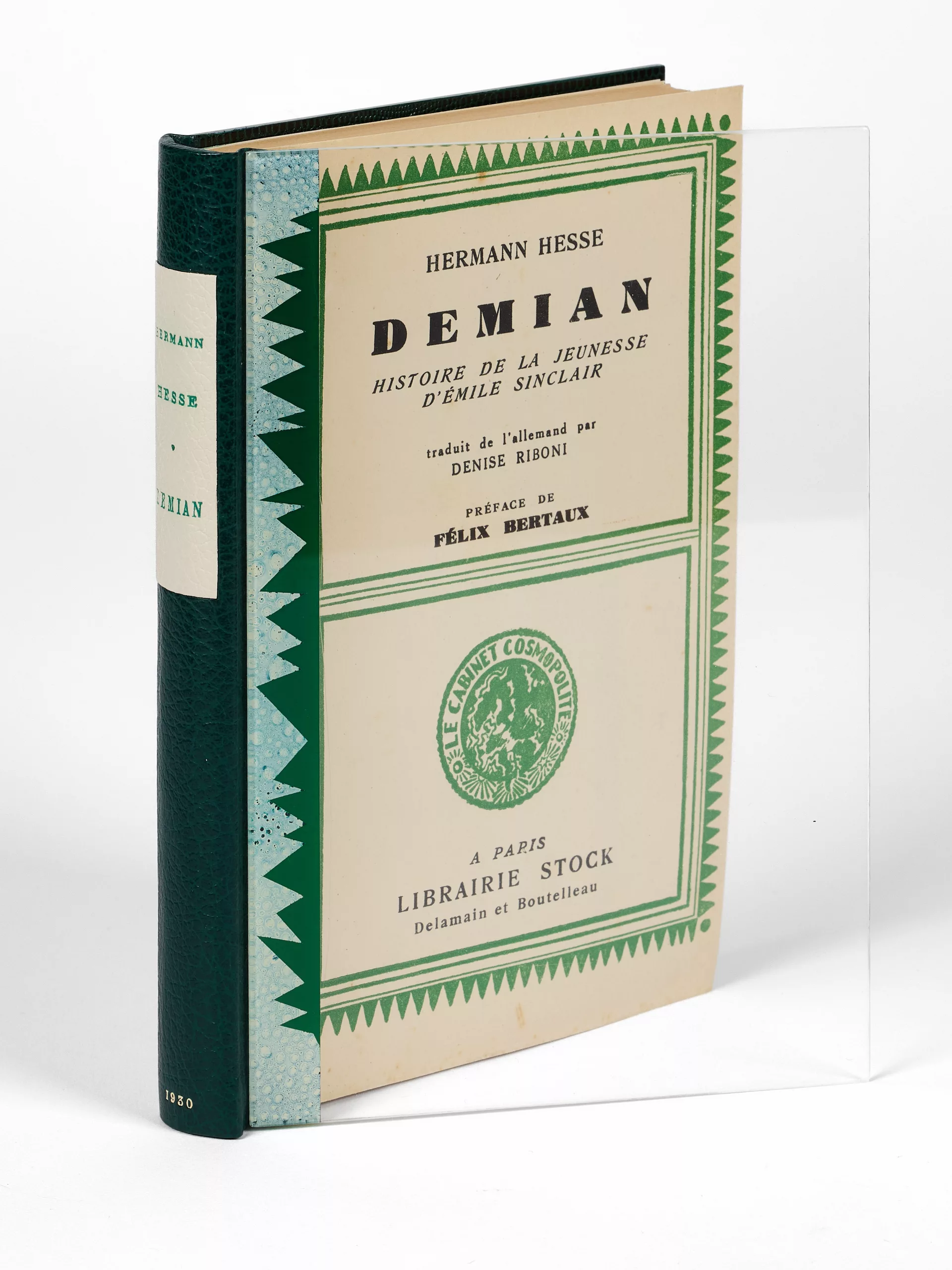
Demian
One of 2,700 copies on satin-finish alfa paper (no. 1532).
Demian, subtitled Histoire de la jeunesse d’Émile Sinclair (The Story of a Youth), is Hermann Hesse’s first published novel, preceding Siddhartha and Steppenwolf. It already contains the essential substance of Hesse’s lifelong struggle: renunciation of the world and introspection, cast as a Bildungsroman that met with enormous success among the German youth of the postwar years and won the admiration of Thomas Mann, situating it in the tradition of Mann’s own work and that of Robert Walser. Demian portrays the turmoil of the child becoming a man, a condensed treatment of the theme of the outsider who must not fear leaving the world in order to better discover himself.
Published under the pseudonym Emil Sinclair, a reference to the German diplomat and writer Isaac von Sinclair, friend of Friedrich Hölderlin, it was immediately translated into French and brought Hesse a European readership that would only continue to grow, culminating in the Nobel Prize in Literature in 1946 — the second awarded to a German-language author (although Hesse had become a naturalized Swiss citizen during the war) after Thomas Mann in 1929. Heinrich Böll, Günter Grass and Herta Müller would later join this list of laureates.