

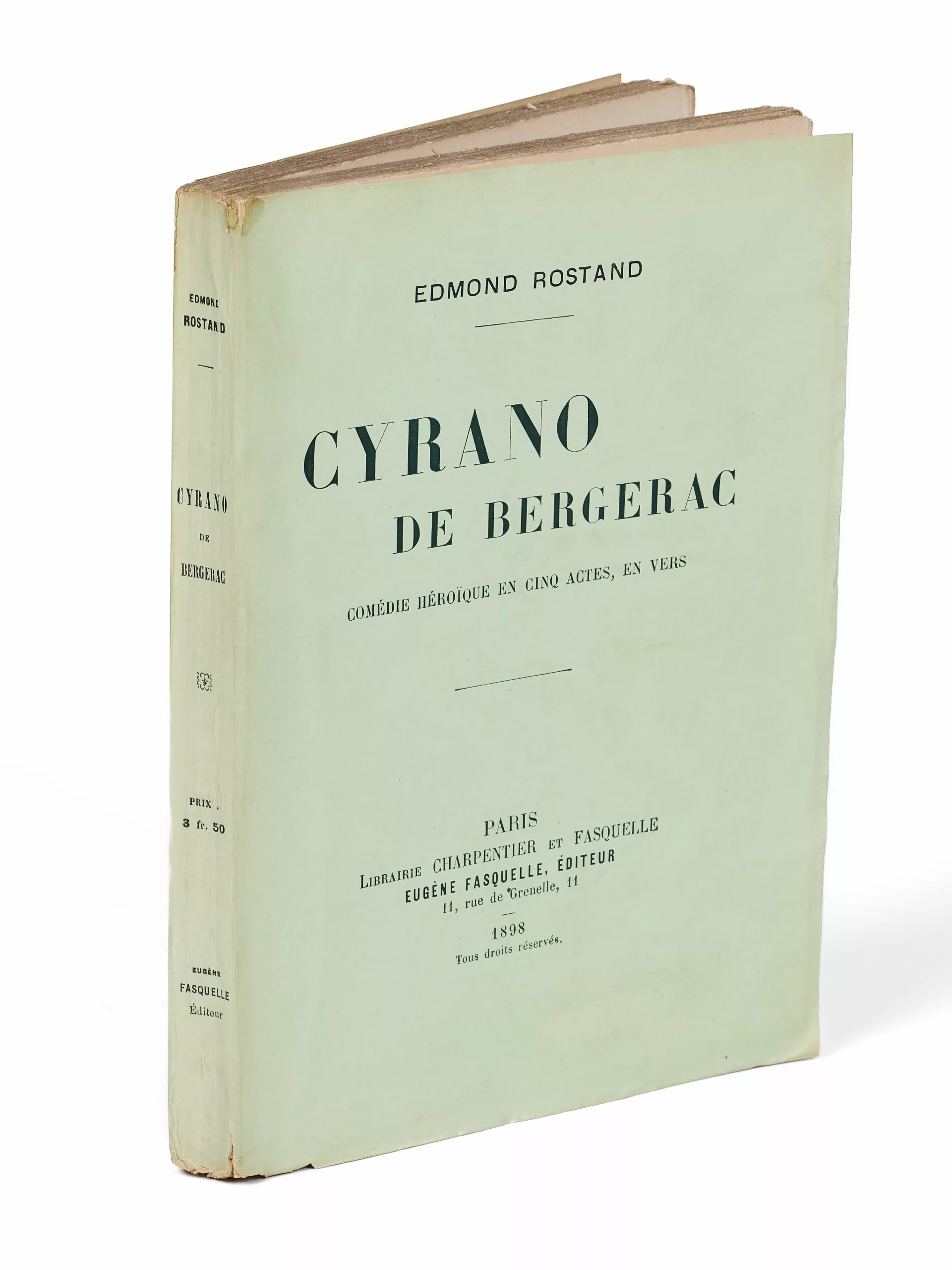
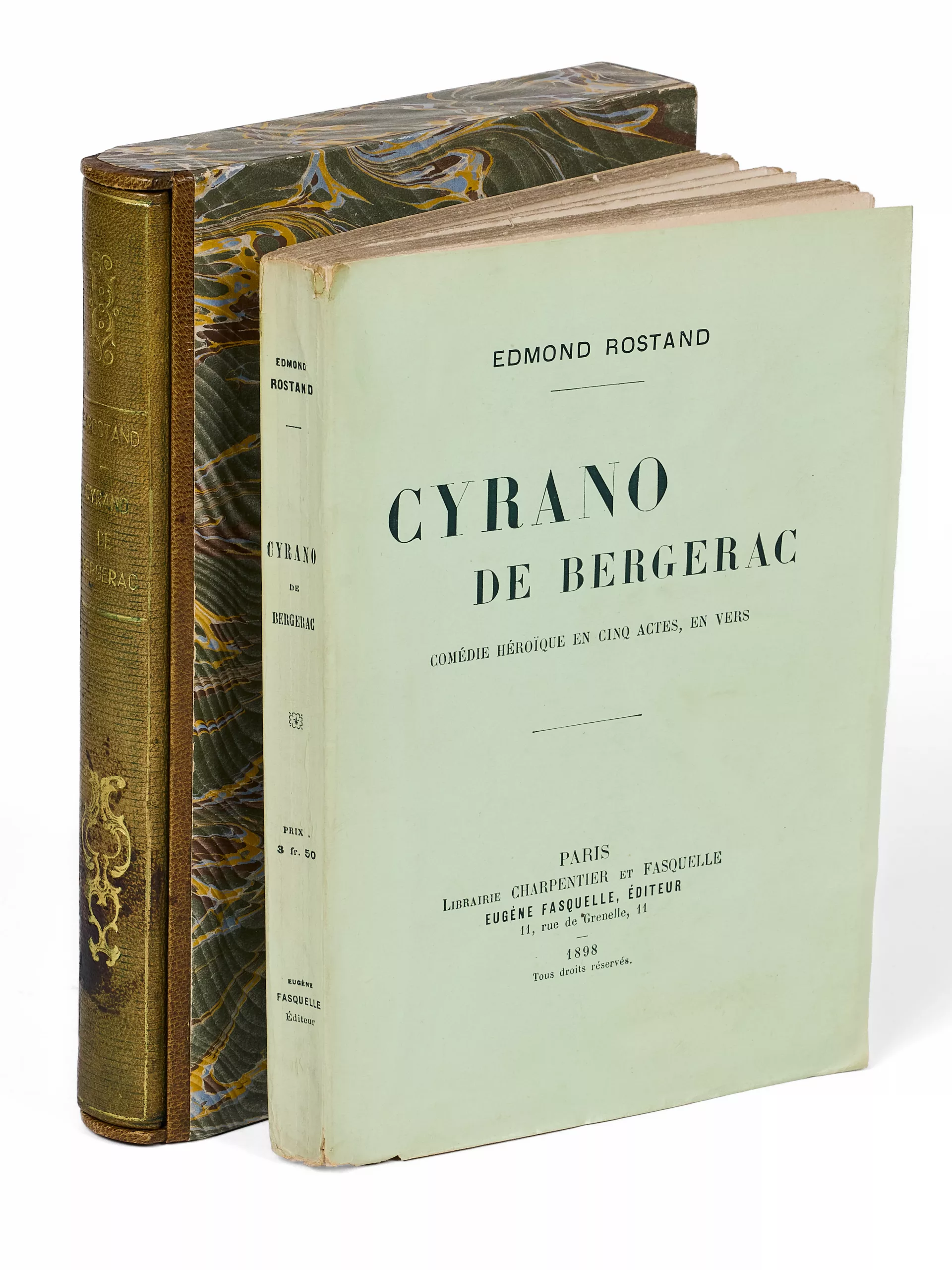
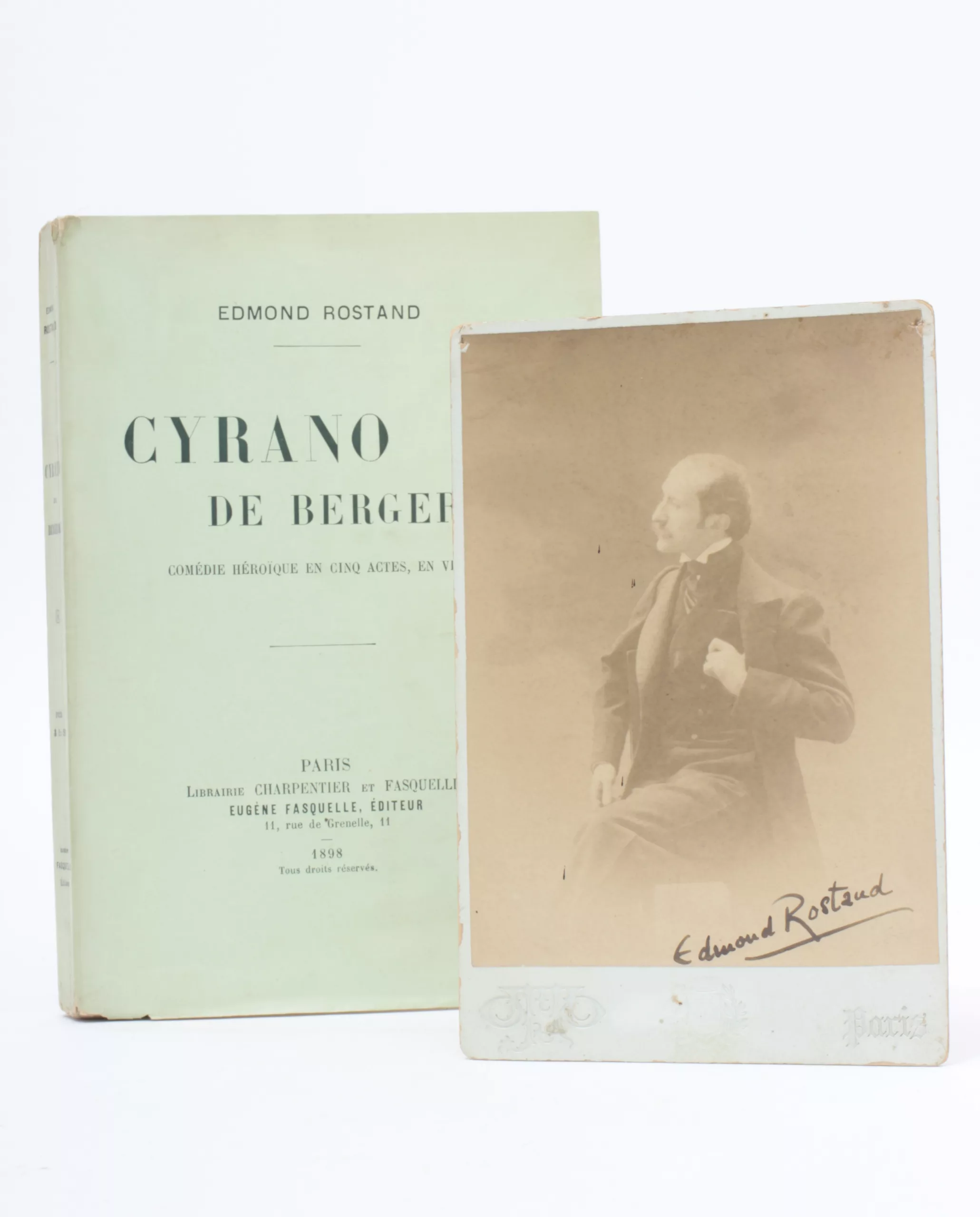
Cyrano de Bergerac
On December 28, 1897, Rostand’s heroic comedy became the greatest theatrical success since Hernani. Forty curtain calls, a unanimous audience — and even Félix Faure, the President of the Republic, attended a performance on January 6, 1898. The play ran for four hundred performances until 1900, and Coquelin, introduced to the author the previous year by Sarah Bernhardt, went on to play the role until his death — nine hundred and fifty times in all! Rostand was elected to the Académie française in 1901, at the age of thirty-three, making him the youngest academician at the time.
The figure of Cyrano first appeared in the purely literary description given by Théophile Gautier in Les Grotesques (1844): “On opening the first volume of Bergerac, where his portrait in copperplate can be seen, the gigantic dimensions and singular shape of his nose struck me so forcibly that I lingered over it longer than the thing was worth, and fell into these deep reflections: (…) it forms, in the middle, a mountain which seems to me bound to be, after the Himalayas, the highest mountain in the world; then it plunges toward the mouth, which it broadly overshadows, like a tapir’s trunk or the beak of a bird of prey; at its very tip, it is divided into two portions by a groove rather similar, though more pronounced, to the furrow that cuts across the cherry lip of Anne of Austria, the pale queen with the long ivory hands. This makes, as it were, two distinct noses on a single face, which is more than custom allows.” Rostand, surely, would have appreciated this!