

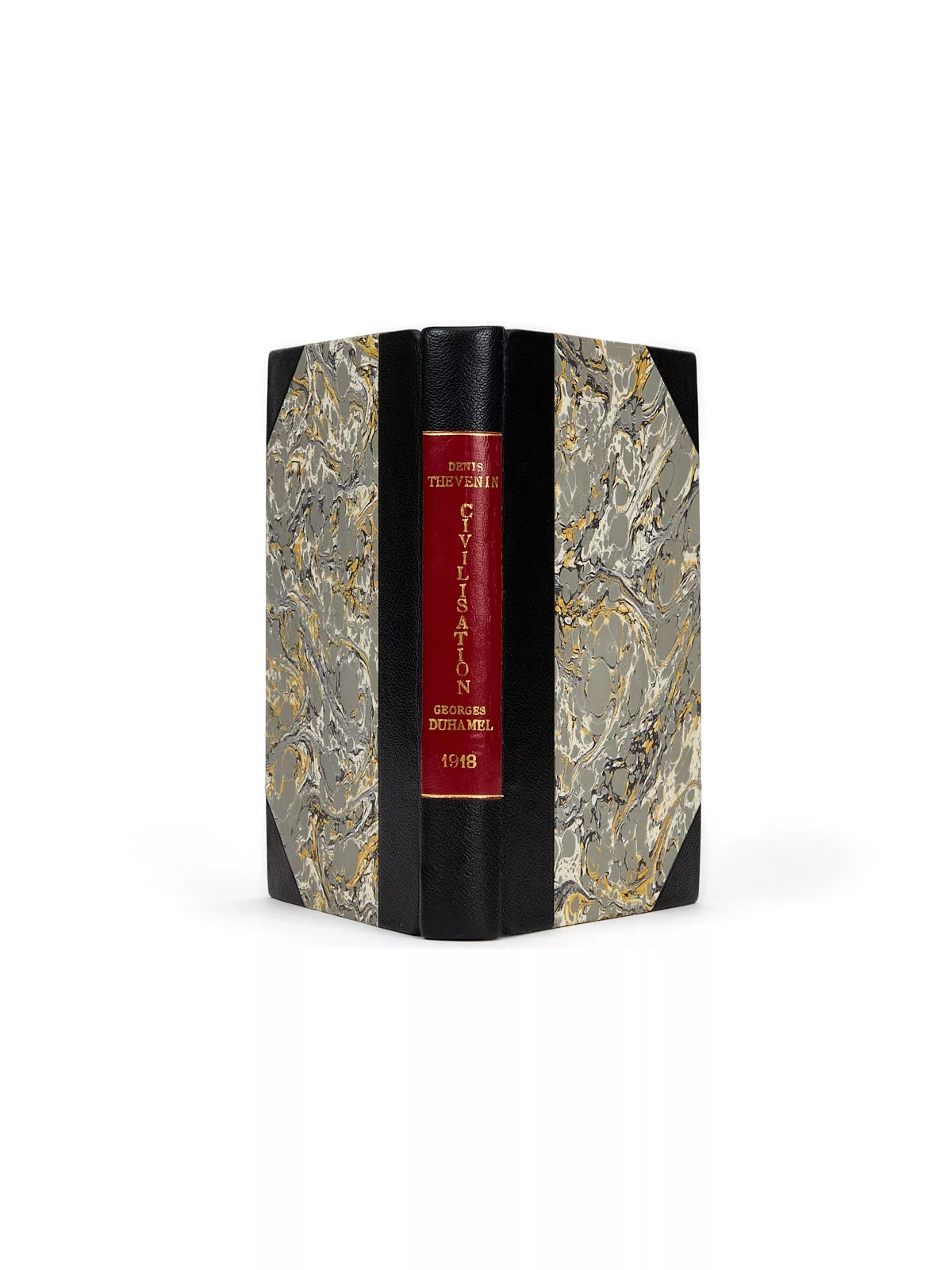
Civilisation
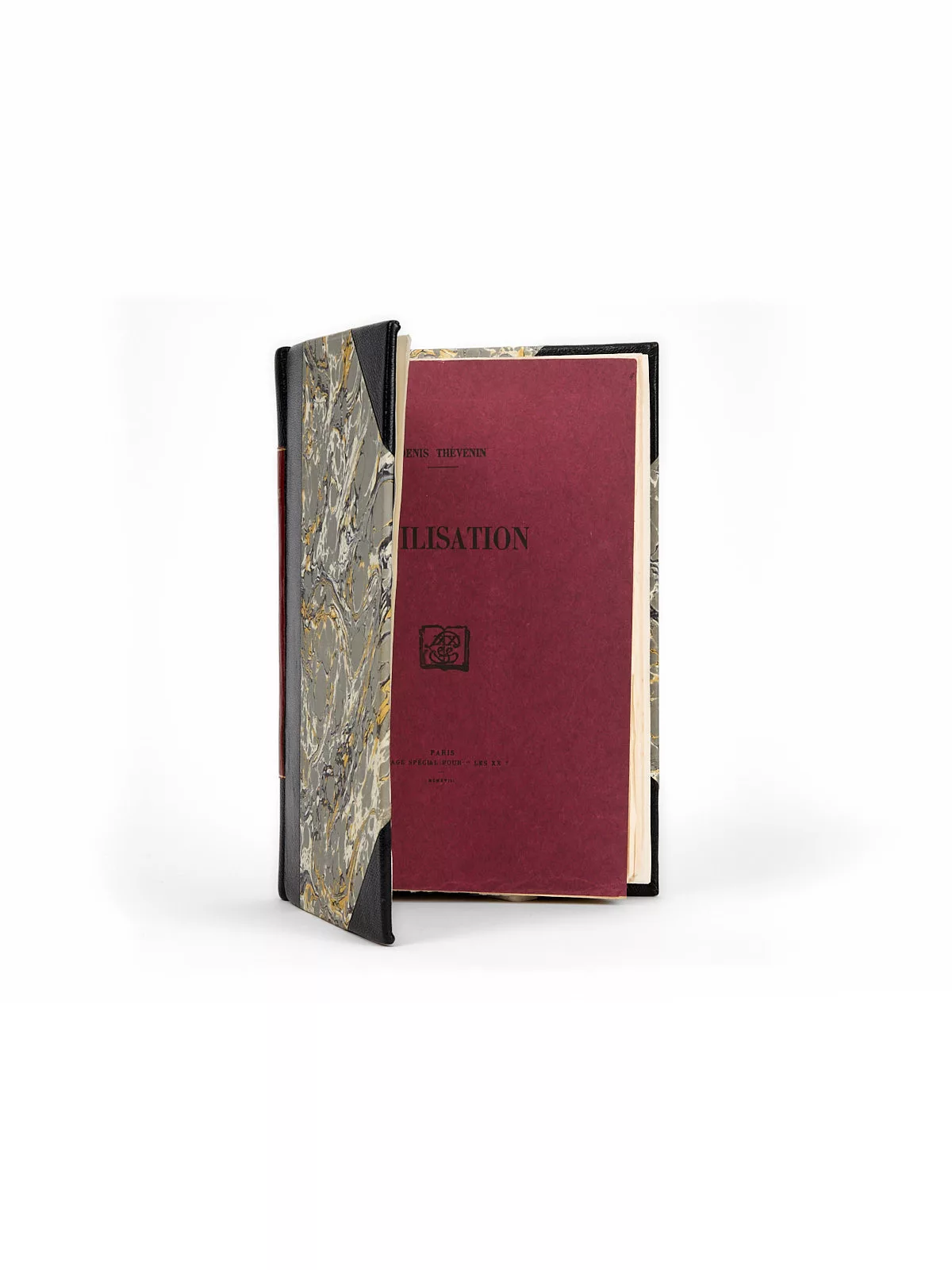
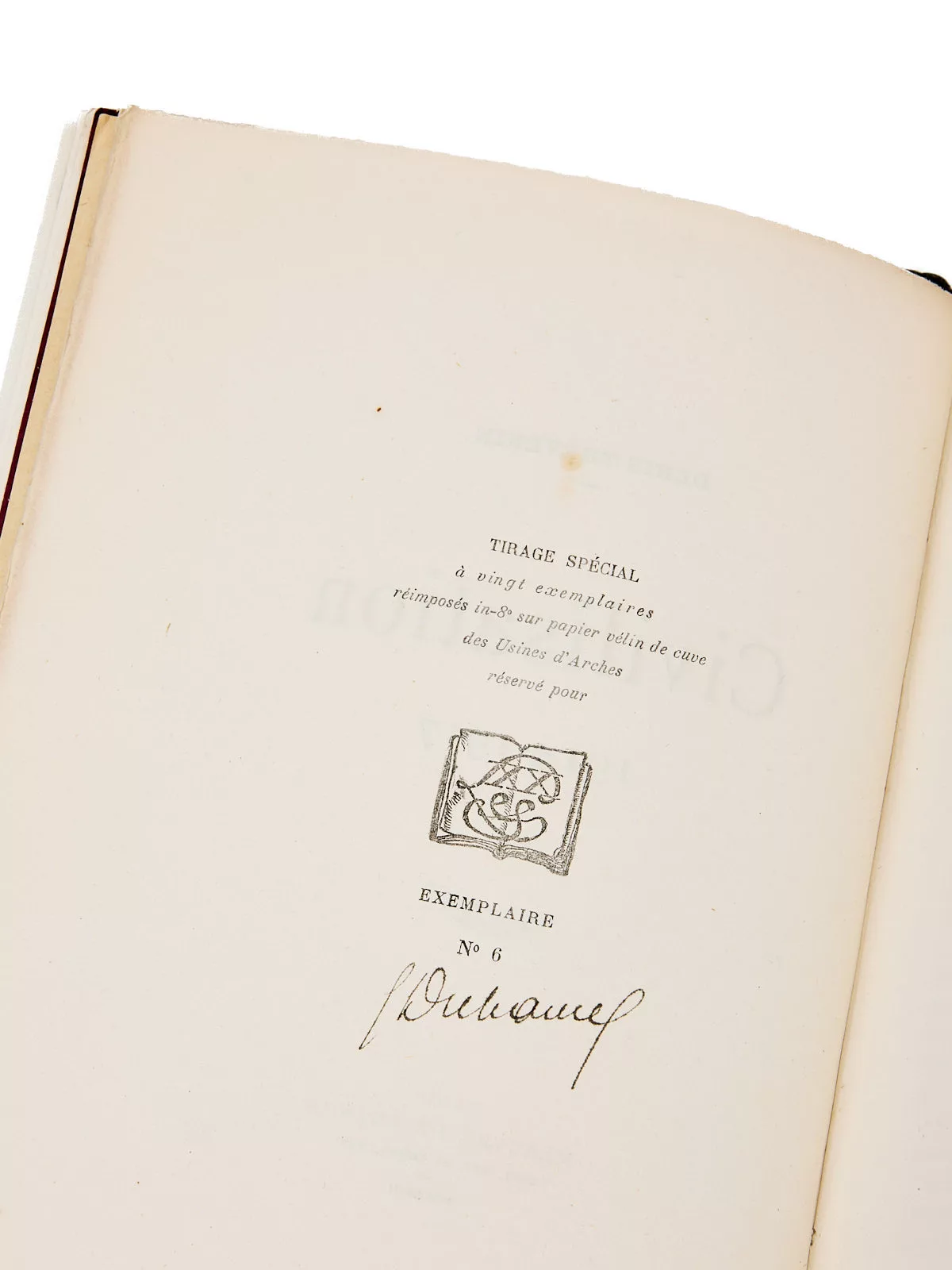
Special printing of 20 réimposé copies on vélin d'Arches, reserved for “Les XX” and signed by the author (no. 6).
As early as mid-December 1914, Georges Duhamel, then still a practicing physician, wrote to his wife: “I shall owe it to the war that I left my usual rut and saw an enormous array of men that nothing could have prepared me to imagine.” These early impressions gave rise to Vie des martyrs, published in April 1917, a book praised by Maurice Genevoix in L’Europe nouvelle in January 1918. A year later, Duhamel followed it with Civilisation, a more ambitious and more novelistic work in which he broadens his scope through several different narrators. The book is no longer simply a testimony but a reflection on what war does to humanity: the physician’s compassion is joined by moral disillusionment, even despair, in texts born of the ambulances behind the front lines.
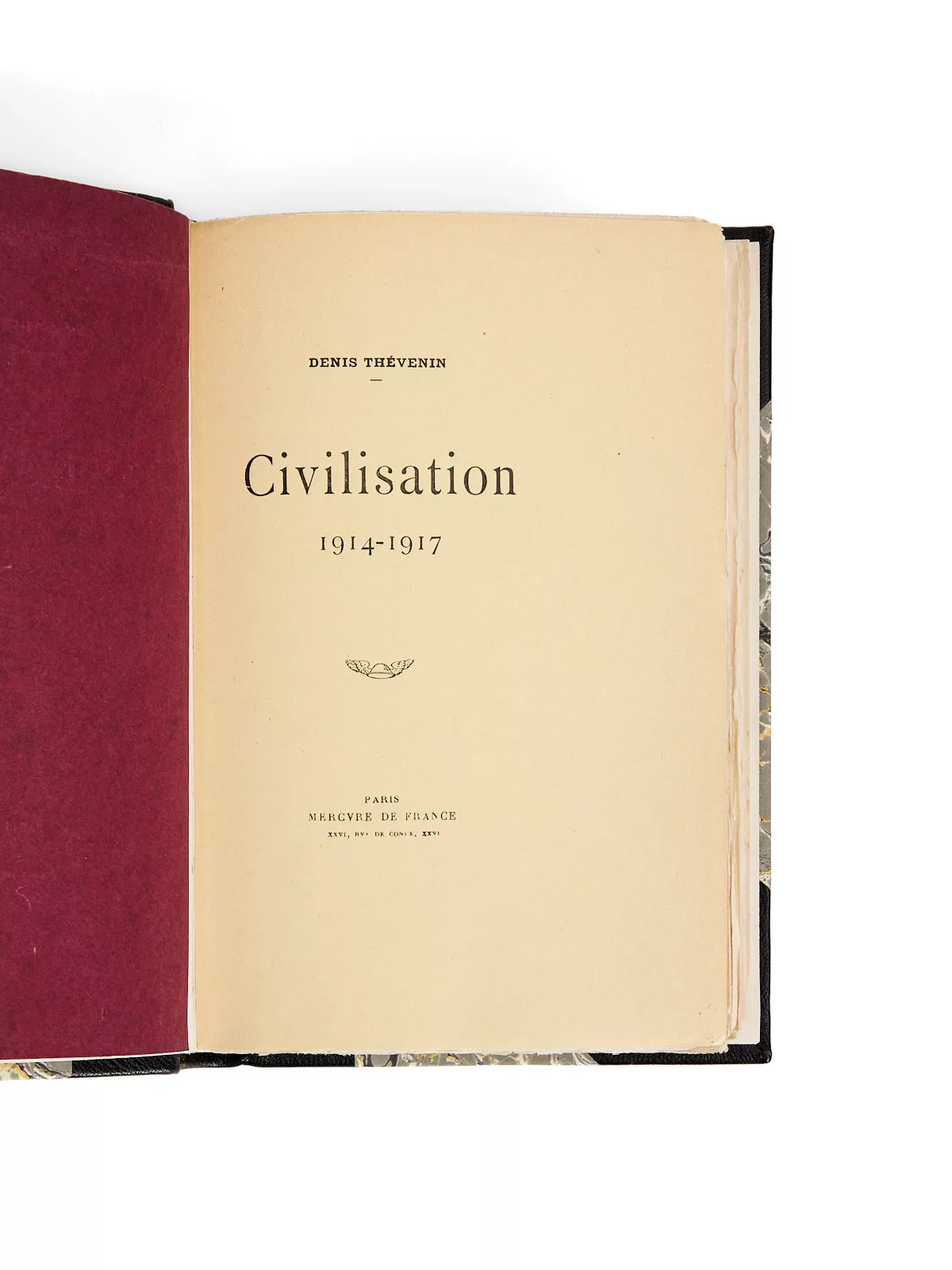
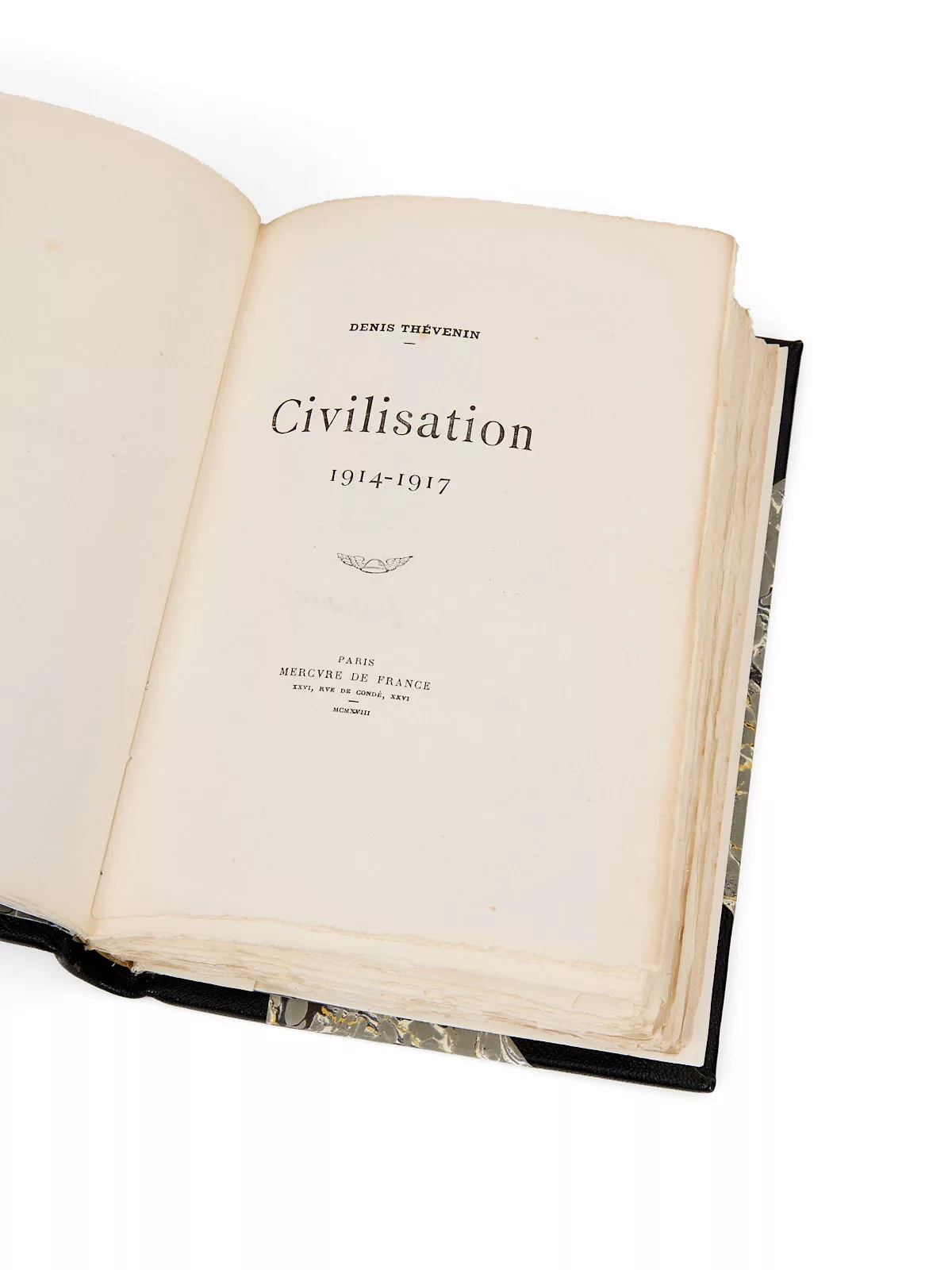
On 11 December 1918, Civilisation was awarded the Prix Goncourt, beating Koenigsmark by Pierre Benoît, Les Silences du colonel Bramble by Maurois and Simon le pathétique by Giraudoux. Following this literary recognition, Duhamel gave up medicine for good. The book was published under the pseudonym Denis Thévenin, for reasons that remain unclear, since Duhamel signed most of the review copies under his real name.
Jean Norton Cru, in Témoins, expressed reservations about the book, questioning the veracity of certain episodes and accusing the author of a degree of aestheticization: “Did the author not play too insistently on the string of pity, for literary effect, with the intention of producing crowd-pleasing set pieces?” Civilisation nonetheless remains one of the most important testimonies left by a physician of the Great War.
In August 1940, Civilisation was banned and placed on the Bernhard list, before Duhamel’s entire body of work was placed on the Otto list. At the Liberation, Duhamel joined the Comité National des Écrivains, from which he resigned in 1946, disapproving of the excesses of the Épuration.
This printing for “Les XX” does not carry the printer’s colophon of the first edition, only the mention “imprimerie Roy de Poitiers,” as in the first edition. As with all titles published by this society of bibliophiles, it is signed by the author, who signs “Georges Duhamel.”