


Châtiments
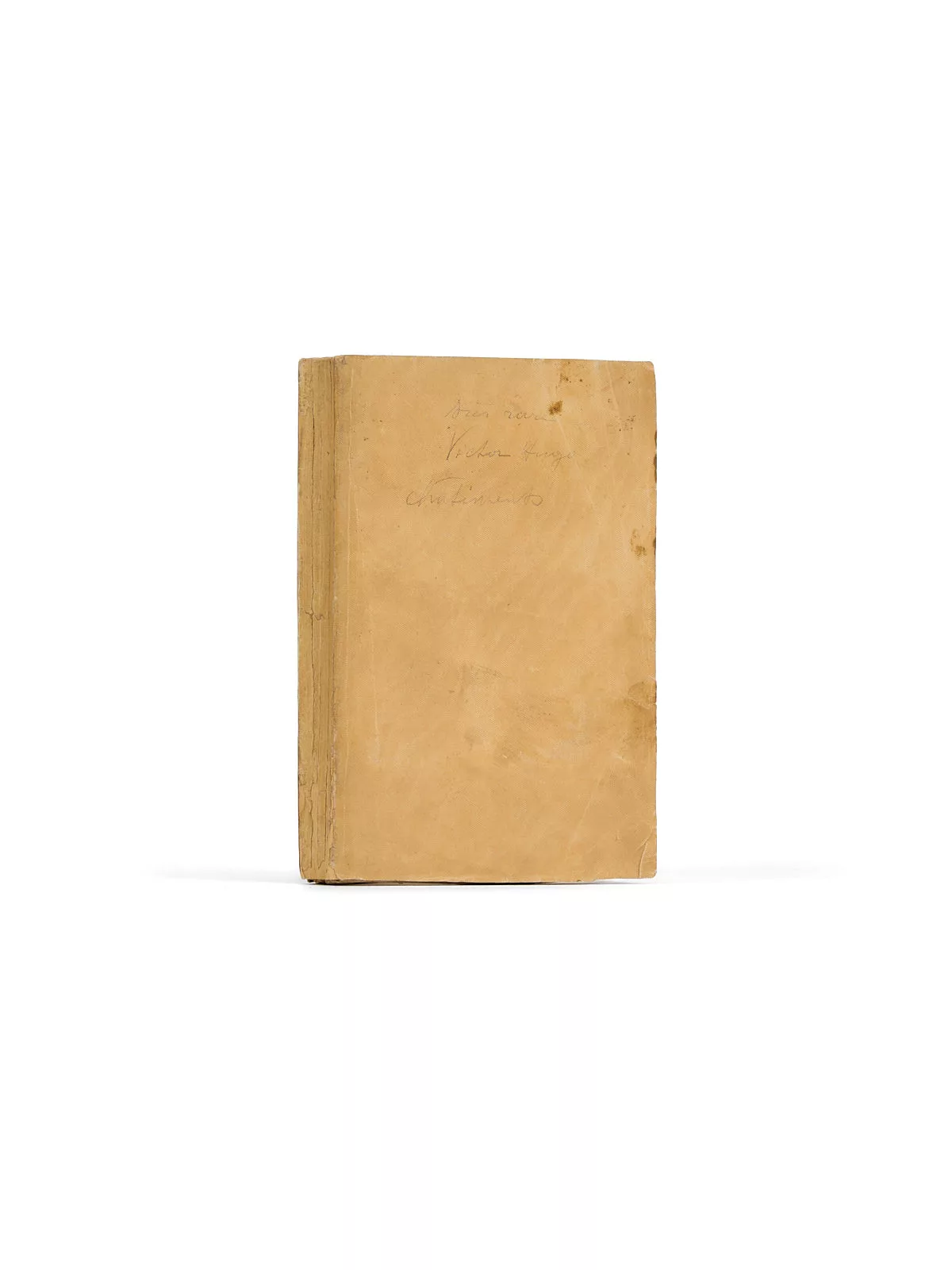
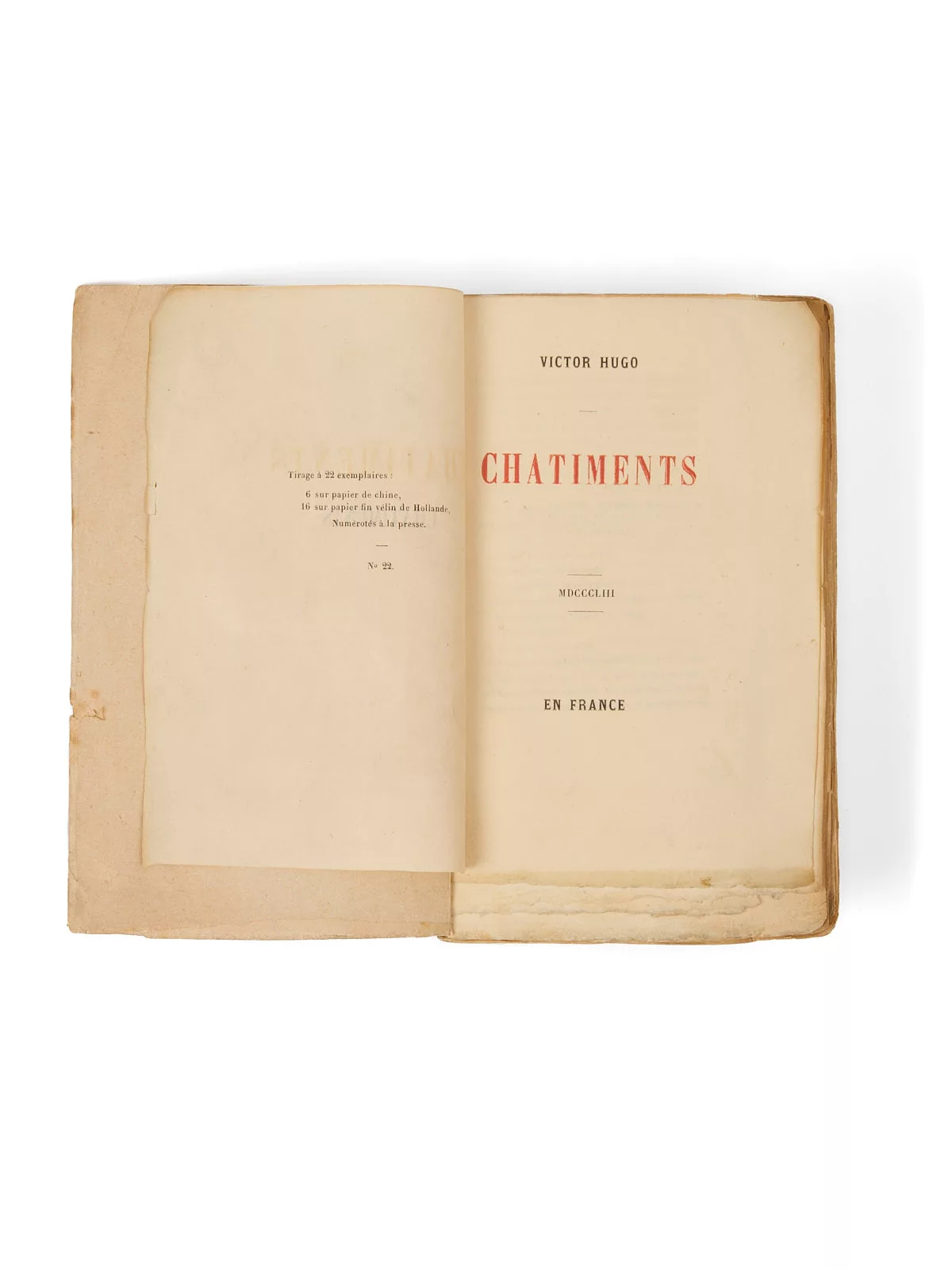
One of 16 copies on fine vélin de Hollande (no. 22).
Following the coup d’état of 2 December 1851, which brought Louis-Napoléon Bonaparte to power, Victor Hugo was forced into exile. Having set aside Histoire d’un crime, which he would not publish until 1877, and just as he began writing his pamphlet Napoléon-le-Petit, Hugo already had in mind its satirical counterpart, which he initially considered calling Les Vengeresses, then Le Chant du Vengeur, before settling on the single word Châtiments — a “threatening and simple title, that is to say beautiful,” as he wrote to his publisher Hetzel.
The collection appeared in two editions in Brussels in November 1853: an official version, self-censored with lines of dots, which Hugo called “the Eunuch,” and a clandestine version bearing the fanciful imprint “Genève & New-York.” From this complete edition, 22 copies were réimposé and printed separately on deluxe paper (6 on China paper and 16 on Holland paper), with which the Brussels typographer Samuel was very pleased: “I regret,” he wrote, “having sent you the first five thousand: the second batch is infinitely better…” The only variant of the deluxe-paper copies is the imprint “En France,” which replaces “Genève & New-York.”
The first edition, clandestine like all the others, is truncated: a great number of lines are replaced by rows of dots, since the Faider law prohibited the publication in Belgium of anything directed against a foreign sovereign. The preface contains the following declaration: “There has been published in Brussels a truncated edition of this book, preceded by these lines: ‘the false oath is a crime.’ The few lines just read, preface to a mutilated book, contained the commitment to publish the complete book. That commitment we now fulfill. V.H.”
A good copy in wrappers of the Holland-paper printing, as published (the spine has been skillfully restored).
Flavien Michaux, Essais bibliographiques concernant les œuvres de Victor Hugo parues pendant l’exil; Vicaire, IV-313; absent from Carteret and Clouzot.