

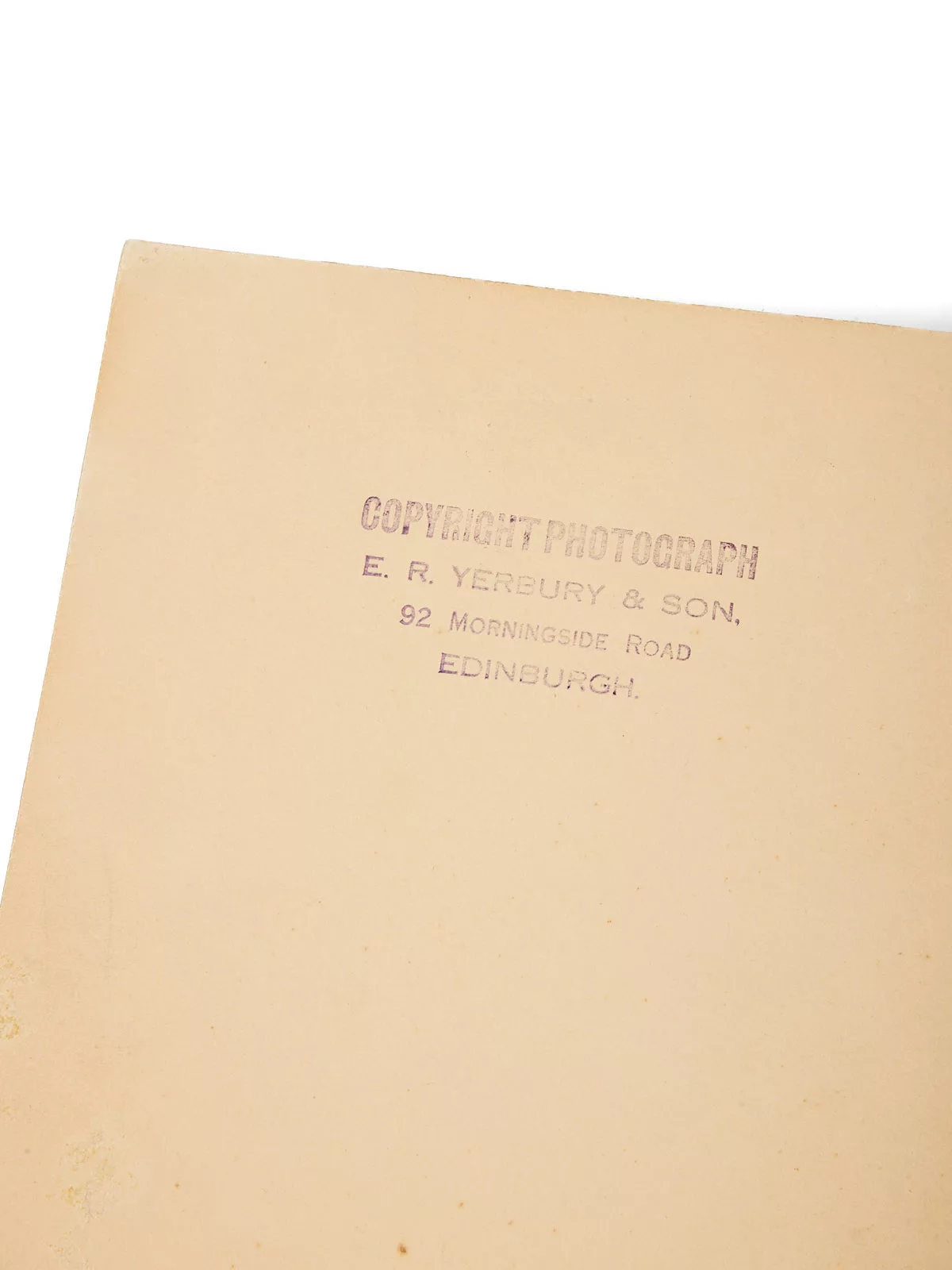
The copyright stamp reads: “E.R. YERBURY & SON. 92 MORNINGSIDE ROAD, EDINBURGH.”
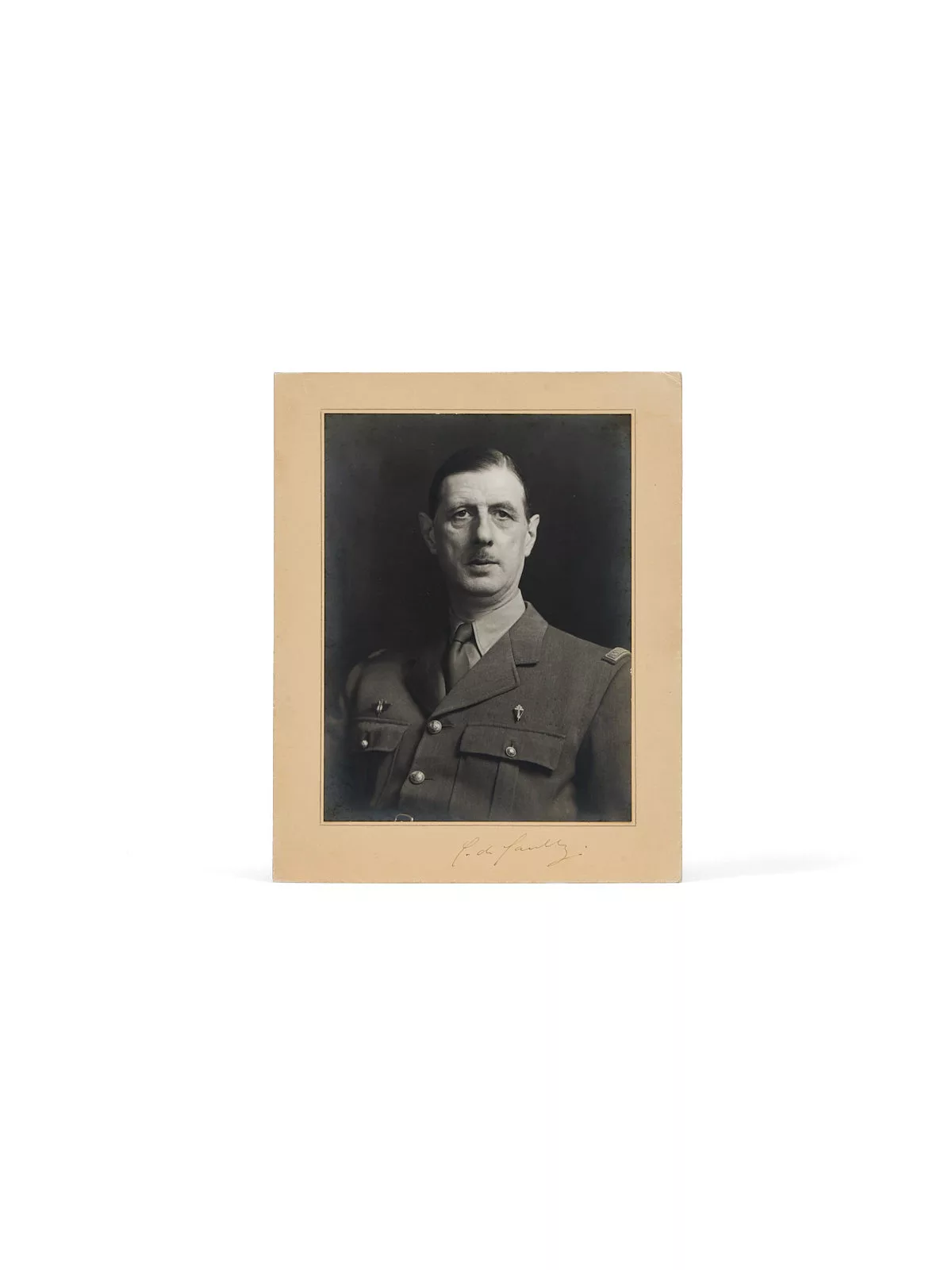
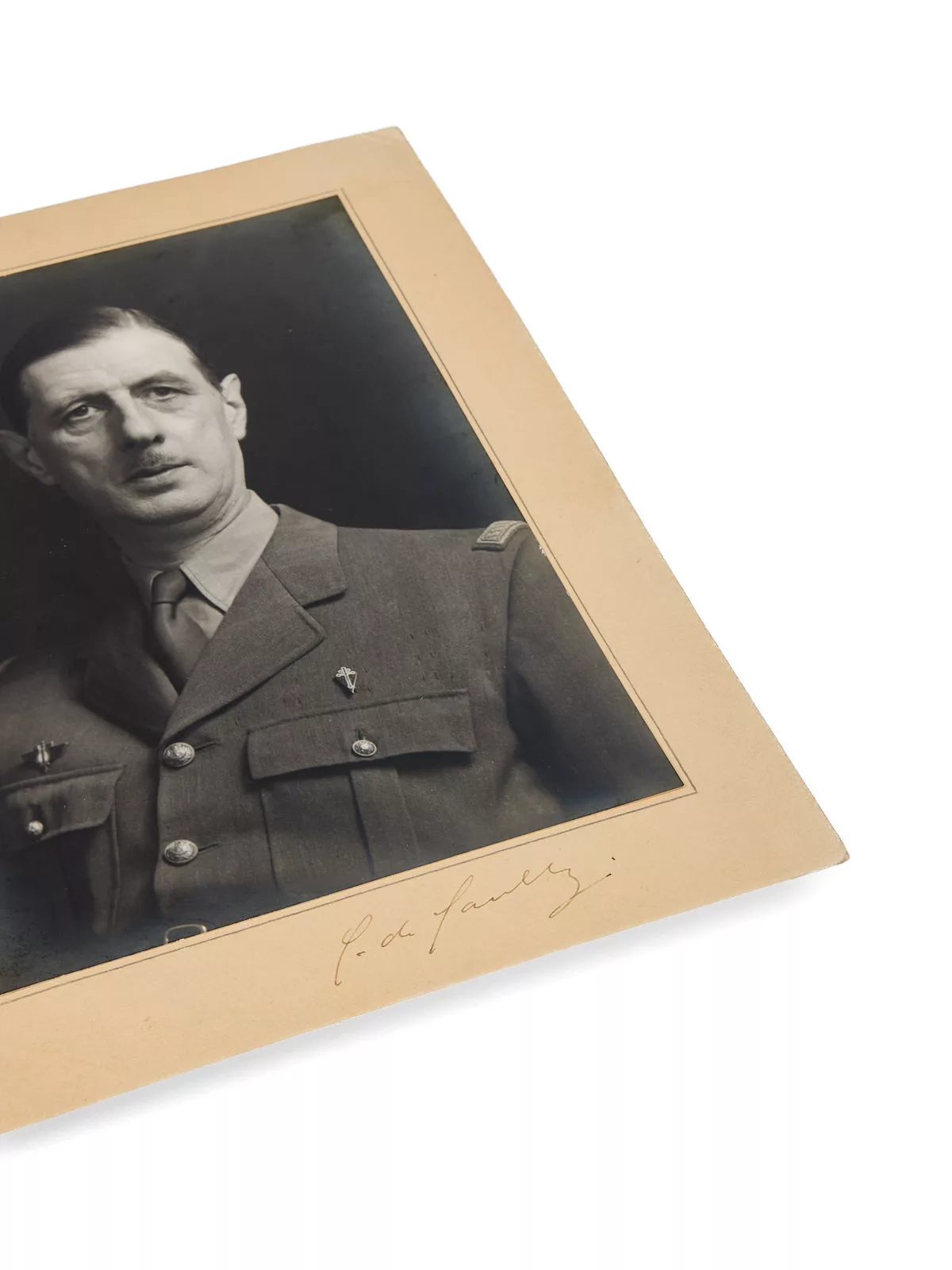
A very fine photographic portrait of General de Gaulle, taken in Edinburgh in 1942 by Edward Reuben Yerbury, in the studio of E. R. Yerbury & Son.
The photograph belongs to a very precise moment in the history of Free France. On 23 June 1942, de Gaulle traveled to Edinburgh to inaugurate the Scottish Free French House, established at 28 Regent Terrace, in one of the finest Georgian ensembles of the New Town, at the foot of Calton Hill. The house was intended both as a reception point for Free French visitors to Scotland and as a center for the promotion of French culture. After the war, it briefly became the French Consulate General, before serving as the official residence of the Consul General.
The speech de Gaulle delivered that day has remained famous. He celebrated the Franco-Scottish alliance, the old Auld Alliance, sealed at the end of the thirteenth century, describing it in a phrase that would enjoy lasting fortune: “the oldest alliance in the world.” In the midst of war, as Free France sought support wherever it could be found, this historical reference was far from incidental: it allowed the General to root the present struggle in a long, almost dynastic, fidelity between Scotland and France.
It is against this background that Yerbury’s portrait must be understood. Edward Reuben Yerbury, descended from a prominent dynasty of Edinburgh photographers, then ran, with the family firm, one of the most celebrated studios in the city. Based on Morningside Road, the E. R. Yerbury & Son studio had built a reputation for portraiture, admired for its handling of pose, light and printing well beyond its local circle. In 1942, Yerbury was commissioned to produce several photographic studies of the leader of Free France.
The portrait is all the more interesting for capturing a de Gaulle still at war, yet already fully formed in his public image. This is not the presidential de Gaulle of the 1960s, nor merely the man of 18 June: it is the leader of Free France at the moment his image was becoming fixed — upright, grave, military, offered simultaneously to French, British and Allied networks. The Edinburgh photograph quickly became one of the General’s reference portraits, cherished by his supporters and widely circulated during 1942.
Yerbury’s later career confirms the importance attached to these portraits. At the Liberation, the photographer was invited by the French government to Paris in 1945 to photograph de Gaulle once again — a gesture that testifies to the recognition given to these wartime images, made far from occupied France but already intended to build the visible presence of the leader of Free France.
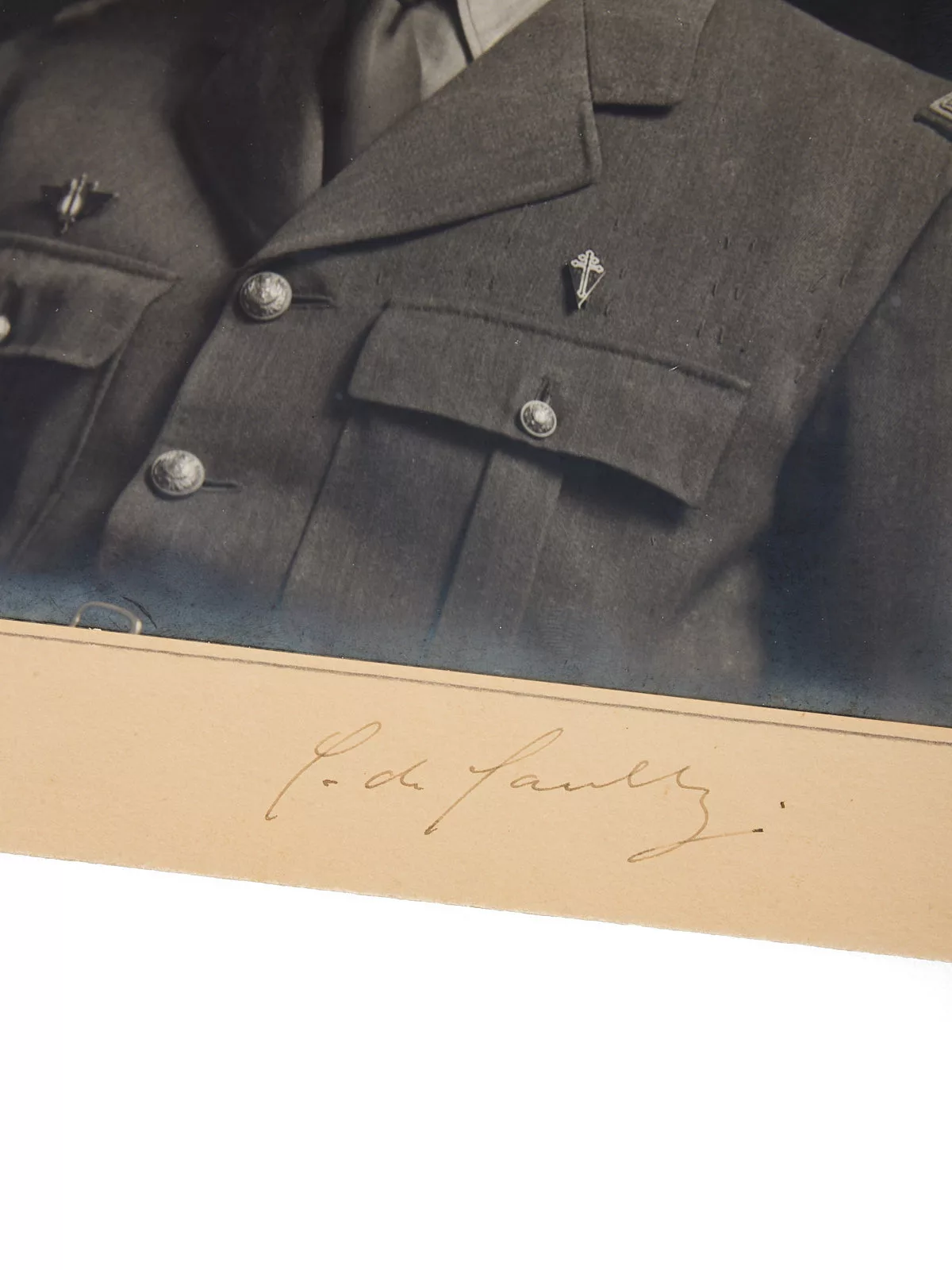
A superb print, one of the few known signed examples.