

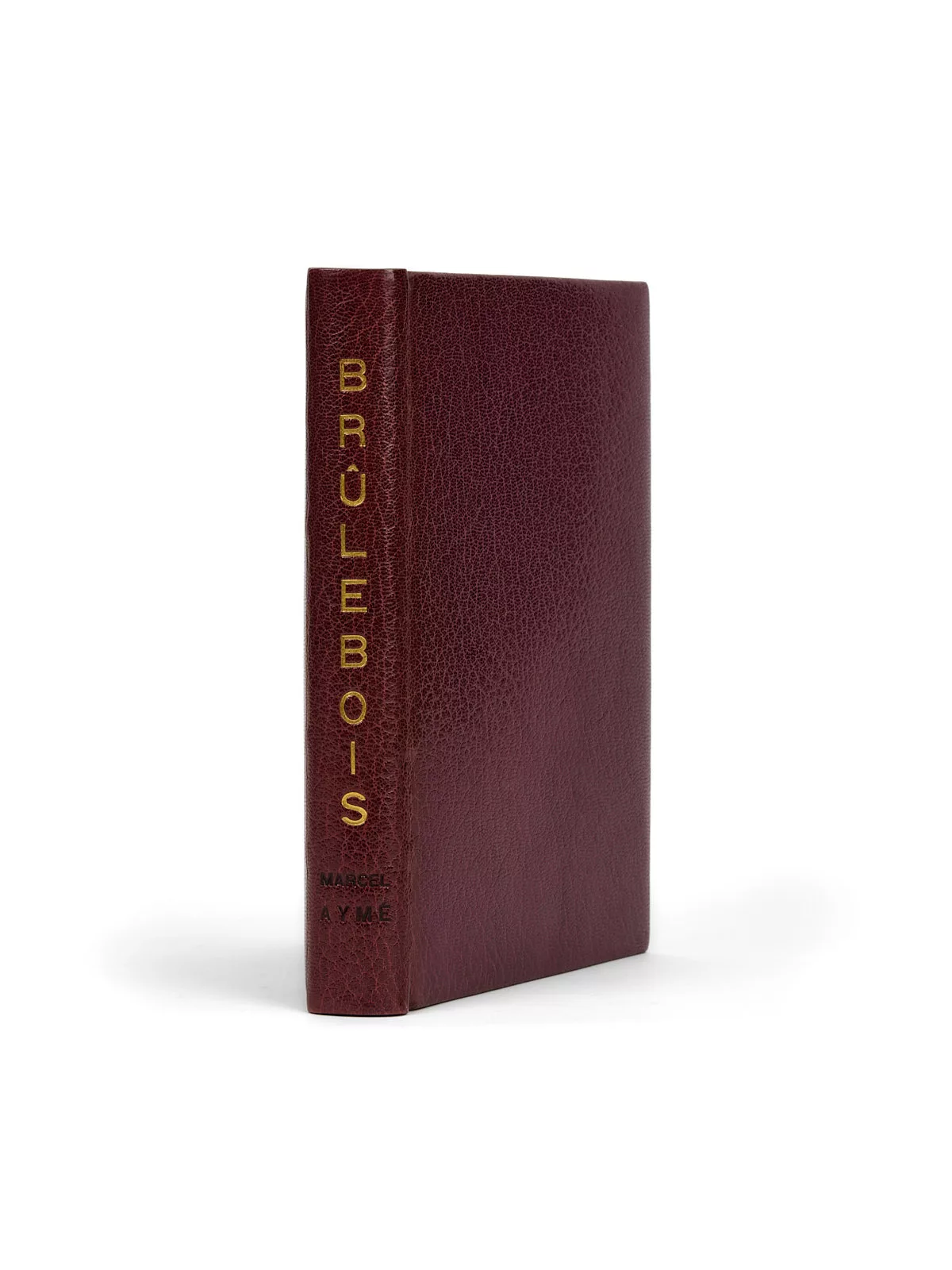
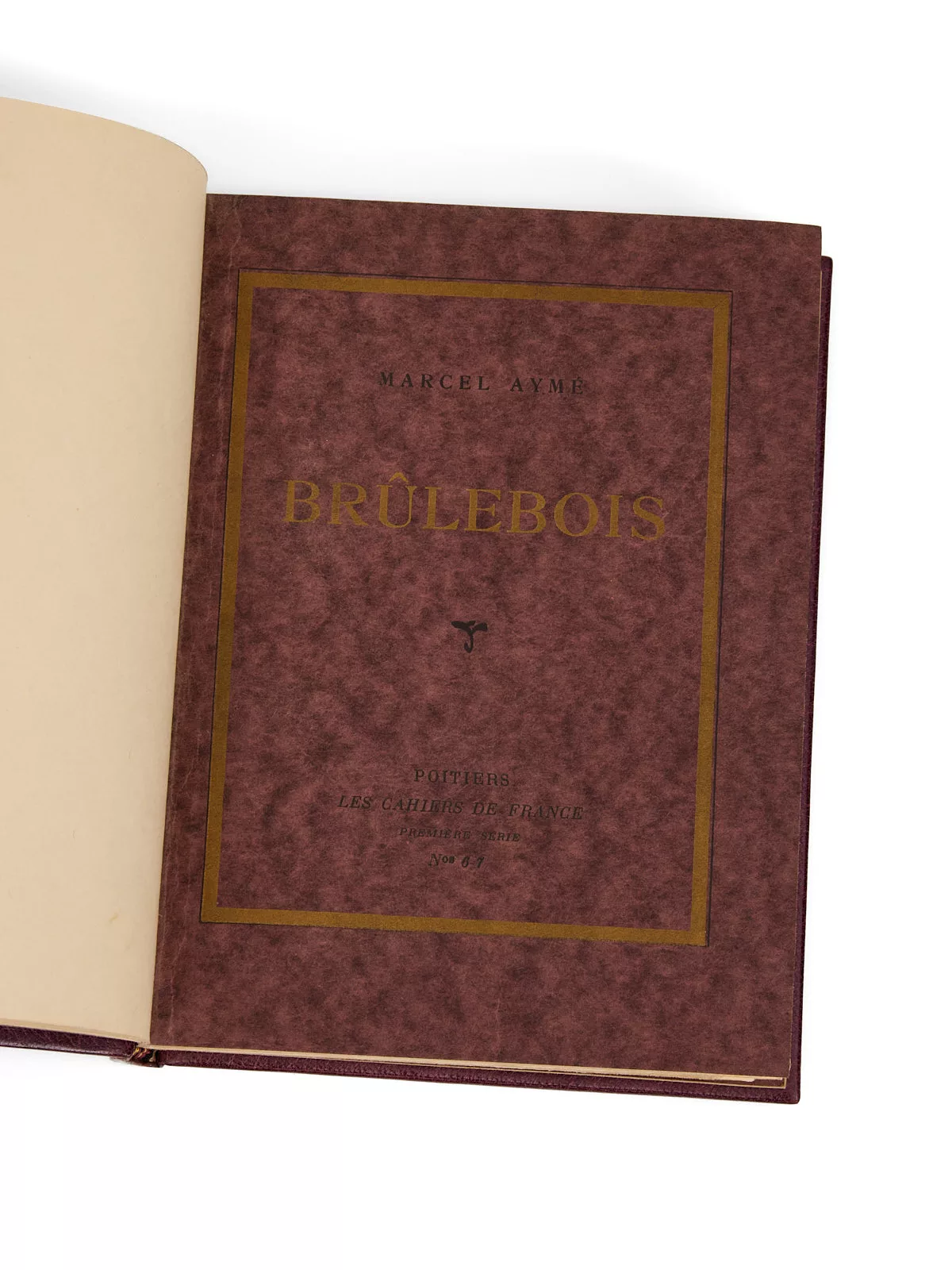
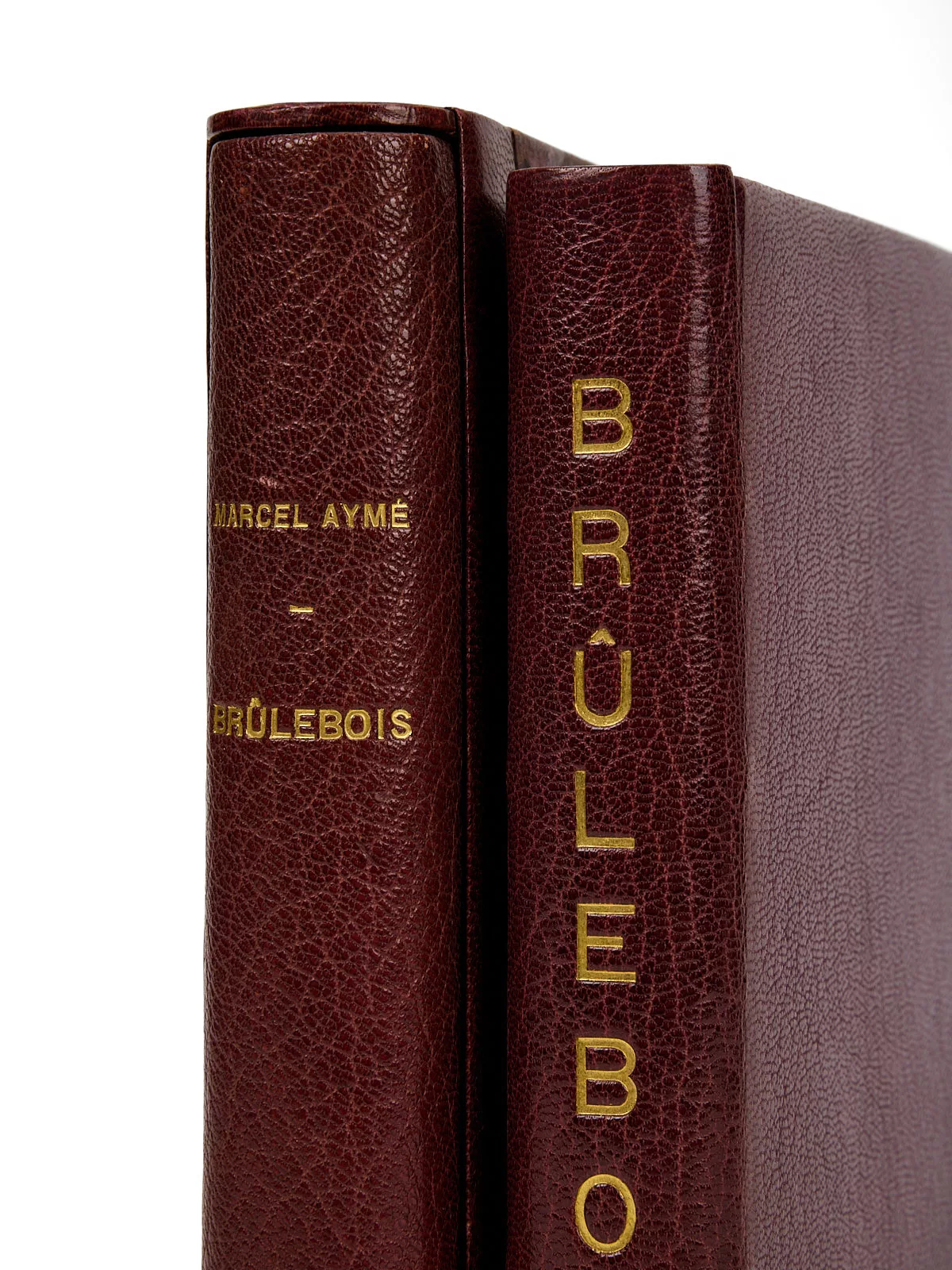
Brûlebois
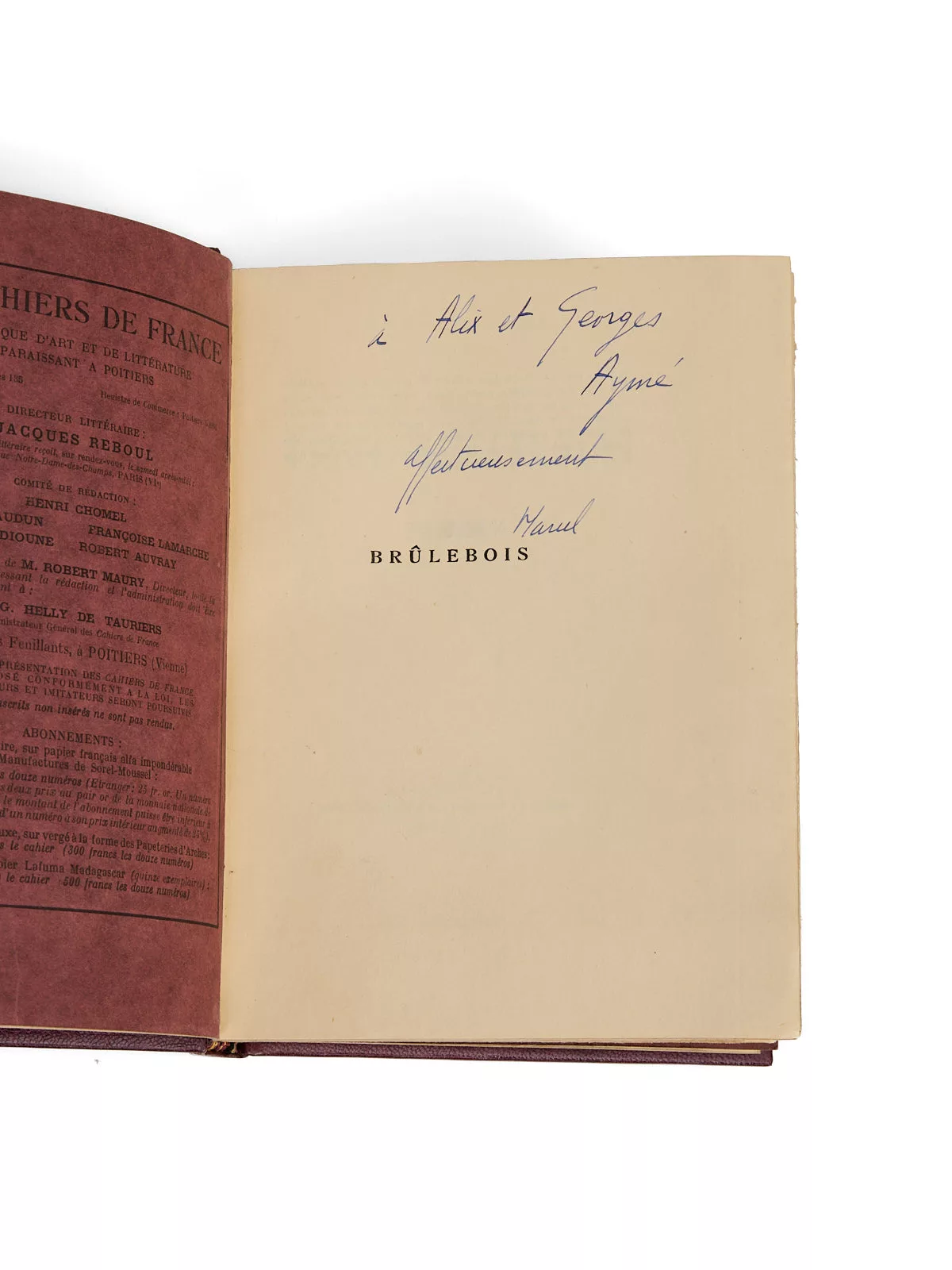
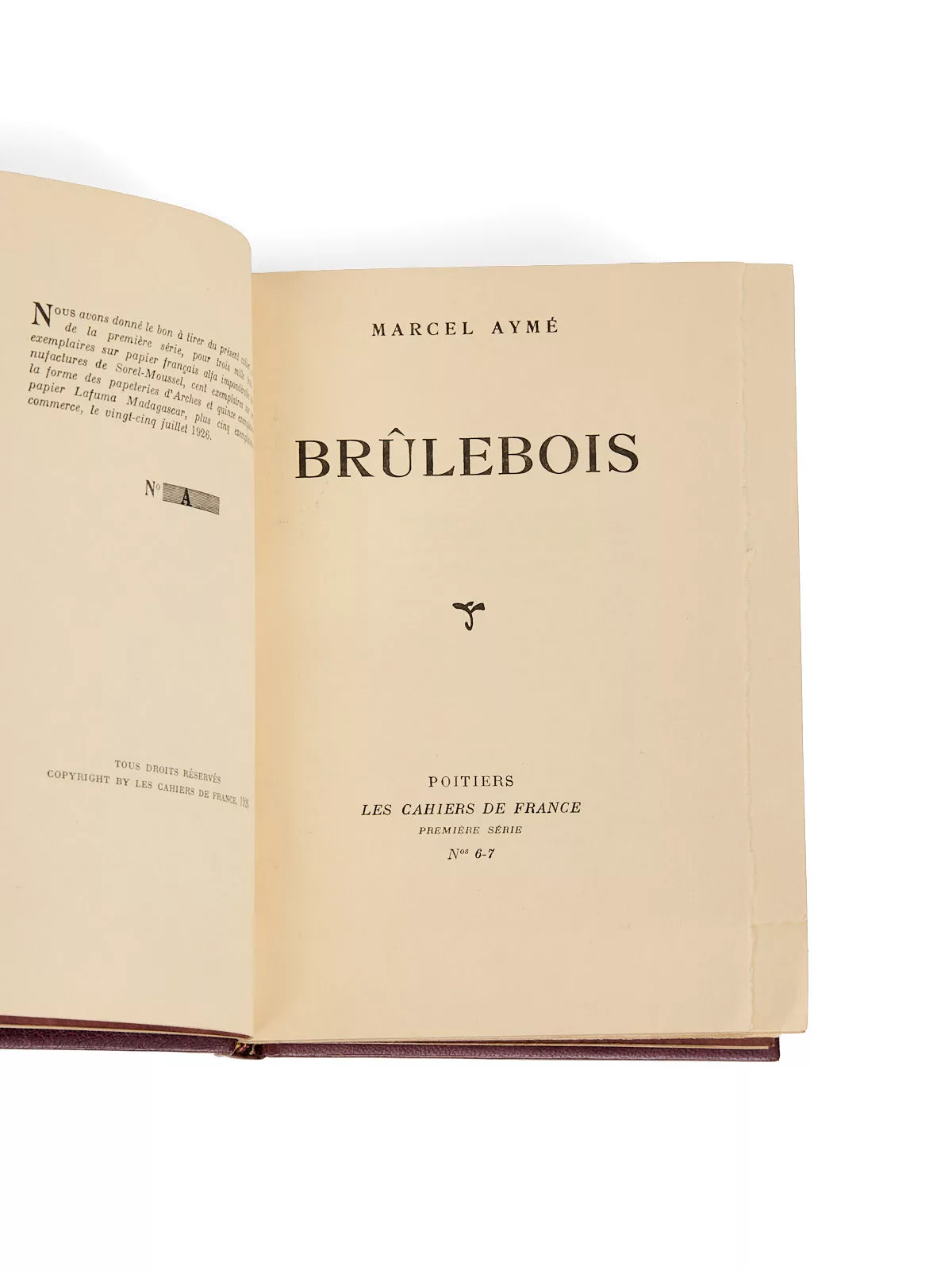
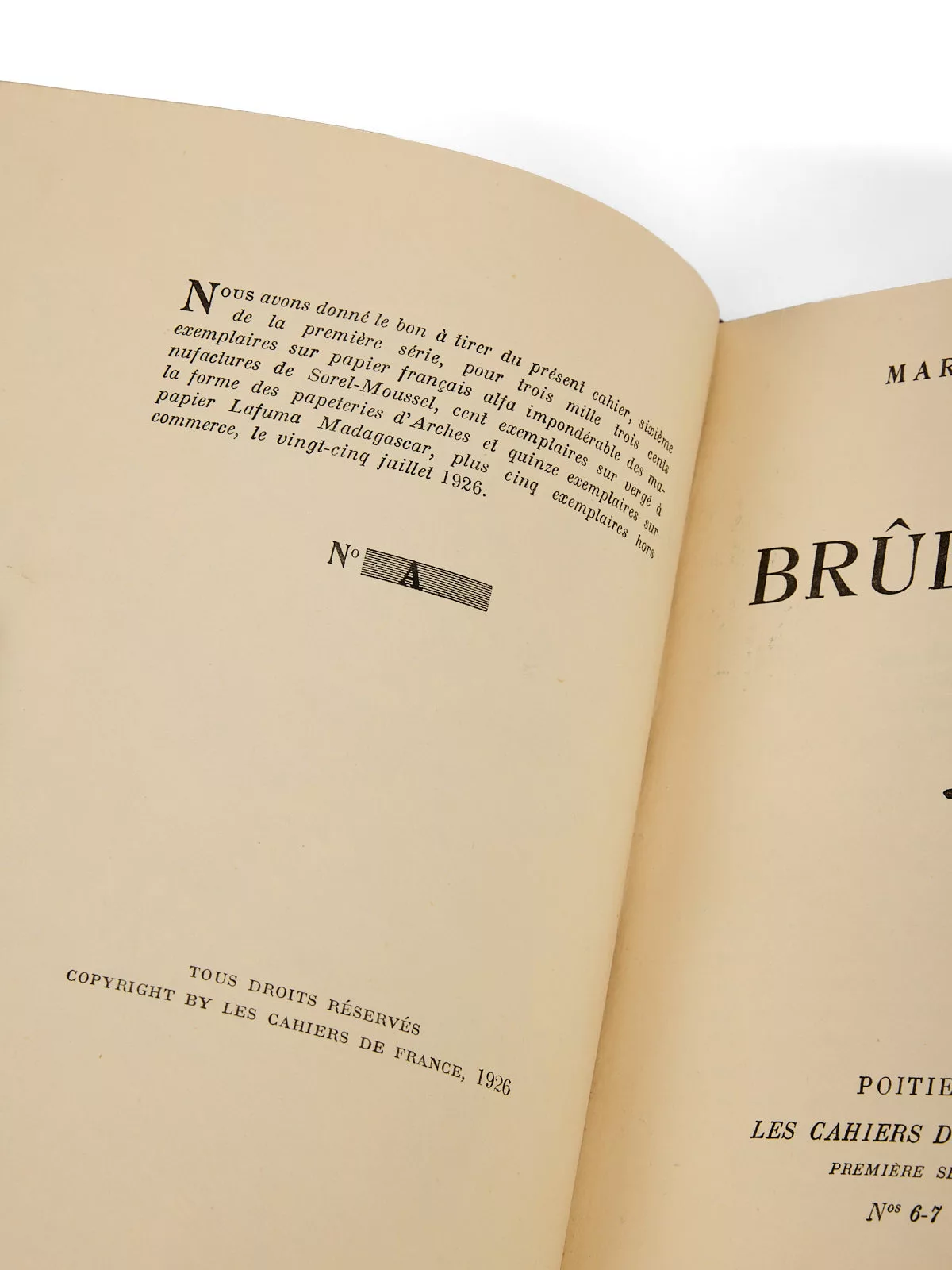
One of the first 20 copies on Madagascar paper, this the first of five hors commerce copies (marked A).
Signed presentation inscription: “À Alix et Georges Aymé, affectueusement, Marcel.”
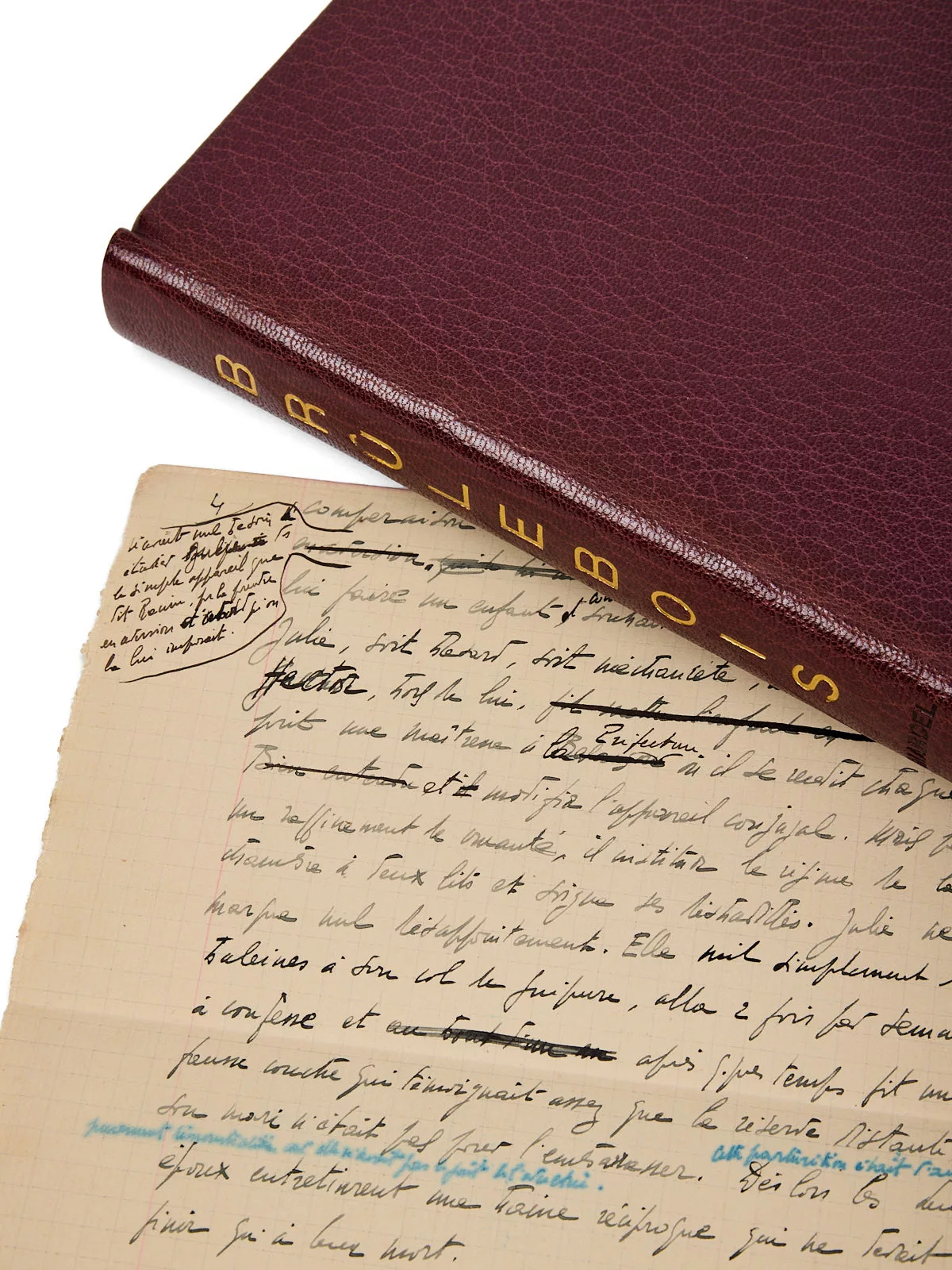
Preserved with the copy: the autograph manuscript of a passage from the novel (1 p. on 1 leaf, 170 x 220 mm), taken from chapter 1 (page 8 of this edition).
A precious copy of Marcel Aymé’s first book:
the copy of his brother Georges and the painter Alix Aymé, enriched with an autograph passage from the novel.
The genesis of Brûlebois is a family story. Having returned to Dole to convalesce, Marcel Aymé undertook his first novel at the urging of his elder sister Camille, herself a writer. The character was a familiar one to him: a baggage porter at the Dole railway station, whom he transformed into a disgraced former sub-prefect, a drunkard and a naïf. Aymé’s tenderness for social outcasts and his distrust of conventional respectability find their first fictional expression here. From this very first book, Marcel Aymé’s style and subject matter are already present.
It was first his sister who played a decisive role in the book’s publication. Already in contact with Jacques Reboul, who ran the Cahiers de France in Poitiers, Camille Aymé had initially secured an agreement to publish her own book — but after reading Brûlebois, she agreed to give up her place to her brother! And the family story does not end there: Georges Aymé (1889–1950), the writer’s elder brother and future general, also became involved, and from April 1926 was corresponding with Reboul on his brother’s behalf. The Médiathèque du Grand Dole preserves an extensive correspondence with the publisher, including a letter of 10 June 1926 forwarding corrections to the manuscript. His support continued after publication: in January 1927, Marcel thanked him for having sent the book to several prominent figures, and Georges wrote again to Reboul “regarding the award of the Prix Corrard,” which the novel was to receive. In March, Georges Aymé met Jean Paulhan — a decisive encounter, since on 5 April Gaston Gallimard wrote to the young novelist referring to this meeting and asking for his next manuscript: Marcel Aymé thus joined Gallimard. Brûlebois was reissued by Gallimard in 1930 in a corrected and abridged version.
But the original edition — achevé d’imprimer 25 July 1926 — appeared in September, and its reception soon went beyond provincial circles: the national press took notice, while readers in Dole were divided over this unflattering portrait of their bourgeoisie. In the Nouvelle Revue française of March 1927, René Lalou described the hero as a “saintly drunkard” and praised “his biographer’s vivid, fiery imagination.”
Alix Aymé (1894–1989), born Hava, belongs in turn to the history of artistic exchange between France and the Far East. Trained under Maurice Denis, this painter, illustrator and decorator notably created the decor of the royal palace of Luang Prabang and taught at the École des Beaux-Arts de l’Indochine, where she practiced and taught the art of lacquer. She married Georges Aymé on 7 July 1931.
A perfect copy, with a remarkable family and editorial provenance, given how decisive his brother Georges’s help was for Marcel Aymé’s career.