

Aventures d’Alice au pays des Merveilles
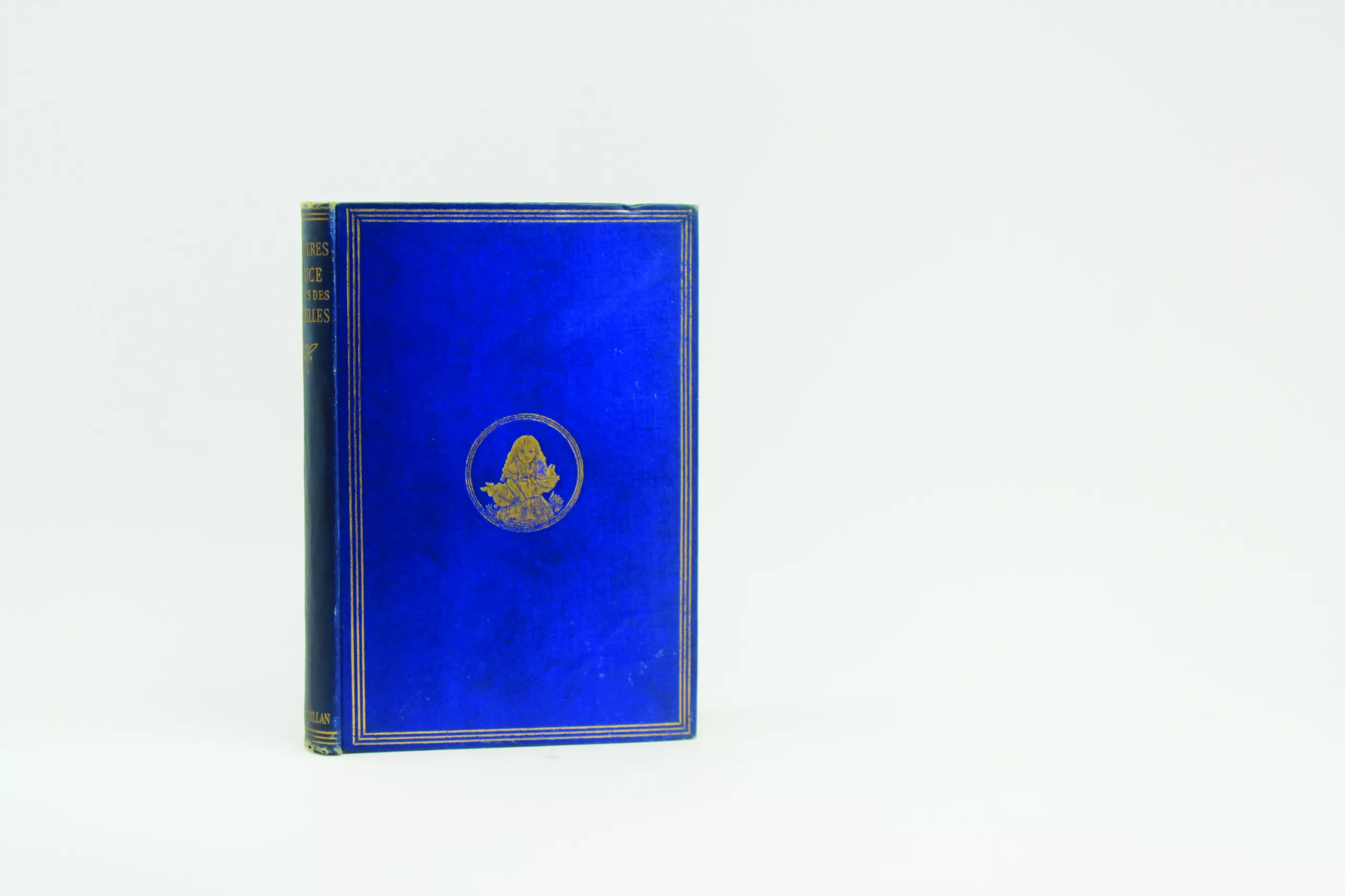
First edition of the French translation, by Henri Bué.
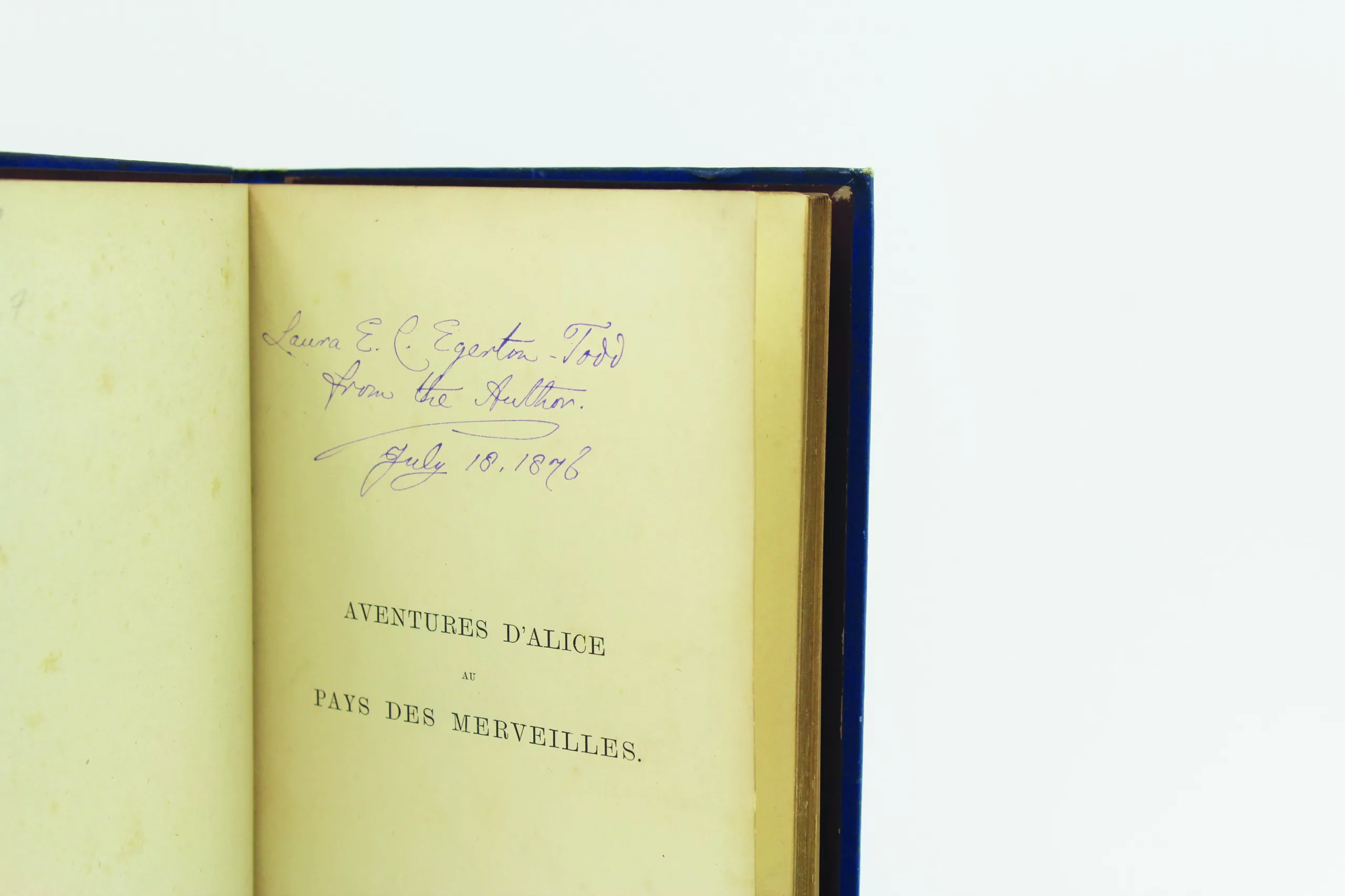
Autograph presentation inscription: “To Laura E. C. Egerton-Todd, From the author [Lewis Carroll], July 18, 1876.”
On 4 July 1862, Lewis Carroll was still only the Reverend Charles Dodgson, a lecturer at Christ Church College, Oxford, when he set out by boat on the River Isis with the Reverend Duckworth and the three Liddell sisters, Charlotte, Edith and Alice. During this excursion of some ten kilometers, Carroll improvised a story to entertain the girls. Two years later he presented Alice Liddell with an illustrated manuscript of the tale, under the title Alice’s Adventures Underground. Three years after that, in 1865, Macmillan and Co. published the first edition of Alice’s Adventures in Wonderland, illustrated by John Tenniel. Tenniel, a self-taught artist, had joined Punch as a draftsman and caricaturist in 1850. His woodcuts for Alice are among the masterpieces of illustration, so much so that they are now almost inseparable from Carroll’s text. The same partnership continued for the sequels, Through the Looking-Glass (1870) and The Nursery “Alice” (1890).
A moving copy, presented to a certain Laura Todd, then aged twelve — exactly the age Alice Liddell was when Carroll gave her the first version of the book as a Christmas present in 1864. Laura [Emma Chamberlain Egerton] Todd was the eldest daughter of William Egerton Todd, a colonel in the Loyal Lincoln Volunteers, a well-known British Army infantry regiment.
This first French edition, translated by Henri Bué for the same publisher, appeared within a month of the German edition and reproduces all the engravings from the English edition. The translator was the son of a colleague of Carroll’s at Oxford, a professor of French. Henri Bué struggled to produce a translation that was both sensible and faithful to the spirit of the text, particularly for the puns and numerous songs: “The difficulties of translators of Alice can be imagined. Sometimes they declined to face the difficulty as in Chapter VII (‘were they in the well … of course … well in.’), or, when a popular song was parodied, they parodied a popular song of their own country” (WMGC). It met with only limited success compared to the rediscovery of Alice fifty years later by the Surrealists, and in particular by Louis Aragon, whose 1929 translation of La Chasse au Snark opened the way to an entirely different reception of the work and brought it into the collective imagination. The following year, Marie-Madeleine Fayet produced a new translation of Alice, finally supplemented with the text of Through the Looking-Glass: “The two Alice books are not children’s books, but rather the only books for which we become children.” Nothing more need be added to Virginia Woolf’s remark.
WMGC, The Lewis Carroll Handbook, 73 & 158.