

Au hasard Balthazar
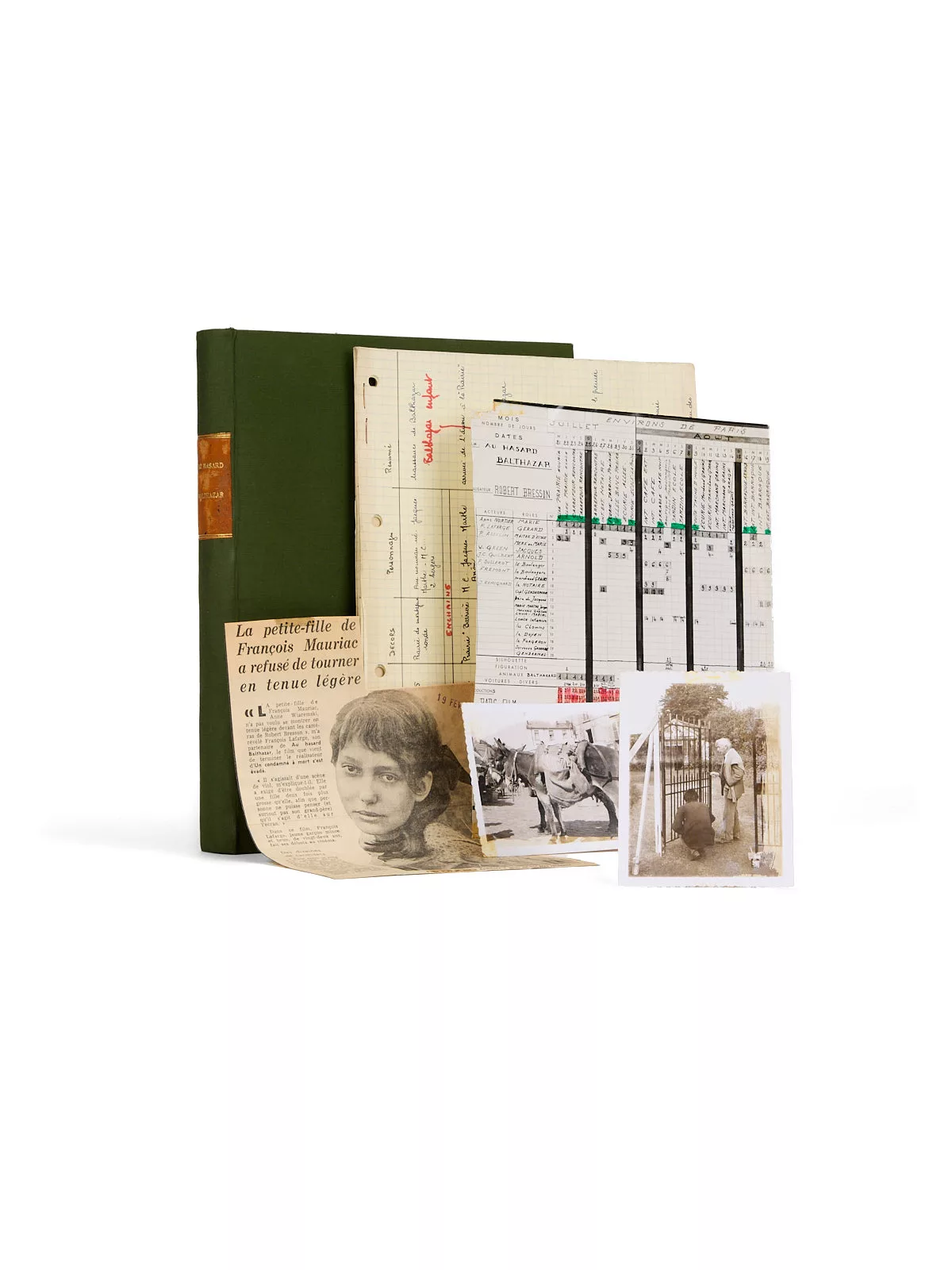
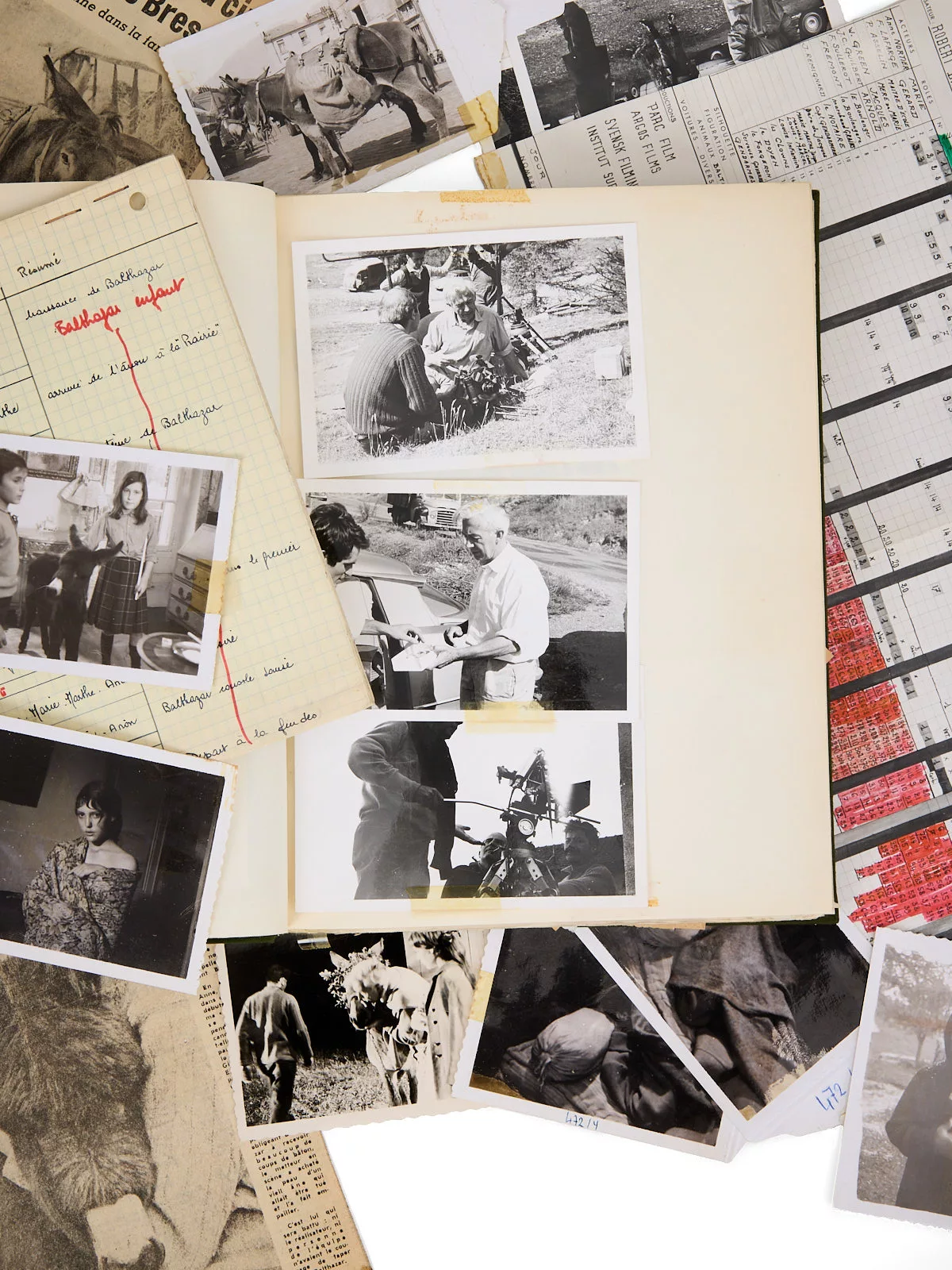
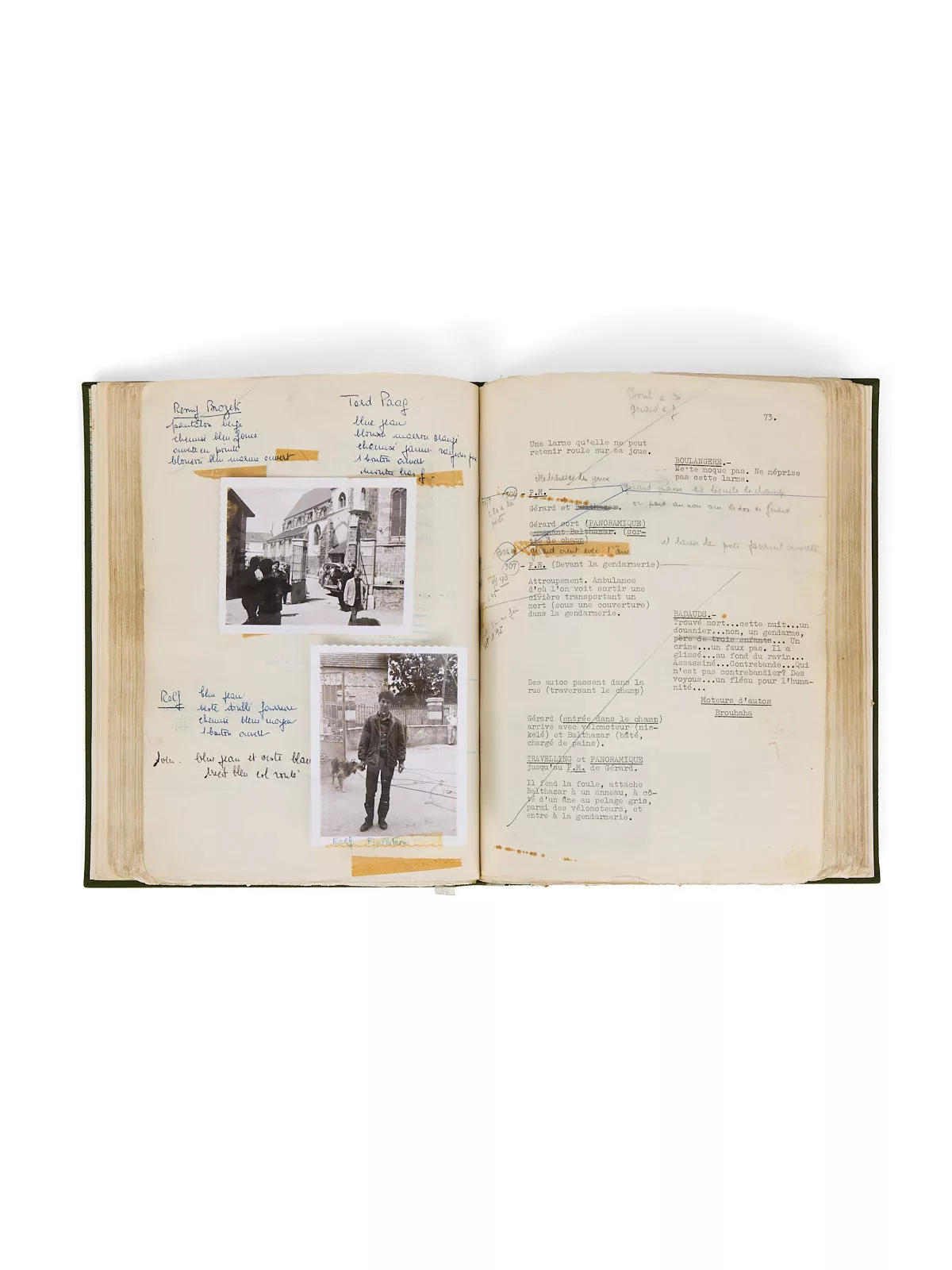
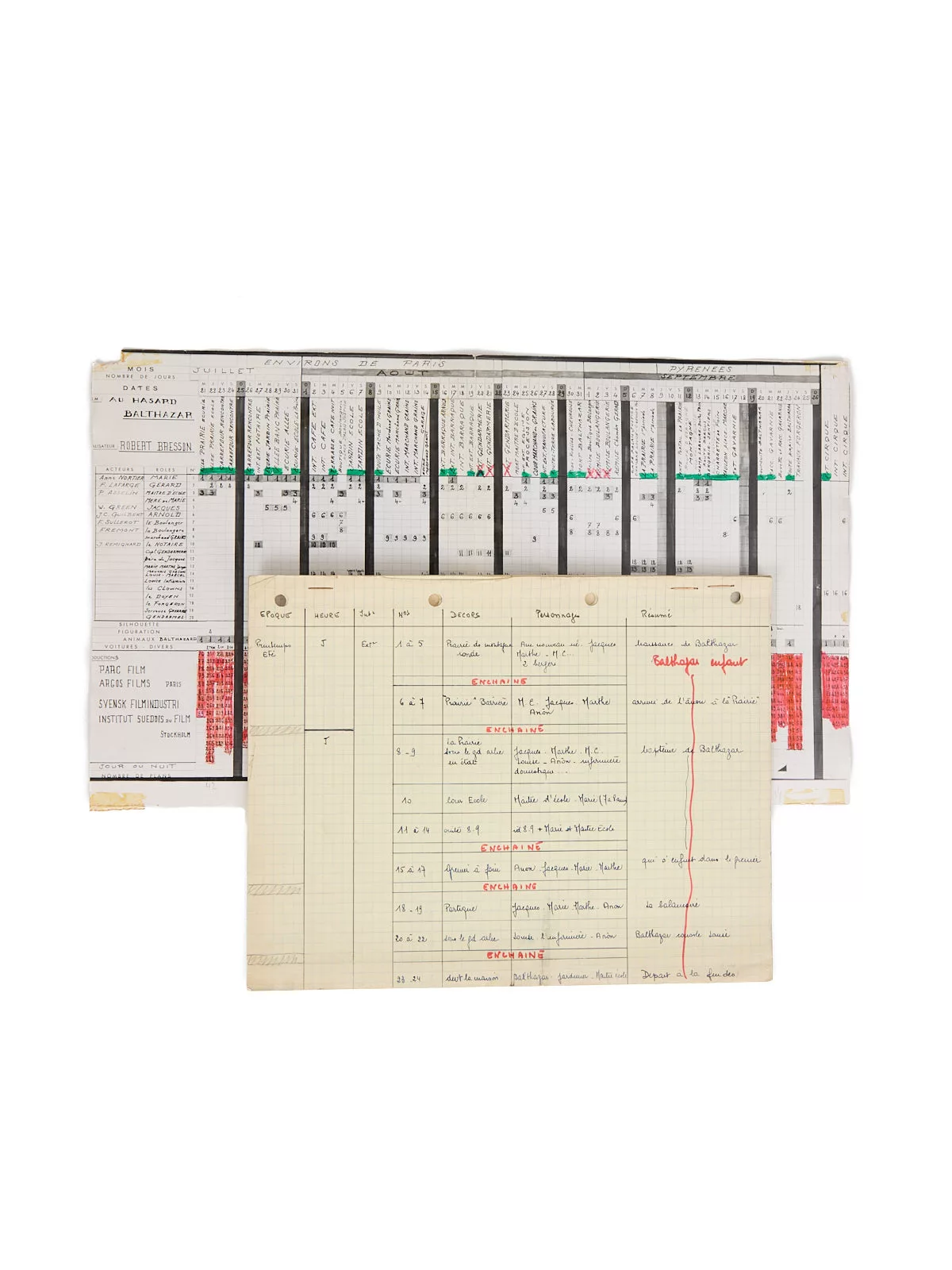
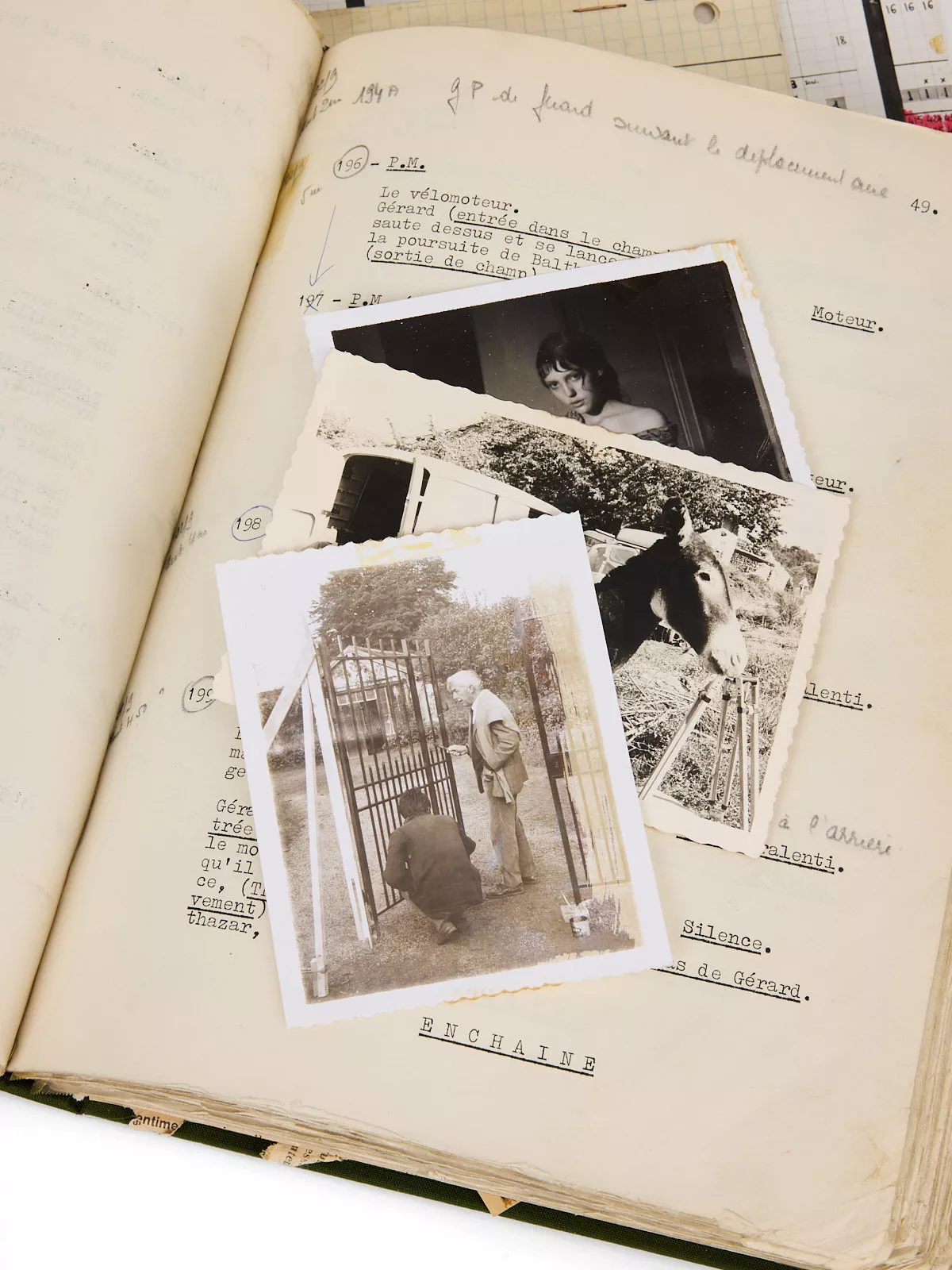
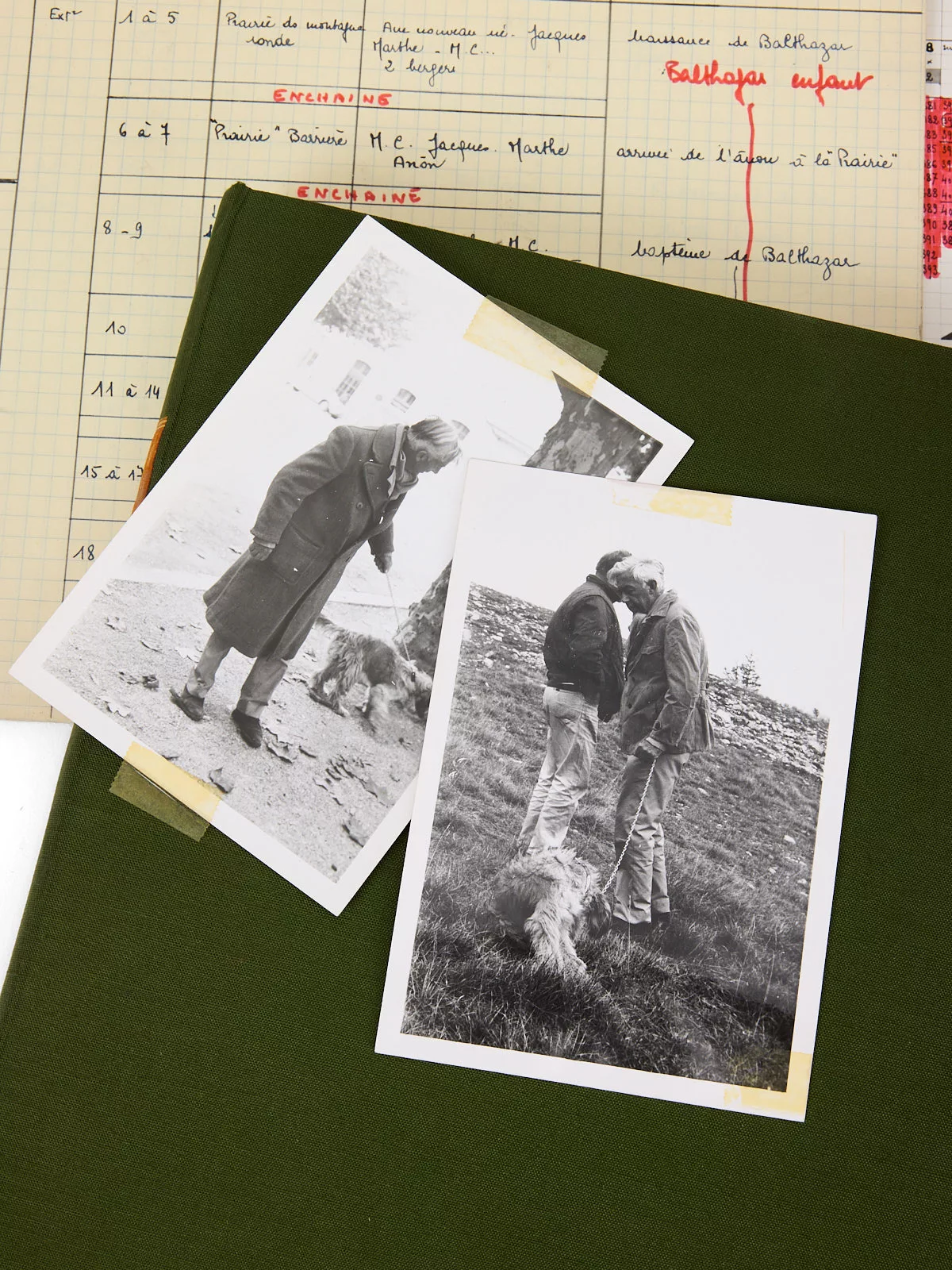
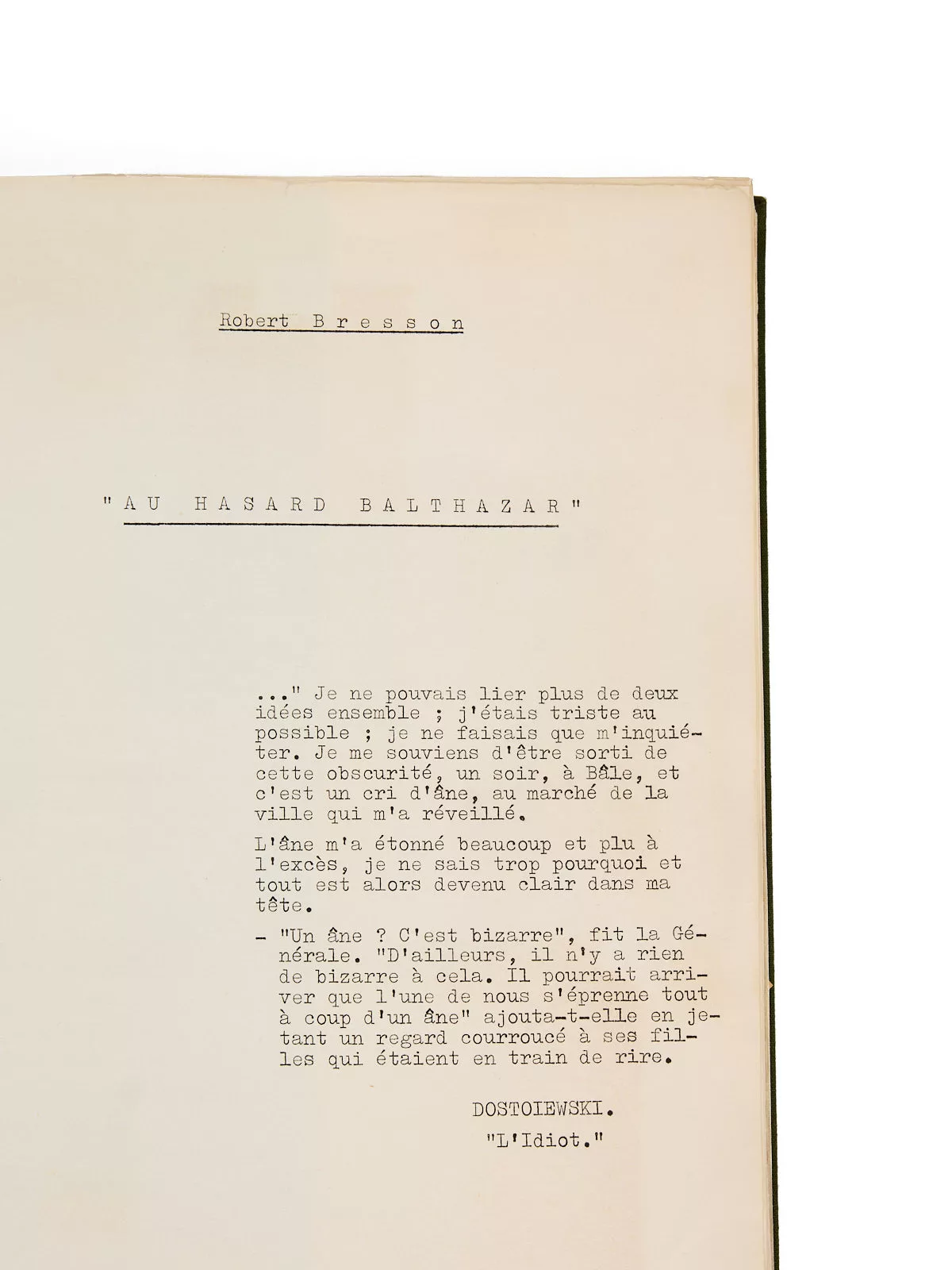
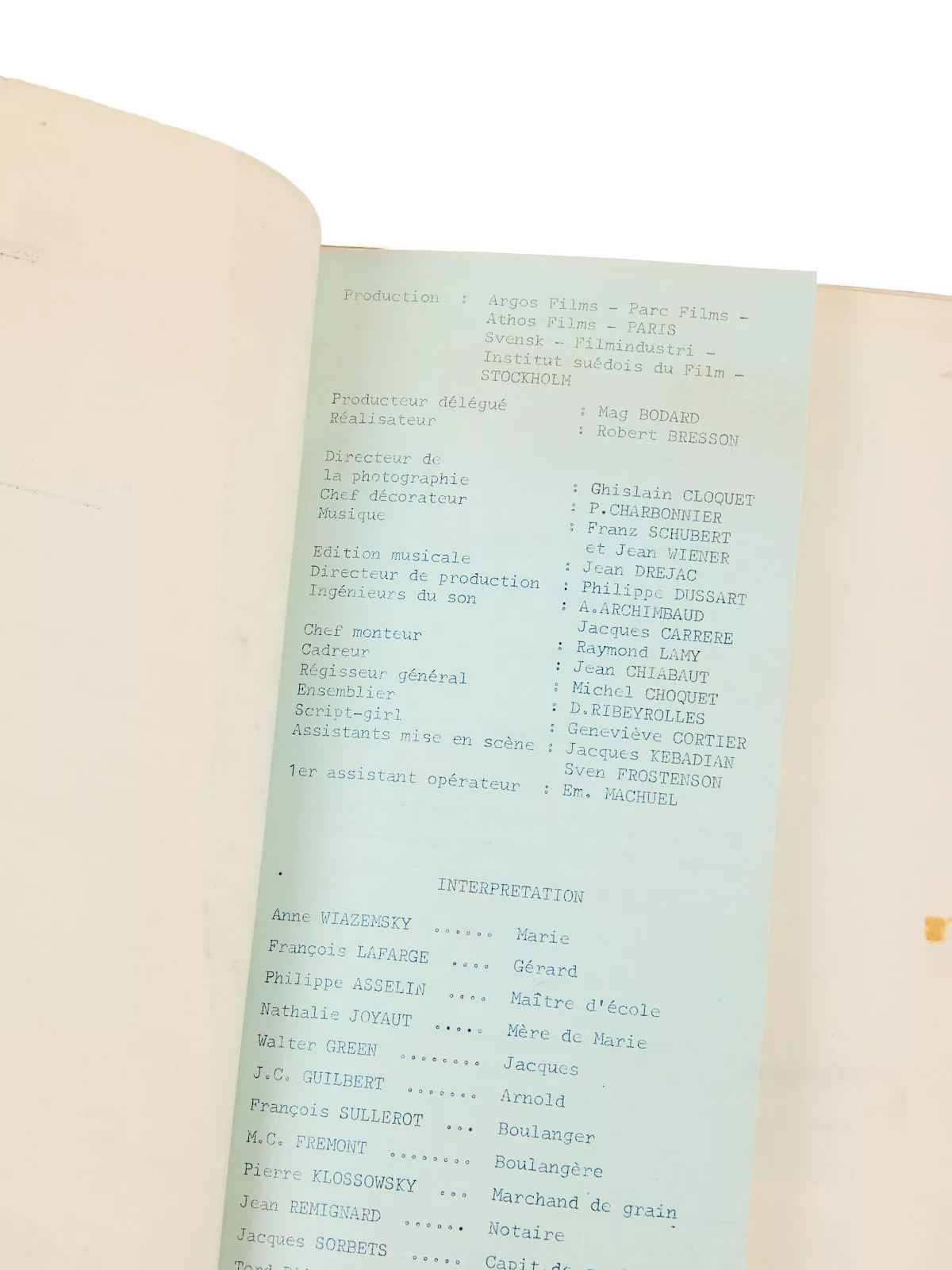
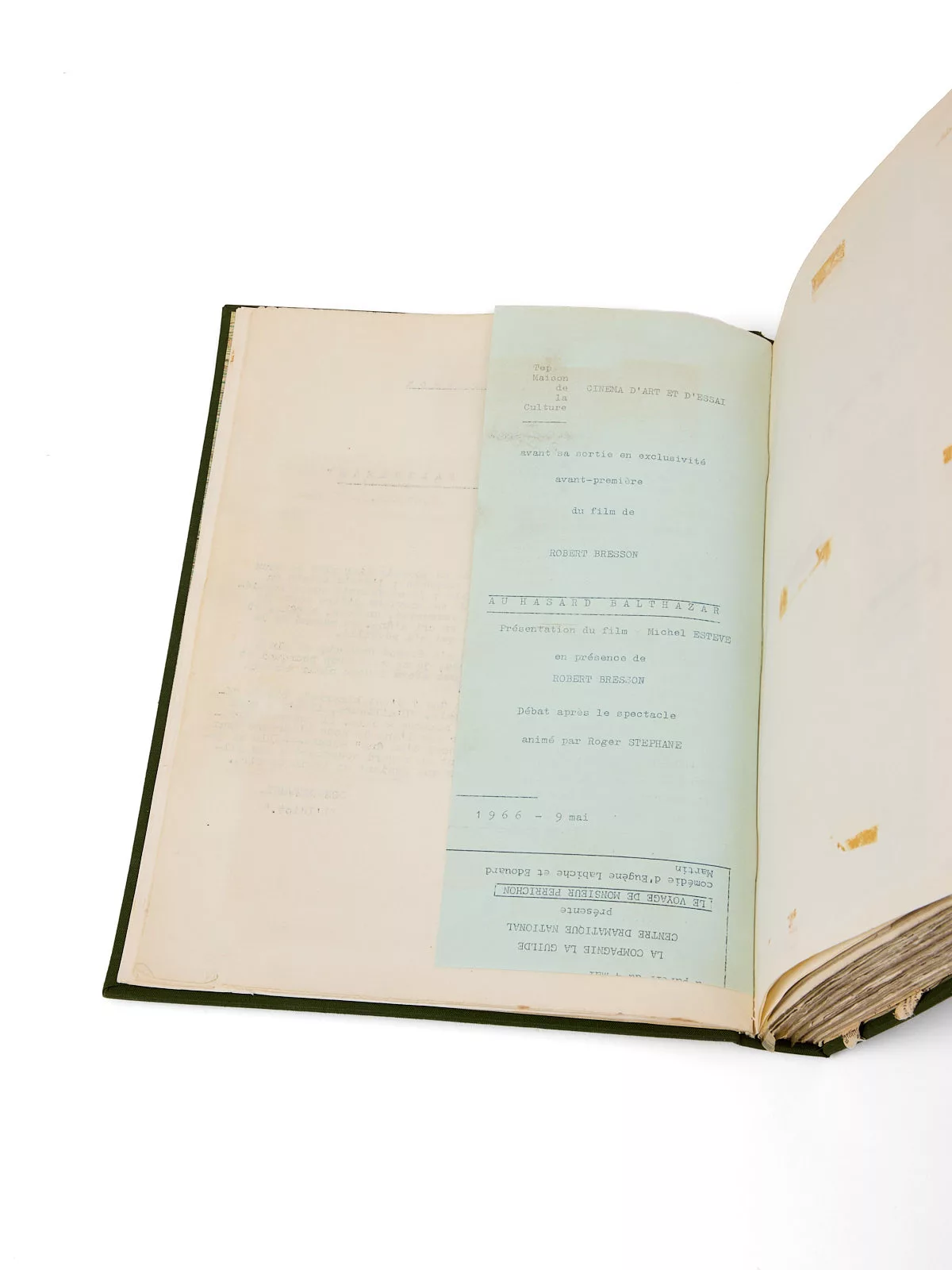
The complete typescript of the shooting script for this legendary film, prepared and annotated by Geneviève Cortier, the continuity supervisor on set, enriched with notes and sketches relating to shots and costumes, along with the shooting schedule, 73 photographs of a number of shots and actors, and numerous press clippings inserted at the beginning and end, supplemented by a separately stapled table of sequences on [18] leaves (270 x 210 mm), written in blue and red ink, giving details of the sets and characters.
The film, whose shooting-day schedule (21.7–26.9.1965) records the actors and shots filmed each day, portrays the trials of the donkey Balthazar, at the mercy of the humans, good or bad, who care for him. It was passionately championed before its release by Jean-Luc Godard, Louis Malle, François Reichenbach and Marguerite Duras on the television program “Pour le plaisir.”
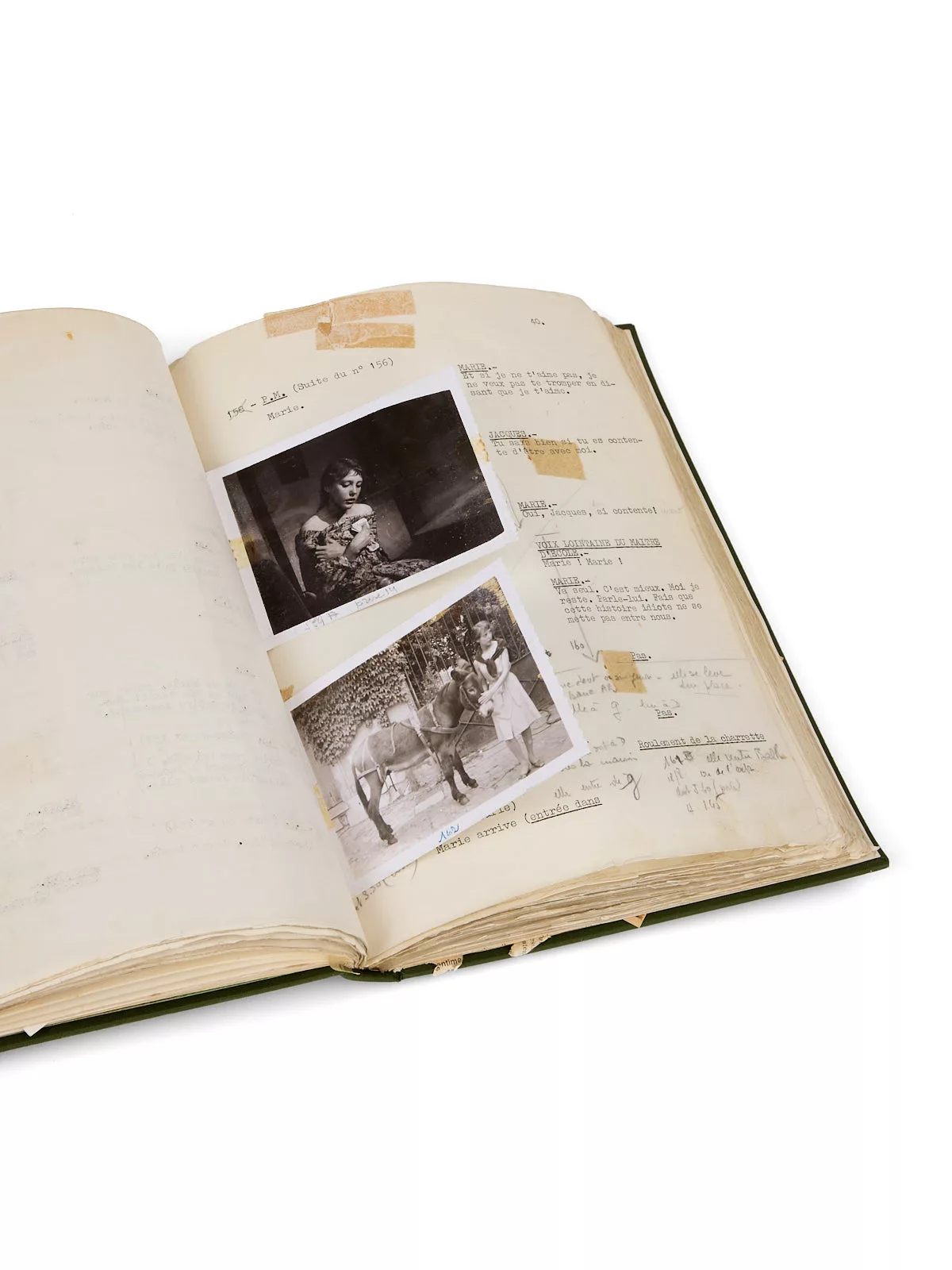
Comprising the description of the film’s 709 shots, this working document is enriched — meticulously tracing the progress of the filming from page to page — with numerous handwritten additions and corrections, in pencil and ink, as well as 43 autograph annotations (opposite pages 2, 3, 4, 5, 6, 7, 8, 9, 21, 31, 33, 34, 36, 37, 42, 45, 51, 54, 61, 63, 64, 66, 73, 84, 87, 88, 105, 117, 118, 121, 125, 126, 131, 132, 134, 145, 146, 149, 158, 160, 162, 167, 169) and 8 pencil sketches of shots to be filmed (opposite pages 34, 65, 66, 71, 74, 117, 141, 165).
73 black-and-white photographs — 53 (105 x 80 mm), 19 (130 x 90 mm) and 1 (115 x 115 mm) — originally taped in place opposite the text, though most have since become detached, complete the ensemble; among them are 8 photographs of Robert Bresson and 8 of Anne Wiazemsky, François Mauriac’s granddaughter, who met Jean-Luc Godard on this shoot in August 1965 and married him in 1967, and 1 photograph of the director with the film’s leading actress and the donkey Balthazar. 24 of these photographs are captioned, 20 of them with the number of the shot in question (64, 79, 89, 98, 162 [2], 169, 251, 252, 309, “raccord 369-370,” 445, 460, 467, 470, 472 [2], “raccord 493,” 495, 503).
The set is completed by the following documents:
[18] leaves (270 x 210 mm) of summary tables of the film’s sequences;
[1] leaf (390 x 235 mm) of the shooting-day schedule;
53 black-and-white photographs (105 x 80 mm);
19 black-and-white photographs (130 x 90 mm);
1 black-and-white photograph (115 x 115 mm); including 8 photographs of Robert Bresson, 8 of Anne Wiazemsky and 1 of the two of them together.
Even today, watching a Robert Bresson film remains a startling experience; Au hasard Balthazar is no exception, and it stands in Bresson’s filmography as a strange and irrevocable turning point, a pivot allowing no return: the film is dark, very dark, and despite a lingering aftertaste of a paradise repeatedly lost, it offers no possibility of hope or redemption.
When it was first screened in New York at the 1966 film festival, “it received rather unfavorable reviews.” In Europe, by contrast, critics were full of praise. The celebrated filmmaker and Cahiers du cinéma critic Jean-Luc Godard declared: “Everyone who sees this film will be absolutely astonished […] because this film really is the world in an hour and a half.” The film critic Tom Milne called it “perhaps [Bresson’s] greatest film to date, certainly his most complex.”
The American theatrical release took place four years later. In 1970, Roger Greenspun of the New York Times praised the film’s final scene as “surely one of the most moving passages in the history of cinema.” Andrew Sarris, one of the most influential film critics, wrote in 1970: “No film I have seen has come closer to making my whole being vibrate […]. It stands alone as one of the highest peaks of artistically realized emotional experience.”
A magnificent and unique document.