

Artine
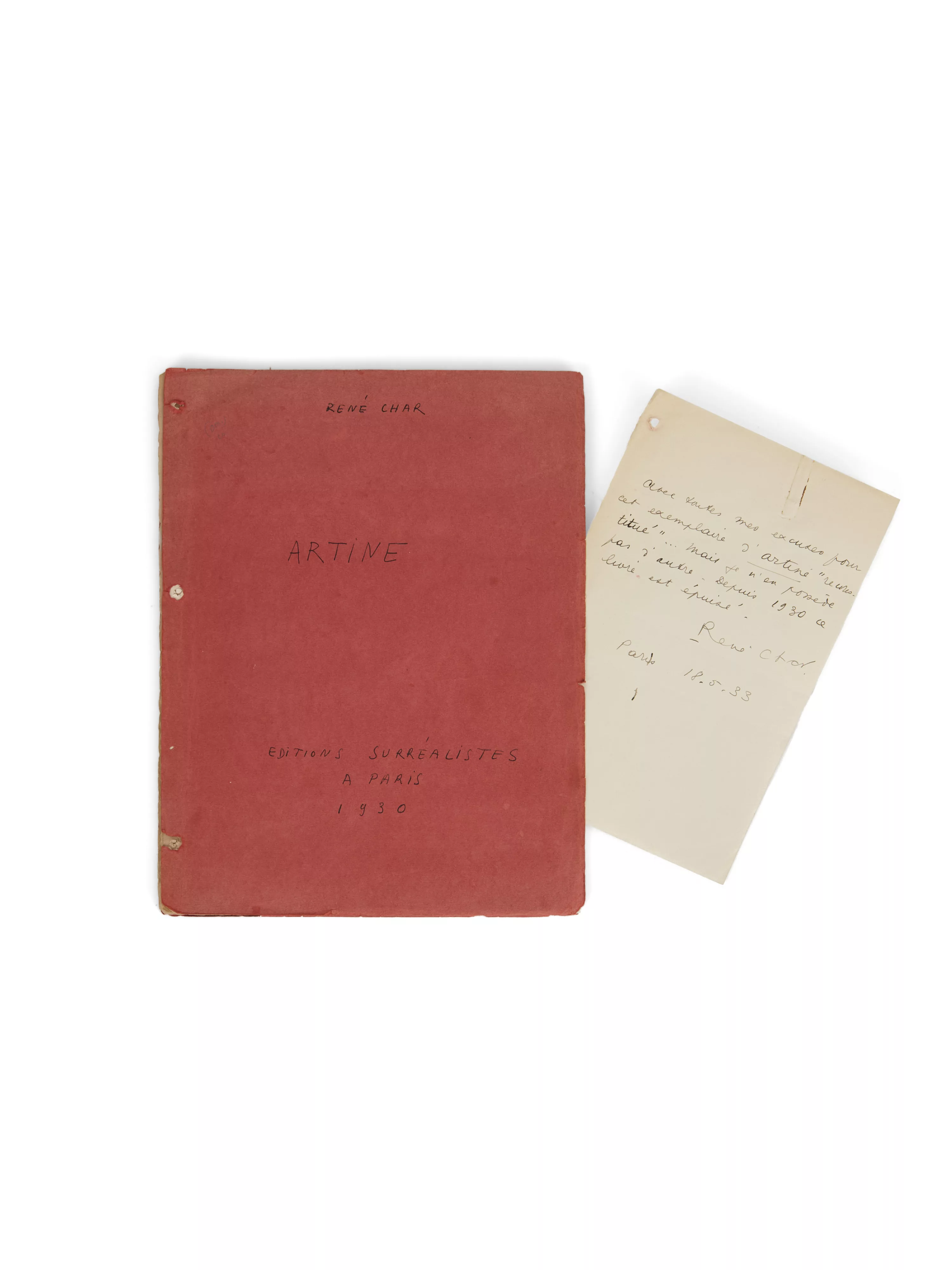
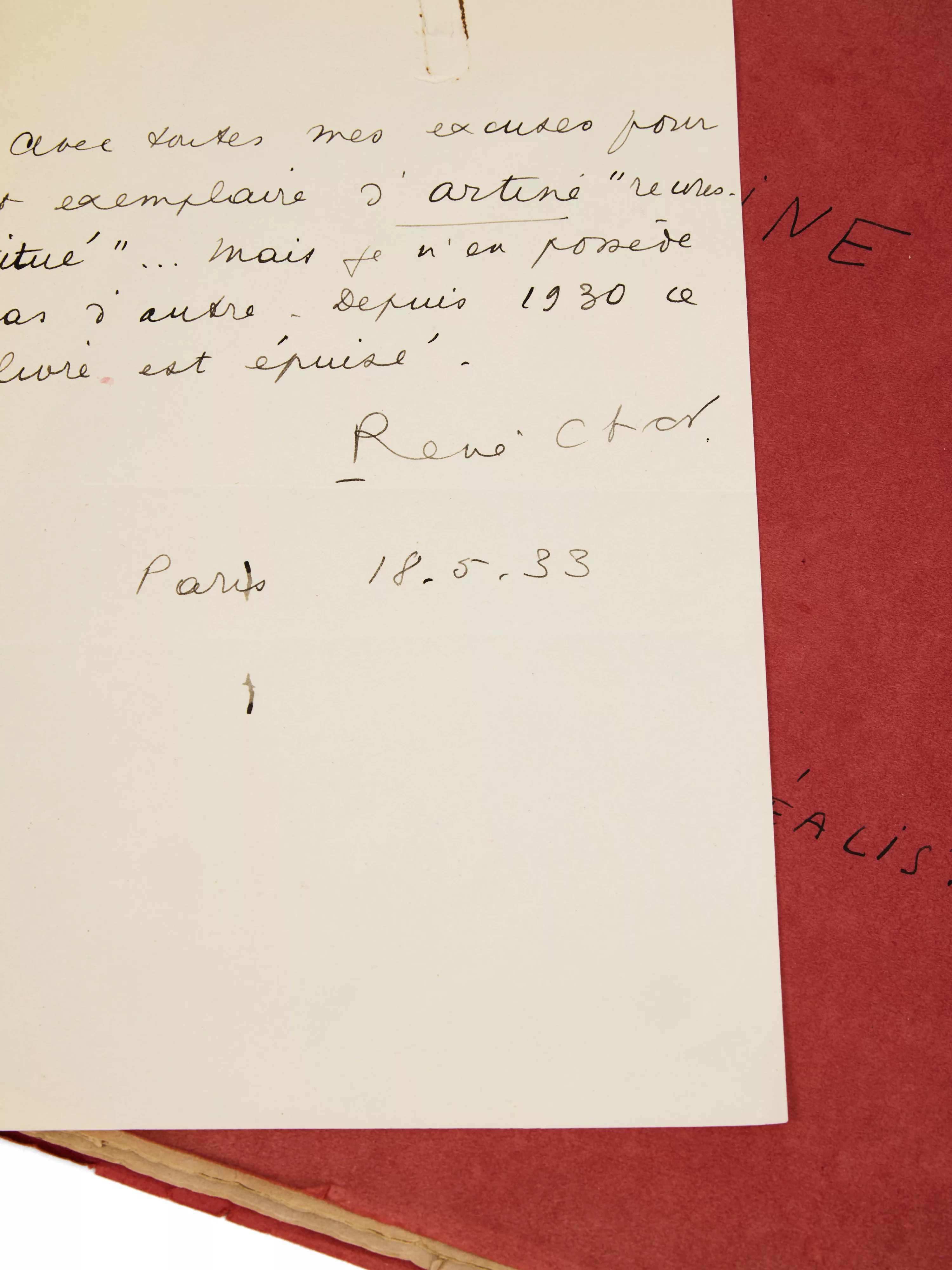
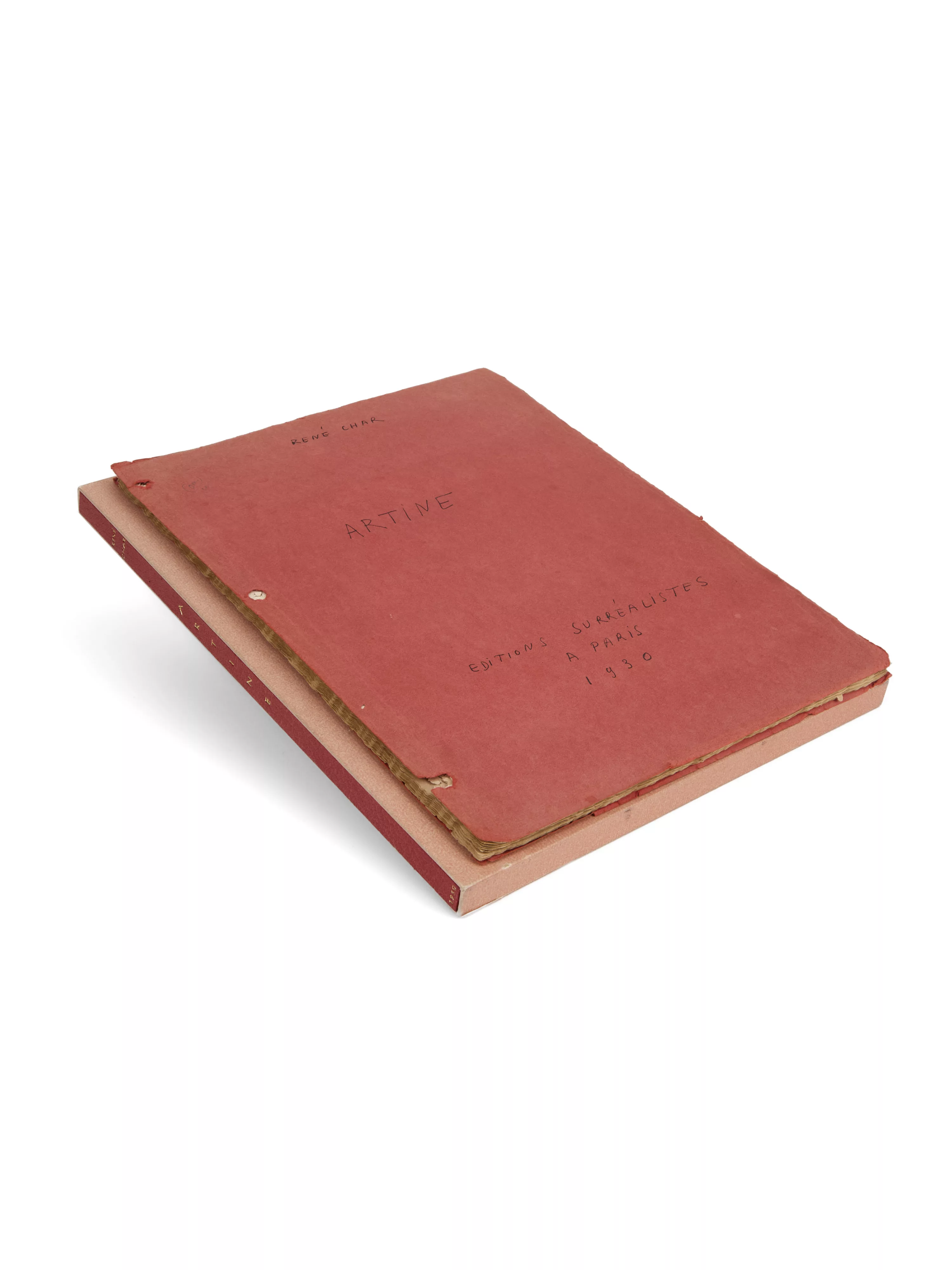
“Avec toutes mes excuses pour cet exemplaire d'Artine “ reconstitué ”… mais je n'en possède pas d'autre - depuis 1930 ce livre est épuisé. René Char, Paris, 18.5.1933.”
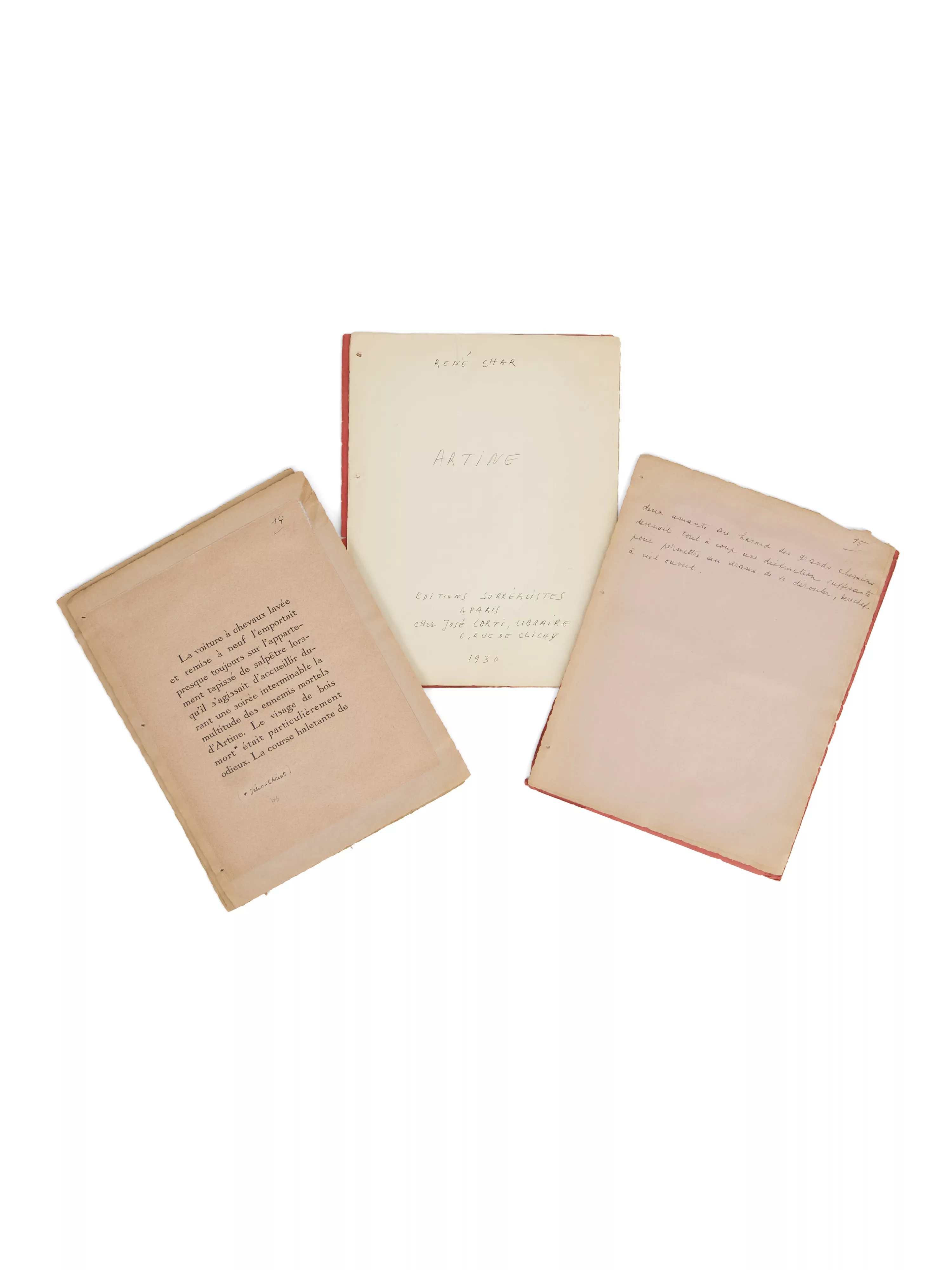
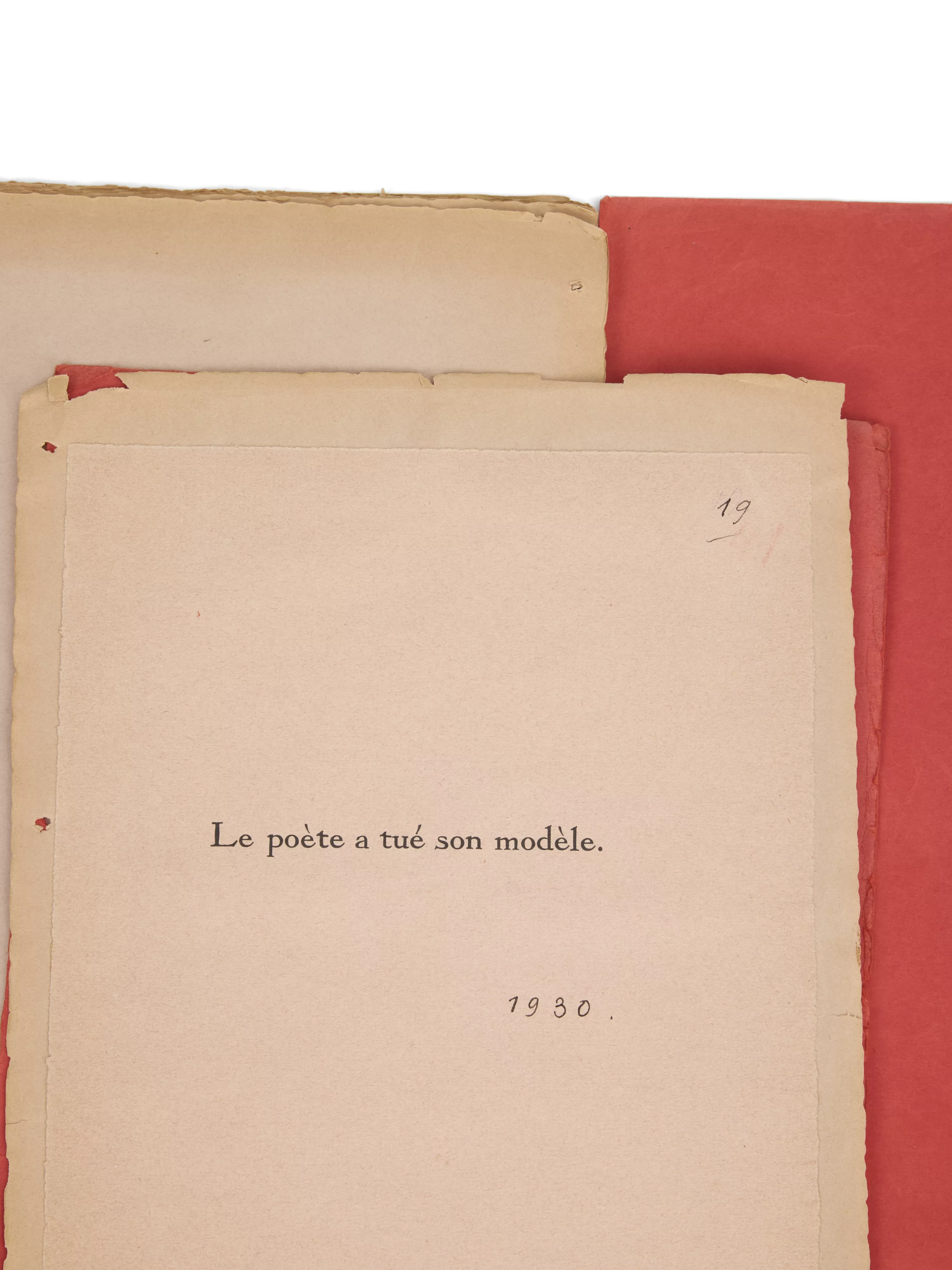
René Char thus reconstructed a complete copy of Artine, using discarded pink-paper sheets of pages [1], [2], [3], [4], [5], [6], [7], [8], [10], [11], [12], [13], [14] — with the autograph correction “Jésus-Christ” added, [16], [17] and [19], along with the correction of “1930” — all mounted on paper. Char then recomposed by hand the titles and texts of the missing pages, namely the front cover, the title page, and the texts of page [9], page [15] and page [18].
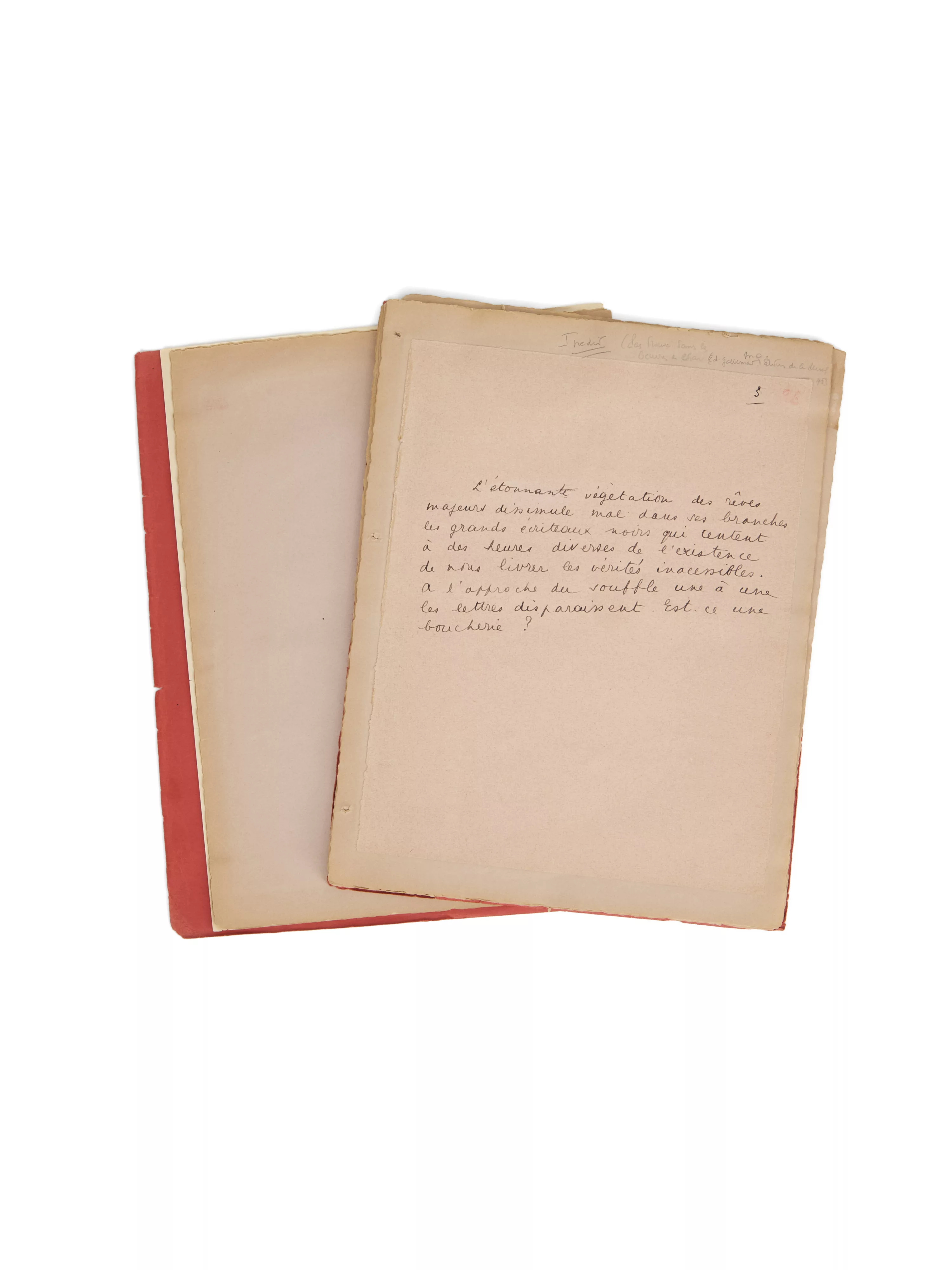
Inserted at page [3] is an entirely unpublished eight-line text:
“L’étonnante végétation des neiges éternelles dissimulent mal dans ses branches les grands écriteaux noirs qui tentent à des heures diverses de l’existence de nous livrer les vérités inaccessibles. À l’approche du souffle une à une les lettres disparaissent. Est-ce une boucherie ?”
This same text, in this same autograph version, also appears in the autograph manuscript of Artine that was presented to Paul Éluard — who, together with Breton, wrote the publisher’s insert.
Paul Éluard and René Char met in the autumn of 1929, and Char had jokingly told Éluard that his poetry was too elegiac, calling him the Lamartine of Surrealism, a “Lamartine sans lame.” The name Artine was born from this pun, and Char gave it to the collection he was then preparing.
These are the only two known occurrences of this passage, traces of which also appear in two presentation inscriptions by the poet:
“à Georges Hugnet. À l’approche du souffle une à une les lettres s’éclipsent. C’est une boucherie…”
“Pour José Delfau. Est-ce une boucherie ? Ces signaux fraternels, René Char, 29 décembre 1932”
“At the origin,” Char explained, “there was this dark-haired young woman who came, during an absence of my mother, to offer herself as a servant, and who disappeared, leaving on a piece of paper only her name, Lola Abba — a name I had already read, by the light of a match, on a cross at night in the cemetery of L’Isle, in the paupers’ section, with my friend Francis l’Élageur beside me. And I did not know why there was, in her appearance and disappearance, fire, death, fine rain, the winding course of life.” Through these coincidences — pure gifts for the Surrealist he then was — Char thus explained how Artine was born. A dreamed woman, or rather a figure of waking dream, she would recur throughout his work, named again in Ralentir travaux, in La Parole en archipel, and later in Sous ma casquette amarrante.