

Abbés
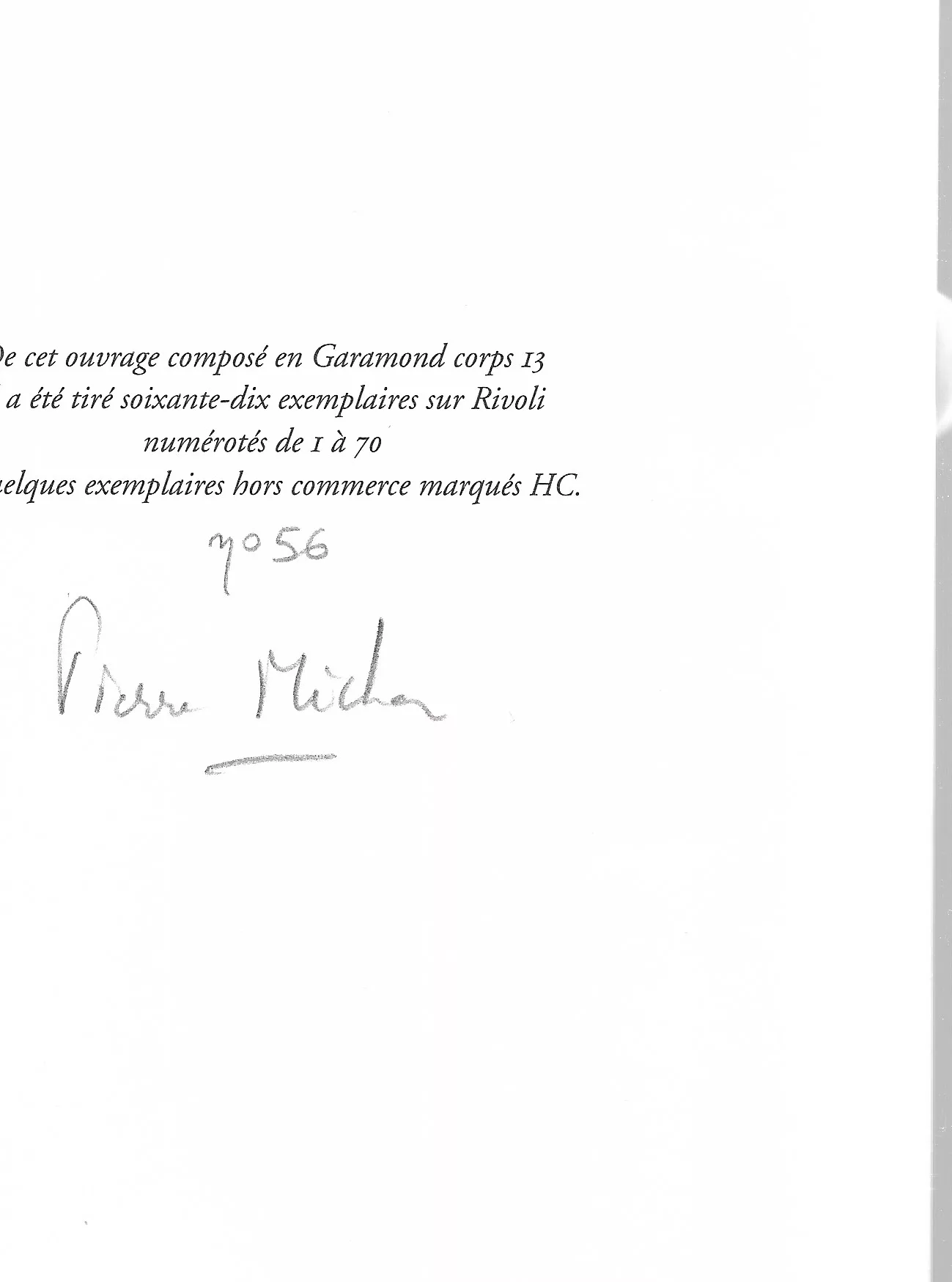
One of 70 copies on vélin Rivoli (no. 56), signed.
This text first appeared in the collection Les Passants inutiles (Nantes, 2001). With the publication of Abbés, Pierre Michon continues the autobiography of humankind he began in 1984 with Vies minuscules, here with a more specific focus on the sacred in literature. Michon acknowledged being driven by “a very wavering sense of the sacred, stammering, timid, or despairing”—while adding “a sacred no longer guaranteed by any God”—which leads him toward a literature experienced as a fallen form of prayer, freed from any metaphysical expectation: “For the two passions that come from fire… he has kept them: glory and flesh. Glory, which is the gift of propagating fire in the memory of men, and flesh, which has the gift of consuming the body at will in a sharp flame, a lightning bolt.” (Abbés, p. 18).
The book tells new “minuscule lives,” which Michon tries to rescue from oblivion in order to convey his vision of the world: slowing the fall of the dead into forgetfulness, giving new life to the disappeared, the overlooked, the damned and the bastards. The humble is glorified through stories of famous authors and painters (Beckett, Flaubert, Faulkner, Goya, Watteau, Van Gogh) seen from the point of view of simple people, anonymous, obscure or even fictional observers.