

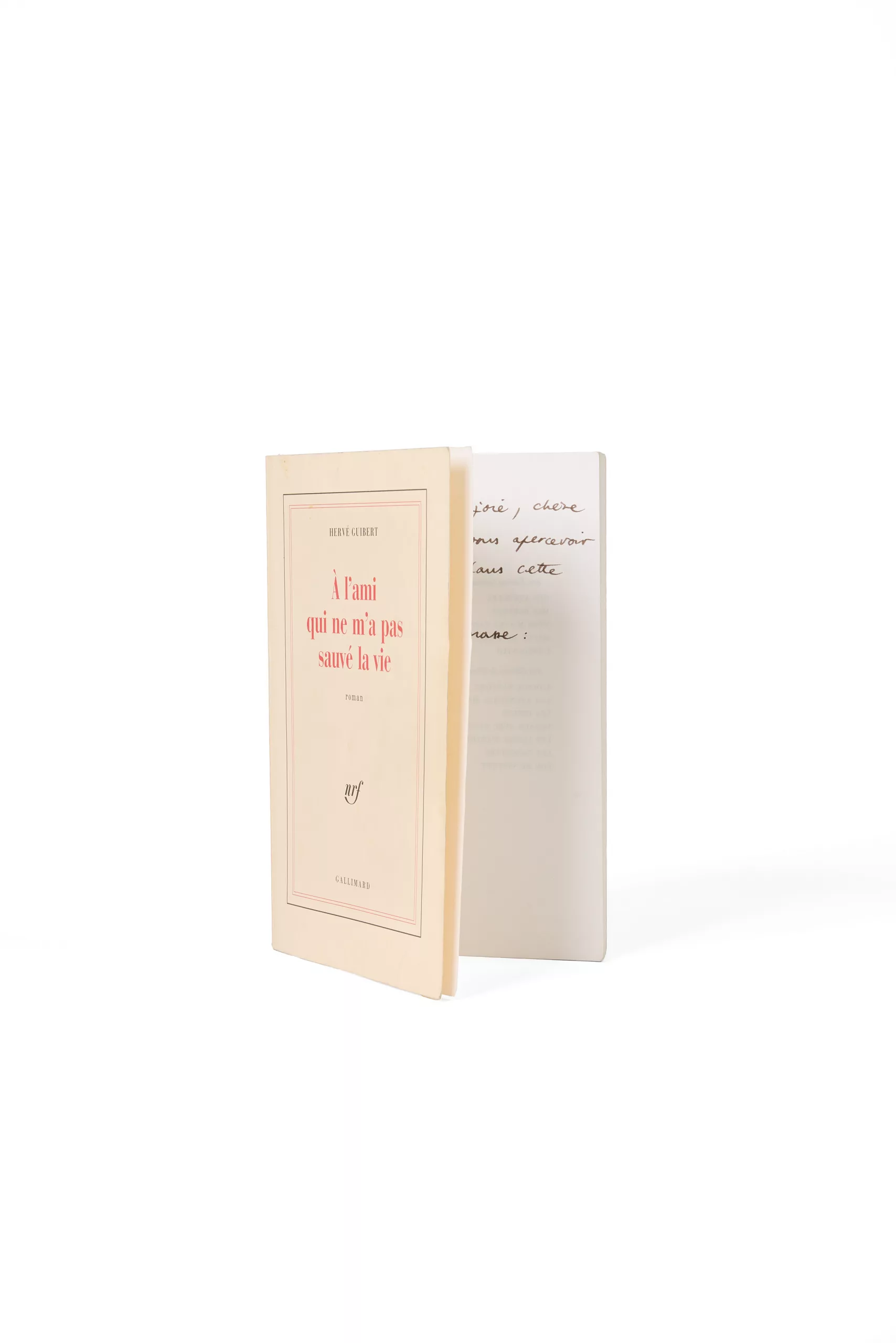
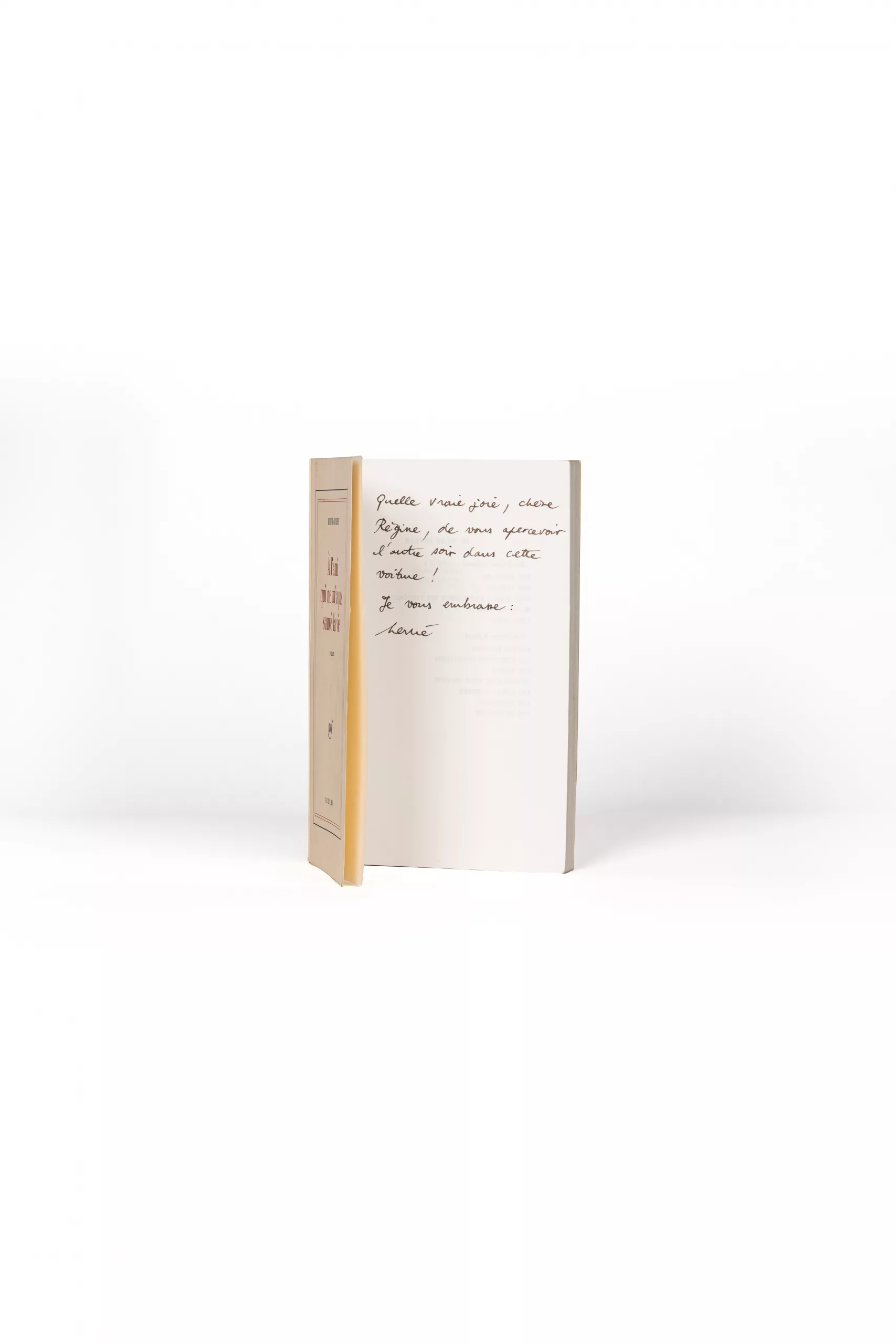
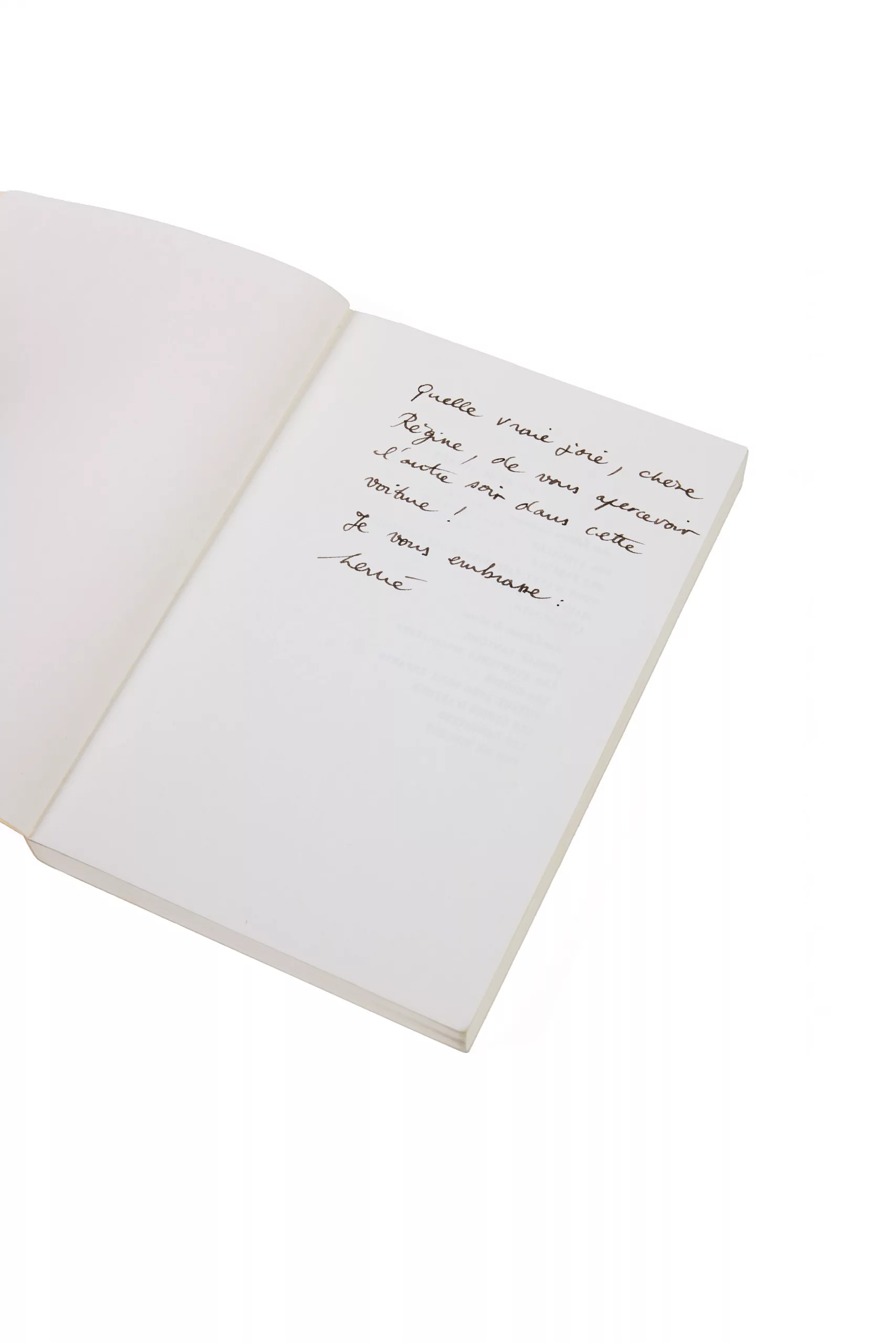
Signed presentation inscription: “Quelle vraie joie, chère Régine, de vous apercevoir l'autre soir dans cette voiture ! Je vous embrasse : Hervé.”
Copy of Régine Deforges, the first publisher to accept the author's work, in 1977, with La Mort propagande.
Born in 1955, Hervé Guibert died at the age of thirty-six of AIDS. Author of some thirty books, he was also a photographer and photography critic for Le Monde. À l’ami qui ne m’a pas sauvé la vie recounts his illness and the last days of the philosopher Michel Foucault, who also died of AIDS: a pioneering work of autofiction, “[which] is not a testament, but a book that provides keys to understanding what was in all the other books, and which sometimes I did not understand myself (…) I speak of truth in whatever distorted form the work of writing may give it. That is why I hold to the word novel. My models exist, but they are characters. I hold to truth insofar as it allows particles of fiction to be grafted on, like film splices, with the idea of making it as transparent as possible. But there are also great springs of lies in this book.” (“La vie sida,” interview with Antoine de Gaudemar, Libération, 1 March 1990).
“The strength, the beauty of this pitiless book lie in the meticulous attention Guibert pays to the progression of his illness, recorded day by day and finally accepted, even loved (…) Novels or accounts have already been written about this disease, named for the first time about ten years ago, and more will follow. As cruel and poignant as this one, with this cruelty or this elegance that provokes laughter in the worst moments, we shall not see again for a long time.” (Michel Braudeau, “Écrire contre la mort,” Le Monde, 2 March 1990).