

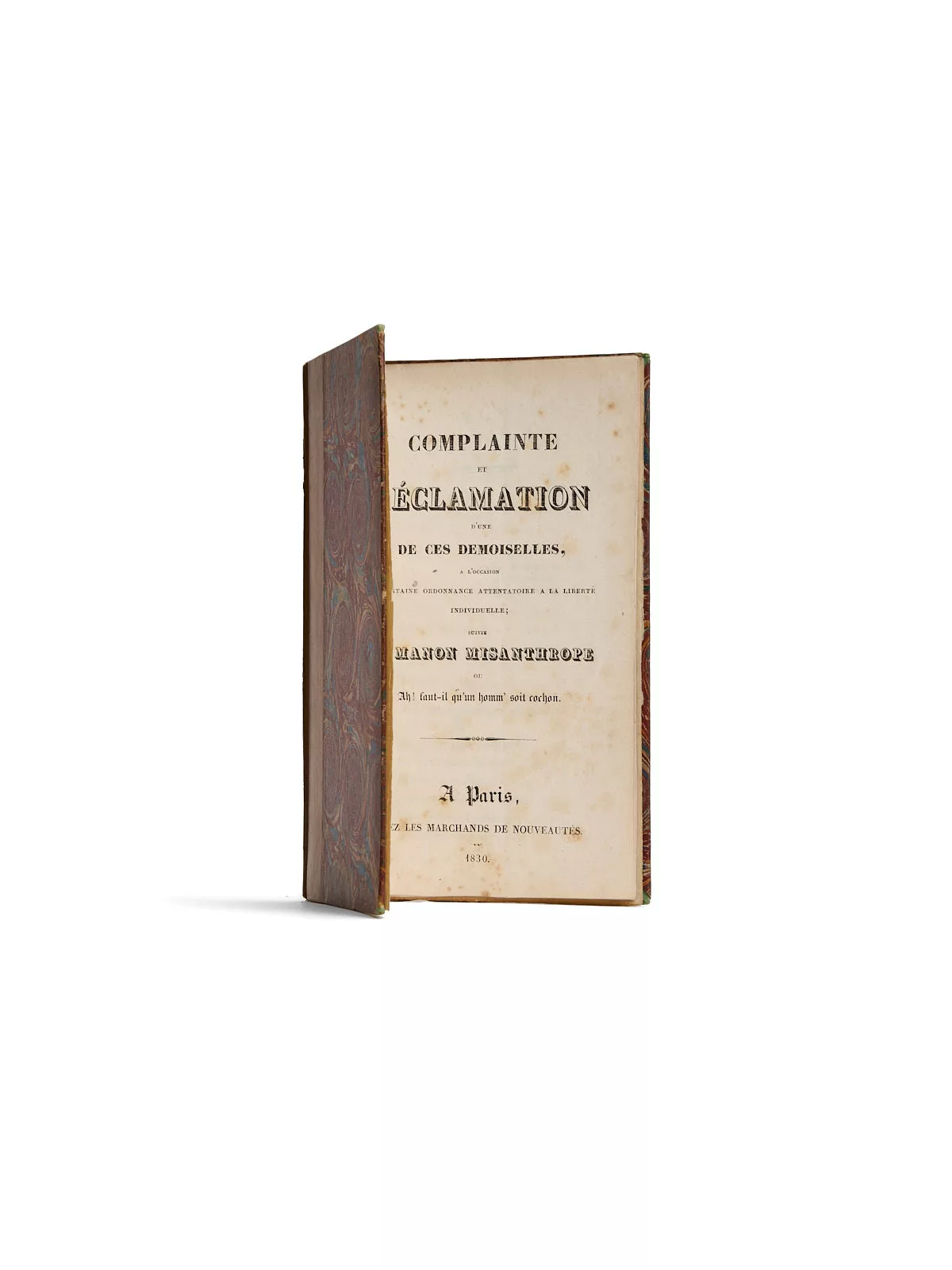
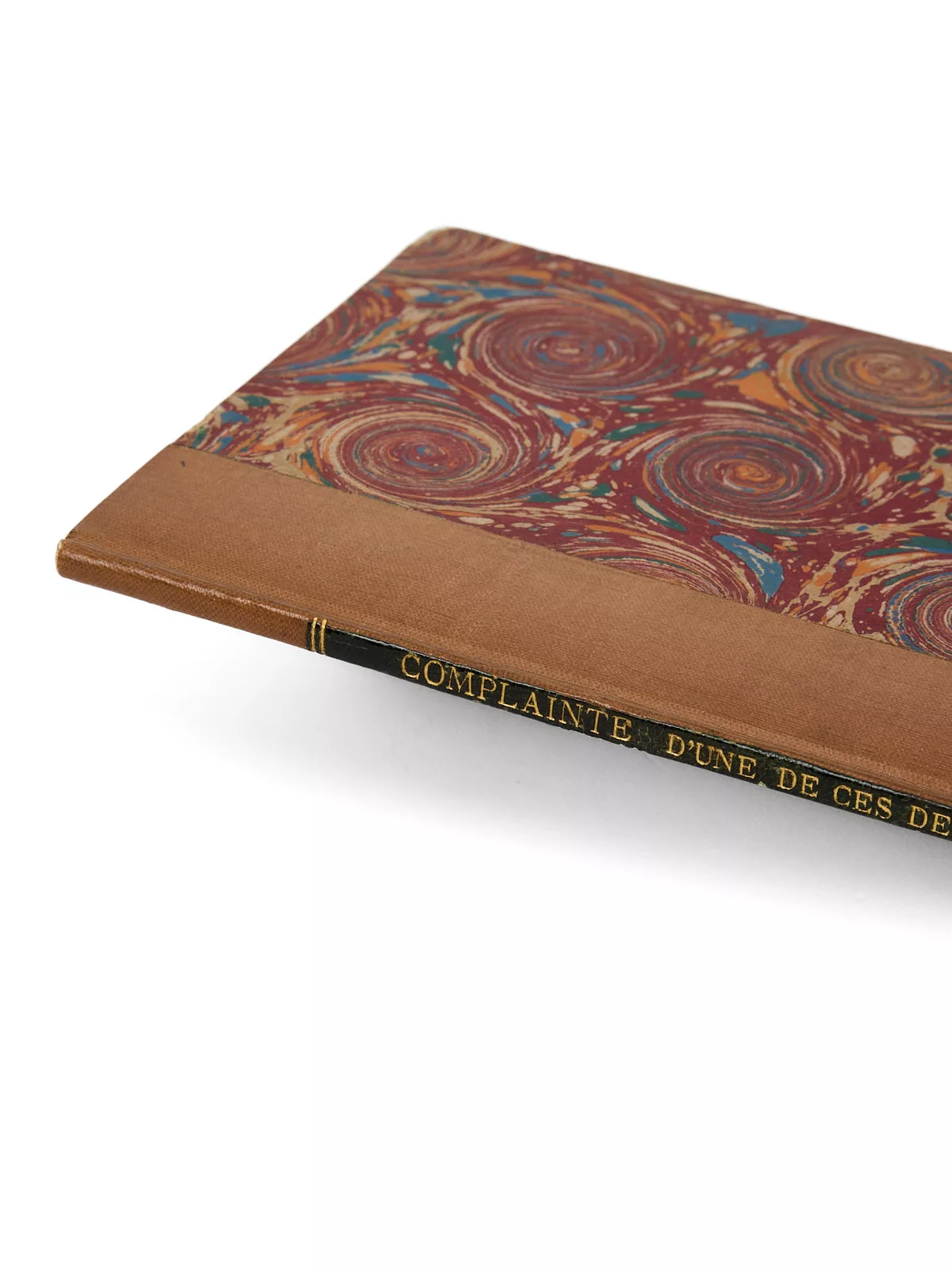
Complainte et Réclamation d’une de ces demoiselles
This ordinance forbade public women from appearing in passages, public gardens and on the boulevards, and restricted prostitution to licensed houses (maisons de tolérance). Women known as “isolated,” who had their own lodgings, could only join these establishments after the streetlamps were lit: they had to go there directly, could not change houses during the evening, and were required to be home by eleven o’clock. Beyond the repression of solicitation, the measure thus tended to place their activity under the dependence of the madams and to facilitate its surveillance.
The measure prompted a series of petitions, songs and pamphlets, among them the Pétition des filles publiques de Paris, presented under the name of Mlle Pauline, and Le Tocsin de ces demoiselles. The present Complainte belongs to this literature of the moment: its popular language and bawdy double entendres voice a protest against the obstacles placed on the prostitutes’ means of livelihood.
The phrase “attentatoire à la liberté individuelle” (an infringement on individual liberty), displayed in the title, gives this protest its political scope. Its documentary interest lies in the way this satirical song, on the eve of the July Revolution, seizes upon a conflict between the moral police and individual liberty.
Jill Harsin, Policing Prostitution in Nineteenth-Century Paris, Princeton University Press, 1985, pp. 43–45.