

L’Immaculée Conception
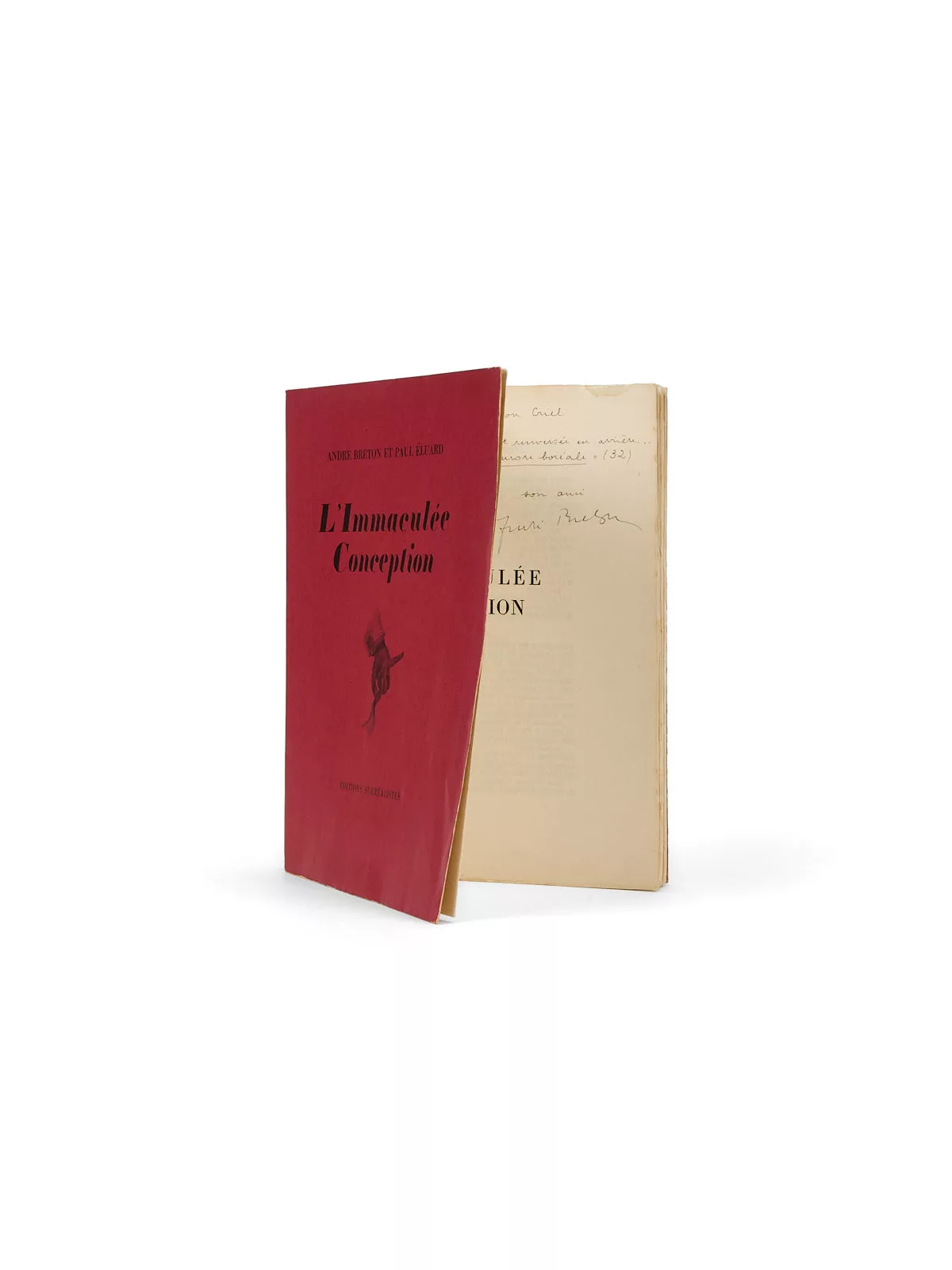
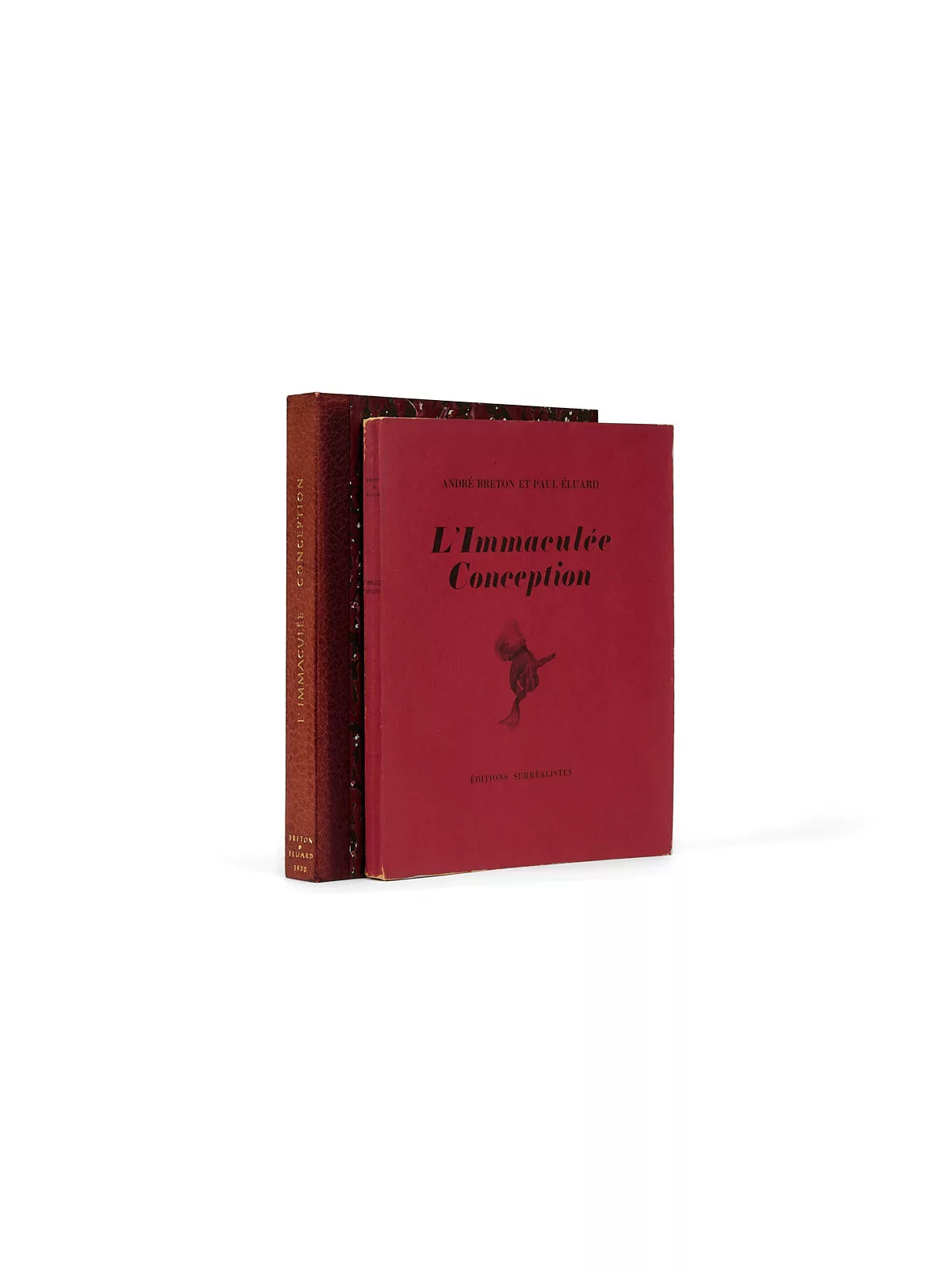
One of 2,000 copies on impondérable paper (no. 369).
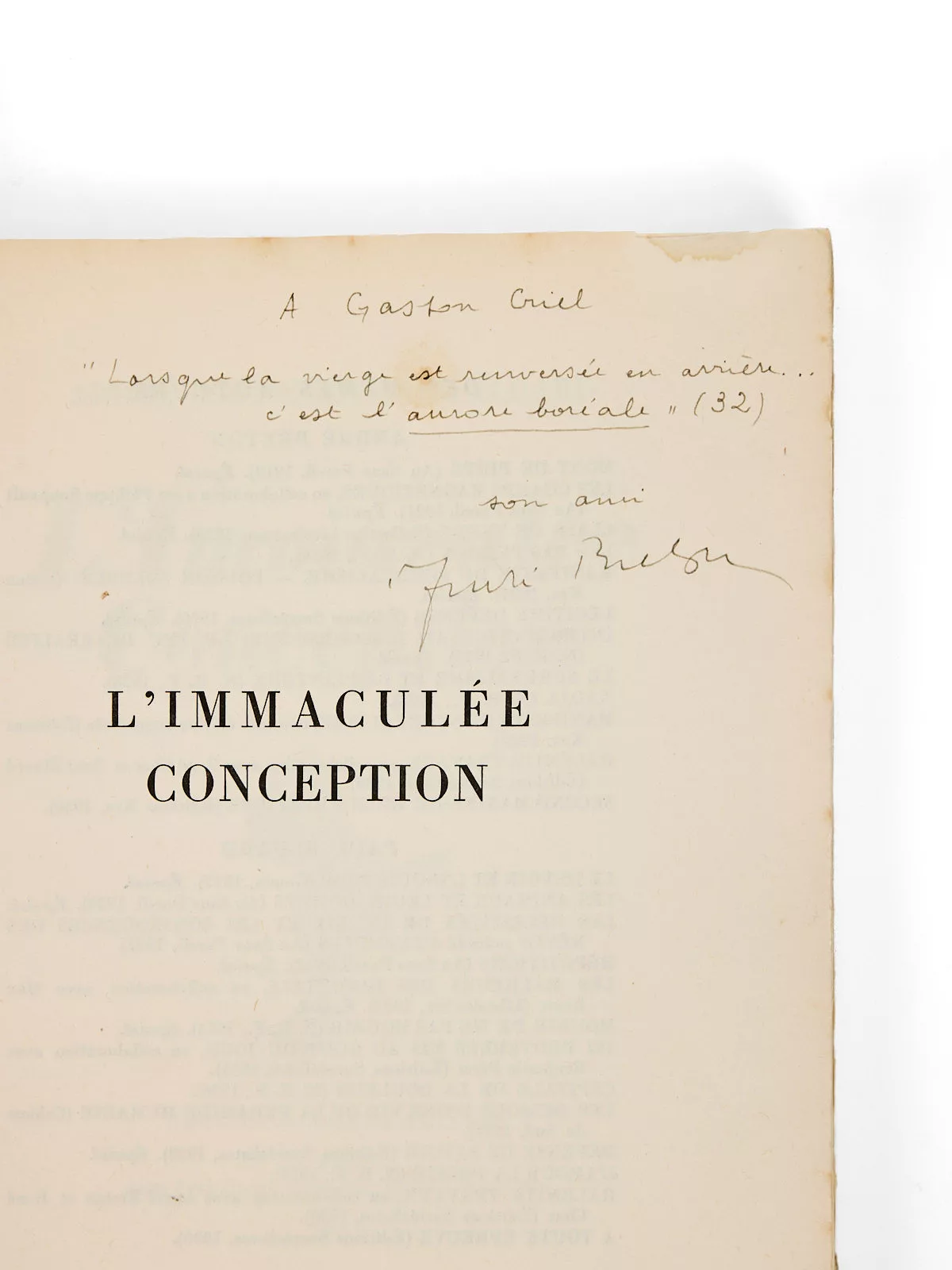
Signed presentation inscription, accompanied by a quotation from the book: “À Gaston Criel “Lorsque la vierge est renversée en arrière... c'est l'aurore boréale.” (32), son ami André Breton.”
Gaston Criel (1913–1990), a writer of unusual career, author notably of La Grande Foutaise, praised by Henry Miller, was in turn secretary to André Gide, assistant to Jean Cocteau on the filming of La Belle et la Bête, and a journalist for Carrefour. He also held numerous other occupations, including record salesman, caravan dealer and bartender.
A prisoner of the Germans during the Second World War, Criel maintained a correspondence with Max Jacob. The undated inscription necessarily postdates the book’s publication and testifies to a relationship formed later between Breton and Criel.
The quotation chosen by Breton corresponds to the thirty-second and final proposition of the section entitled “Les Médiations,” devoted to positions of love.
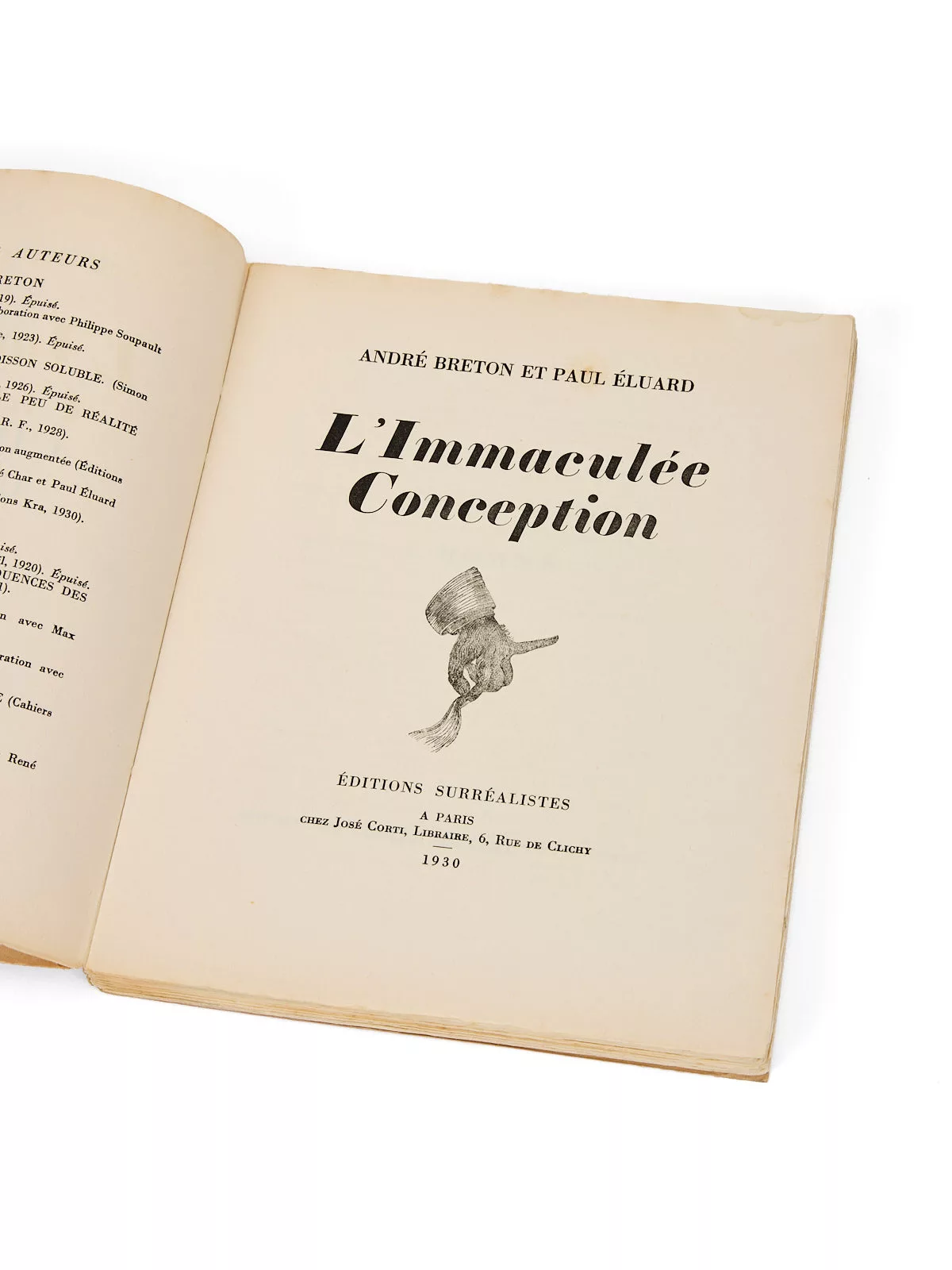
L’Immaculée Conception is one of the major works of the collaboration between André Breton and Paul Éluard. Written jointly, it constitutes an experiment in collective writing grounded in Surrealist automatism. The text is divided into four parts: “L’Homme,” “Les Possessions,” “Les Médiations” and “Le Jugement originel.”
It is the first book illustrated with an original work by Salvador Dalí, who had joined the Surrealist group in 1929. A photogravure reworked with drypoint appears as frontispiece in copies of the deluxe issue only, while the artist’s vignette is reproduced on the cover and title page of the entire print run. Executed in March 1930, the frontispiece composition predates the writing of the book by a few months and relates to a phrase from its final section, “Le Jugement originel.”
Marguerite Bonnet and Étienne-Alain Hubert, editors of André Breton’s Œuvres complètes in the Bibliothèque de la Pléiade, emphasize the importance of this work, which they consider “of the greatest importance, [and which] has not yet received its true place, although by its certainties as much as its doubts it represents one of the major expressions of the Surrealist approach” (Œuvres complètes, I, p. 1652).
Mischler-Löpsinger, 2 (for Dalí).