

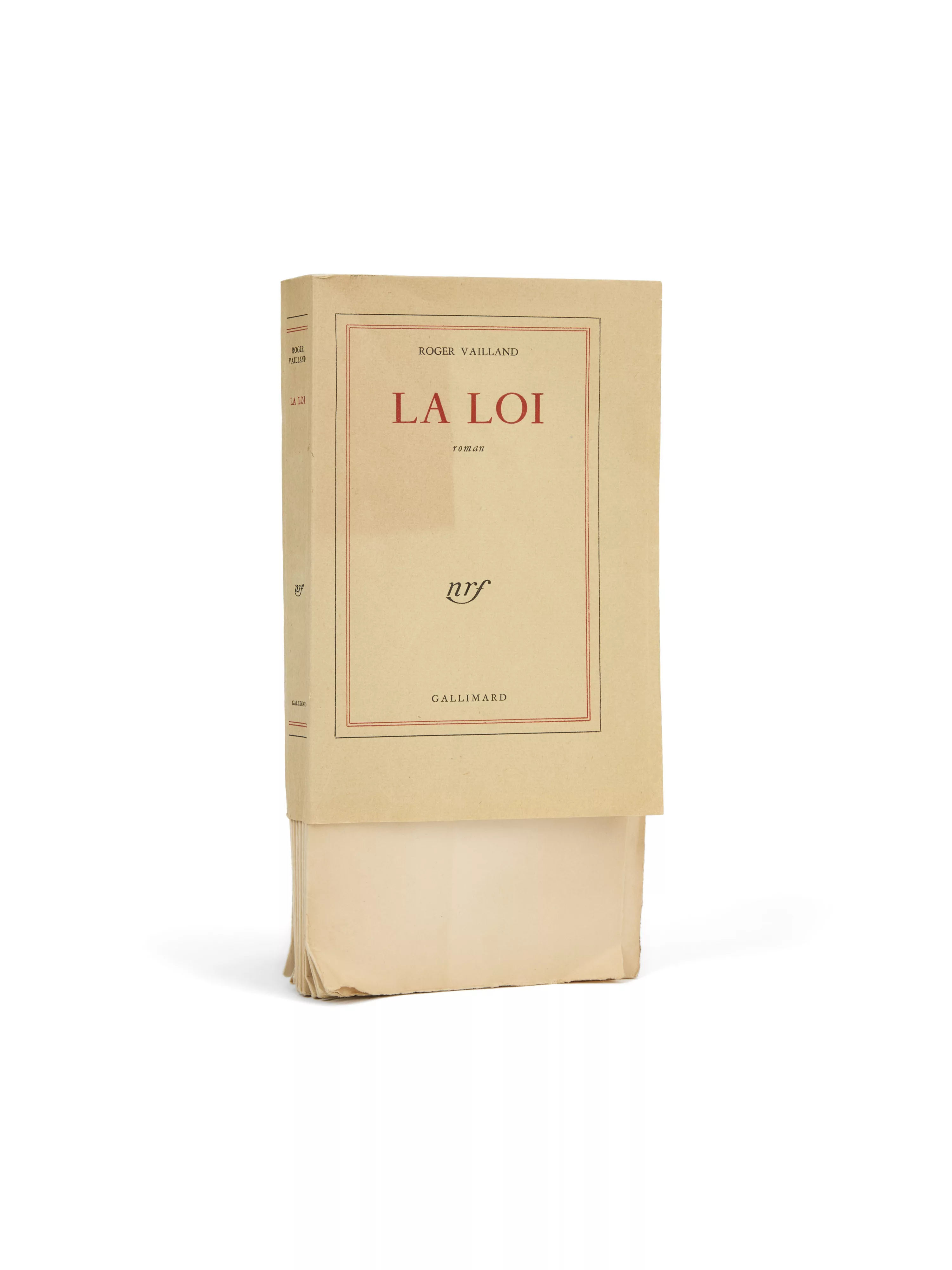
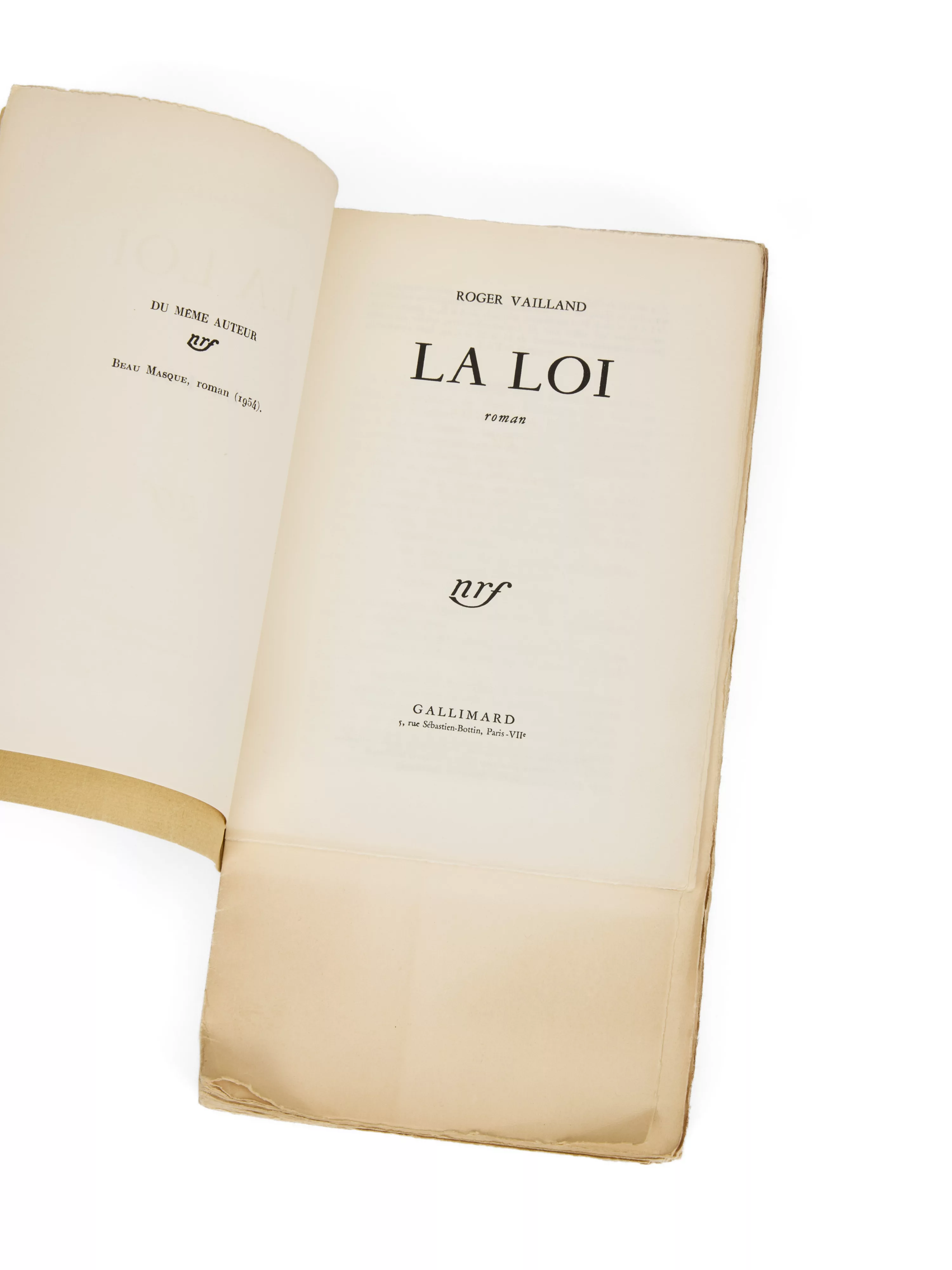
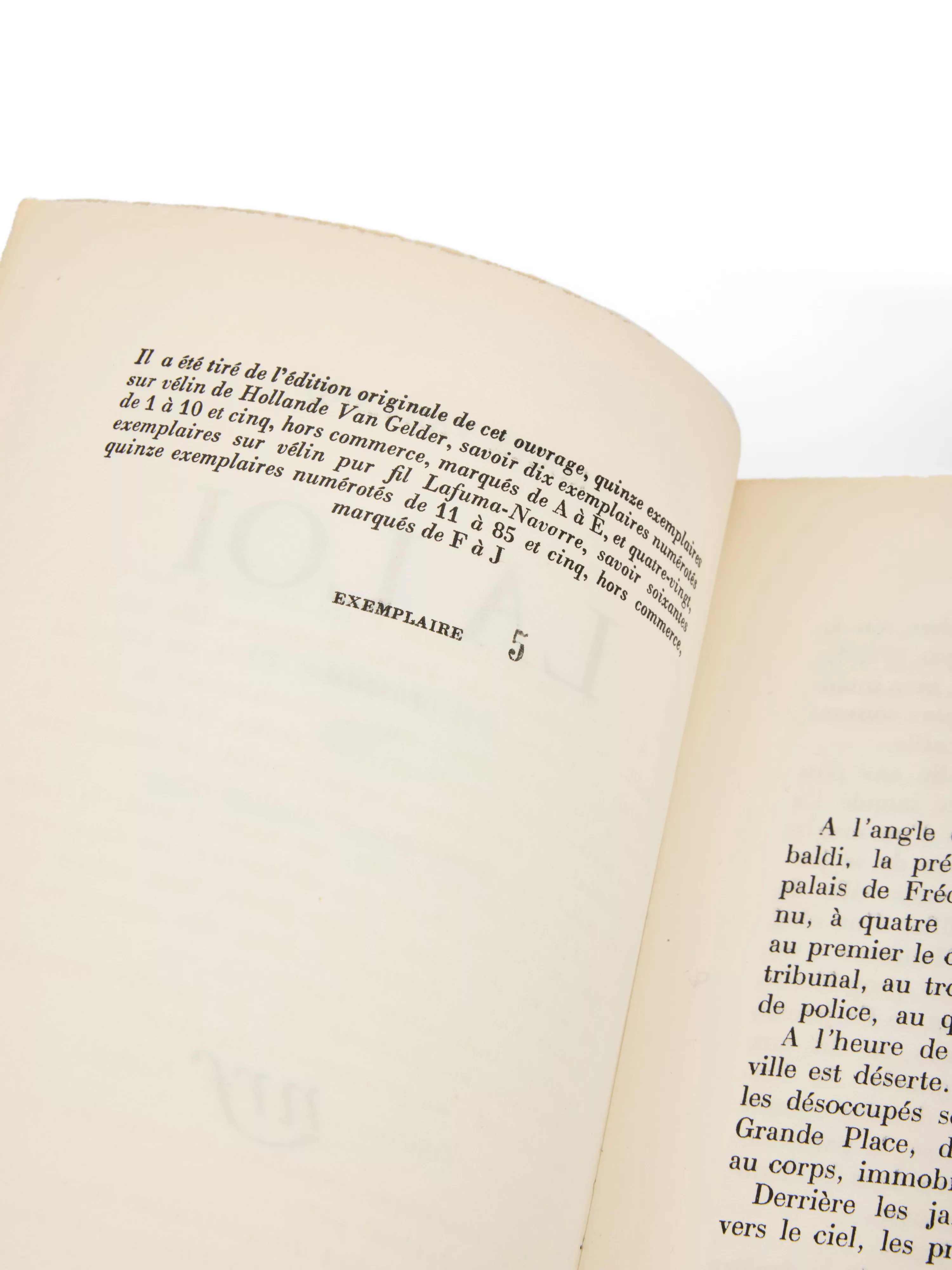
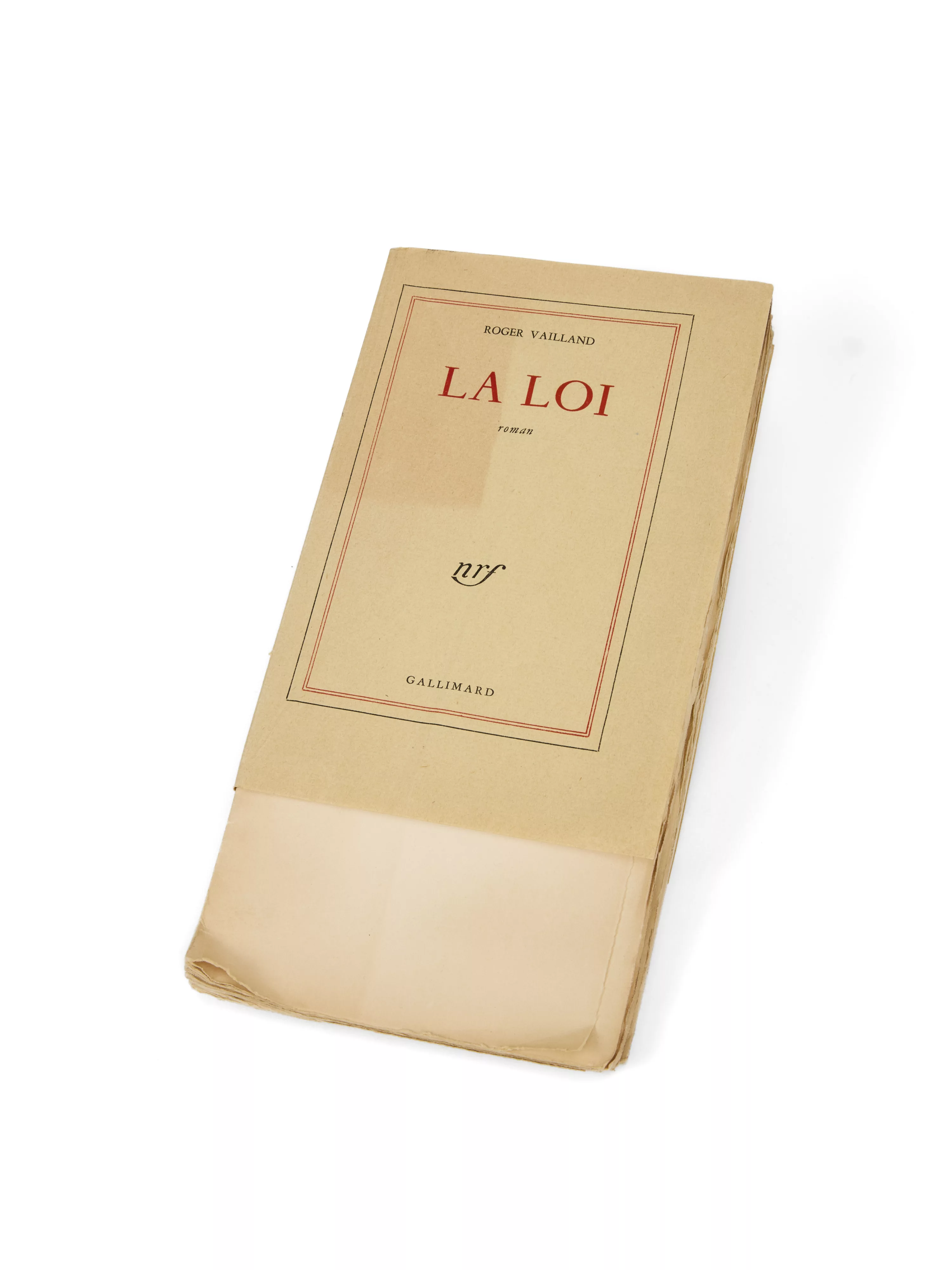
La Loi
One of 15 copies on vergé Hollande (no. 5).
Large-margin copy, entirely unopened.
Roger Vailland here directs his sharp eye toward relations of domination in a small town in southern Italy: through its depiction of rivalries, clan struggles and strategies of alliance or seduction, the novel becomes a parable of the mechanisms of power and social hierarchy.
The Prix Goncourt was awarded to him on the second ballot, by six votes to four over Michel Butor’s La Modification: a choice of the realist, political novel over the avant-garde of the Nouveau Roman. The prize crowned a graduate in Philosophy, a fellow traveler of Surrealism and co-founder of the review Le Grand Jeu, who had also worked as a journalist. During the Occupation, he took part in the Resistance, notably in sabotage and derailment operations. It was at this time, cut off from his network, that he began writing Drôle de jeu, which won him the Prix Interallié in 1945.
A figure of the committed intellectual, he lived through the contradictions of his age. At first a fervent Communist, he was shaken in 1956 by the revelation of Stalin’s crimes in the Khrushchev report. His inner world collapsed. “I wept the day Stalin died. And I wept again on the road to Moscow […] when I had to kill him a second time, after reading the account of his crimes,” he noted in his journal on 5 June 1956.
Vailland remained a complex figure, closely watched by the Renseignements généraux: “An alcoholic and addicted to narcotics, he is, in private, not favorably regarded,” they wrote in a note dated 29 July 1952. The subject might well have been flattered by such a portrait. While the police meticulously recorded his Communist associations, his work made him one of the most lucid observers of the political and social passions of his time, of which La Loi remains one of the high points.
A magnificent and spectacular copy with exceptionally wide margins.