

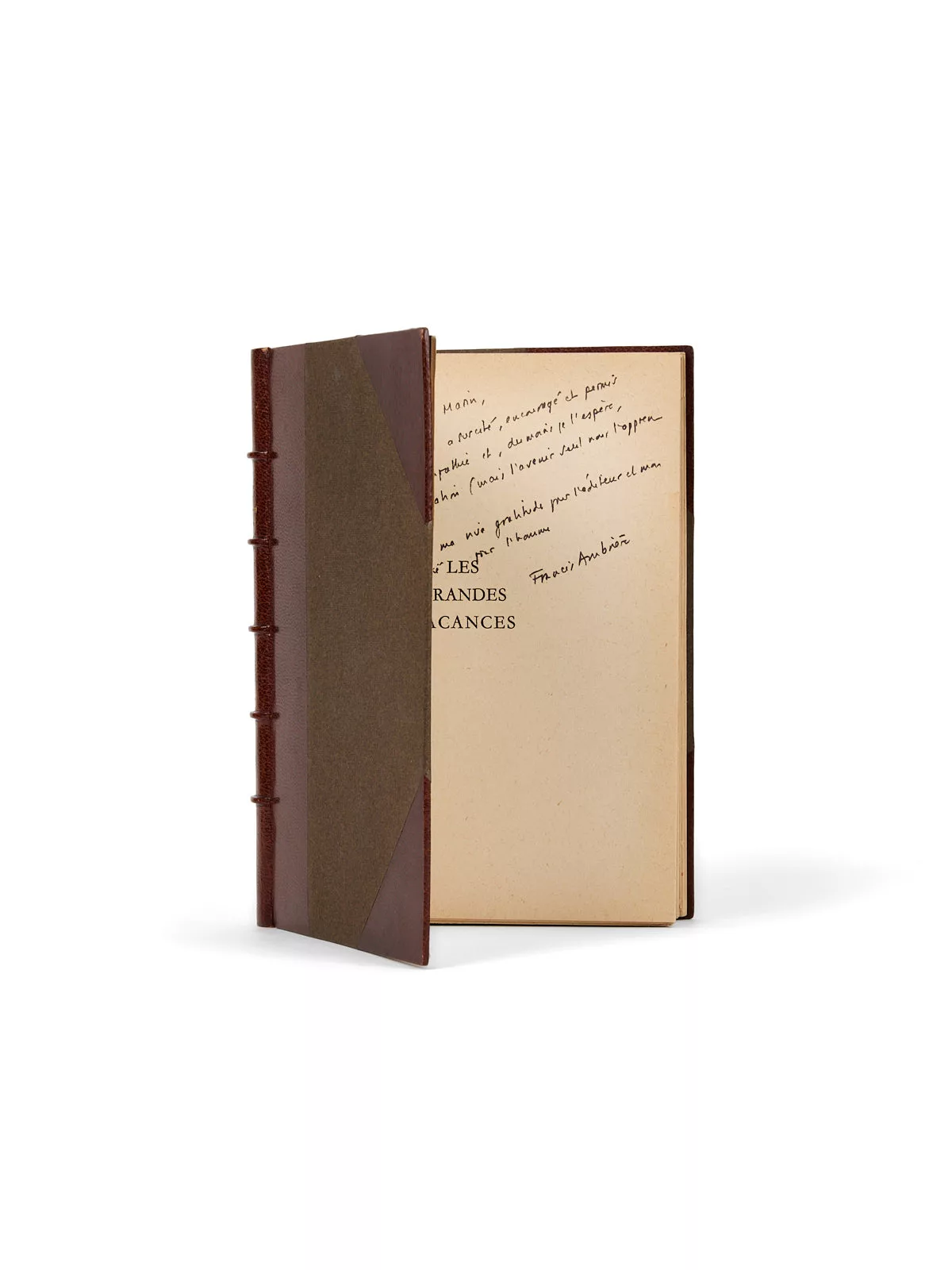
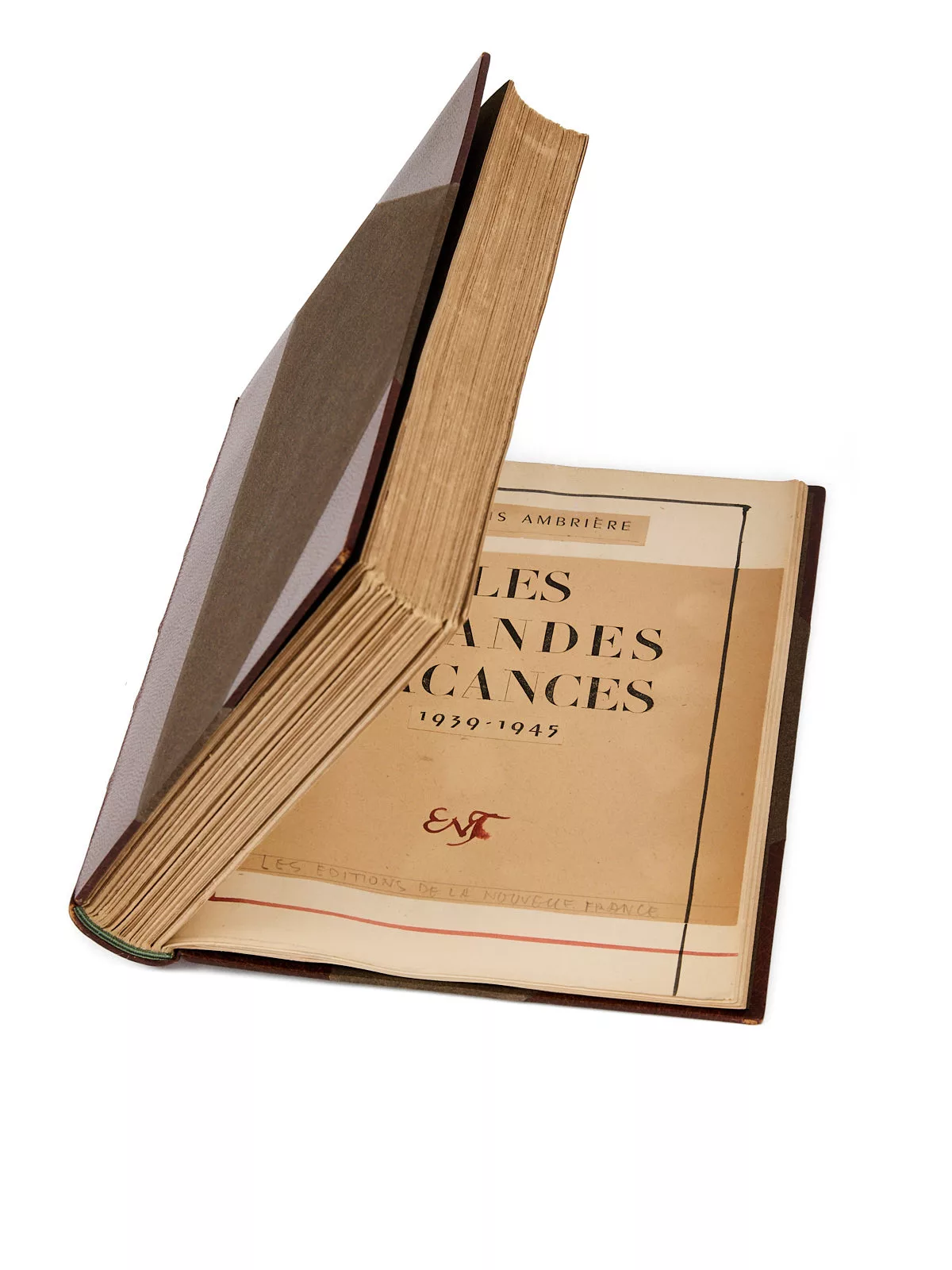
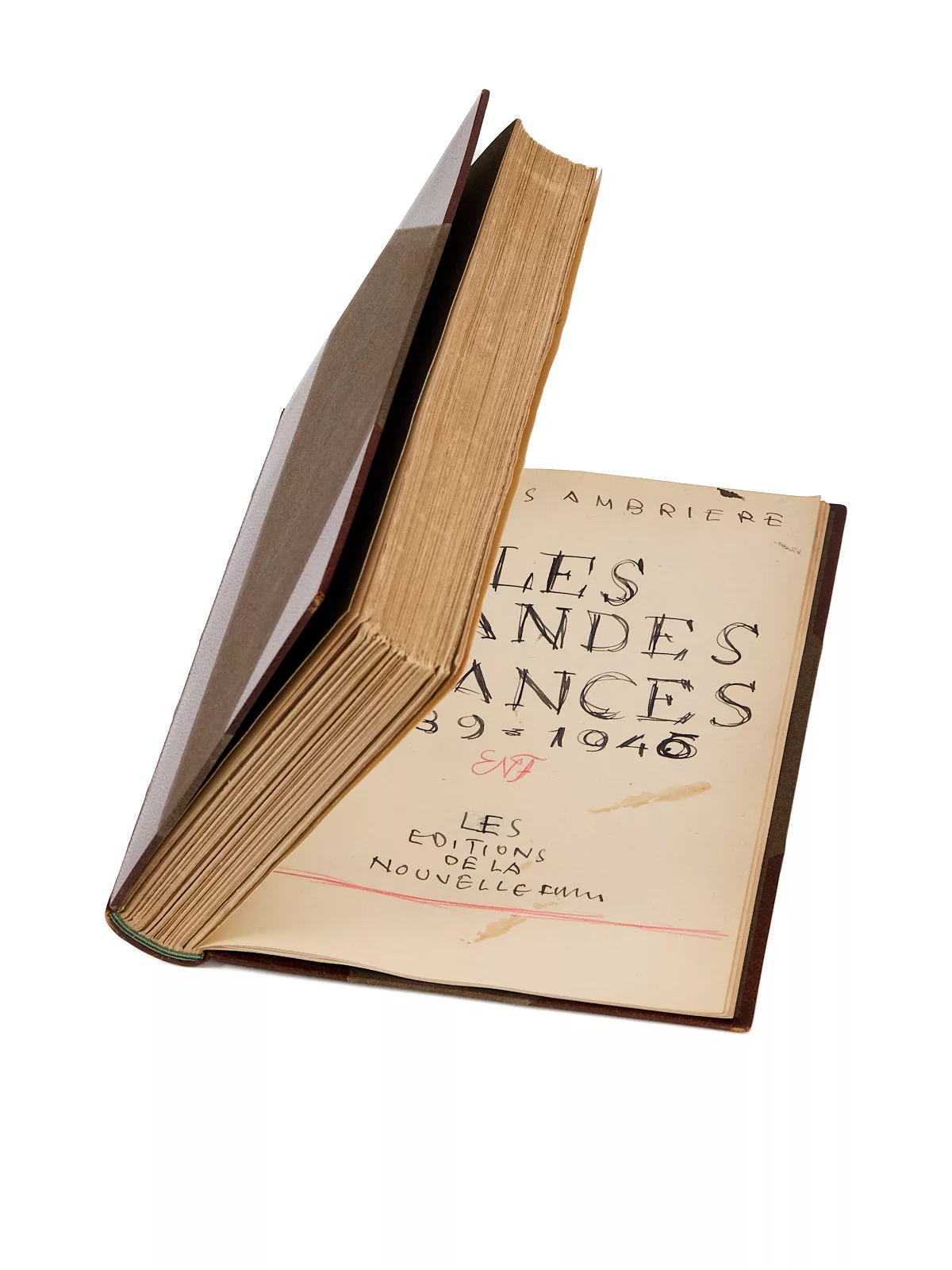
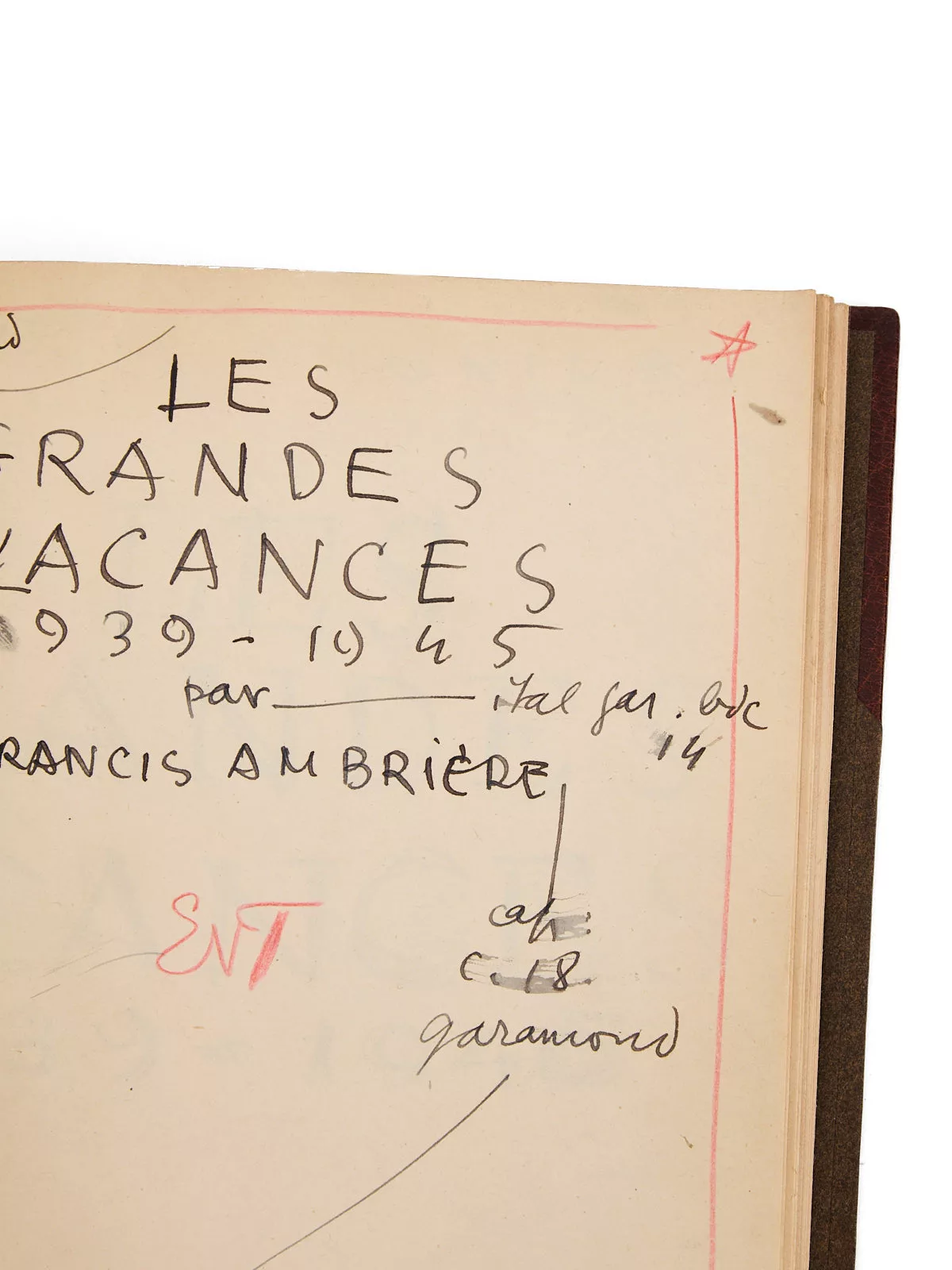
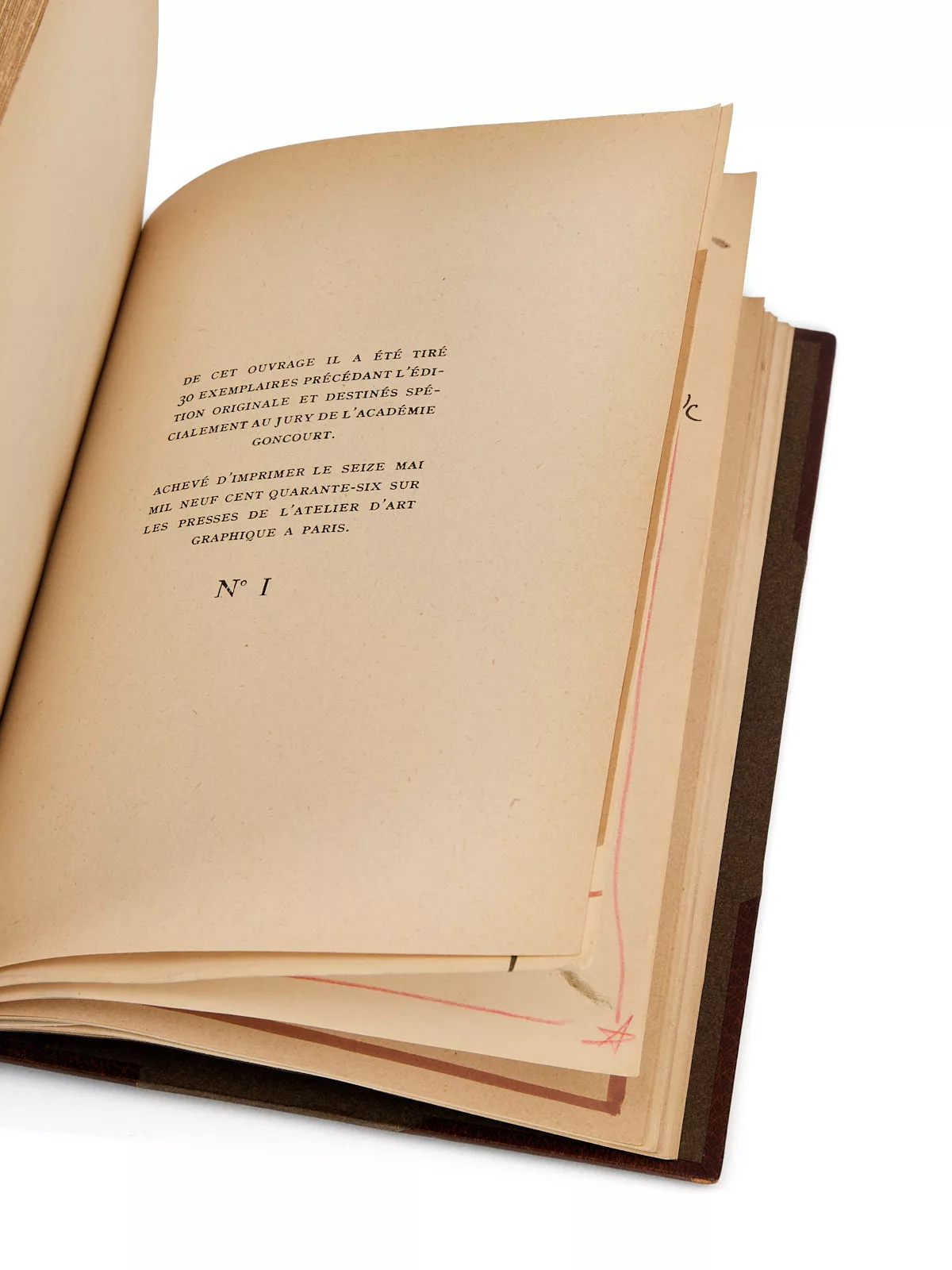
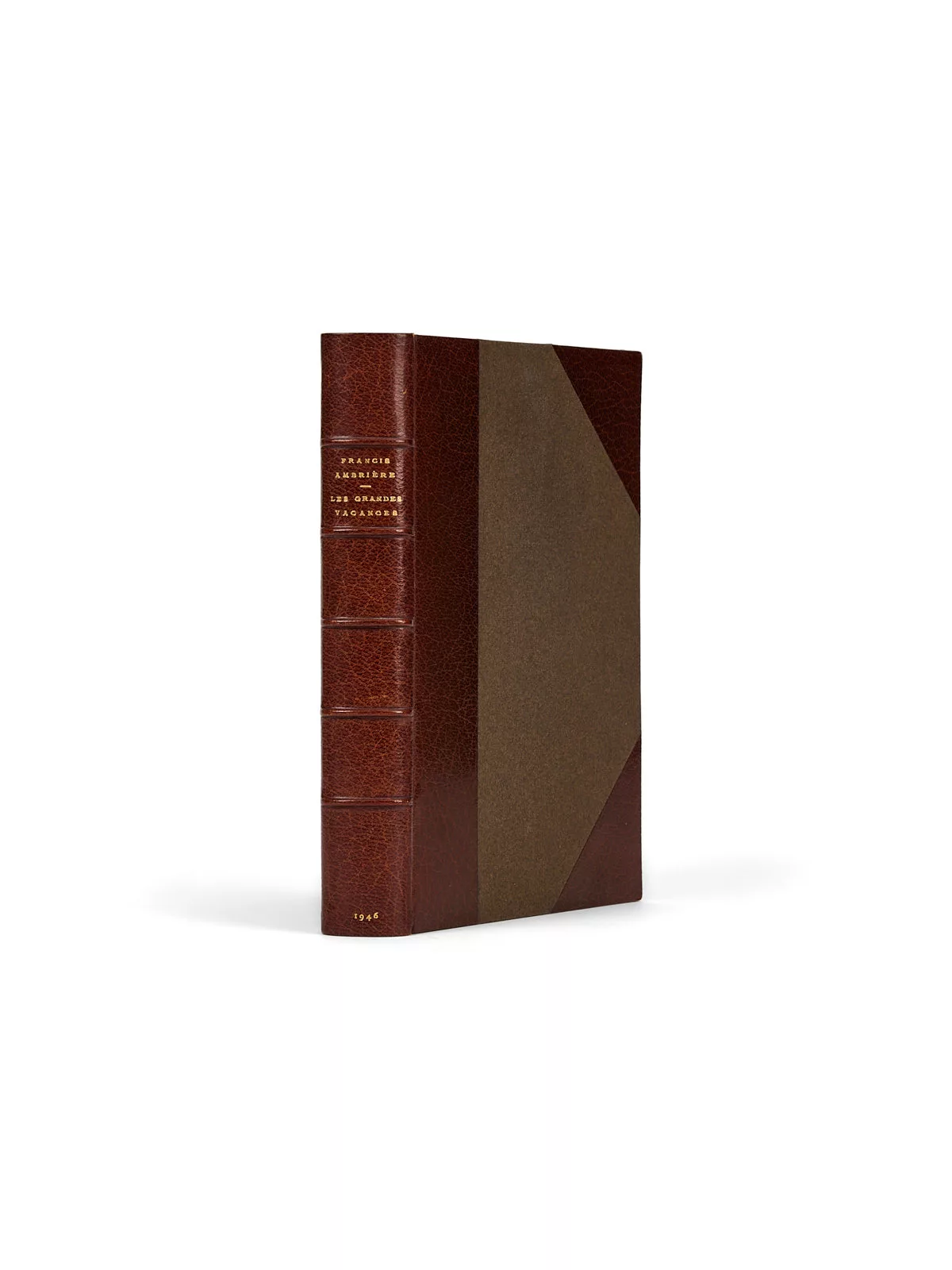
One of only 30 copies: copy no. I, containing at the end 6 original trial designs for the cover to be created for the forthcoming Éditions de France edition, published in June 1946.
Signed presentation inscription: “À Raymond Morin, ce livre qu'il a suscité, encouragé et permis, par sa sympathie et, du moins je l'espère, par divination (mais l'avenir seul nous l'apprendra). Avec ma vive gratitude pour l'éditeur et mon amitié pour l'homme, Francis Ambrière.”
Les Grandes Vacances received the prize in 1946, but retrospectively for the year 1940, the prize having been held in reserve during the war. The book is not a novel but the direct testimony of a French prisoner of war, held captive in Germany from June 1940 to March 1945. Ambrière composes a chronicle of a generation of confined men, caught between heroism, despondency, compromise and inner resistance. This “make-up” Goncourt, awarded at the end of the war, is an exception in the prize’s history: it crowns a work of testimony rather than fiction, in competition with two other major accounts of the combat or camp experience: Le Sacrifice du matin by Pierre de Bénouville and L’Univers concentrationnaire by David Rousset.
The tone of the book remains deeply marked by its era: patriotic, virile, at times harsh even in its judgments. On the relationships formed between French prisoners and German women, Ambrière writes: “il faut bien dire pourtant que la sentimentalité complaisante et niaise des Allemandes, autant que leur sensualité parfois bestiale, offrait aux Français des proies qu’ils n’avaient nul mal à forcer.” There are also pages of striking lucidity, notably when the arrival of American troops and the sudden abundance of their supplies opens, before the eyes of the starving prisoners, an almost advertising-like image of the new world: “Ce mépris de la nourriture et cette surabondance dégoûtaient un peu après tant de privations que nous avions souffertes, et l’absurdité d’un tel gaspillage criait contre les hommes. Tout n’était-il fait que pour aboutir à cette espèce de caravane publicitaire, qui semait au long de la route les échantillons de ses produits, comme une réclame géante de la jeune Amérique parmi les peuples affamés de la vieille Europe ?”
A very fine copy.